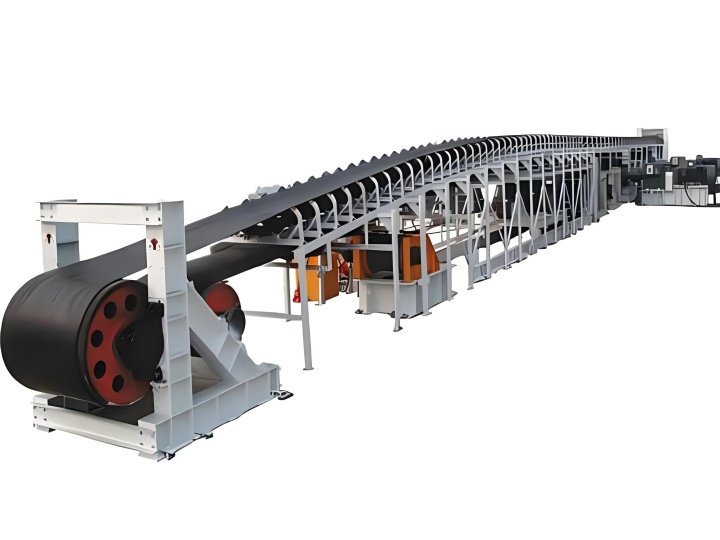
Heavy-Duty Trough Belt Conveyor
A trough belt conveyor is a bulk material handling system that uses angled idlers to form a trough-shaped belt for carrying loose materials like coal, ore, grain, and cement with minimal spillage.
With 15+ years of engineering expertise and 2,000+ systems deployed across 30+ countries, we specialize in custom trough belt conveyor solutions from 50 TPH to 8,000 TPH. Recent example: a 3.2 km overland system we engineered for a copper mine replaced 14 haul trucks and cut transport costs by 63% .
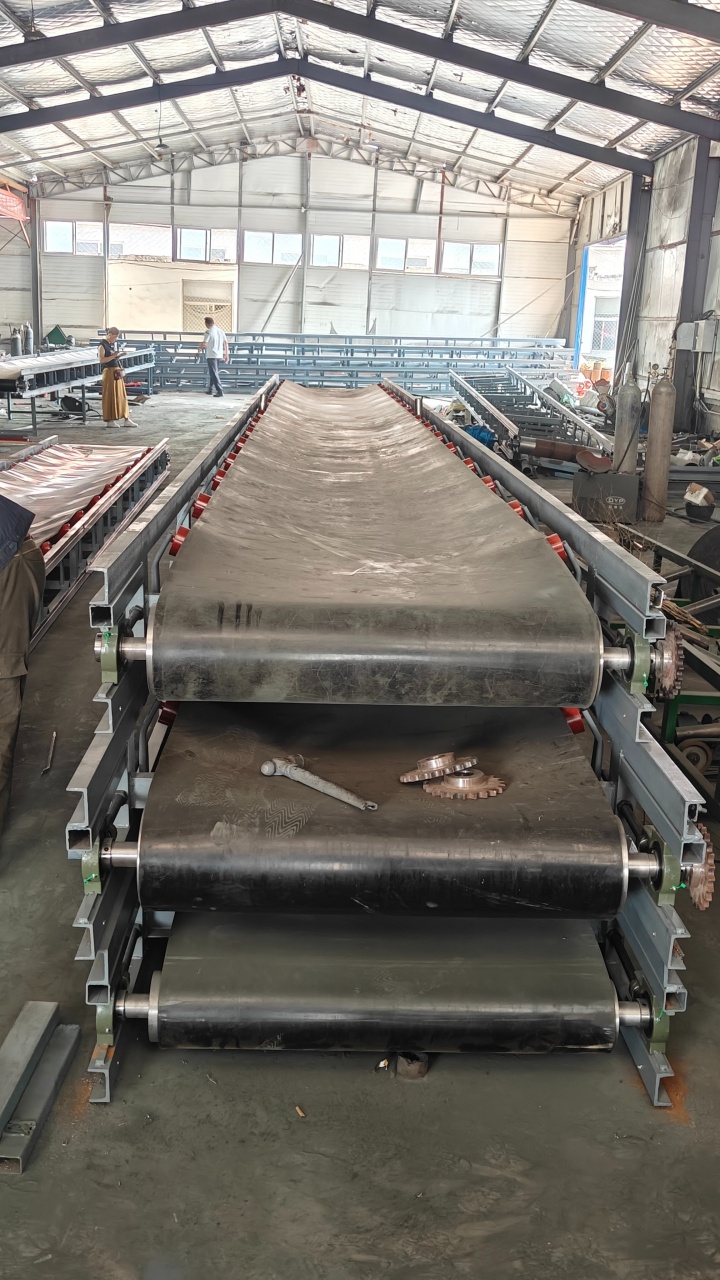
What Is a Trough Belt Conveyor?
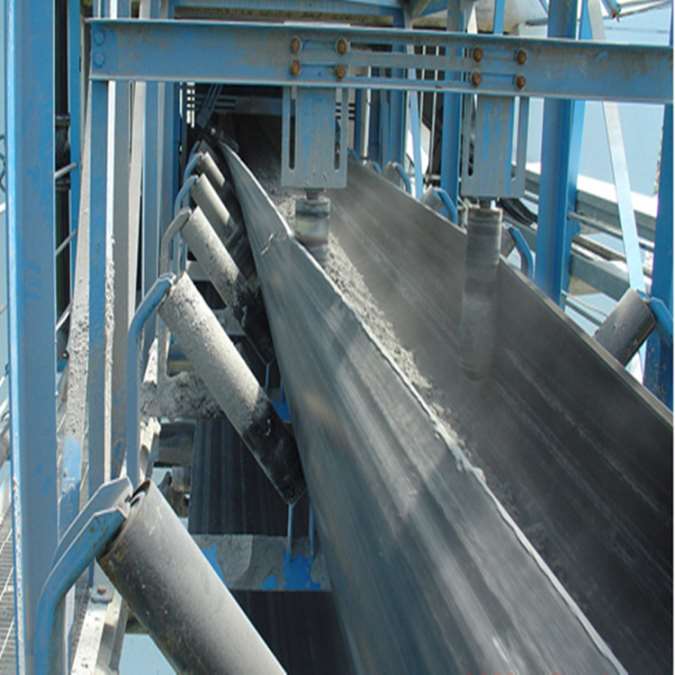
A trough belt conveyor is a conveying system where carrying idlers are positioned at an angle (20°, 35°, or 45°) beneath the belt to create a trough shape. This design contains bulk materials, prevents spillage, and enables significantly higher capacity than flat belt conveyors.
Unlike flat belt conveyors—used for unit handling like boxes or packages—trough belt conveyors are engineered for continuous bulk solids handling over long distances, often replacing truck haulage and reducing operating costs by 50–70%.
Key Benefits
|
Benefit |
How We Deliver |
|
Spillage Prevention |
Trough shape keeps material centered—reduces product loss and cleanup labor |
|
High Capacity |
Move up to 8,000 TPH—enough to fill 160 rail cars every hour |
|
Long-Distance |
Single systems spanning 500+ meters—eliminates multiple transfer points |
|
Low Maintenance |
Standardized, accessible components reduce downtime |
|
Energy Efficient |
Slash transport costs by 50–70% compared to truck haulage |
|
Versatile Belting |
Rubber, PVC, silicone, heat-resistant (750°F), oil-resistant, cold-resistant—matched to your material |
Technical Specifications
Design complies with ISO 5048 and CEMA standards.
|
Parameter |
Range |
Application Note |
|
Belt Width |
400 – 2,500 mm |
Grain elevators to high-capacity mining |
|
Conveying Speed |
0.6 – 3.15 m/s |
For abrasive ores, we recommend below 1.5 m/s to extend belt life |
|
Conveying Capacity |
Up to 8,000 TPH |
Based on width, speed & trough angle combination |
|
Conveying Length |
Custom, up to 500+ m |
Single-flight design reduces transfer points and maintenance |
|
Max Incline |
20° (standard); 30° with cleated belting |
Depends on material flow characteristics |
|
Troughing Angle |
20°, 35°, or 45° |
35° is industry standard—recommended for 80% of applications |
|
Belt Materials |
Rubber, PVC, Silicone, PU, Heat (750°F), Cold, Oil-resistant |
Selection based on material temperature, abrasiveness, and chemical properties |
|
Frame Material |
Carbon steel / Stainless steel (optional) |
Stainless recommended for corrosive environments (chemicals, fertilizers) |
|
Standards Compliance |
ISO 5048, CEMA, ISO 9001, CE |
Full documentation available for export |
Applications
Trough belt conveyors are used across five primary industries:
Mining & Quarrying – Ore, coal, minerals, overburden
Agriculture & Grain – Grain, corn, wheat, soybeans, fertilizer
Cement & Construction – Cement, sand, aggregate, clinker
Ports & Bulk Terminals – Ship loading/unloading, stockyard management
Chemical & Fertilizer – Bulk chemicals, pellets, corrosive materials
What Our Customers Say
"We've worked with this engineering team on three conveyor projects over five years. Their design support is exceptional, and their equipment consistently delivers 99%+ uptime in harsh conditions."
— Project Manager, Cement Plant, Vietnam
"The 1,500 TPH trough belt conveyor they designed for our copper mine has run 24/7 for over two years with less than 2 hours of monthly downtime. We're planning a second line."
— Operations Manager, Copper Mine, Inner Mongolia
Frequently Asked Questions
Q1: Trough belt vs. flat belt—what's the difference?
A trough belt conveyor uses angled idlers to form a trough for bulk materials. A flat belt conveyor has a flat surface for unit handling—boxes, packages, or parts on assembly lines.
Q2: What is the max incline for a trough belt conveyor?
Standard units handle up to 20°. With cleated or chevron belting, up to 30°.
Q3: What materials can it handle?
Coal, ore, grain, cement, sand, gravel, fertilizer, chemicals, pellets. Heat-resistant options up to 750°F; acid-alkali resistant belts for corrosive materials.
Q4: How do I choose the trough angle?
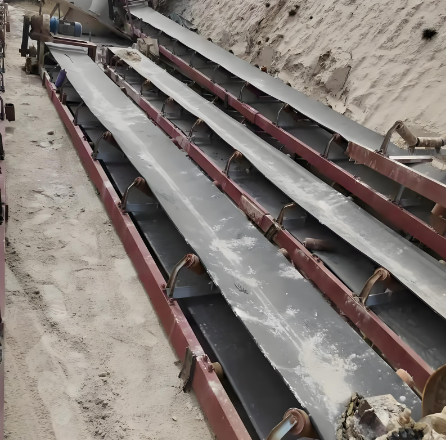
20° – Lightweight materials (grain, fertilizer, wood chips)
35° – Most bulk materials (coal, ore, sand) — recommended for 80% of applications
45° – Fine, free-flowing materials (cement, fly ash, fine chemicals)
Q5: Can you customize width and length?
Yes—full customization based on material type, capacity, distance, and site conditions. We provide detailed engineering drawings for your approval before fabrication. Free engineering consultation included.
Get a Free Engineering Consultation
Tell us about your project (material, capacity, distance, site conditions) and we'll respond within 24 hours with a customized recommendation, engineering drawings, and budgetary quote.