E-mail: sale@xxdahan.com
Follow Us 


In today's fast-paced industrial landscape, efficiency and flexibility are paramount. Traditional fixed conveyor systems often fall short when operations require mobility, space optimization, or temporary setups. This is where the foldable belt conveyor emerges as a game-changing solution.
A Foldable Belt Conveyor —also known as a folding belt conveyor, portable belt conveyor, or mobile belt conveyor—is a material handling system designed with a folding mechanism that allows the belt to collapse or fold when not in use. This innovative design enables easy storage, convenient transportation, and rapid deployment across various work sites.
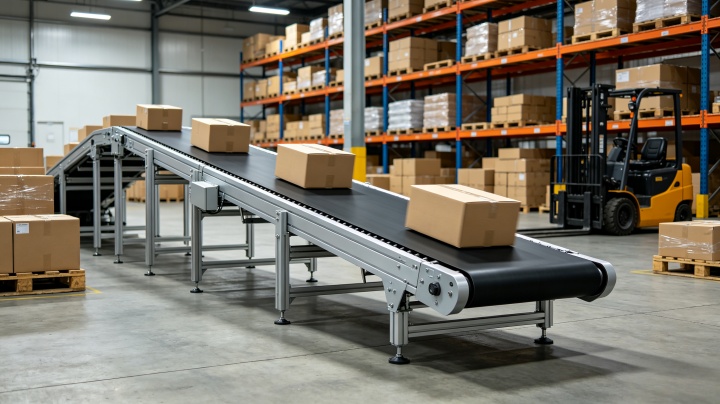
Whether you're managing a warehouse, running a manufacturing facility, or handling agricultural products, a foldable belt conveyor offers the versatility to adapt to changing operational needs. This comprehensive guide explores everything you need to know about these portable conveyor systems, from key features and applications to selection criteria and maintenance tips.
A foldable belt conveyor is a type of conveyor system specifically engineered to fold or collapse the belt for space-saving and portability purposes. Unlike traditional fixed conveyors, these systems are lightweight, mobile, and can be quickly set up or reconfigured as operational demands shift.
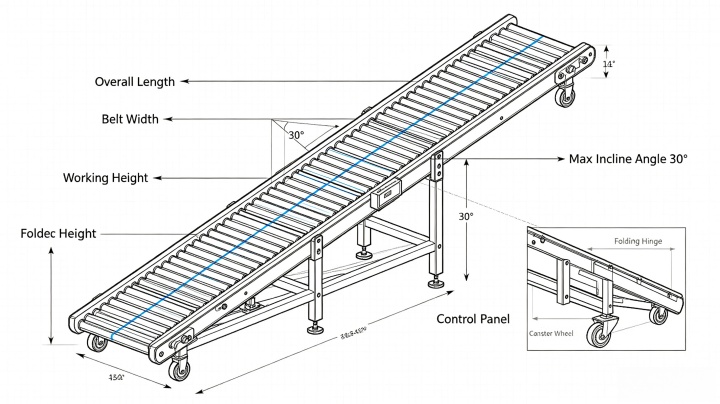
The core components of a foldable belt conveyor typically include:
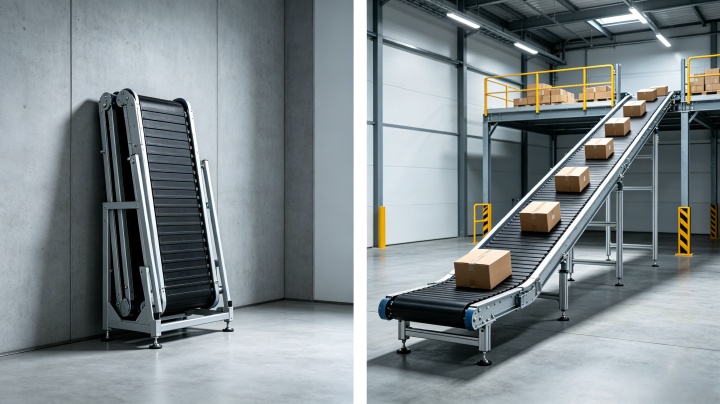
The folding mechanism allows operators to reduce the conveyor's footprint by approximately 40% when not in use, making it ideal for facilities with limited space or operations that require frequent relocation.
Learn more about our range of belt conveyor systems or find the right portable conveyor for your specific needs. For heavy-duty applications, consider our mobile conveyor equipment series.
One of the most significant advantages of a foldable belt conveyor is its ability to conserve floor space. When folded, these conveyors occupy a fraction of the space required by fixed systems, allowing for efficient storage and easier transportation between job sites.
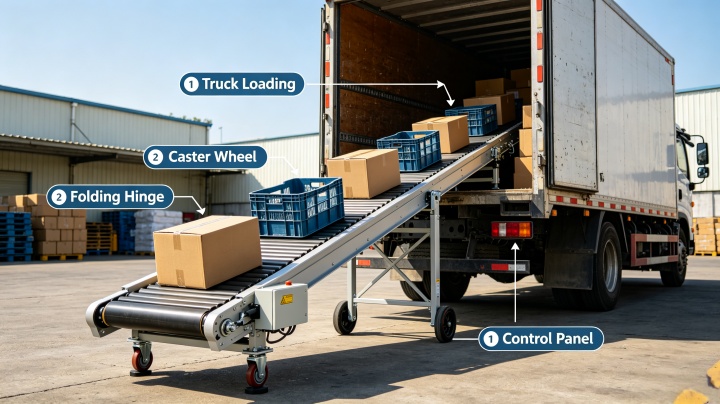
Equipped with wheels and ergonomic handles, foldable belt conveyors can be moved effortlessly across warehouses, construction sites, or agricultural fields. This mobility is particularly valuable for temporary operations, seasonal work, or businesses that handle multiple projects simultaneously.
Time is money in industrial operations. Foldable belt conveyors can be deployed rapidly—some models achieve setup speeds 50% faster than traditional systems. This efficiency translates to reduced downtime and increased productivity.
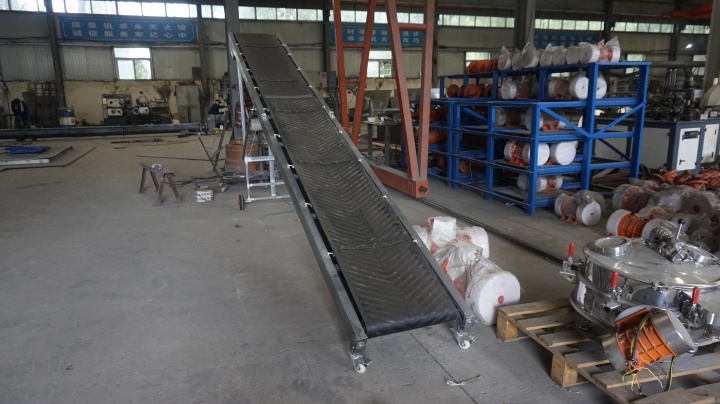
Many folding conveyors feature adjustable lengths and incline angles, allowing operators to customize the system for specific applications. Whether you need to load trucks, stack materials, or transfer goods between different elevations, these conveyors can adapt to your requirements.
Foldable belt conveyors can handle a wide range of materials, including:
High-quality folding conveyors are built with robust materials to withstand demanding environments. Stainless steel frames offer superior corrosion resistance, while fire-resistant and anti-static rubber belts ensure safe operation in challenging conditions.
In warehouses and distribution centers, space optimization is critical. Foldable belt conveyors facilitate the efficient movement of goods between loading docks, storage areas, and truck trailers. Their portability allows for quick reconfiguration as operational needs change, making them ideal for handling seasonal peaks or temporary workflows.
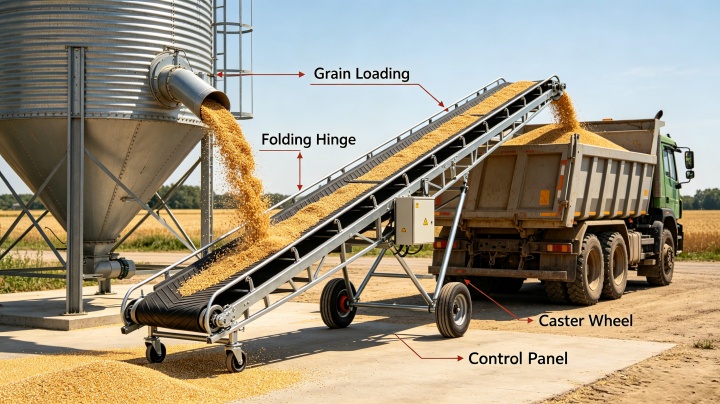
Agricultural operations benefit significantly from foldable belt conveyors. These systems are used for loading and unloading grain, seeds, feed, and other agricultural products. Farmers can transport conveyors between silos, storage sheds, or fields, providing flexibility that fixed systems cannot offer.
In construction and mining environments, where conditions are harsh and project locations change frequently, foldable belt conveyors provide a reliable solution for moving bulk materials. Their rugged construction and portability make them suitable for temporary stockpiles, loading operations, and material transfer between sites.
Manufacturers use foldable belt conveyors for assembly lines, packaging operations, and material handling. The ability to fold and store the conveyor when not in use helps optimize production floor space. In food processing and pharmaceutical applications, models with FDA-compliant stainless steel frames and hygienic belts are available.
During peak seasons or promotional events, retailers and e-commerce businesses often need temporary material handling solutions. Foldable belt conveyors can be set up quickly to handle increased order volumes, then folded and stored when demand subsides.
When selecting a foldable belt conveyor for your operation, consider the following key parameters:
| Feature | Foldable Belt Conveyor | Fixed Belt Conveyor |
| Portability | High - can be moved between sites | None - permanent installation |
| Space Efficiency | Excellent - folds for storage | Poor - occupies continuous floor space |
| Setup Time | Minutes | Days or weeks |
| Initial Cost | Moderate | Lower per meter |
| Long-term Cost | Higher mobility may justify premium | Lower if long-term fixed operation |
| Flexibility | High - adapts to changing needs | Low - designed for specific location |
| Best Use Cases | Temporary operations, multiple sites, space-constrained facilities | Permanent production lines, continuous operation |
| Feature | Foldable Belt Conveyor | Fixed Belt Conveyor |
| Portability | High - can be moved between sites | None - permanent installation |
| Space Efficiency | Excellent - folds for storage | Poor - occupies continuous floor space |
| Setup Time | Minutes | Days or weeks |
| Initial Cost | Moderate | Lower per meter |
| Long-term Cost | Higher mobility may justify premium | Lower if long-term fixed operation |
| Flexibility | High - adapts to changing needs | Low - designed for specific location |
| Best Use Cases | Temporary operations, multiple sites, space-constrained facilities | Permanent production lines, continuous operation |
Start by analyzing the materials you need to convey—consider their weight, size, shape, and whether they require special handling (e.g., food-grade belts for edible products, anti-static belts for electronic components).
Measure your available floor space and consider clearance requirements. If you need to store the conveyor when not in use, ensure your storage area can accommodate the folded dimensions.
Determine how frequently you'll need to move the conveyor. For frequent relocation, look for models with durable wheels, ergonomic handles, and lightweight construction. Hydraulic lifting systems can simplify repositioning on uneven surfaces.
Ensure the conveyor's belt width, length, speed, and load capacity align with your operational demands. For heavy-duty applications, consider models with reinforced frames and more powerful motors.
For regulated industries, verify that the conveyor meets relevant standards. Food-grade stainless steel models with FDA certification are essential for food processing, while fire-resistant UL94 V-0 rated conveyors are critical for chemical and high-risk environments.
Q: How much space can I save with a foldable belt conveyor?
A: Depending on the model, folded conveyors can save approximately 40% of floor space compared to their extended configuration.
Q: Can a foldable belt conveyor handle inclined transport?
A: Yes, many foldable belt conveyors offer adjustable incline angles, with some models capable of operating at up to 30 degrees.
Q: What industries commonly use foldable belt conveyors?
A: Key industries include warehousing, agriculture, construction, mining, manufacturing, food processing, and retail distribution.
Q: Are foldable belt conveyors suitable for outdoor use?
A: Yes, models with weather-resistant materials and corrosion-resistant frames are available for outdoor and harsh environment applications.
Q: How long does it take to set up a foldable belt conveyor?
A: Setup typically takes minutes, with some models offering 50% faster deployment than traditional conveyor systems.
The foldable belt conveyor represents a significant advancement in material handling technology, offering the perfect balance of portability, flexibility, and performance. Whether you operate a warehouse, farm, construction site, or manufacturing facility, these versatile systems can streamline your operations, optimize space utilization, and adapt to changing requirements.
By understanding the key features, applications, and selection criteria outlined in this guide, you'll be well-equipped to choose the right foldable belt conveyor for your specific needs. The investment in a quality foldable conveyor system can deliver substantial returns through improved efficiency, reduced downtime, and enhanced operational flexibility.
CONTACT
WhatsApp:+86 18339211009
Email:sale@xxdahan.com
Add:China, Henan Province, Xinxiang City.Yanjin county forest park gate to the west 1000 meters north road