E-mail: sale@xxdahan.com
Follow Us 


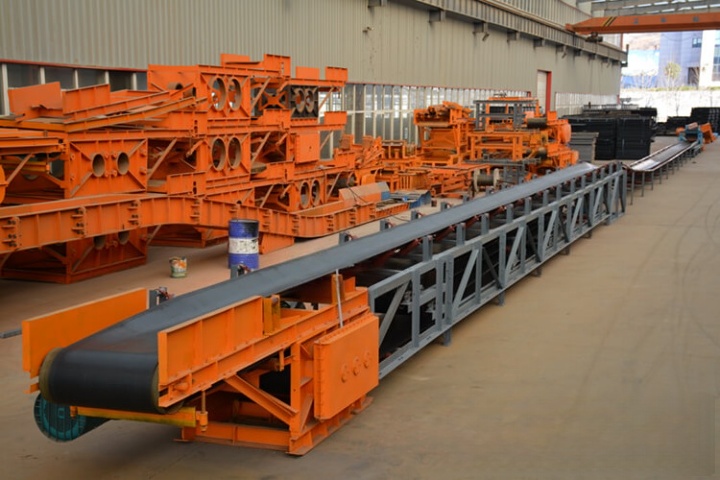
Planning a new building material production line? The machinery you choose will impact your business for the next 5–10 years. Here is the short answer to what matters most: evaluate suppliers across five dimensions — performance, build quality, after-sales support, total cost of ownership, and supplier track record. Never choose based on price alone. Use this guide as your supplier evaluation checklist for construction material machinery sourcing. so you can make a confident, informed purchasing decision.
| Criterion | What to Check | Why It Matters |
| Evaluating Building Material Machinery Performance | Efficiency, automation level, energy consumption, mold lifespan | Directly affects daily output and operating costs |
| Build Quality & Durability of Block Making Equipment | Key component materials, welding workmanship, brand of major parts | Determines service life and breakdown frequency |
| After-Sales Support | Installation guidance, training, spare parts availability, response time | Minimizes downtime and production losses |
| Total Cost of Ownership | 5-year energy + maintenance + spare parts + downtime costs | Prevents "cheap buy, expensive run" traps |
| Supplier Credibility | Years in business, export experience, customer references, certifications | Predicts reliability and long-term partnership quality |
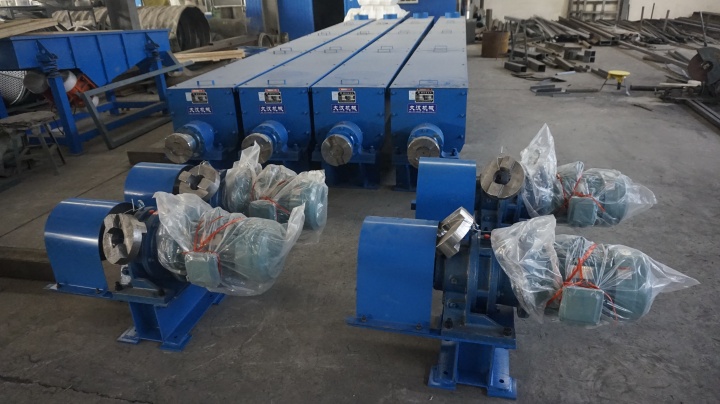
Define your production requirements first. This is the single most important step — and the one most buyers skip.
Before you send any inquiry, answer these six questions in writing
What finished product will you make? (Bricks, blocks, pavers, wall panels, roof tiles, or slabs?)
What is your target daily capacity? (Tons, cubic meters, or square meters per shift?)
What raw materials are available locally? (Cement, clay, fly ash, sand, aggregate, or stone blocks?)
What are your product dimensions? (Standard sizes or custom specifications?) What is your workshop floor space? (Length, width, and height available for the line?)
What is your all-in budget? (Equipment + shipping + installation + training + 1 year of spare parts?)
Action step: Compile your answers into a one-page "Project Requirement Sheet." Send this to every supplier when requesting a quote. It will cut your inquiry-to-quote time by 50% and ensure you receive comparable proposals.
When evaluating building material production line performance, the machine's throughput must match your capacity target — but never choose a machine that runs at 100% capacity 100% of the time. Always leave a 15–20% margin for peak demand and maintenance downtime. Key performance metrics to compare across suppliers:
Production rate — Units per hour at standard operating conditions
Automation level — Fully automatic, semi-automatic, or manual? Each 10% increase in automation typically reduces labor costs by 8–12%.
Energy consumption per unit — KwH per ton of product. This is your largest recurring operating expense.
Mold change time — How many minutes to switch product sizes? Faster changeovers mean greater production flexibility.
First-pass yield rate — What percentage of output meets quality standards without rework? A 95% yield vs. 90% yield means 5% less waste over 10,000 tons.
Red flag: If a supplier cannot provide detailed energy consumption data or yield rate guarantees, move on. They either lack testing data or are hiding inefficiencies.
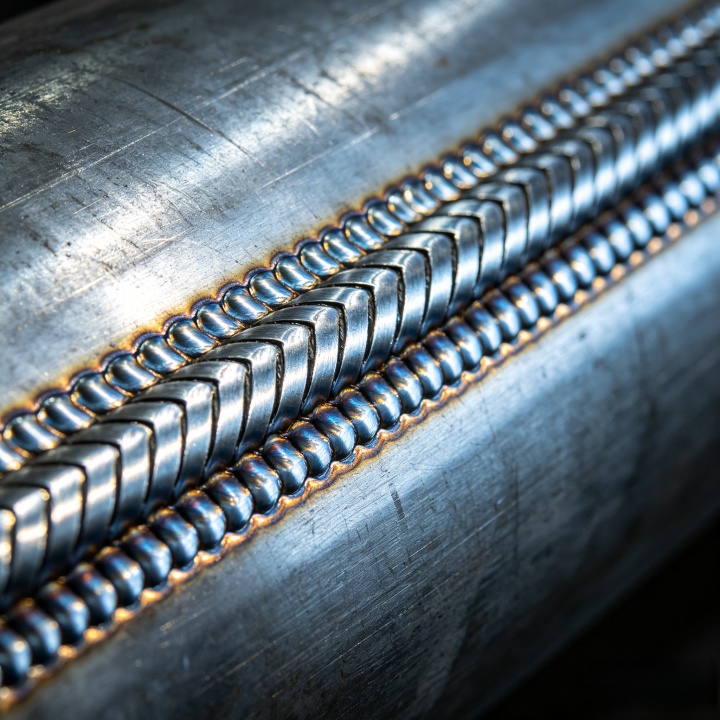
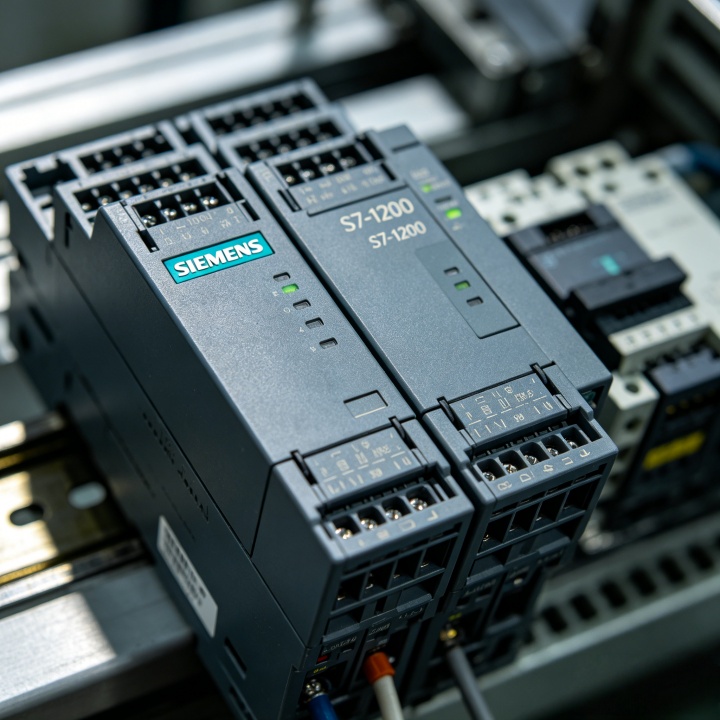
Build quality is not about how heavy the machine looks — it is about what is inside. The brand and specification of hydraulic pumps, motors, PLC controllers, and wear plates determine service life far more than steel thickness. When evaluating durability, insist on written answers to these questions:
What brand is the hydraulic system? (Rexroth, Parker, or generic Chinese brands? The price difference can be 2–3x.)
What brand is the PLC controller? (Siemens, Mitsubishi, ABB, or unbranded?) What material are the wear plates and molds made from? (Hardox 450 vs. standard Q235 steel — lifespan difference is 3–5x.)
What surface treatment is applied? (Epoxy coating, galvanizing, or simple paint? For humid climates, epoxy is non-negotiable.)
What is the designed service life in operating hours? (A professional supplier should quote a figure, e.g., 20,000 hours before major overhaul.)
Action step: Request a detailed component brand list in writing. Compare these side-by-side across shortlisted suppliers. Two machines with identical photos can have vastly different internal quality.
For overseas buyers, after-sales support and supplier credibility are more important than the machine itself — because you cannot call a local repair shop for a Chinese-made hydraulic pump.
Before signing any contract, confirm these five support elements in writing:
Installation & commissioning — Will an engineer travel to your site? How many days will they stay? Who covers travel costs and daily fees?
Operator training — How many days of hands-on training are included? Will they provide training manuals and video tutorials?
Spare parts availability — Which parts are considered "wear parts"? What is the typical lead time for emergency parts orders? Are parts stocked in a regional warehouse near you?
Remote technical support — Is WhatsApp/WeChat video support available 24/7? Can they perform remote diagnostics via the PLC interface?
Warranty terms — How many months or operating hours? What exactly does warranty cover — all parts, or only non-wear parts? Does it include on-site labor?
Red flag: A supplier that says "we provide full support" but cannot detail exactly what that means in writing is not being transparent. Walk away.
The purchase price is typically only 40–60% of your total cost of ownership of your total 5-year cost. Do not make a decision based on the quote alone.
Here is a complete cost breakdown you can use to compare suppliers:
| Cost Component | Typical % of 5-Year Total | How to Estimate |
| Equipment purchase | 25–35% | Contract price |
| Ocean freight & insurance | 8–12% | Get a freight forwarder quote |
| Import duties & clearance | 5–15% | Check your country's tariff schedule |
| Installation & commissioning | 3–5% | Engineer travel + local labor |
| Energy costs (5 years) | 20–30% | Supplier spec × local electricity rate × operating hours |
| Spare parts & maintenance (5 years) | 10–15% | Typically 3–5% of equipment value annually |
| Downtime losses (5 years) | 5–10% | Daily production value × estimated breakdown days |
Critical calculation:
A machine quoted at $80,000 with energy consumption of 45 kWh/ton vs. a $95,000 machine at 35 kWh/ton — over 10,000 tons of annual production at $0.12/kWh, the more expensive machine saves $12,000 per year in electricity alone. Over 5 years, that is $60,000 — more than covering the $15,000 price difference.
Always calculate 5-year total cost, never compare only the unit price.
You are not just buying a machine — you are entering a partnership that will last 5–10 years. Supplier credibility is your strongest risk mitigator.
Here is a practical checklist to verify any supplier before you pay a deposit:
Years in business — Suppliers with less than 5 years of manufacturing experience are significantly higher risk. The building material machinery industry requires years of design iteration to produce reliable equipment. If they have been in business for less than 3 years, request additional due diligence.
Export track record — Ask for a list of countries they have exported to. Are any of these countries in your region? Do they understand your local voltage (110V vs. 220V), frequency (50Hz vs. 60Hz), and climate conditions (humidity, temperature extremes)?
Customer references — Ask for contacts of 2–3 clients who purchased similar equipment in the last 2 years. Contact them. Ask about: on-time delivery, actual vs. promised performance, responsiveness to issues, and whether they would buy again.
Third-party certifications — ISO 9001, CE marking, or other relevant certifications. These are not guarantees of quality, but they do indicate a baseline of process discipline.
Online presence — Check their website, Alibaba store, YouTube channel, and social media. A supplier with no digital footprint is a higher risk. Look for video evidence of machines in actual operation.
Red flag: A supplier that cannot or will not provide customer references has something to hide. No credible B2B machinery manufacturer operates without a list of satisfied customers.
The industry benchmark for a healthy investment is a payback period of 2 to 4 years. Anything shorter than 18 months is realistic only in exceptionally high-margin markets. Use this simple calculation to estimate your payback period:
Monthly Revenue = Daily Capacity × Operating Days per Month × Unit Selling PriceMonthly Costs = Raw Materials + Labor + Energy + Maintenance + Finance CostsMonthly Net Profit = Monthly Revenue − Monthly CostsPayback Period (months) = Total Equipment Investment / Monthly Net Profit
For example: If your total investment (equipment + shipping + installation) is $150,000 and your monthly net profit is $4,500, your payback period is 33 months — or about 2.8 years.What is a realistic profit margin? Most building material manufacturers operate at 10–25% net margins, depending on product type and market conditions. Use your local market prices — not supplier-provided estimates — to calculate revenue.
Warning: If a supplier provides a "profit calculation" showing 1-year payback, run the numbers yourself using conservative estimates. Suppliers have a natural incentive to present optimistic projections. Your local market conditions are unique — only you can accurately forecast your costs and selling prices.
Avoid these five mistakes that cost buyers thousands of dollars:
| Pitfall | Why It Happens | How to Avoid |
| Low price, stripped-down configuration | Supplier uses cheaper motors, thinner steel, or unbranded hydraulics | Request a detailed configuration list with brand names and model numbers for every major component |
| Verbal promises not honored | Sales team over-promises; after-sales team under-delivers | Write every commitment — training days, spare parts, warranty, delivery date — into the contract |
| Delivery delays | Supplier takes orders beyond production capacity | Contract a penalty clause: e.g., 0.5% of contract value per week of delay. Follow up weekly with a production photo |
| Missing accessories on arrival | Incomplete packing or unscrupulous shipping | Request a full packing list with photos before shipment. Consider third-party inspection (SGS, Bureau Veritas) at the loading port |
| Equipment failure due to local conditions | Supplier did not account for local voltage, humidity, or raw material differences | Provide full site conditions in writing before ordering: voltage, frequency, ambient temperature, humidity, and raw material samples for testing |
Most important rule: Never pay 100% before shipment. Standard industry practice for export machinery is 30% deposit, 70% balance against shipping documents (copy of Bill of Lading). Some suppliers may ask for 40%/60% — that is also acceptable. But 100% upfront is a significant risk.
Building material machinery is a long-term asset. Buying obsolete technology saves money today but costs you competitively in 3–5 years.
Here are the trends shaping the industry right now:
Industrial Internet of Things (IIoT) — Machines with sensors that report real-time operating data: production count, temperature, vibration, energy consumption. This enables predictive maintenance — fixing issues before they cause breakdowns. Ask if your supplier offers IoT-ready control systems.
Robotic automation — Palletizing robots, automatic stacking, and packaging systems. Labor shortages are a global challenge; investing in automation now will protect you from rising labor costs.
Energy-efficient motors and drives — IE3 or IE4 efficiency-rated motors and variable frequency drives. These reduce electricity consumption by 15–30% compared to standard motors. The premium pays back within 2–3 years.
Modular line design — Production lines that can be expanded by adding modules. This allows you to start with a smaller investment and scale up as your market grows.
Smart strategy: Even if you choose a basic configuration today, ask your supplier whether the control system can be upgraded later to support IIoT features. "Upgradeable" is better than "replaceable."
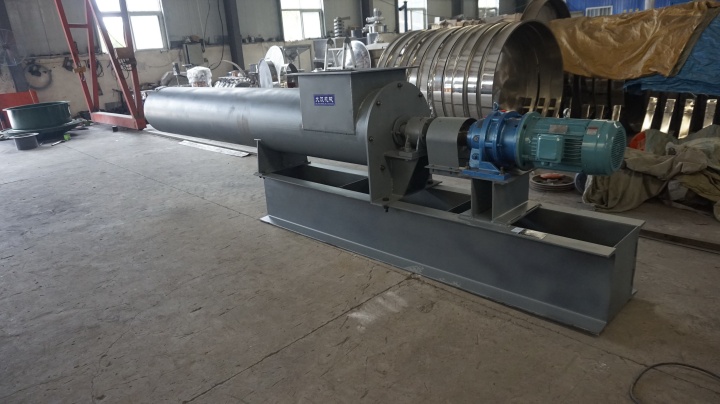
A professional procurement process protects you from costly mistakes. Follow these 10 steps in order:
| Step | Action | Timeline |
| 1 | Define your product, capacity, and budget internally | 1 week |
| 2 | Research 3–5 potential suppliers through B2B platforms, exhibitions, or referrals | 2 weeks |
| 3 | Send your Project Requirement Sheet and request detailed quotes | 1–2 weeks |
| 4 | Compare technical proposals side-by-side; shortlist 2–3 suppliers | 1 week |
| 5 | Video call or visit factory; request customer references and contact them | 2–3 weeks |
| 6 | If feasible, send your raw material samples for test runs at the supplier's factory | 2–4 weeks |
| 7 | Negotiate commercial terms: price, payment schedule, delivery, warranty, and training | 1–2 weeks |
| 8 | Sign formal contract; pay 30% deposit | 1 day |
| 9 | Track manufacturing progress; request weekly photo/video updates; arrange third-party inspection before shipment | 4–12 weeks (depending on equipment complexity) |
| 10 | Arrange shipping, customs clearance, and on-site installation; complete training and final acceptance | 4–8 weeks after shipment |
Total timeline from inquiry to production: Typically 4–8 months, depending on equipment complexity and shipping distance.
The most common pitfall is choosing a supplier based on the lowest price alone. This often leads to a 'stripped-down' configuration with cheaper components. To avoid this, always request a detailed configuration list with brand names and model numbers for every major component.
For overseas buyers, after-sales support is more important than the machine itself because you cannot easily call a local repair shop for specialized parts. It minimizes downtime and production losses. Always confirm installation guidance, training, spare parts availability, and warranty terms in writing before signing a contract.
Never buy building material machinery based on price alone. The lowest-priced quote is almost always the most expensive option over 5 years.
A reliable machine from a credible supplier — with proven performance, durable construction, solid after-sales support, and transparent documentation — will deliver consistent output, low downtime, and predictable costs. That is how you build a profitable, sustainable production business.
Use the five criteria in this guide as your evaluation framework. Ask every question listed here. Document every answer. Verify every claim.
And remember: The best supplier is not the one with the cheapest machine — it is the one that helps you make money, day after day, for the next decade.
Ready to start your equipment sourcing project? Contact us with your production requirements, and we will provide a detailed proposal, component brand list, and reference client contacts for your verification.
CONTACT
WhatsApp:+86 18339211009
Email:sale@xxdahan.com
Add:China, Henan Province, Xinxiang City.Yanjin county forest park gate to the west 1000 meters north road