E-mail: sale@xxdahan.com
Follow Us 


A practical comparison of rubber and PVC conveyor belts for heavy materials, focusing on abrasion, impact, tensile strength, operating conditions, cost, and application suitability.
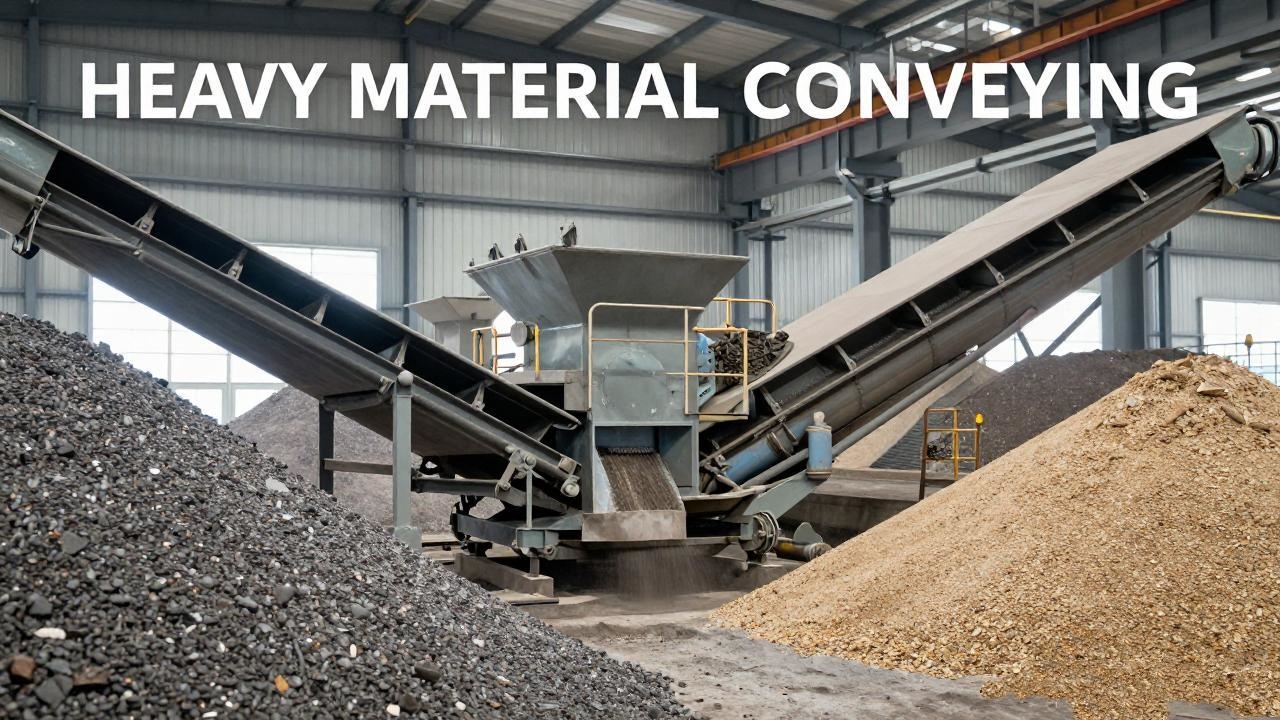
Choosing the right conveyor belt is critical when handling heavy bulk materials. A belt suitable for packages or light-duty conveying may fail prematurely when exposed to abrasive particles, sharp edges, heavy impact, or high belt tension.
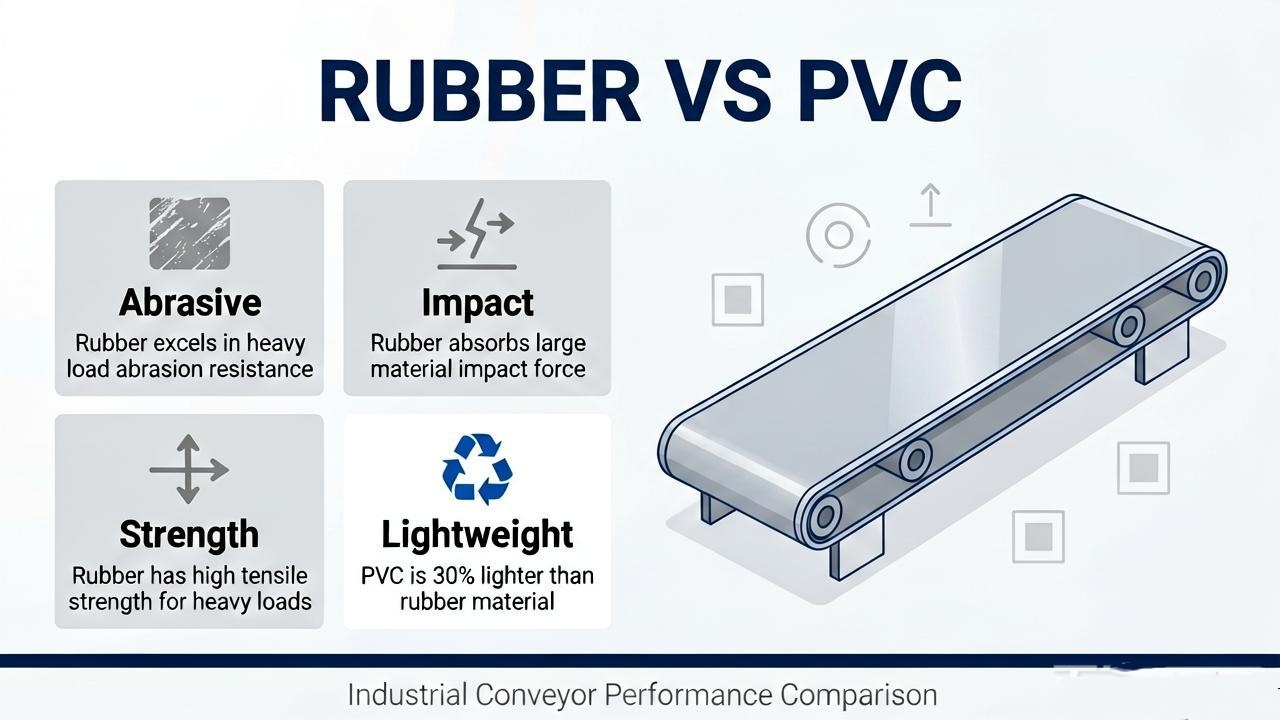
The Difference Between Rubber and PVC Conveyor Belts for Heavy Materials mainly involves abrasion resistance, impact resistance, cut and tear resistance, tensile strength, temperature performance, belt weight, and operating cost. Rubber conveyor belts are generally preferred for heavy, abrasive, angular, and high-impact materials, while PVC conveyor belts are more suitable for light-to-medium applications with controlled loading conditions.
Material weight alone does not determine the correct belt. Material shape, abrasiveness, impact energy, conveying capacity, belt tension, temperature, conveyor length, and operating environment should also be considered.
| Feature | Rubber Conveyor Belt | PVC Conveyor Belt |
|---|---|---|
| Heavy Bulk Materials | Excellent | Suitable for selected conditions |
| Abrasion Resistance | Excellent | Moderate |
| Impact Resistance | Excellent | Lower |
| Cut & Tear Resistance | Generally higher | Lower for severe applications |
| Tensile Strength | High | Moderate |
| Temperature Resistance | Generally higher | Generally lower |
| Chemical Resistance | Depends on compound | Generally good |
| Belt Weight | Heavier | Lighter |
| Cleaning | Moderate | Easy |
| Initial Cost | Generally higher | Generally lower |
| Best Fit | Heavy-duty bulk conveying | Light-to-medium conveying |
Rubber is generally better suited to demanding bulk material handling, while PVC is often more practical for lighter, cleaner, and controlled conveying environments.
The Difference Between Rubber and PVC Conveyor Belts for Heavy Materials is not simply a question of which belt is stronger. A heavy material should be evaluated according to its weight, particle shape, abrasiveness, impact energy, and loading method.
High material loads increase the forces placed on the conveyor belt and drive system. Long conveyors and high-capacity systems can also generate substantial belt tension.
Reinforced rubber constructions are commonly used for demanding bulk conveying because they can be designed for higher mechanical loads. PVC belts are more commonly used for light-to-medium duty applications.
Large rocks, ore, aggregate, and other heavy materials may fall onto the belt at loading and transfer points. Repeated impact can cause cuts, punctures, or damage to the belt carcass.
Rubber generally provides better impact resistance because its elastic properties help absorb mechanical shock. The belt should still be matched with suitable loading-zone support and impact protection.
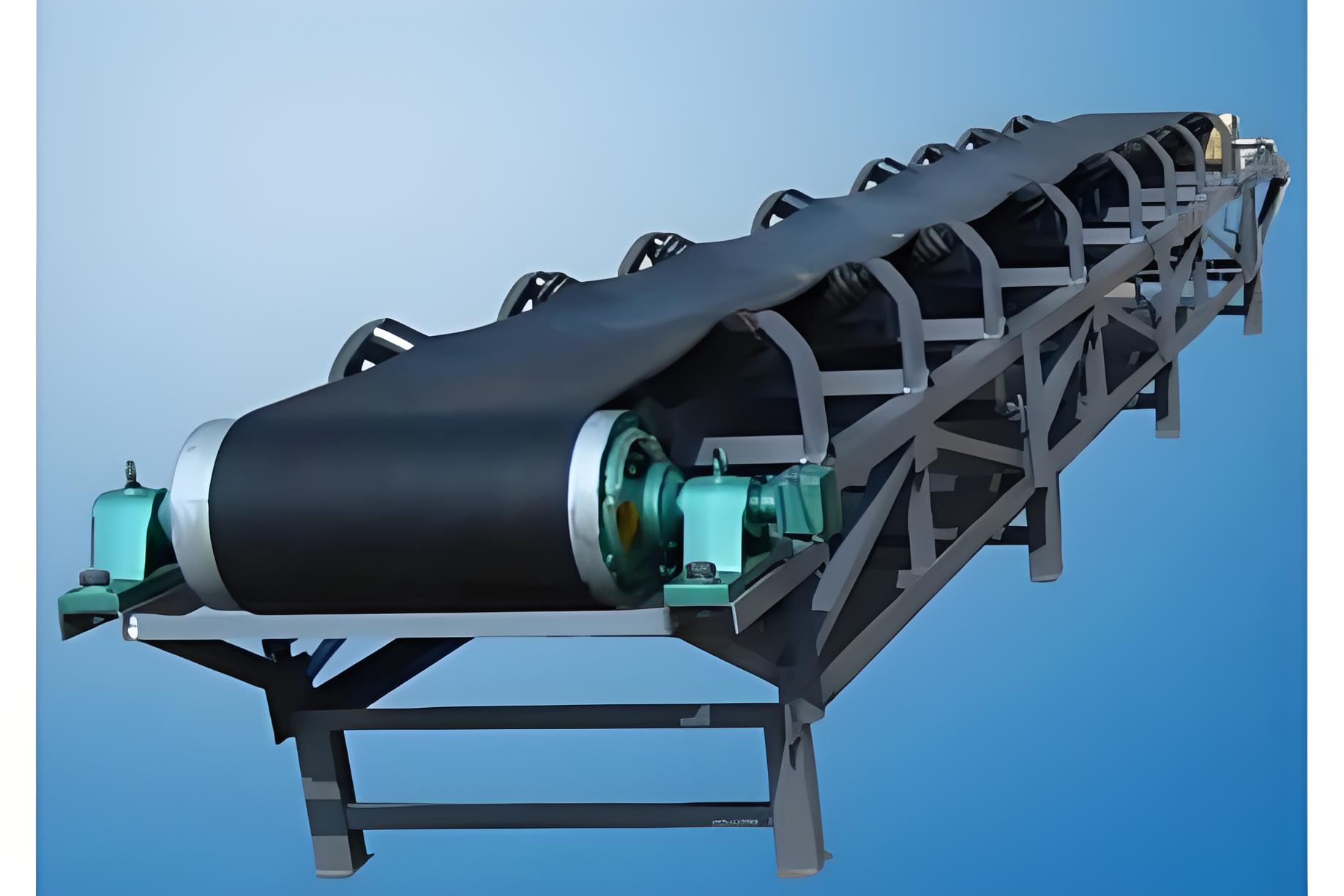
Heavy materials are often abrasive or angular. Crushed stone, gravel, ore, and similar materials can continuously wear the belt cover and may also cause cutting or tearing.
Rubber is generally better suited to severe abrasion and sharp materials, while PVC is more appropriate when abrasive contact is limited.
Temperature, moisture, dust, chemicals, and outdoor exposure can also affect belt selection.
Rubber and PVC are available in different constructions and compounds, so the actual operating temperature and environmental conditions should be considered before selecting the belt material.
The Difference Between Rubber and PVC Conveyor Belts for Heavy Materials becomes clearer when the actual material and operating conditions are considered.
Ore and mineral materials are often heavy, abrasive, and angular, with significant impact during loading. Rubber is generally preferred because abrasion resistance, impact resistance, and tensile strength are important.
Coal can be transported in large quantities and over significant distances. Rubber is generally more suitable for demanding coal handling where high capacity, continuous operation, and resistance to wear are required.
These materials can produce continuous abrasion and impact, particularly when large or angular particles are loaded onto the belt. Rubber is generally preferred when the conveying conditions are severe.
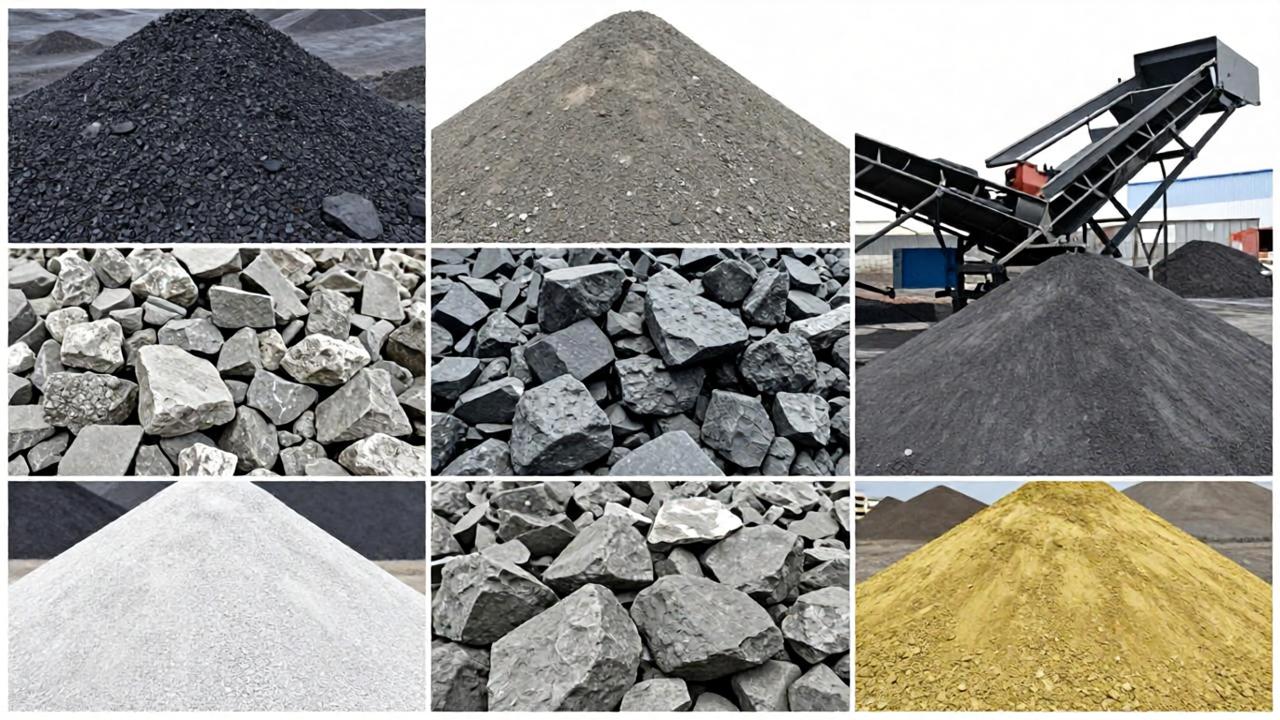
Cement and clinker conveying can involve abrasive materials and elevated temperatures. Belt selection should therefore consider both abrasion resistance and the actual material temperature.
Heavy does not automatically mean that a rubber belt is required.
A heavy carton or packaged component may create much less impact and abrasion than a similar-weight piece of rock. On a short indoor conveyor with controlled loading, PVC may still be suitable.
The important factor is application severity, not material weight alone.
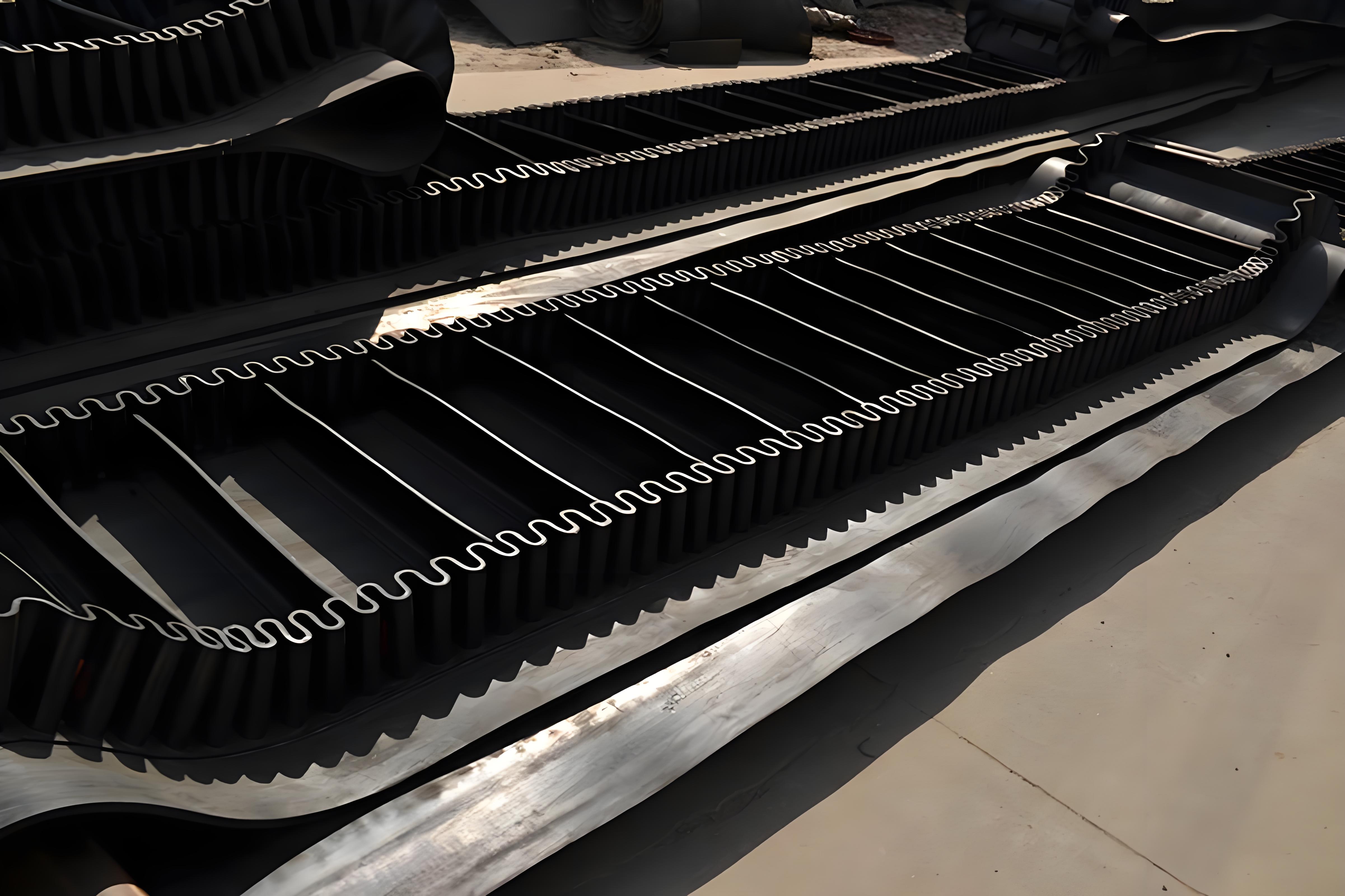
Rubber conveyor belts can be specified with cover compounds designed for demanding abrasive conditions. This makes rubber a common choice for rock, aggregate, ore, coal, and other abrasive bulk materials.
Heavy materials can generate significant impact when loaded from a height. Rubber generally provides better resistance to repeated mechanical shock than standard PVC constructions.
Sharp or angular materials can cut the belt cover and initiate tears. Rubber is generally better suited to applications where cutting, gouging, and tear propagation are concerns.
This is particularly important for crushed rock, aggregate, mining materials, and construction debris.
High-capacity and long-distance conveyors can place substantial tension on the belt. Reinforced rubber belt constructions can provide the strength required for demanding conveying systems.
Required belt strength depends on capacity, belt width, conveyor length, incline, speed, and system design.
Expand When Is a PVC Conveyor Belt a Better Choice?
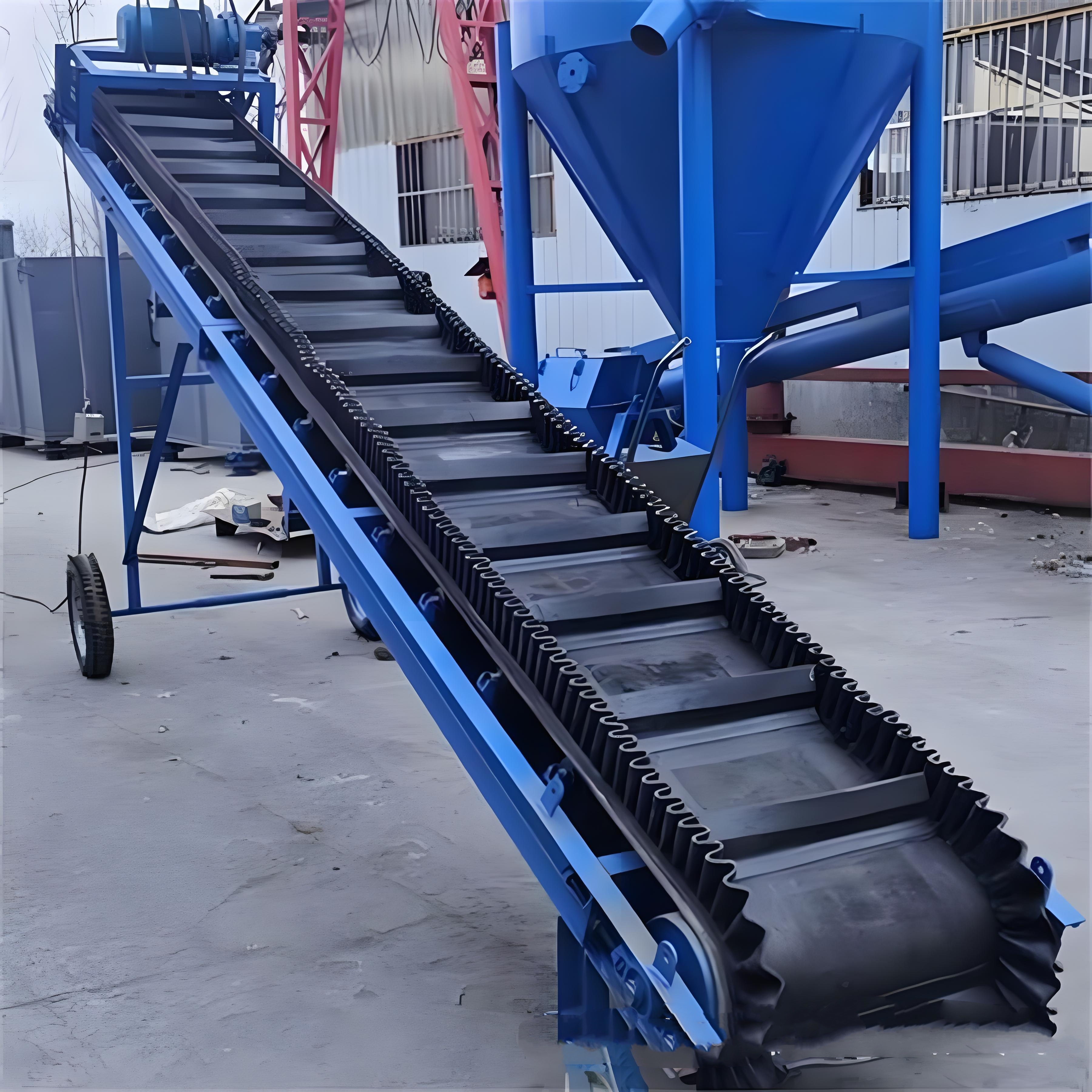
PVC conveyor belts can be a better choice when severe abrasion and impact are not the primary concerns.
PVC may be suitable when the application prioritizes:
Low belt weight: Easier handling during installation and maintenance.
Easy cleaning: Useful for clean indoor conveying.
Chemical resistance: Suitable for many applications depending on the formulation.
Moisture resistance: Useful where moisture exposure is expected.
Lower initial cost: Often attractive for light-to-medium duty applications.
Typical applications include packaging, logistics, parcel handling, light manufacturing, and selected clean-processing environments.
When heavy material is also abrasive, angular, or dropped onto the belt with significant impact, rubber should normally be considered first.
Expand Can PVC Conveyor Belts Handle Heavy Materials?
Yes, PVC conveyor belts can handle some heavy materials, but the complete operating condition must be evaluated.
Before selecting PVC for a heavy material, consider:
Material abrasiveness
Particle or package size
Impact during loading
Required conveying capacity
Conveyor length and belt tension
Operating temperature
For example, a heavy packaged product moving smoothly on a short indoor conveyor can create relatively low mechanical stress. Crushed limestone with a similar weight can create much greater abrasion, impact, and cutting.
Therefore, the Difference Between Rubber and PVC Conveyor Belts for Heavy Materials should be evaluated according to the actual conveyor conditions rather than weight alone.
For heavy, abrasive, angular, or high-impact bulk materials, rubber is generally the more suitable choice. PVC can remain practical when the material is heavy but the conveying conditions are controlled and within the belt's design capabilities.
PVC generally has a lower initial purchase cost and lower belt weight, making it attractive for suitable light-to-medium applications.
Rubber generally requires a higher initial investment, especially when reinforced construction or specialized cover compounds are required.
However, purchase price is only one part of the total operating cost.
A belt that wears rapidly or suffers repeated impact damage may require more frequent replacement. Replacement also involves labor, maintenance, installation, and production downtime.
For demanding applications, compare:
Initial Cost + Maintenance + Replacement Frequency + Downtime
This provides a more useful view of Total Cost of Ownership than purchase price alone.
A higher initial belt cost can therefore be justified when improved durability reduces replacement and downtime in severe conveying conditions.
| Application | Generally Preferred Choice | Main Reason |
|---|---|---|
| Mining | Rubber | Heavy loads, abrasion, and impact |
| Quarrying | Rubber | Abrasive and angular materials |
| Aggregate | Rubber | Continuous abrasion and impact |
| Coal | Rubber | High-volume bulk conveying |
| Limestone | Rubber | Heavy abrasive material |
| Cement and clinker | Rubber | Demanding bulk handling |
| Heavy packaged goods | Depends on conditions | Impact and abrasion may be limited |
| Packaging | PVC | Lightweight and economical |
| Logistics | PVC | Controlled indoor conveying |
| Light manufacturing | PVC | Light-to-medium duty |
This table provides a general starting point. Final belt selection should be based on the actual conveyor conditions.
When comparing the Difference Between Rubber and PVC Conveyor Belts for Heavy Materials, focus on the conditions that determine belt failure and operating cost.

Choose rubber when the material is:
Heavy and abrasive
Sharp or angular
Loaded with significant impact
Transported continuously at high capacity
Conveyed over long distances or under high belt tension
PVC may be suitable when the material is:
Light to medium duty
Packaged or relatively smooth
Handled indoors under controlled conditions
Not exposed to severe abrasion or impact
The correct choice should always be based on the complete application rather than one specification.
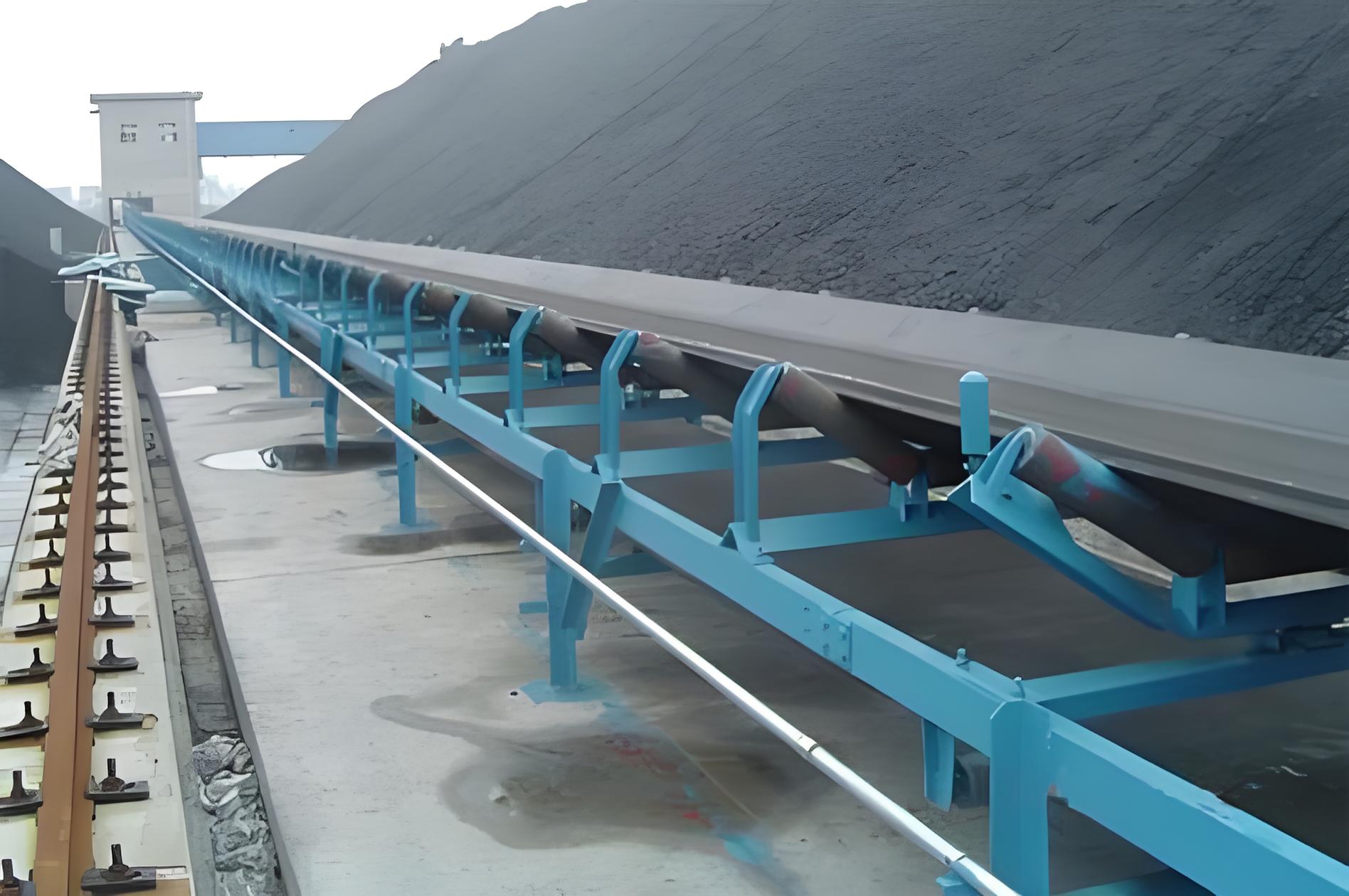
To select a suitable belt and prepare an accurate quotation, provide:
Material: Type of material being conveyed.
Bulk Density: Approximate material density.
Capacity: Required conveying capacity.
Maximum Lump Size: Largest particle or package.
Belt Width: Required belt width.
Conveying Length: Approximate conveyor length.
Incline: Horizontal or inclined conveyor.
Material Temperature: Normal and maximum temperature.
Loading Condition: Dropped onto the belt or loaded gradually.
Operating Environment: Indoor, outdoor, wet, dusty, or chemical conditions.
Providing these parameters helps determine the appropriate belt construction, reinforcement, cover characteristics, and overall specification.
Need Help Selecting a Conveyor Belt?
Dahan can evaluate these operating conditions and recommend a suitable conveyor belt construction for the application.
Is rubber or PVC better for heavy materials?
For heavy, abrasive, angular, or high-impact bulk materials, rubber is generally the better choice. PVC can still be suitable for certain heavy packaged materials when impact and abrasion are limited.
Can PVC conveyor belts be used for mining or aggregate?
PVC is generally not the first choice for severe mining or aggregate applications because these materials can create high abrasion, impact, cutting, and continuous loading. A properly specified rubber conveyor belt is normally more suitable.
Is a rubber conveyor belt more expensive than PVC?
Rubber generally has a higher initial cost. However, maintenance, replacement frequency, installation, and downtime should also be considered. In demanding applications, the higher initial investment may be justified by longer service performance.
The Difference Between Rubber and PVC Conveyor Belts for Heavy Materials ultimately depends on application severity.
Choose rubber when handling heavy, abrasive, angular, high-impact, or high-capacity bulk materials. Rubber is generally the preferred starting point for mining, quarrying, aggregate, coal, limestone, cement, and other demanding applications.
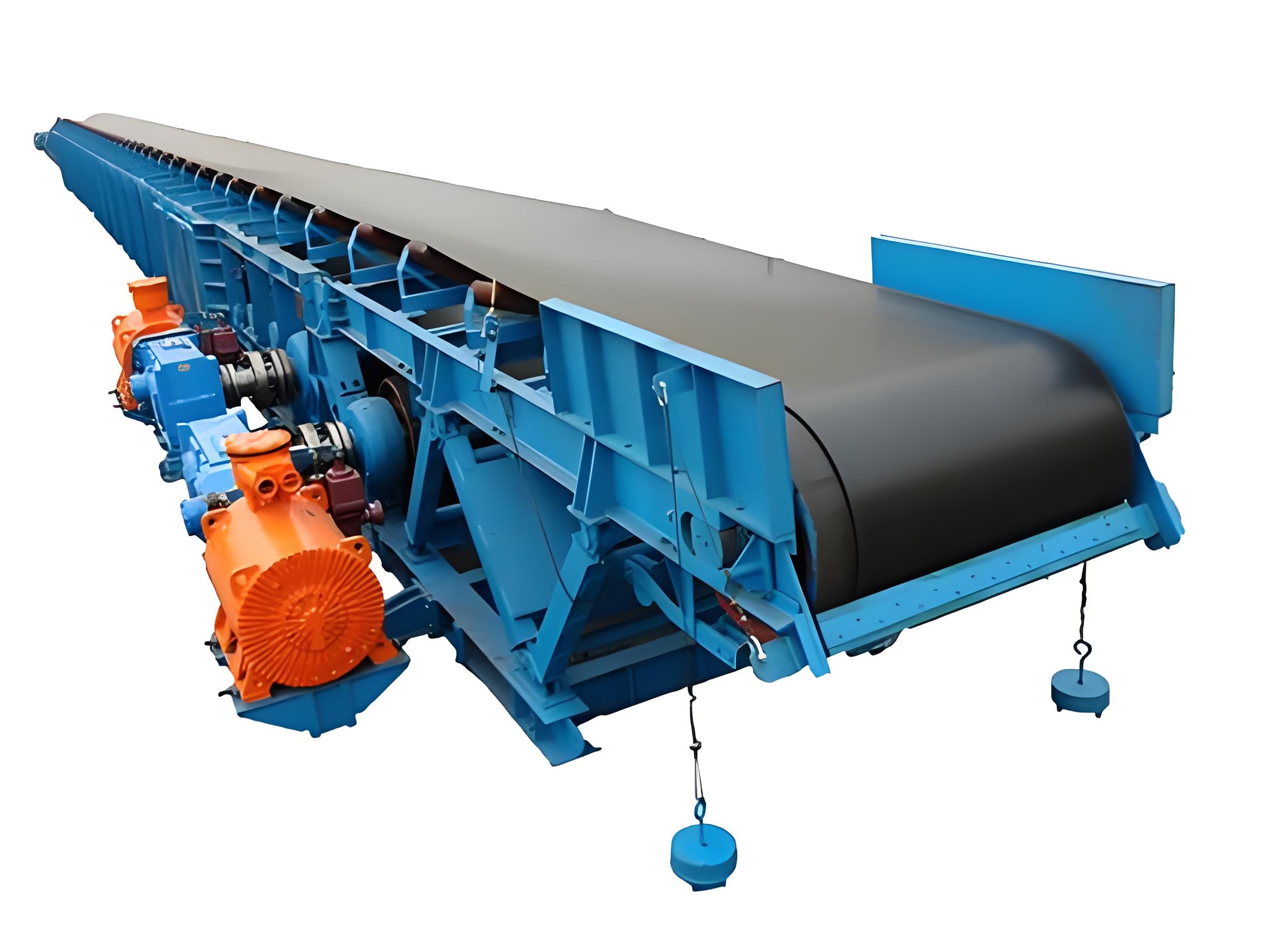
Choose PVC when the application is light or medium duty and priorities include low belt weight, easy cleaning, chemical resistance, moisture resistance, and lower initial cost.
Request a Conveyor Belt Recommendation
For a reliable belt selection, provide the material type, capacity, particle size, belt width, conveying length, loading condition, temperature, and operating environment. Dahan can use these parameters to help determine a suitable belt construction and prepare a quotation.
A good belt selection is not simply about choosing the stronger material. It is about matching the belt to the load, abrasion, impact, tension, temperature, environment, and total operating cost.
CONTACT
WhatsApp:+86 18339211009
Email:sale@xxdahan.com
Add:China, Henan Province, Xinxiang City.Yanjin county forest park gate to the west 1000 meters north road