E-mail: sale@xxdahan.com
Follow Us 


In today's fast-paced logistics, warehousing, and manufacturing environments, efficiency and flexibility are paramount. Fixed conveyor systems, while reliable, often fall short when operations require adaptability across multiple workstations or temporary setups. This is where the Mobile Conveyor Belt for light materials proves indispensable.
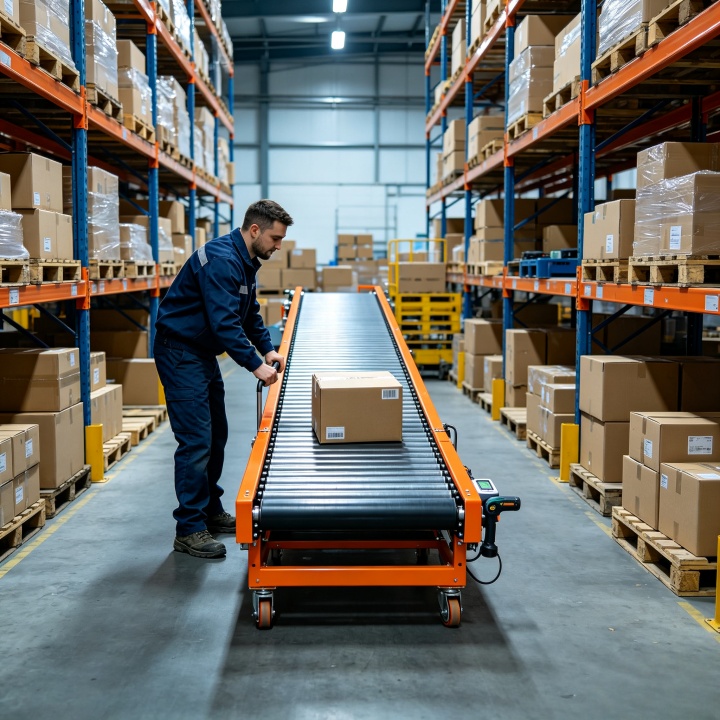
Designed for transporting irregularly shaped and lightweight items—such as postal parcels, clothing, paper products, plastic goods, and packaged foods—this portable equipment combines the reliability of traditional belt conveyors with unmatched mobility and versatility. Whether you are unloading trucks, sorting packages, or feeding assembly lines, a mobile conveyor belt offers a cost-effective solution to enhance productivity and reduce manual labor.
A mobile conveyor belt is more than just equipment—it's a core tool for enhancing warehouse flexibility. Unlike stationary systems, these units are mounted on wheeled frames, allowing a single operator to reposition them between workstations, loading docks, or even different job sites.
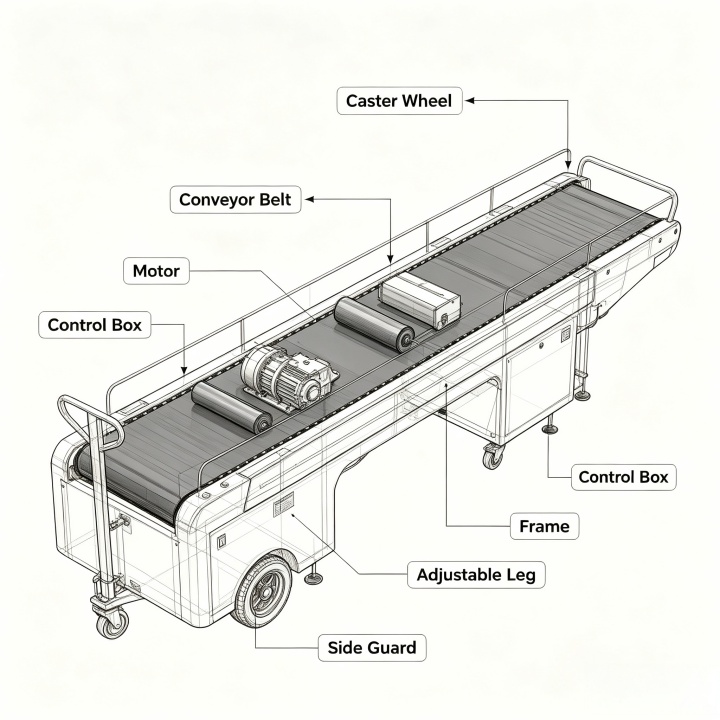
Key components that make this solution effective include:
With the ability to handle incline angles up to 30° and accommodate various belt materials (PVC, PU, rubber, felt), this portable system delivers quiet, gentle, and energy-efficient operation—making it an indispensable asset for modern logistics environments.
Electrical control: Start/stop, emergency stop, and variable frequency speed control
Light-duty mobile conveyors typically use belts made from materials suited to the application:
| Belt Material | Key Properties | Typical Applications |
| PVC (Polyvinyl Chloride) | Durable, oil-resistant, flame-retardant; thickness options 1.0–9.0 mm | Logistics, packaging, security inspection |
| PU (Polyurethane) | Transparent, non-toxic, food-grade; thickness 0.8–2.5 mm | Food processing, pharmaceuticals |
| Rubber | Abrasion-resistant, high durability | Heavy-duty or rough material handling |
| Felt | Soft surface, lint-free | Transporting fragile items |
The defining advantage of a mobile conveyor is its ability to be moved and positioned by a single person. Equipped with swivel casters—often with brakes for stability during operation—these units can be easily rolled to loading docks, between warehouse aisles, or directly into containers. This flexibility allows a single conveyor to serve multiple dock doors or workstations, reducing the need for multiple fixed systems.
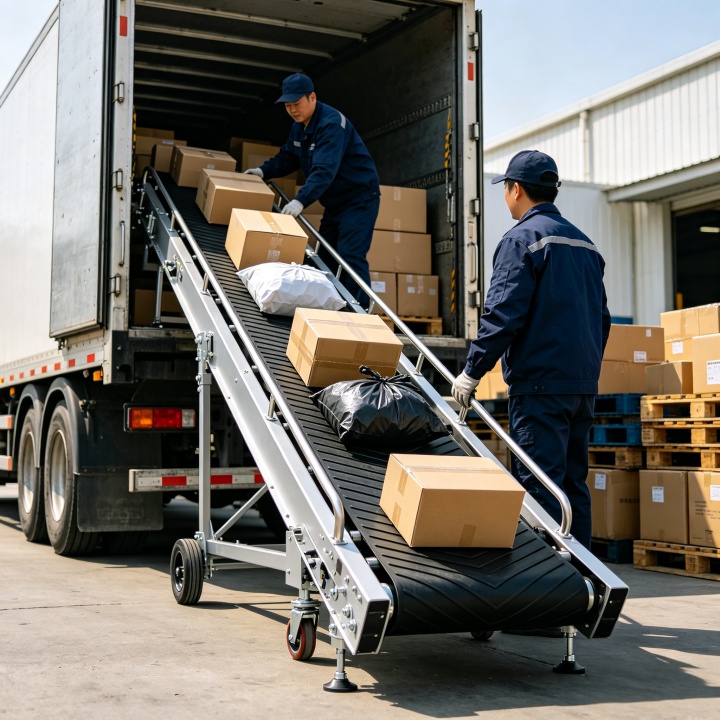
Unlike vibrating or screw conveyors, belt conveyors create no relative movement between the belt surface and the material being transported. This minimizes product damage—a critical requirement when handling delicate items like packaged foods, electronics, or finished goods. The flat belt surface accommodates items of various shapes and sizes without the constraints of side guides.
Many mobile conveyor belts for light materials feature adjustable incline angles, typically up to 30°. This allows for:
Loading and unloading trucks at dock height
Connecting different floor levels within a facility
Feeding hoppers or processing equipment at elevation
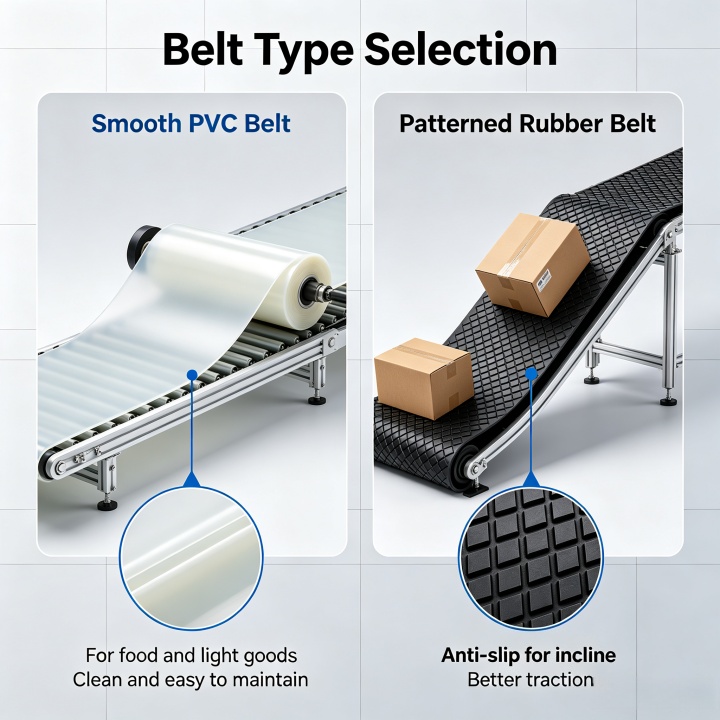
For steeper inclines, patterned belts (such as diamond, herringbone, or granular patterns) can be specified to improve grip and prevent slippage.
Compared to roller or chain-driven conveyors, belt conveyors produce significantly lower noise levels. This makes them suitable for environments requiring low ambient noise, such as office-adjacent warehouses, retail distribution centers, or healthcare logistics.
Light-duty mobile conveyors feature simple mechanical structures with fewer moving parts than complex automated systems. Modular designs allow for quick assembly, easy cleaning, and simplified maintenance. Additionally, the lightweight belt materials reduce the motor power required to drive the system, resulting in energy savings.
Truck loading and unloading
Sorting and cross-docking operations
Order picking and packing lines
Transporting packages, boxes, and polybags
Sorting irregularly shaped items
Connecting to automated sorting systems
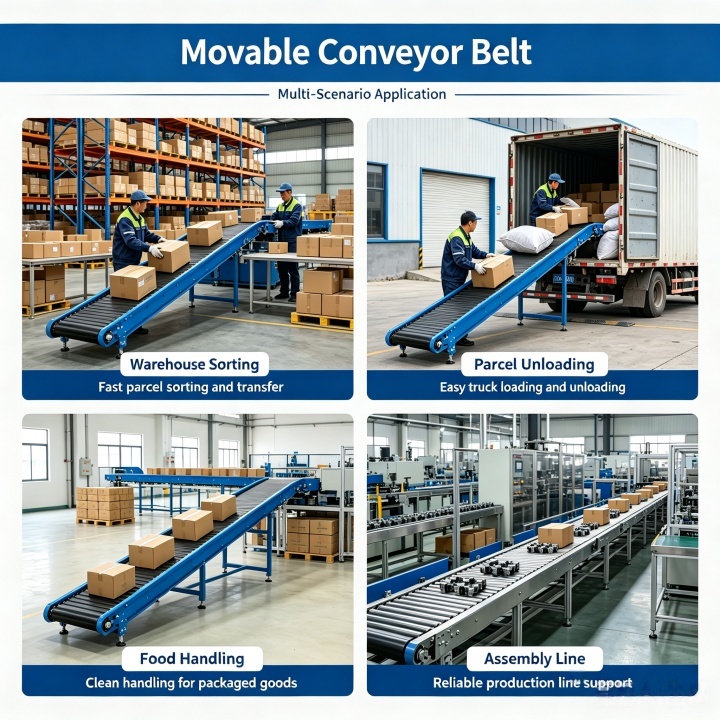
Feeding lightweight components to assembly stations
Moving work-in-progress between production stages
Temporary lines for seasonal production spikes
Transporting fruits, vegetables, and packaged food
Inclined conveying for washing or grading lines
Conveying packaged medicines and medical supplies
Cleanroom-compatible PU belts for hygiene-sensitive applications
When selecting a mobile conveyor belt for light materials, consider the following parameters:
| Parameter | Typical Range | Notes |
| Belt width | 200–1200 mm | Wider belts for bulk items |
| Conveyor speed | 10–45 m/min | Variable speed options available |
| Max load per item | Up to 80 kg | Heavier capacities with reinforced belts |
| Max incline angle | Up to 30° | Greater angle may require patterned belts |
| Conveying direction | Bi-directional | Reversible for loading/unloading flexibility |
| Power supply | Single-phase or three-phase | Depending on motor requirements |
Consider the weight, size, shape, and fragility of the items you handle. For delicate items, choose smooth PVC or PU belts; for rough or abrasive items, rubber belts provide greater durability.
Determine whether you need horizontal, inclined, or variable-angle conveying. If your facility requires frequent changes in layout, opt for a highly portable model with swivel casters and quick-release frames.
Temperature: Most systems operate in -25°C to +40°C; high-temperature applications may require specialized belts-8
Humidity: Keep below 80% for standard electronics; IP-rated systems available for wet environments
Cleanliness: Food-grade or pharmaceutical applications require PU or FDA-compliant belts
Some mobile conveyors can be connected in series—up to three units—to extend conveying distance when needed. This modular approach allows you to start small and expand as operations grow.
What is the maximum incline angle for a mobile conveyor belt handling light materials?
Standard units can handle up to 18°–30° incline. For steeper angles, patterned belts with diamond or herringbone textures can maintain grip on inclines up to 45°.
Can I customize the belt material for my specific application?
Yes. Leading suppliers offer customization in belt material (PVC, PU, rubber, felt), width, length, pattern coverage, and joint method (mechanical buckle or vulcanized joint).
Is it easy to move the conveyor within my facility?
Absolutely. Most units are equipped with swivel casters and handles, allowing a single operator to reposition the conveyor. Brakes on casters lock the unit in place during operation for stability.
Can multiple mobile conveyors be linked together?
Yes. Many models allow up to three units to be connected in series, extending the total conveying distance to accommodate longer workflows.
What maintenance is required?
Regular maintenance is minimal: inspect belt tension, clean the belt surface, and check for wear on rollers and bearings. Modular designs simplify parts replacement.
A mobile conveyor belt for light materials is a versatile, cost-effective investment for any operation handling lightweight goods. Its portability, gentle handling characteristics, and adaptability to various workflows make it an essential tool for modern logistics, warehousing, and manufacturing environments.
By choosing the right belt material, configuration, and incline capability, businesses can significantly reduce manual labor, improve loading/unloading efficiency, and create safer, more ergonomic workspaces.
Ready to explore mobile conveyor belt solutions for your operation? Contact our team for a customized recommendation based on your specific material handling needs.
CONTACT
WhatsApp:+86 18339211009
Email:sale@xxdahan.com
Add:China, Henan Province, Xinxiang City.Yanjin county forest park gate to the west 1000 meters north road