E-mail: sale@xxdahan.com
Follow Us 


Rubber Conveyor Belt Maintenance and Common Troubleshooting Guide explains how to inspect, maintain and troubleshoot a rubber conveyor belt before minor problems develop into serious damage or unplanned downtime. The main inspection areas include belt tracking, tension, wear, splices, pulleys, idlers, loading points and material buildup.
Effective maintenance starts with identifying the symptom, checking the surrounding conveyor components, finding the root cause and verifying the result.
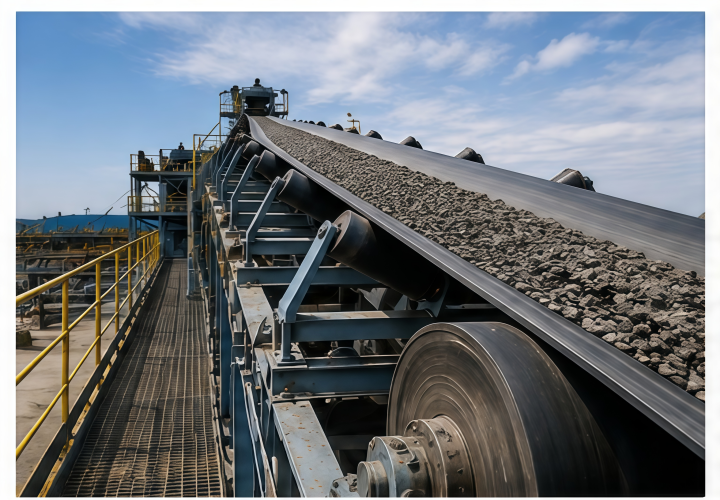
A practical maintenance program can be divided into daily, weekly and periodic inspections.
Check whether the belt remains centered and whether abnormal noise, vibration, rubbing or material buildup is visible.
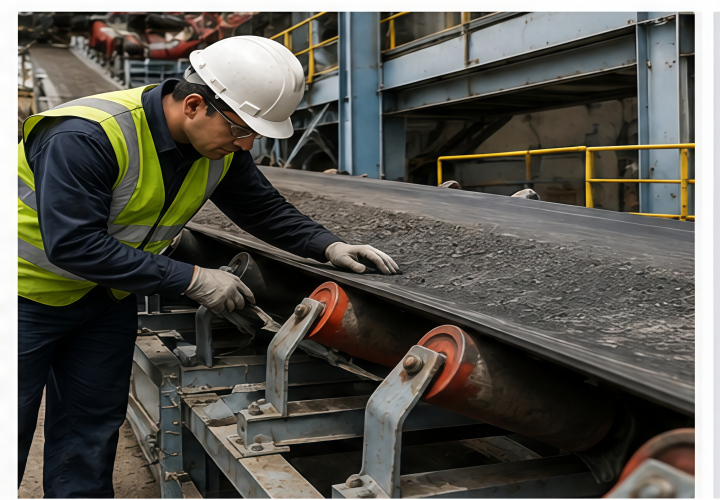
Inspect the belt surface for cuts, cracks, tears and unusual wear. Check belt edges, visible splice areas, pulleys, idlers and loading points.
Check belt tension and take-up movement. Inspect pulley surfaces, accessible idlers, belt cleaners, loading areas and conveyor structure.
Investigate uneven wear because it may indicate alignment, loading or component problems.
Inspect belt wear condition, splice integrity, cover deterioration, pulleys, idlers, take-up components and overall alignment.
Inspection intervals should reflect actual operating conditions and recurring failure patterns.
| Problem | Symptoms | Common Causes | First Action |
|---|---|---|---|
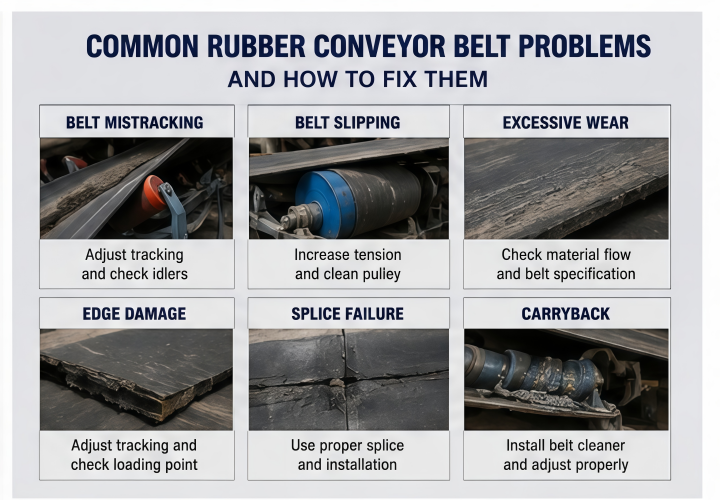
| Belt mistracking | Belt moves to one side | Misalignment, uneven loading, buildup, splice condition | Check belt path and alignment |
| Belt slipping | Belt slips at drive area | Low traction, tension or overload | Check tension and drive condition |
| Excessive wear | Cover wears quickly | Abrasion, impact or rubbing | Locate wear and inspect the cause |
| Edge damage | Frayed or worn edges | Mistracking or structure contact | Check tracking and frame |
| Splice failure | Joint lifts or separates | Splice, tension or alignment problems | Inspect splice and belt condition |
| Belt cracking | Surface cracks | Aging, heat or environment | Check operating conditions |
| Carryback | Material remains on return side | Cleaning problems or sticky material | Inspect cleaning and buildup |
| Belt stretching | Frequent take-up adjustment | Elongation, load or tension issues | Check belt and take-up |
Common signs include one-sided edge wear, contact with the structure and uneven material discharge.
Possible causes include misaligned pulleys or idlers, off-center loading, material buildup, structural problems or splice misalignment.
First identify where the belt starts moving away from center, then inspect nearby components and loading conditions. If mistracking begins at a particular conveyor section, check that section first rather than repeatedly adjusting the entire belt path.
Belt slipping usually occurs near the drive pulley when sufficient traction is not maintained.
Check belt tension, pulley condition, contamination and operating load. If slipping occurs mainly during startup or heavy loading, examine load, tension and available traction before further adjustment.
Increasing tension should not automatically be used as the solution because excessive tension can increase stress on the belt and splice.
Rapid or localized wear can result from abrasive material, impact, uncontrolled loading or contact with conveyor components.
Determine where the wear occurs and inspect the loading area, belt path and nearby components before changing the belt specification.
Edge damage is often related to tracking problems.
Look for fraying, cuts, exposed reinforcement or greater wear on one side. Check pulley alignment, idler position, conveyor structure and loading conditions.
Replacing the belt without correcting repeated frame contact may not solve the problem.
Cracks may develop because of aging, repeated flexing, heat or unsuitable environmental exposure.
Inspect crack depth and distribution and consider the operating conditions where the cracks appear. Localized damage may be repairable, while widespread cracking may indicate that replacement is more appropriate.
Warning signs include edge lifting, separation, cracking or abnormal thickness around the joint.
Check whether the splice remains straight and whether its condition changes under load. If the same splice fails repeatedly, inspect belt tension, tracking, alignment and operating conditions instead of repairing the joint alone.
Carryback occurs when material remains attached to the belt after discharge.
Buildup around pulleys and return components can affect belt movement and contribute to tracking and wear problems. Inspect belt cleaners and check whether the conveyed material is unusually wet or sticky.
Some elongation can occur during operation, but repeated take-up adjustment may indicate excessive stretching or another underlying problem.
Check belt condition, operating load, tension and take-up travel instead of continuing to increase tension.
Cuts and punctures should be inspected promptly, especially when conveying large, sharp or heavy material.
Determine whether the damage affects only the rubber cover or also the reinforcing structure. Then inspect the loading area and belt path for the source of the damage.
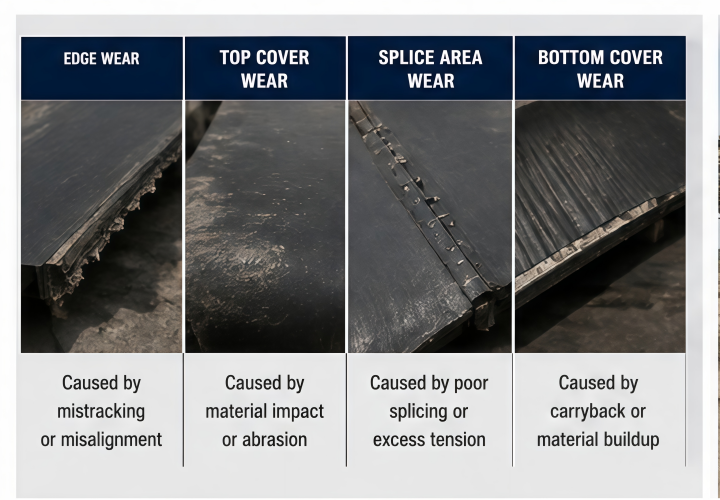
Wear location can provide useful clues about the underlying problem.
| Wear Location | Possible Cause | What to Check |
|---|---|---|
| One belt edge | Mistracking or frame contact | Tracking and alignment |
| Both edges | Structural contact or loading | Belt path and loading |
| Center of top cover | Abrasion or impact | Material and loading |
| Bottom cover | Return-side friction or idler problems | Return idlers and contact points |
| Around splice | Joint stress or alignment | Splice and belt tension |
| Localized area | Damaged or contaminated component | Nearby pulley, idler and structure |
Location-based diagnosis can help distinguish general belt wear from damage caused by a specific component or operating condition.
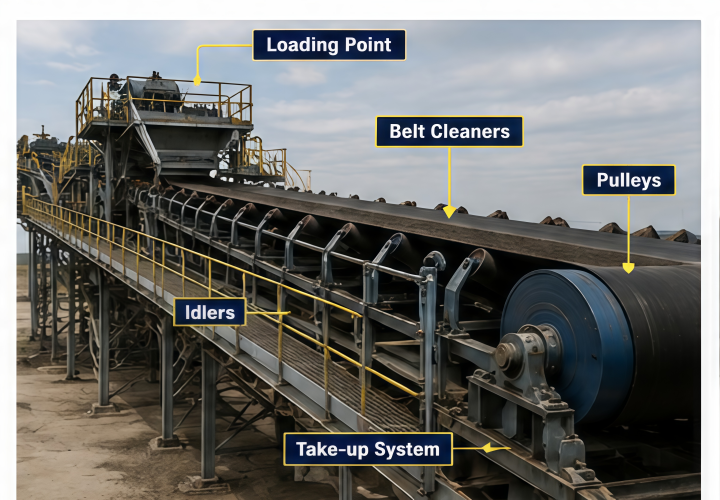
An important principle in Rubber Conveyor Belt Maintenance and Common Troubleshooting Guide is that a belt problem is not always caused by the belt itself.
Before replacement, inspect pulleys, idlers, conveyor structure, loading points, take-up system, cleaning components and splices.
A new belt may experience the same problem again if the original cause has not been corrected. This whole-system approach is particularly important when dealing with repeated mistracking, premature wear or splice failure.
Repeated adjustment without root-cause analysis can create temporary corrections.
A belt that continually mistracks should not simply receive repeated tracking adjustments. A belt that repeatedly slips should not automatically receive more tension. A splice that repeatedly fails should not simply be repaired without investigating alignment and operating stress.
This Rubber Conveyor Belt Maintenance and Common Troubleshooting Guide approach helps separate the visible symptom from the condition actually causing it.
Before inspecting, cleaning, adjusting or repairing a conveyor, follow the site's required isolation and lockout procedures and verify that the equipment cannot start unexpectedly.
Do not clear trapped material or work around moving components while the conveyor is operating.
Localized damage may be repairable when the remaining belt structure is suitable for service.
Replacement should be considered when the belt has extensive cracking, severe wear, major structural damage, excessive elongation or repeated splice failures.
The decision should consider damage extent, remaining belt condition, splice integrity, operating environment and repair history.
Most importantly, correct the cause of repeated failure before installing a replacement belt.
Rubber Conveyor Belt Maintenance and Common Troubleshooting Guide should also consider belt selection because maintenance performance depends partly on whether the belt suits the application.
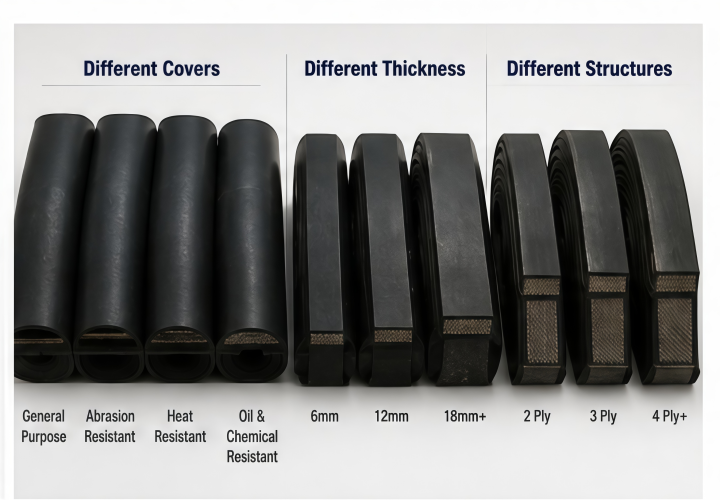
Belt width: Should match conveying capacity and loading conditions.
Tensile strength: Should suit the required tension and conveyor arrangement.
Cover properties: Should correspond to the material and operating environment.
Abrasion resistance: Important for abrasive materials.
Heat resistance: Important for elevated-temperature applications.
Oil resistance: Relevant where conveyed materials contain oil or grease.
Belt thickness: Influences wear capacity and service requirements.
The belt should be selected according to the complete application rather than belt width or purchase price alone.
Useful information includes belt width and length, existing thickness, required tensile strength, cover requirements, conveyed material, conveying capacity, belt speed, operating temperature, conveyor length and inclination, and current failure symptoms.
Photos of the existing belt, splice and conveyor arrangement can also help with technical evaluation.
Dahan can evaluate these requirements and recommend a suitable rubber conveyor belt according to the actual operating conditions.
Routine visual inspection should be part of normal operation, while detailed inspection intervals should reflect operating hours, material conditions and previous failure history.
Possible causes include pulley or idler misalignment, uneven loading, material buildup, structural problems or splice issues. Inspect the complete belt path before repeated adjustments.
Slipping may result from insufficient traction, unsuitable tension, excessive load, contamination or drive-pulley conditions. Identify the cause before further tension adjustment.
Maintain correct tracking, inspect conveyor alignment and prevent prolonged contact between the belt edge and surrounding structures.
Replacement should be considered when damage is widespread, reinforcement is compromised, cracking is extensive, elongation is excessive or repeated repairs are no longer practical.
Effective maintenance combines regular inspection, systematic troubleshooting and correct belt selection.
Mistracking, slipping, excessive wear, edge damage, cracking, splice failure, carryback and stretching should be investigated by considering both the belt and the surrounding conveyor system.
The purpose of Rubber Conveyor Belt Maintenance and Common Troubleshooting Guide is to help determine why a problem occurred, how to correct it and how to reduce repeated failure.
For a replacement project, provide the belt dimensions, operating conditions, conveyed material and current failure symptoms so the required belt can be evaluated correctly. Dahan provides rubber conveyor belt solutions for different industrial conveying requirements.
CONTACT
WhatsApp:+86 18339211009
Email:sale@xxdahan.com
Add:China, Henan Province, Xinxiang City.Yanjin county forest park gate to the west 1000 meters north road