E-mail: sale@xxdahan.com
Follow Us 


The price of a fabric reinforced conveyor belt varies widely, ranging from a few dollars to several tens of dollars per meter.
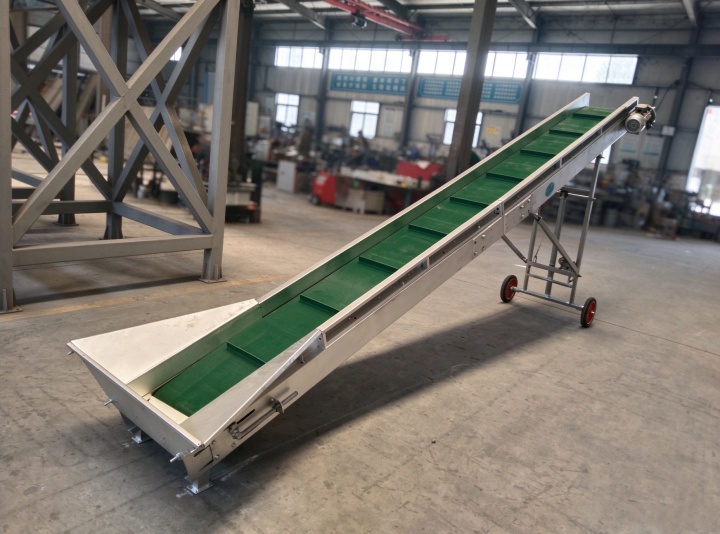
Some reference ranges commonly seen in the market: NN fabric belts are roughly USD 12–70 per meter, EP belts can drop to USD 5–8 per meter in bulk orders, and special specifications or small-batch orders will push the price up noticeably. But these figures cannot be used directly as a quotation—why can the price of the same "fabric reinforced conveyor belt" differ by ten times? The answer lies in five variables.
The material of the fabric plies is the first dividing line in pricing. EP (polyester-nylon) canvas has high initial modulus and low elongation, suitable for medium-to-long distance conveying, and its raw material cost is usually higher than NN. NN (nylon-nylon) canvas offers good flexibility and impact absorption, suitable for small pulley diameters and heavy-impact receiving conditions, with prices fluctuating with nylon chip costs. CC (cotton canvas) is used only for low-load, low-cost general-purpose lines and is the cheapest.
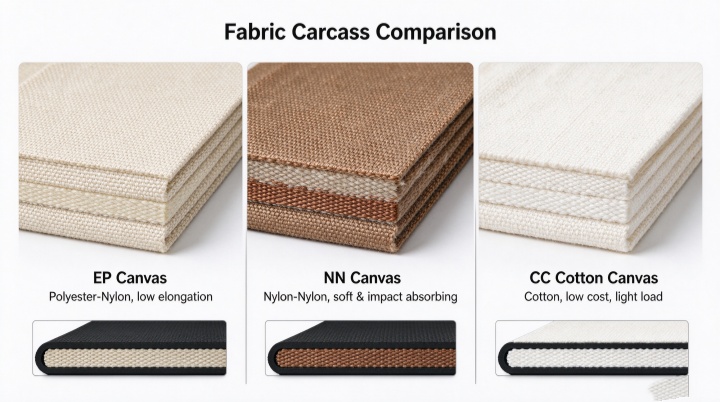
Choosing the material is not about picking the most expensive one, but matching it to conveying distance, pulley diameter and material impact characteristics. The unit price saved by choosing the wrong material is often paid back in excessive elongation and frequent splice failures.
Ply count directly determines fabric consumption and calendering labor. The DH series on the product page covers 2 to 5 plies and beyond; the more plies, the higher the unit price.
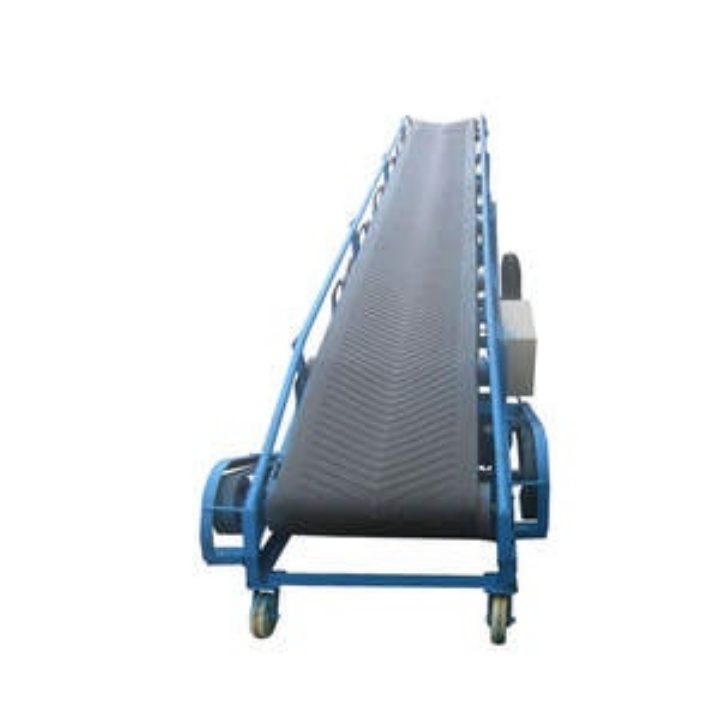
But more plies is not always better—working tension, belt width and pulley diameter determine the reasonable ply count, and over-specifying plies means paying for strength you will never use.
Grades such as DIN Y, W and X differ in wear resistance and rubber compound, and therefore in price. In the product page specification table, DH 160/2 has a 2 mm top cover, while DH 800/5 reaches 6 mm top cover, with bottom cover ranging from 1 mm to 3 mm.
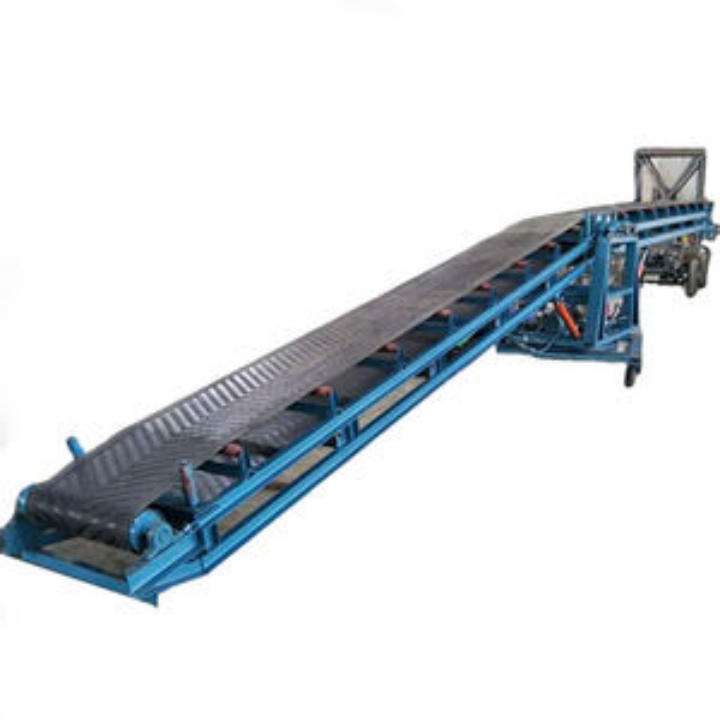
The thicker the cover and the higher the wear grade, the higher the rubber cost and belt weight, and naturally the higher the price per meter.
The product page covers belt widths from 300 mm to 2400 mm. Wider belts require greater calendering and vulcanization equipment capacity, pushing the unit price up. On order quantity, a small order of 100 meters versus a bulk order of 1000 meters or more can differ by more than double in price per meter. Providing accurate belt width and annual usage when requesting a quote is the only way a supplier can give a meaningful price.
Flame retardant (for underground coal mines), heat resistant (cement, metallurgy), oil resistant, food grade—each additional special property increases the cover rubber formulation and testing costs. The product page FAQ notes that flame-retardant fabric belts can be produced by modifying the cover rubber compound, and such customization is directly reflected in the unit price. The same applies to heat-resistant belts: ordinary fabric belts are suitable for -20°C to 80°C, and material temperatures above 120°C require a special heat-resistant cover rubber formulation.
Rather than asking "how much per meter," it is better to prepare a quotation checklist: belt width, fabric type (EP/NN/CC), ply count, top/bottom cover thickness and grade, working temperature, whether flame retardant/oil resistant/food grade is required, expected purchase quantity, conveying distance and material characteristics. Give this information to the supplier and you can get an actionable quotation within 24 hours, instead of a vague "a few dollars to several tens of dollars."
The price of a fabric reinforced conveyor belt is ultimately determined by the working conditions, not by "how much per meter." The unit price saved by choosing the wrong specification will be paid back in downtime, replacement and shortened service life. Confirm the parameters against the specification table first, then discuss price—that is the correct order.
CONTACT
WhatsApp:+86 18339211009
Email:sale@xxdahan.com
Add:China, Henan Province, Xinxiang City.Yanjin county forest park gate to the west 1000 meters north road