E-mail: sale@xxdahan.com
Follow Us 


A heavy duty belt conveyor is widely used in mining, coal, aggregate and metallurgy industries for continuous transportation of heavy and bulk materials.
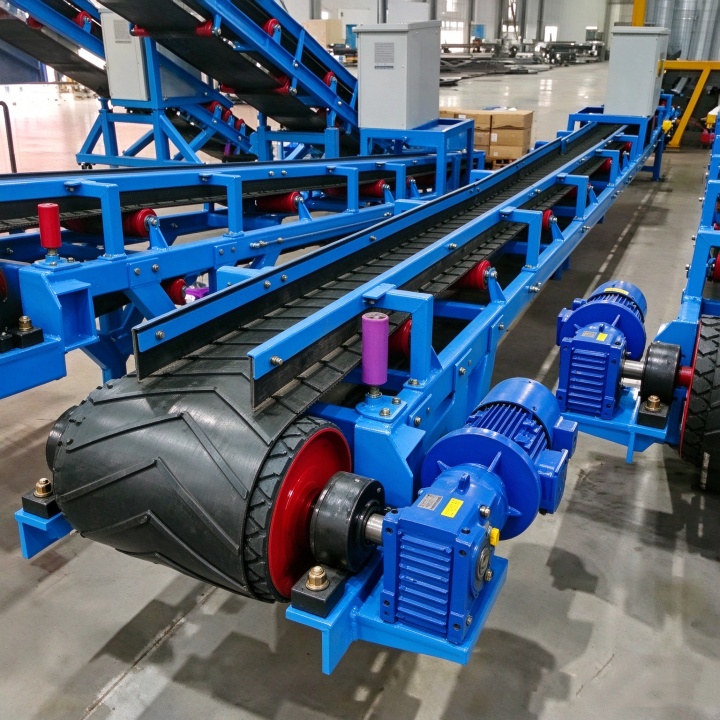
When you choose heavy duty belt conveyor, you should not only focus on conveying capacity. It is necessary to confirm proper equipment configuration by combining material characteristics, conveying route, belt specifications and driving power.
Materials vary in particle size, weight, moisture and temperature, which bring different requirements for the conveyor belt and equipment structure. When you choose heavy duty belt conveyor, pay close attention to whether the material will abrade the belt, bring strong impact or stick to the belt during conveying.
| Material Type | Conveying Characteristics | Configuration Recommendations |
| Large Lump Ore | Heavy weight, strong impact | Thickened wear-resistant conveyor belt, add material drop buffer device |
| Coal | Large conveying capacity, prone to dust generation | Select belt width according to particle size, add dust-proof structure if necessary |
| Sand and Gravel, Crushed Stone | Obvious wear on the belt | Choose wear-resistant rubber conveyor belt |
| Wet and Sticky Materials | Easily adhere to the belt | Equip with a suitable cleaner to reduce material residue |
| High-Temperature Clinker | High conveying temperature | Use heat-resistant conveyor belt |
Conveying capacity is a key reference when you choose heavy duty belt conveyor. Generally speaking, higher conveying capacity requires larger belt width and running speed. These parameters cannot be determined separately, and you also need to consider material bulk density, maximum particle size and loading cross-section.
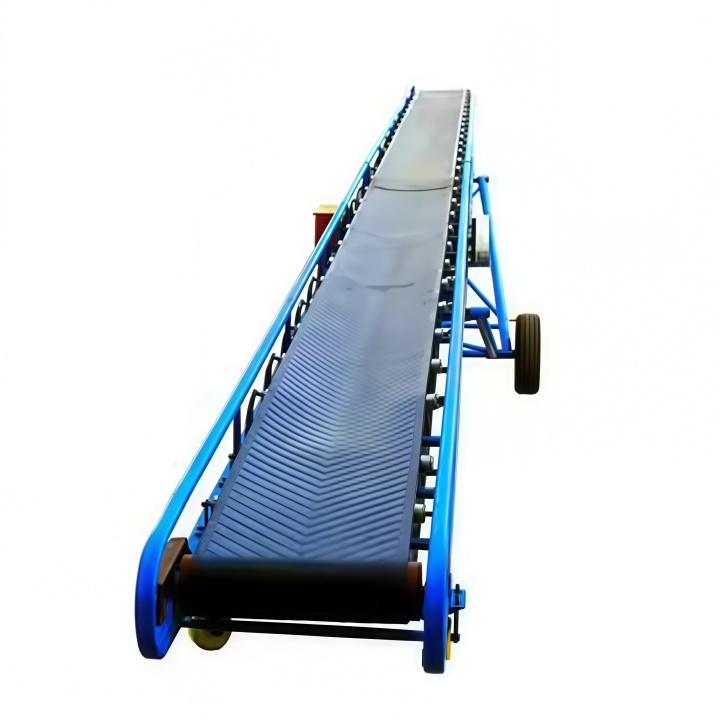
Belt width mainly determines the loading space for materials. For large lump ore, enough width should be reserved to prevent material spillage. For fine materials such as coal powder and sand, confirm the width according to bulk density and actual loading volume.
Belt speed affects the throughput per unit time. Higher speed can boost conveying capacity, yet excessive speed may lead to material spillage, dust emission and accelerated equipment wear.
Therefore, you cannot simply raise the speed to meet production targets. Belt width, speed and material load should be well matched when you choose heavy duty belt conveyor.
Conveying route directly determines the driving type, belt structure and tension configuration of the heavy duty belt conveyor. Different routes have different priorities for consideration when you choose heavy duty belt conveyor.
| Conveying Method | Main Selection Focus | Configurations to Pay Attention To |
| Horizontal Conveying | Conveying distance, material load | Drive power, tensioning device, idlers |
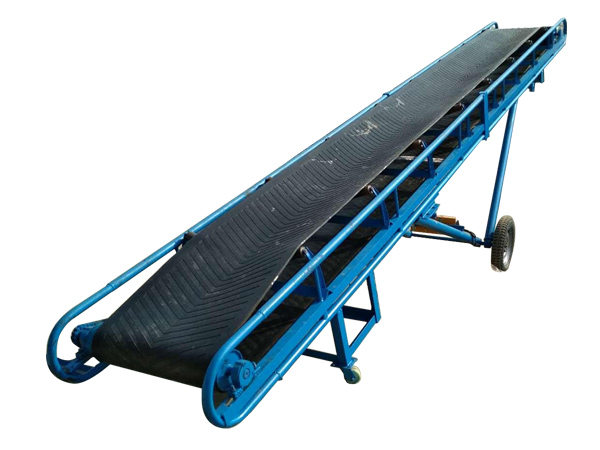
| Inclined Conveying | Inclination angle, material anti-slip capability | Patterned belt, anti-slip structure, drive power |
| Long-Distance Conveying | Belt tension, running resistance | Drive pulley, tensioning device, multi-drive configuration |
When you choose heavy duty belt conveyor, the conveyor belt is in direct contact with materials. Its material and surface structure should fit the application environment. Common types and their applicable scenarios are as follows:
| Conveyor Belt Type | Applicable Working Conditions | Main Features |
| Ordinary Rubber Conveyor Belt | Coal, sand and gravel, ordinary ore | Suitable for conveying common materials at normal temperature |
| Wear-Resistant Conveyor Belt | Ore, crushed stone, coke | Good surface wear resistance, suitable for materials with high wear |
| Heat-Resistant Conveyor Belt | High-temperature materials such as cement clinker and sintered ore | Can adapt to material conveying within a certain temperature range |
| Patterned Conveyor Belt | Conveying lines with a certain inclination angle | Increases belt surface friction to reduce material slipping |
Motor power cannot be decided only by conveying capacity. It is also related to conveying distance, lifting height, material weight and running resistance.
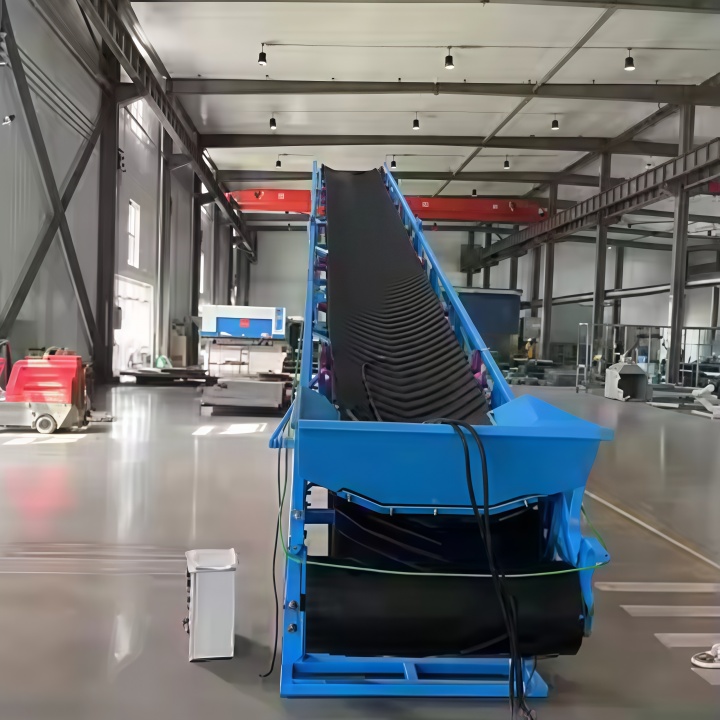
For example, with the same throughput, horizontal conveying and upward inclined conveying require different motor power. Inclined conveying needs extra power to lift materials besides overcoming running resistance of the belt and materials. Higher lifting height usually means larger required driving power when you choose heavy duty belt conveyor.
Besides, take the starting mode and running cycle into account. If the equipment frequently starts under full load, check the starting torque of the motor. For long-time continuous operation, consider the motor duty cycle and heat dissipation to avoid long-term overload.
In short, the motor power of a heavy duty belt conveyor should be calculated comprehensively based on actual throughput, route conditions and operating load, instead of adopting a fixed power value simply according to conveying capacity.
To sum up, when you choose heavy duty belt conveyor, make sure the conveying capacity, belt specifications, driving power and working conditions match each other. Do not blindly pursue a wider belt or a larger motor.
CONTACT
WhatsApp:+86 18339211009
Email:sale@xxdahan.com
Add:China, Henan Province, Xinxiang City.Yanjin county forest park gate to the west 1000 meters north road