Heavy Duty Belt Conveyor
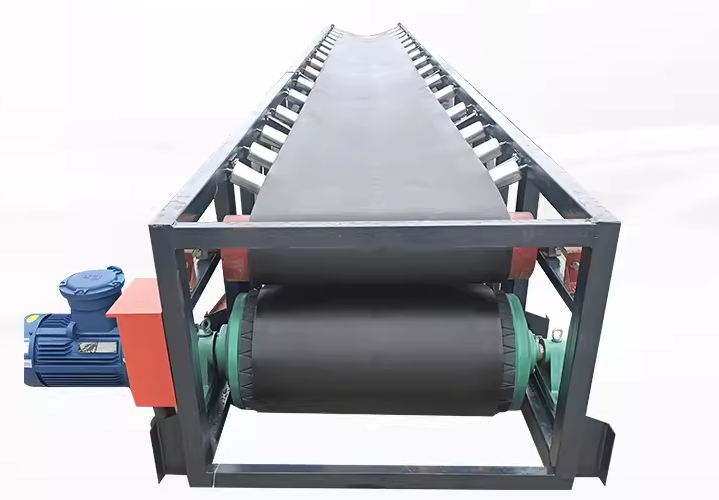
Built for heavy‑load continuous bulk material transportation, this heavy‑duty belt conveyor complies with ISO 5048, CEMA and CE standards. It delivers conveying capacity of 40‑10000 t/h, belt width 400‑2000 mm, single‑flight length up to 230 m and inclination angle 0°‑90°.What is a Heavy Duty Belt Conveyor?
Our heavy duty belt conveyor is purpose-built for continuous, high-volume bulk material transport in the world's most demanding industrial sectors – from abrasive ores and coal to grain and aggregates. Featuring reinforced steel frames, high-torque drives, and abrasion-resistant belting, these systems handle capacities from 40 t/h to 10,000 t/h — verified through rigorous Factory Acceptance Testing (FAT) — with single-flight lengths exceeding 230 meters.
With over 500 systems delivered across 30+ countries, including a Chilean copper mine project that achieved 50,000+ hours of trouble-free operation, our engineering expertise is proven in the field. Every conveyor is designed and manufactured in compliance with ISO 5048, CEMA, and CE standards.
Key Features of Heavy Duty Belt Conveyor
This heavy duty belt conveyor achieves high throughput and energy efficiency, with flexible structural and belt options to handle various bulk materials across different angles and distances while cutting downtime and meeting environmental requirements.
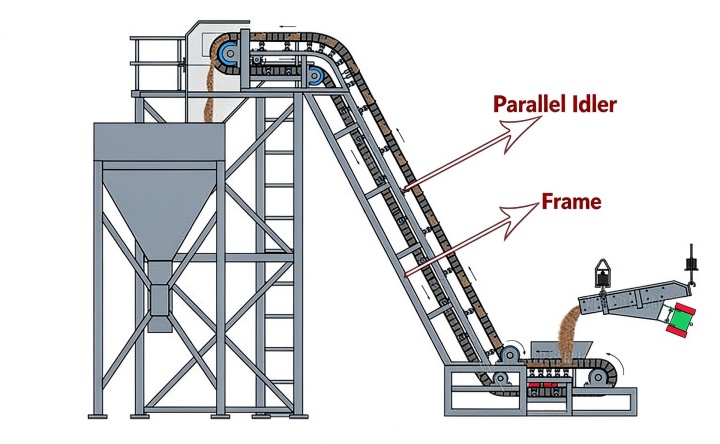
Maximize Throughput: Capacities up to 10,000 t/h eliminate bottlenecks, reduce truck haulage costs, and boost productivity.
Reduce Energy Costs: VFD drives match belt speed to load conditions, delivering energy savings up to 15% vs. fixed-speed systems.
Minimize Downtime: Sealed-for-life bearings, abrasion-resistant steel, and modular design extend service intervals and reduce unplanned stoppages.
Conquer Angles & Distances: Horizontal, inclined up to 90°, single-flight lengths up to 230m — custom configurations reduce transfer points.
Handle Any Material: Choose from rubber (heat/oil/cold/flame-resistant), PVC, PU, or steel-cord belting for iron ore, coal, cement, grain, fertilizers, and more.
Environmentally Conscious: Fully enclosed designs with dust suppression reduce spillage and meet compliance standards.
Flexible Configurations: Stationary, portable, or traveling models with head, tail, or central drive arrangements to match site constraints.
Technical Specifications of Heavy Duty Belt Conveyor
All data verified through FAT prior to shipment.
| Parameter | Standard Range | Selection Notes |
| Belt Width | 400 – 2,000 mm | Wider belts available for higher throughput |
| Capacity | 40 – 10,000 t/h | Per ISO 5048; depends on density and speed |
| Belt Speed | 0.4 – 2.0 m/s | Higher for light materials; lower for abrasive |
| Single Length | Up to 230 m | Multi-drive for longer distances |
| Inclination | 0° – 90° | Chevron or sidewall belts required above 25° |
| Drive Power | 0.37 – 250 kW | Based on friction, lift, and load |
| Belt Material | Rubber, PVC, PU, steel-cord | Heat/cold/oil/flame-resistant options |
| Frame Material | Carbon steel or stainless steel | Stainless for food, chemical, corrosive environments |
| Drive Arrangement | Head, tail, or central | Head or head+central for long distances |
| Compliance | ISO 9001, ISO 5048, CEMA, CE | International design and safety standards |
The structure of Heavy Duty Belt Conveyor
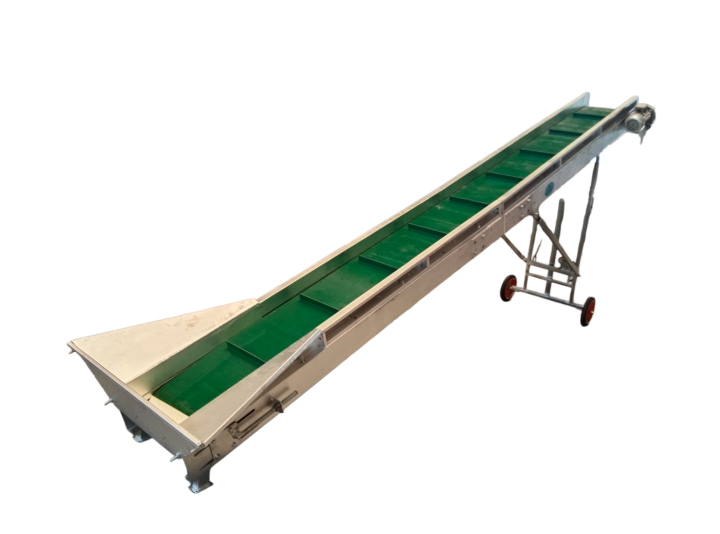
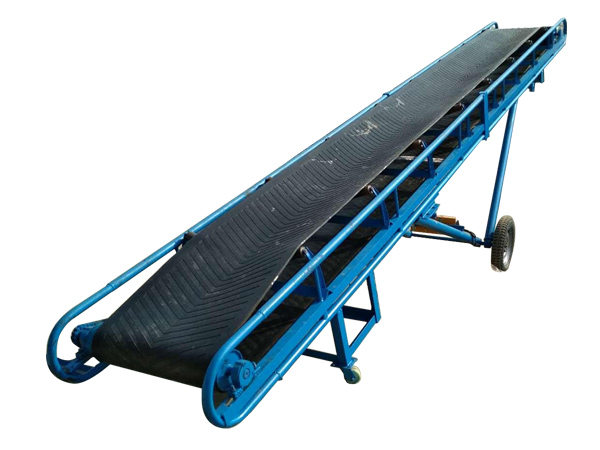
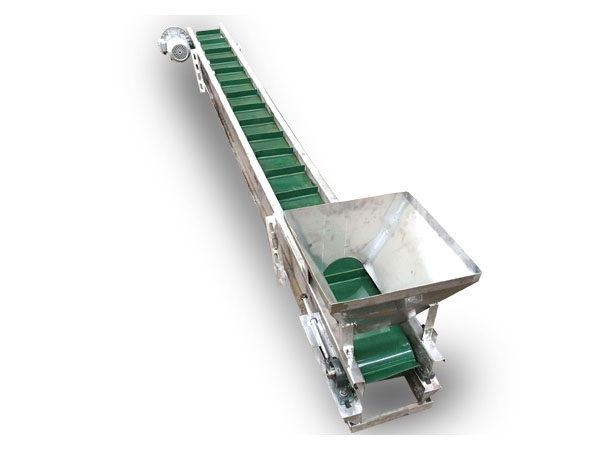
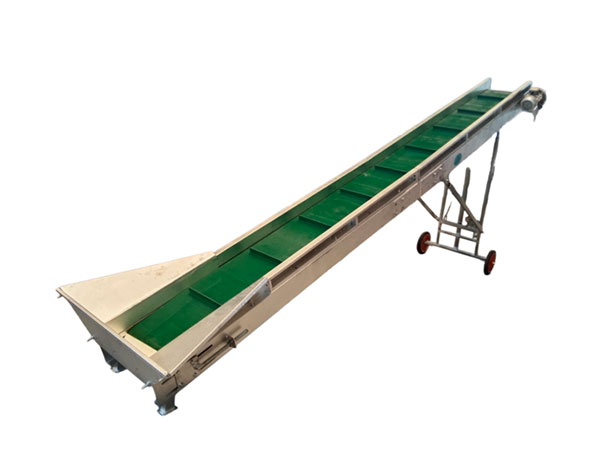
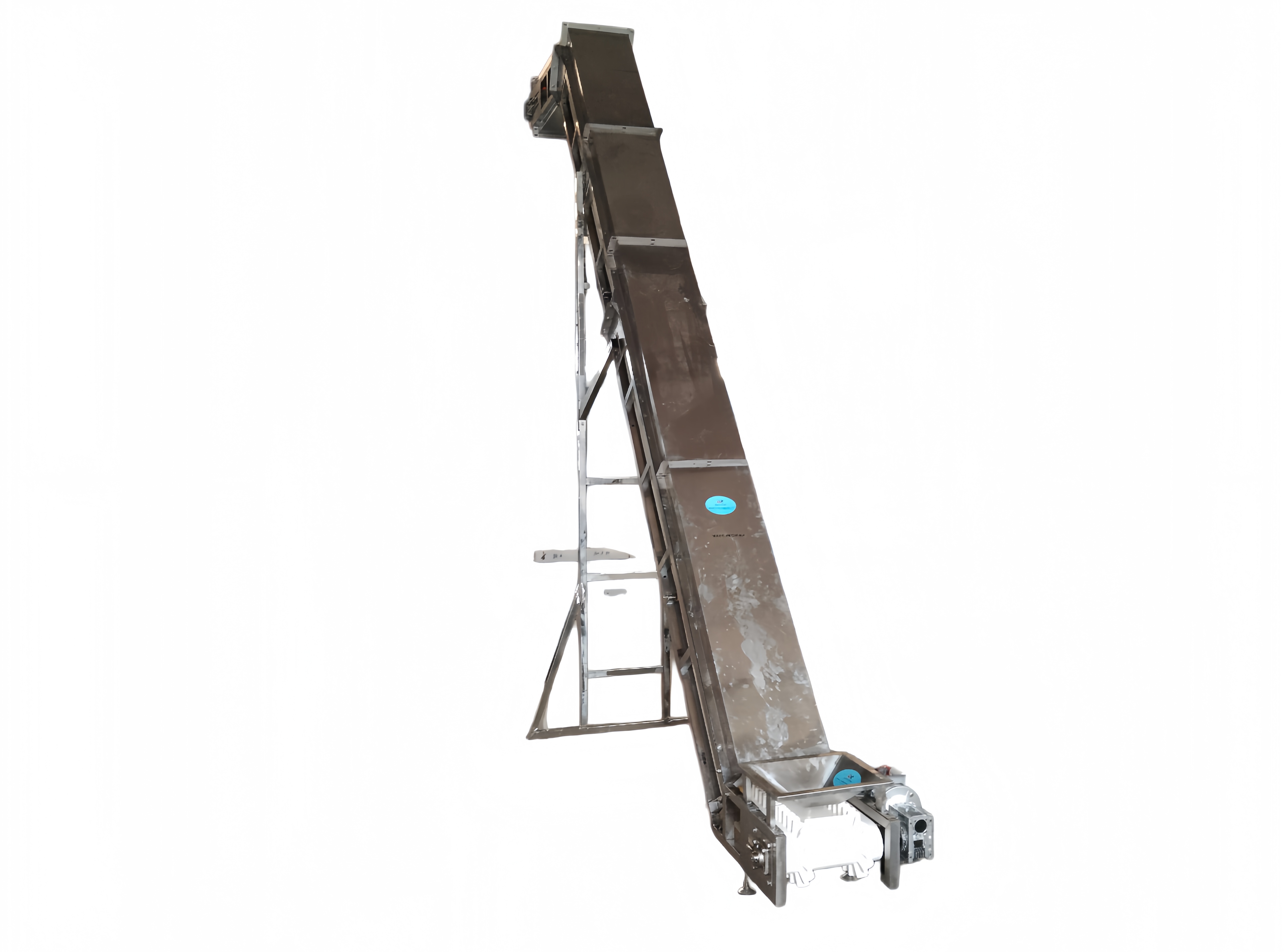
This mobile inclined belt conveyor consists of frame, conveyor belt, idler sets, pulley assembly, drive system, tensioning device, feed hopper, lifting mechanism, travelling assembly and electric control box.
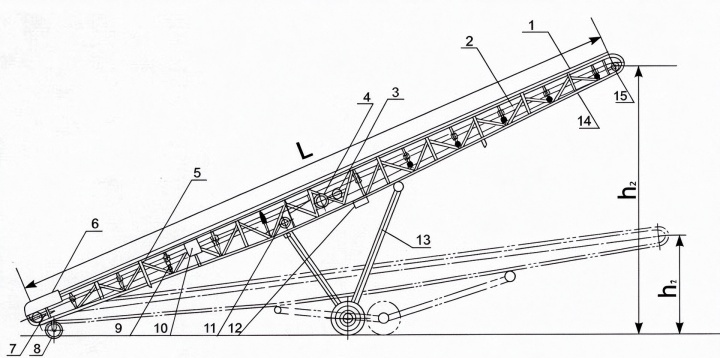
The upper and lower idlers support the belt. Head pulley, drive pulley, bend pulley and redirecting pulley form the roller system. Main motor supplies power, and the tensioning device adjusts belt tightness. The lifting device changes inclination angle and conveying height. The support frame with travelling wheels enables site movement. The feed hopper feeds materials, while the electric control box manages operation.
How to Select the Right Configuration?
This guide helps match belt width, speed and conveyor structure according to your material features, required throughput and site conditions, and we provide free technical calculation and proposal service.
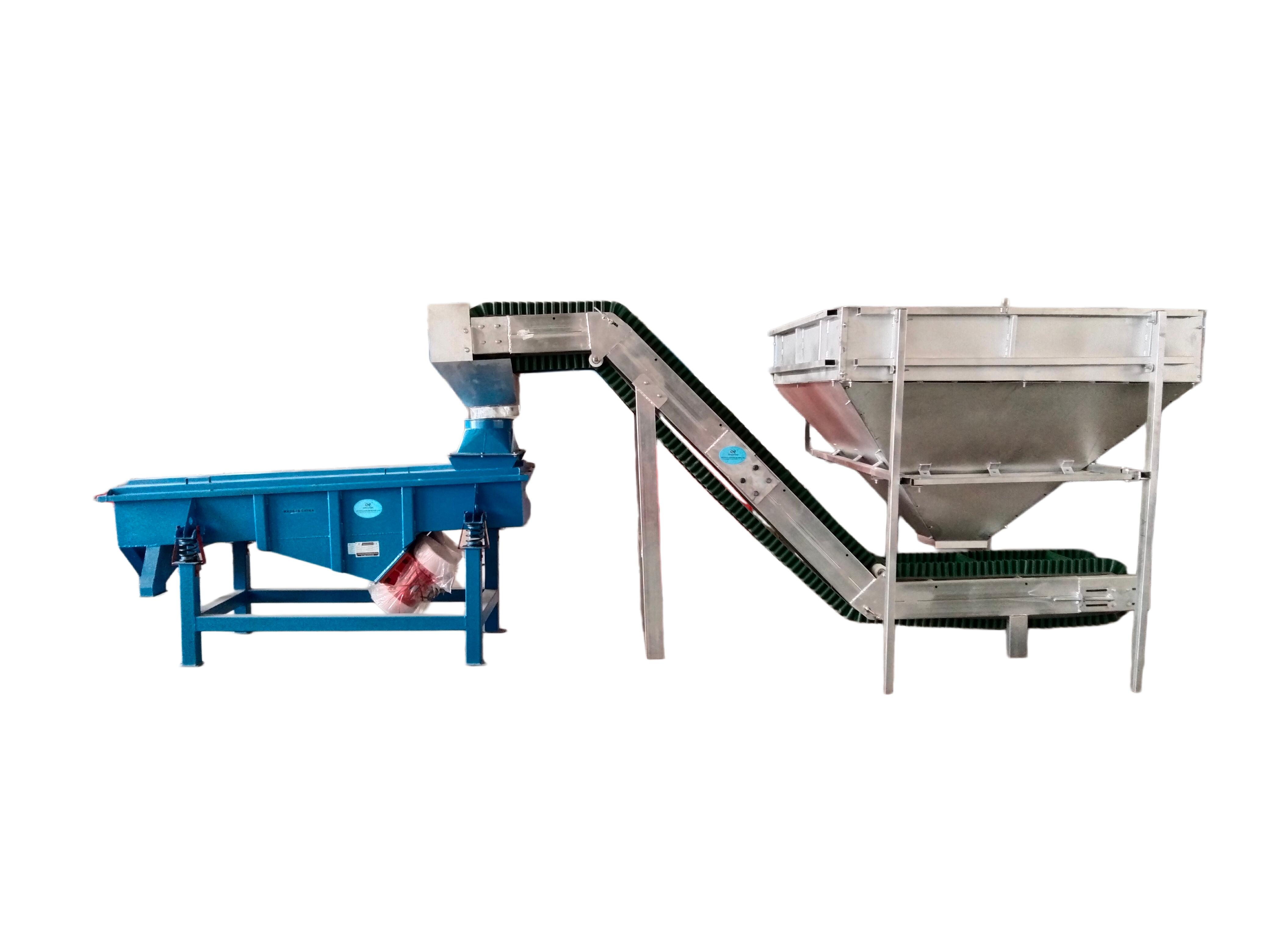
Material Characteristics: Density (t/m³) and lump size (mm) determine belt width. High-density, large-lump materials (e.g., iron ore) need wider belts (≥1,200 mm).
Required Throughput: Based on target capacity and density, we calculate minimum belt width and speed using professional selection software.
Site Layout & Environment: Horizontal, inclined (>20° needs chevron/sidewall), long-distance (>100m needs rigorous tension calculation), or special environments (temperature, moisture, corrosiveness, explosion-proof).We offer free selection calculations – share your material properties, capacity, and site conditions for a detailed report and proposal within 24 hour.
Compliance & Certifications
Trust is built on verifiable standards, not claims.
| Standard | Description |
| ISO 5048 | International design calculation standard for structural strength and performance |
| CEMA | U.S. Conveyor Equipment Manufacturers Association standards |
| CE Certification | EU safety, health, and environmental compliance |
| ISO 9001 | Quality management covering design, procurement, manufacturing, and after-sales |
All systems undergo FAT prior to shipment with complete test reports. Third-party inspection (SGS, BV) available upon request.
Industry Applications of Heavy Duty Belt Conveyor
This heavy duty belt conveyor serves multiple industries including mining, cement, power, port, agriculture, chemical and recycling sectors, handling a wide range of bulk materials with proven reliable performance in global projects.
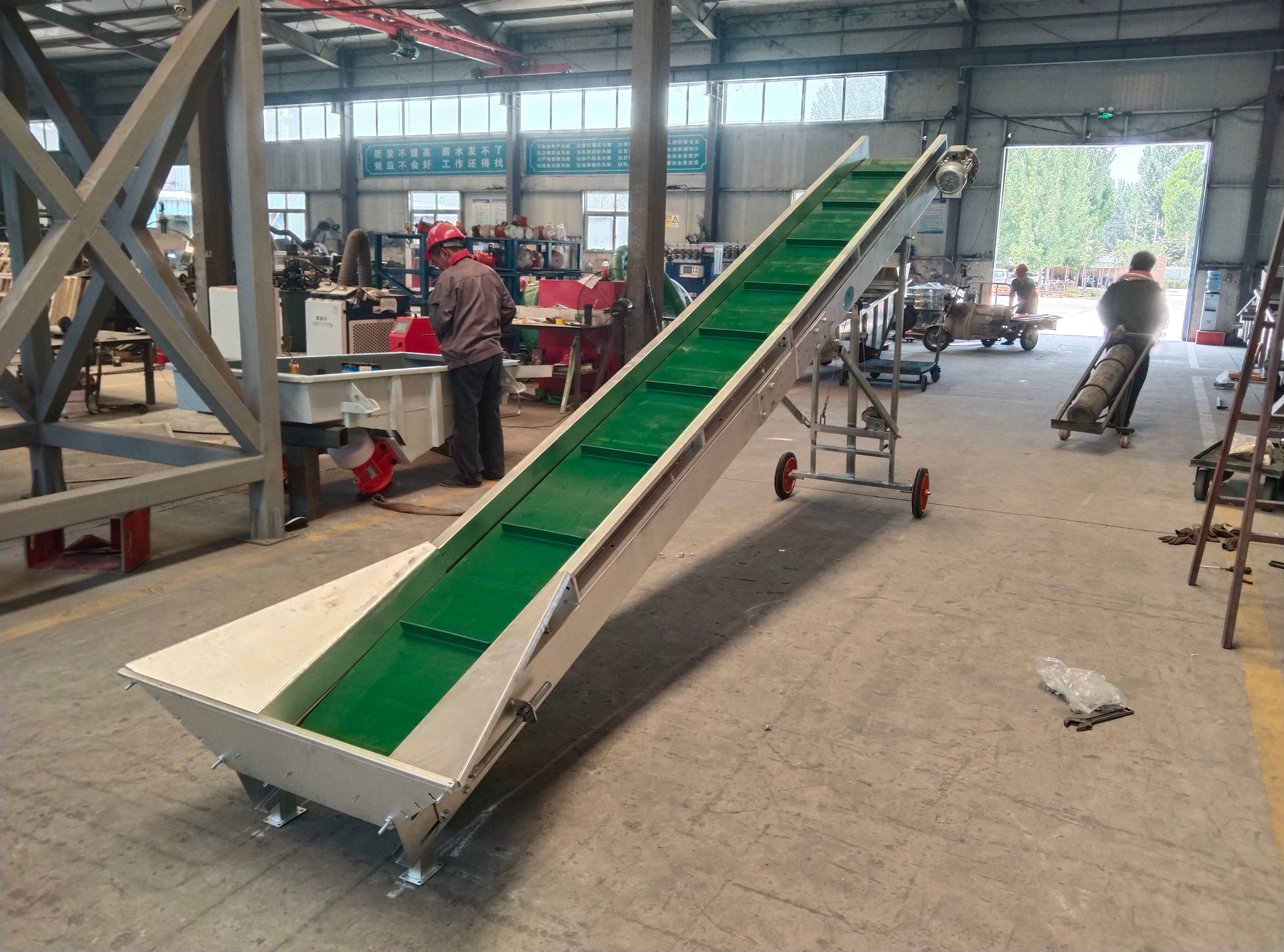
Mining & Quarrying – Iron ore, copper, coal, limestone, granite, aggregates. Our systems are deployed across 4 continents, including a Chilean copper mine where our conveyor achieved 50,000+ hours of continuous operation.
Cement & Aggregates – Limestone, clay, clinker, slag, gypsum, cement. We have supplied heavy-duty conveyors to multiple cement plants, with systems handling over 5,000 t/h of raw material feed.
Power Generation – Coal handling, stacking, reclaiming, boiler feeding. Our conveyors are used in thermal power plants across Asia and Australia, delivering reliable coal feed with minimal maintenance.
Ports & Terminals – Ship unloading, stockpiling, loading, transshipment. We have delivered systems for major port operations, achieving 10,000 t/h throughput for bulk cargo transshipment.
Agriculture & Food – Grain, soybeans, corn, sugar, biomass pellets. Our food-grade belt options meet sanitation standards for agricultural processing facilities.
Chemical & Fertilizers – Fertilizers, phosphate, sulfur, chemical raw materials. Corrosion-resistant belt options are available for chemical handling applications.Recycling & Waste – Construction waste, scrap metal, RDF. Our heavy-duty systems are built to handle abrasive and irregular materials in recycling facilities.
Customer Success Stories
Case 1: Chilean Copper Mine – 50,000 Hours Trouble-Free
| Item | Detail |
| Location | Northern Chile, 25 million tons/year throughput |
| Challenge | 24/7 operation, high impact, 2.4 t/m³ density, 400mm+ lump size |
| Solution | 1,800mm belt, 1.2km length, ST-2500 steel-cord belting, impact idlers, 3×400kW drives |
| Process | Field team adjusted idler spacing and added impact beds at loading zone based on on-site lump size analysis |
| Results | 50,000+ hours without major failure; 40% annual fuel/maintenance savings; eliminated truck haulage |
| Feedback | "Impact idler service life is nearly double that of other brands we have used." – Site Engineer |
Case 2: Australian Coal Mine – 5,500 t/h Inclined Conveying
| Item | Detail |
| Location | Queensland, Australia, open-pit mine |
| Challenge | Lift coal from 80m pit to surface plant; 45°C summer temperatures |
| Solution | 1,600mm belt, 25° incline, 180m length, steel-cord belting, heat-resistant cover, damping impact idlers |
| Process | Multiple site visits during design to measure material flow and temperature variations |
| Results | 5,500 t/h stable throughput; eliminated truck haulage; payback <18 months |
Frequently Asked Questions (FAQ)
Q1: How do you ensure reliability in harsh mining conditions?
Through precise tension calculation, high-quality components (sealed bearings, heavy-duty idlers, abrasion-resistant belting), and a maintenance plan with regular checks on splices, lagging, and idler condition.
Q2: Which belt is best for highly abrasive materials?
High-abrasion-resistant rubber (Grade H or D per ISO 14890) with top cover ≥10mm and bottom cover ≥6mm. For large lumps, use fabric or steel-cord belting with impact idlers and chute liners at transfer points.
Q3: What designs are needed for below -30°C environments?
Cold-resistant rubber (to -45°C), cold-resistant carcass, low-temperature grease in bearings, low-temperature tough materials for rollers/pulleys, and insulation/heating at drive stations and transfer points.
Q4: What configurations for steep inclines above 25°?
Chevron belts (herringbone/V-pattern) for 25°–35°, or sidewall belts (corrugated sidewalls + cleats) for 35°–90°, depending on material, lump size, and throughput.
Q5: What is the typical lead time?
4–6 weeks for standard configurations from final drawing approval; 8–12 weeks for highly customized or extra-large systems (width >1,800mm or length >1km).
Q6: Do you provide on-site installation and commissioning?
Yes – we dispatch engineers for installation supervision, operator/maintenance training, and commissioning. Remote video support also available.
Q7: What is your warranty and support policy?
1-year comprehensive warranty (excluding wear parts). 30-minute online response; 24-hour domestic on-site; 72-hour overseas (subject to visa/flight). Lifetime spare parts supply, remote diagnostics, and technical documentation support.