E-mail: sale@xxdahan.com
Follow Us 


In construction sites, mines, or assembly workshops, short-distance material handling is often the most time-consuming and labor-intensive task. Traditional fixed conveyors not only have high installation costs but are also difficult to move once installed. In this case, a flexible and mobile portable conveyor becomes the key to improving efficiency. This article will help you select the most suitable equipment for your site conditions from core dimensions such as site environment, conveying distance, and material characteristics.
Whether to choose swivel casters or pneumatic tires depends entirely on whether you are working indoors on flat surfaces or outdoors on rough terrain.
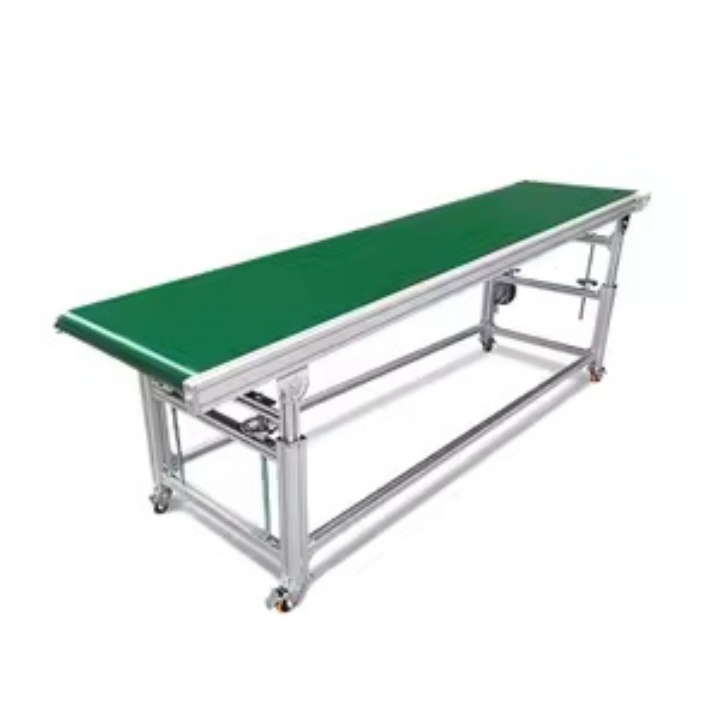
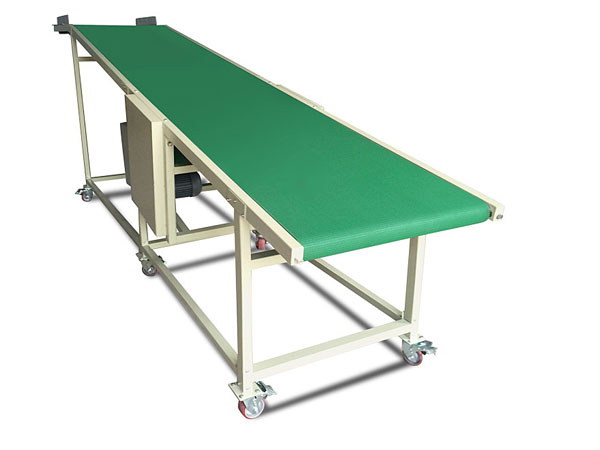
The first step in selection is to determine where the equipment will be working. For indoor scenarios (such as electronics assembly lines or packaging workshops), spaces are usually narrow and floors are flat. You need a model that is compact with a small footprint and equipped with swivel casters at the bottom, making it easy for workers to move and maneuver between equipment. For outdoor scenarios (such as open-pit mining or construction sites), the ground is rough and may even be muddy, so ordinary swivel casters are not sufficient. In this case, you need to select pneumatic tires or a towing chassis to ensure stability and mobility when the equipment is towed between different sites.
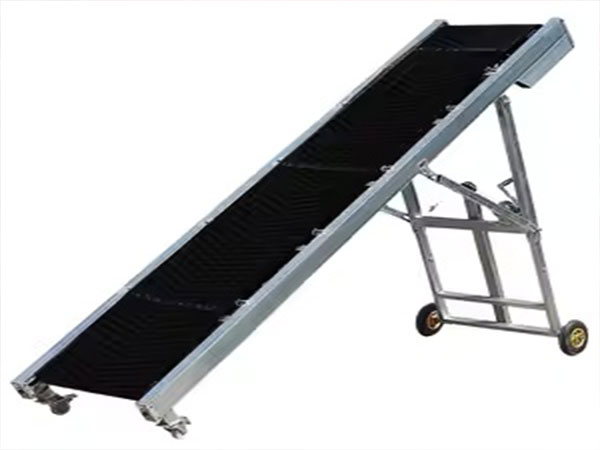
5-10 meters is the golden length for frequent relocation operations, and if you need inclined discharge, you must choose a model with a lifting device.
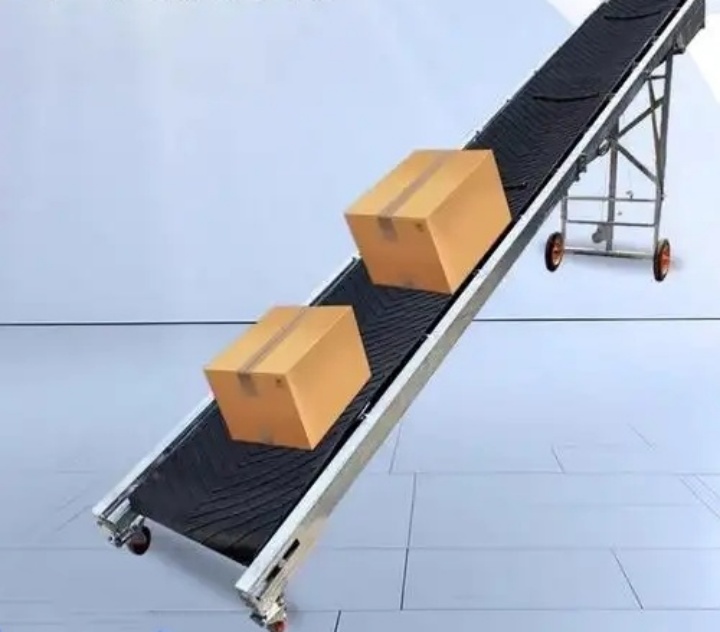
Equipment that is too long wastes space and purchasing costs, while equipment that is too short cannot reach the discharge point. For most small to medium-sized operations that require frequent relocation, the 5-10 meter range is the most practical. Additionally, if you only need flat horizontal transport, you can choose a fixed horizontal model; if you need to load materials into truck beds or high stockpiles, you must choose an inclined model with a lifting device (such as a manual winch). With a manual winch, the inclination angle can be easily adjusted to meet different discharge height requirements.
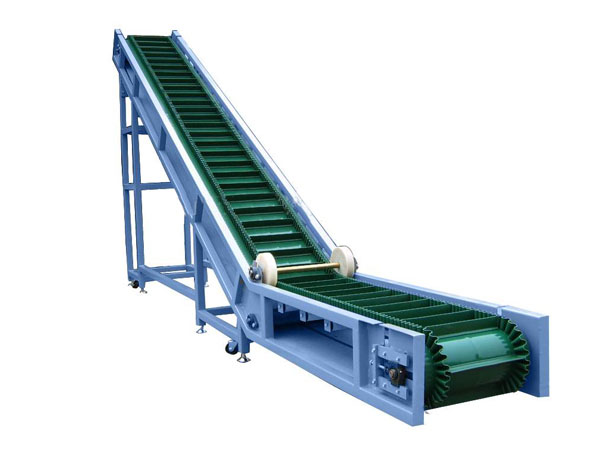
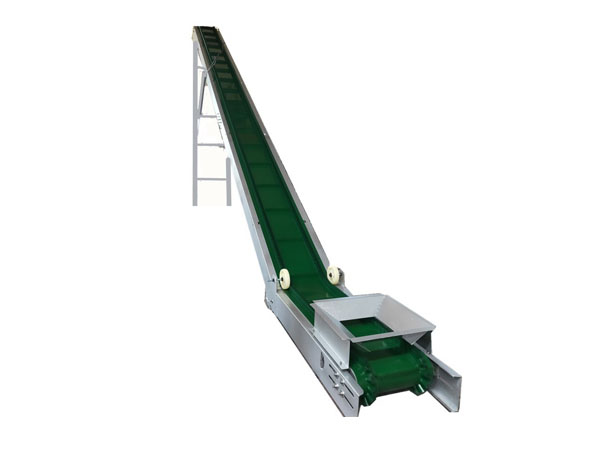
Chevron belts are essential for inclined bulk material conveying, and anti-run-off design is a must for frequently moved equipment.
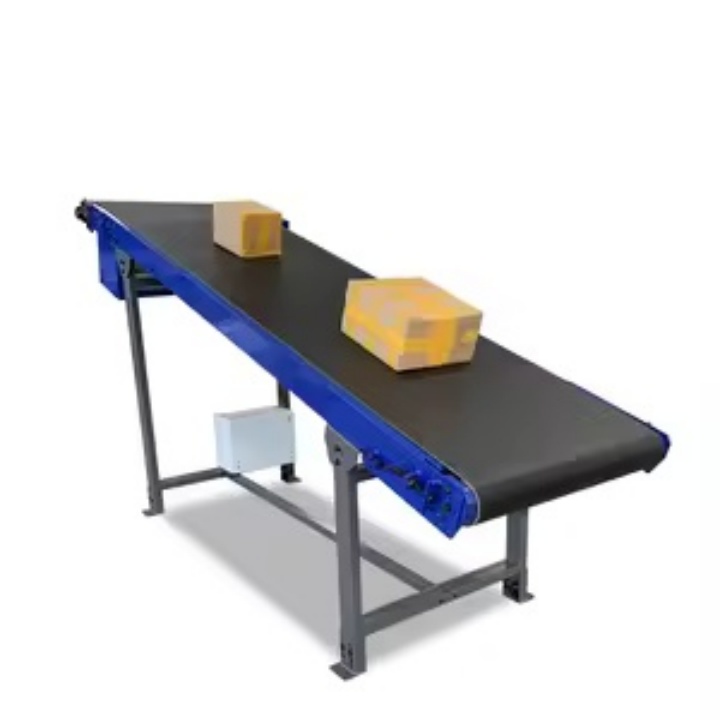
For bulk materials such as sand, grain, or ore, a chevron conveyor belt must be selected to prevent materials from sliding down during inclined conveying. For piece goods such as cartons or home appliances, a standard flat belt is sufficient. In addition, because portable equipment is frequently moved and has a relatively short frame, the belt is highly prone to deviation. Therefore, when purchasing, you must confirm whether the equipment is equipped with guide chutes and an anti-run-off design. Models with anti-run-off and anti-slip belt designs can significantly reduce your maintenance costs and avoid unexpected downtime.
Match the appropriate belt width and power based on your daily processing volume, and be sure to confirm the on-site voltage in advance.
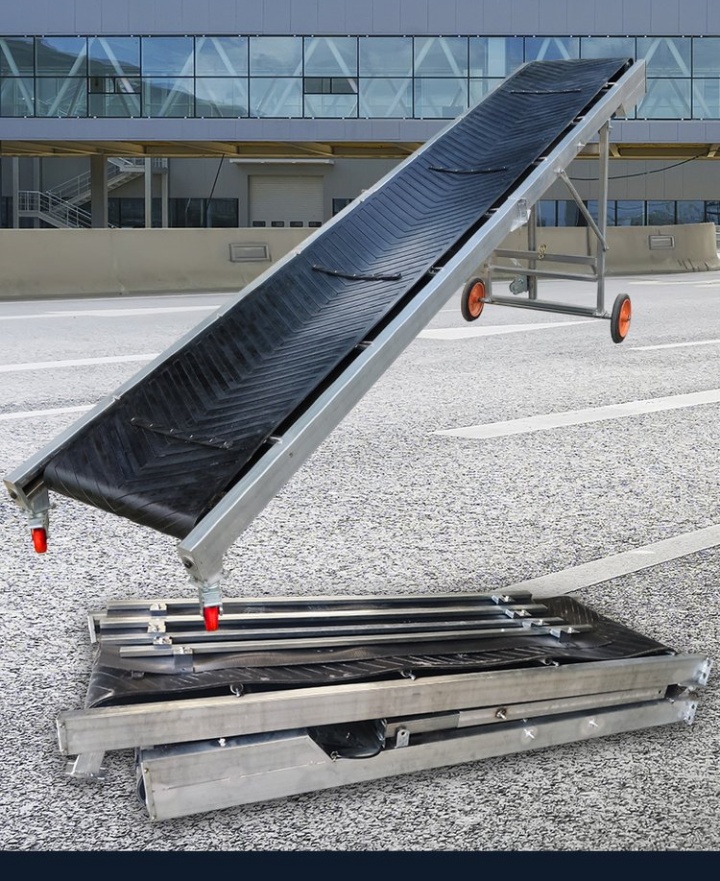
You need to choose the belt width (such as 400mm-800mm) and motor power based on your daily processing volume. If you are handling tens to two hundred tons of material per hour, a standard small portable model is sufficient, and there is no need to spend extra on heavy-duty equipment. At the same time, confirm whether the on-site power supply is single-phase or three-phase. For export equipment or international projects, be sure to confirm whether the manufacturer supports customized voltage and control systems. Equipment that supports multiple voltage and motor power customizations can perfectly adapt to industrial power standards in different countries.
Reserving interfaces for multi-conveyor integration will prevent your equipment from becoming obsolete during future production line upgrades.
You may only need one machine now, but will you need to connect multiple conveyors to form a complete production line in the future? If your production layout changes frequently, it is particularly important that the equipment supports flexible combinations of single-unit operation and multi-unit integration, and that the angle adjustment is flexible enough. Flexible configuration not only meets current needs but also adapts to future process adjustments.
There is no "most expensive is best" when choosing a portable conveyor—only the one that best matches your site. By comprehensively considering your site space, material characteristics, and capacity requirements, you can maximize the value of your equipment.
If you are still unsure about selection, or if your site has special space constraints and requires frequent relocation, feel free to click to view the detailed specifications and customization options of our Small Portable Conveyor Belt.
CONTACT
WhatsApp:+86 18339211009
Email:sale@xxdahan.com
Add:China, Henan Province, Xinxiang City.Yanjin county forest park gate to the west 1000 meters north road