Inclined Belt Conveyor for Coal
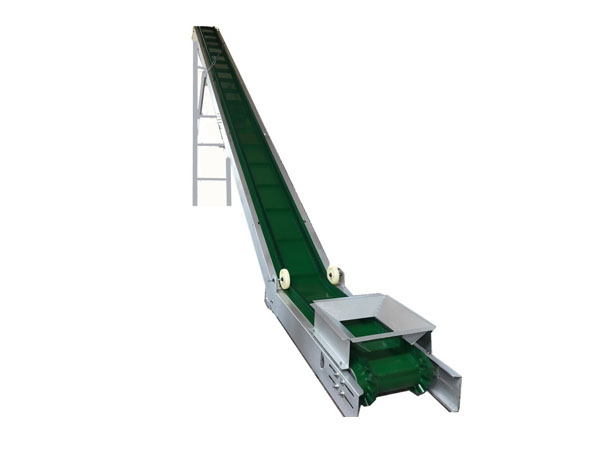
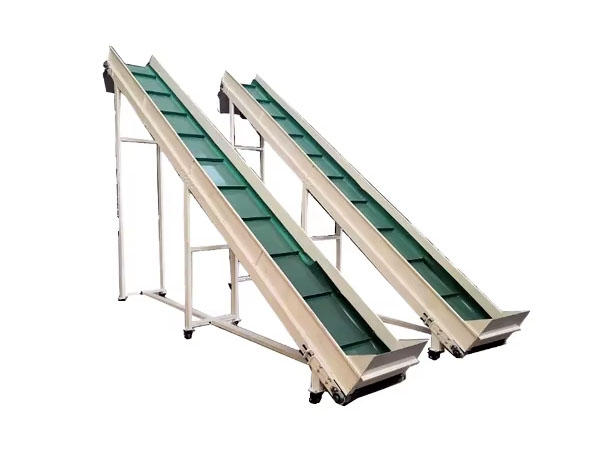
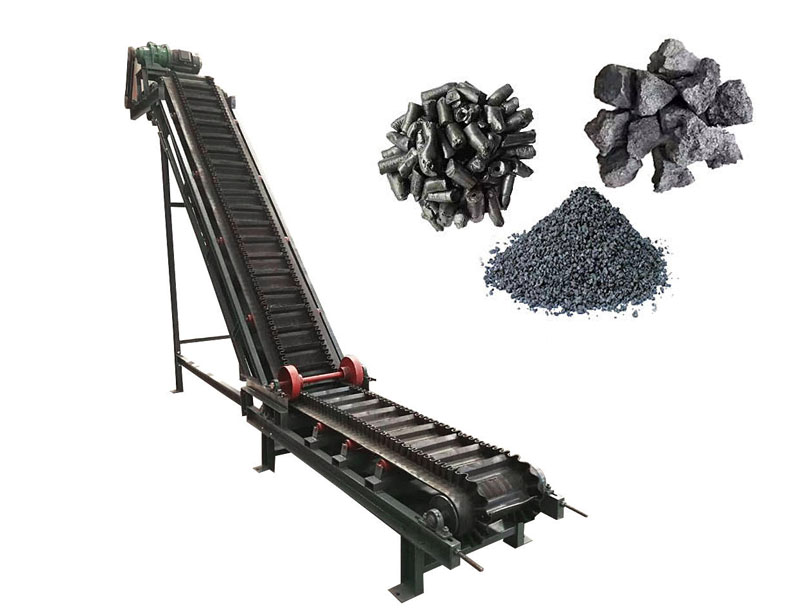
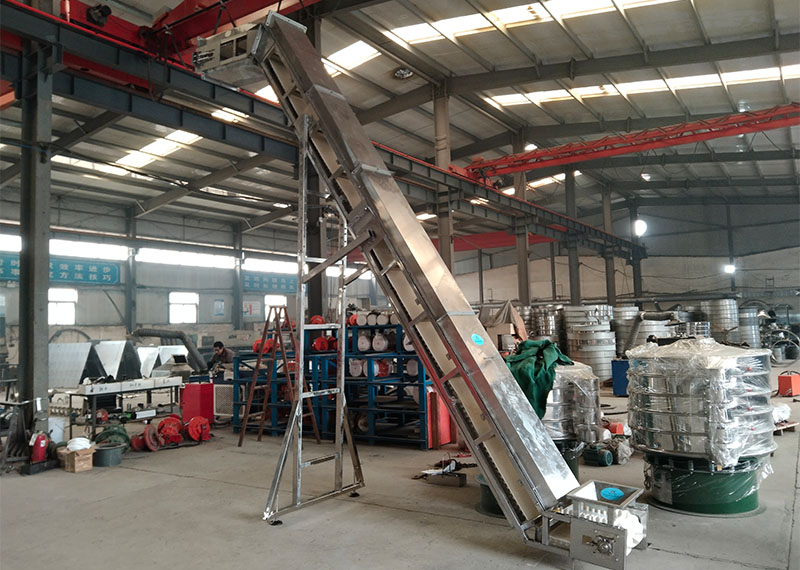
Inclined Belt Conveyor for Coal is used to safely and smoothly transport coal from low to high elevations at steep inclines of 18° to 90°.
Price: $350-$7800
Width: 500 mm – 2400 mm
Inclination Angle: 0° - 90°
Conveying Capacity: 50 t/h – 3000 t/h
What is an Inclined Belt Conveyor for Coal?
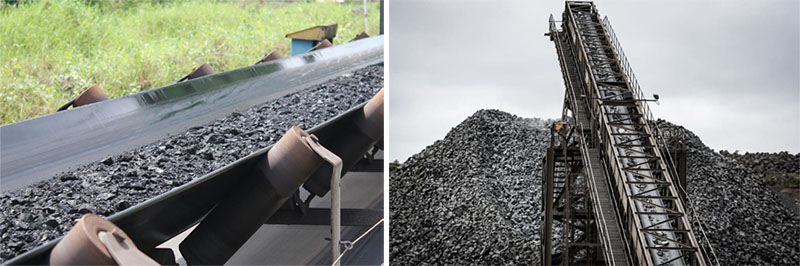
An Inclined Belt Conveyor for Coal is primarily used for conveying coal at steep angles of 18° to 30°, or even 45° to 90°. It smoothly and safely lifts raw or refined coal from a lower elevation to a higher one, significantly reducing the plant's footprint while achieving a maximum conveying capacity of 3000 t/h. It employs deep-groove idler rollers with large trough angles, anti-deviation devices, and high-friction belts to ensure that coal does not slip or spill during steep-angle transport. Considering the high dust and flammable/explosive nature of coal transport, it is equipped with flame-retardant and anti-static belts, fully enclosed dust covers, and wear-resistant liners, enabling high-capacity, high-efficiency coal lifting within limited space.
Need a Custom Coal Conveyor Solution?
Get professional selection advice, layout drawings, and direct factory pricing within 24 hours.
Get Factory Price & Custom Design Now →Inclined Belt Conveyor for Coal parameters
| Parameters | Optional Range/Description |
| Bandwidth | 500 mm – 2400 mm |
| Inclination Angle | 0–30° with smooth/patterned belt, 45–-90° with corrugated sidewall belt |
| Belt Speed | 1.0 – 4.0 m/s |
| Conveying Capacity | 50 – 3000 t/h, depending on belt width, speed, and inclination angle. |
| Belt Types | Flame-retardant EP belt, steel cord tear-resistant belt, herringbone pattern belt, sidewall belt |
| Idler Types | 35°/45° deep trough idlers, buffer idlers, self-aligning idlers, spiral cleaning idlers |
| Drive Configuration | Electric drum or motor-reducer combination, explosion-proof/frequency conversion optional |
| Dust Cover | Fully enclosed corrugated cover, semi-enclosed cover, can integrate spray dust suppression interface |
| Safety Devices | Anti-deviation switch, pull rope emergency stop, speed monitoring, temperature sensor |
What inclination angle is required for an inclined belt conveyor for coal conveying?
Depending on the coal conveying distance, site topography, and material characteristics, inclined belt conveyors for coal are mainly divided into two types: those with a small inclination angle of <18° and those with a large inclination angle of 18° to 90°. The selection must be made strictly based on your actual site conditions.
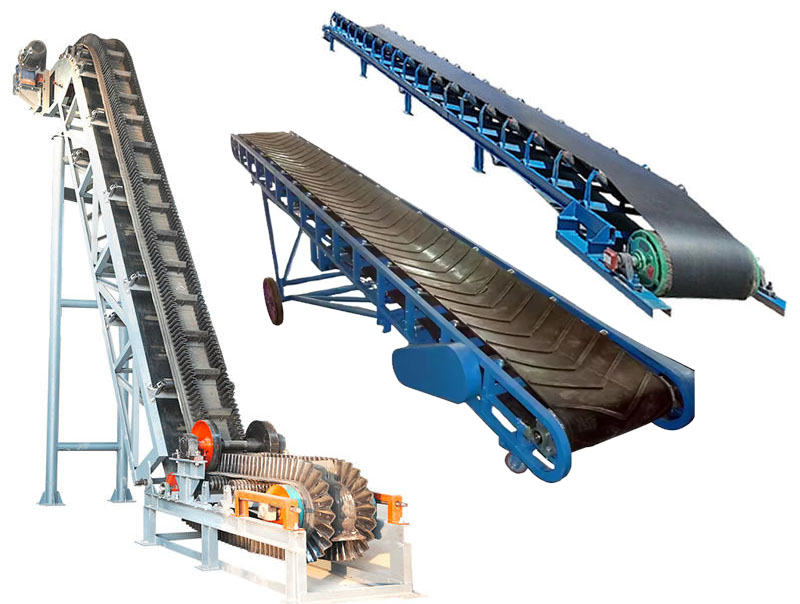
Ordinary small-angle inclined belt conveyors for coal have a conveying angle of less than 18 degrees. They typically use standard flat belts or slightly textured anti-slip belts. They have a very simple structure and low maintenance costs, but cannot meet the requirements for steep or near-vertical lifting. They are commonly used in open coal yards, relatively wide ground corridors, and primary conveying of large pieces of raw coal.
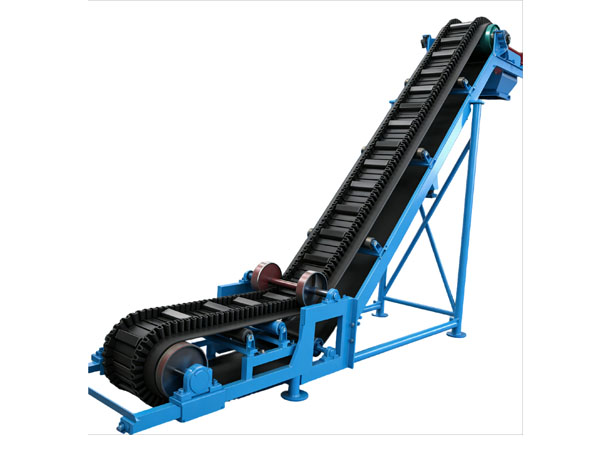
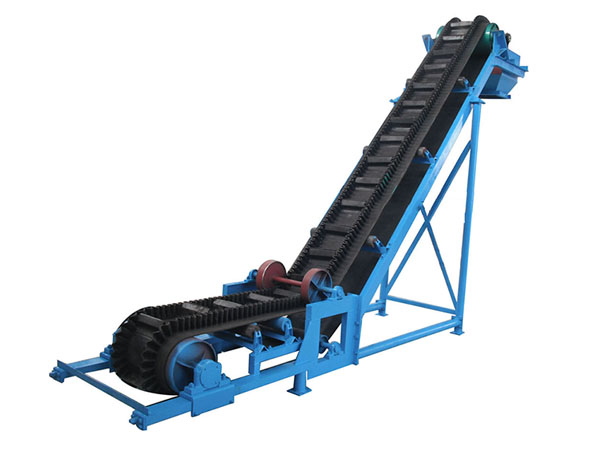
Inclined belt conveyors for coal are used for vertically lifting coal at angles exceeding 18° or 90°. Generally, when the angle is greater than 18°, ordinary flat belts will cause a large amount of coal to slide down the conveyor belt due to insufficient friction. In this case, belts with corrugated sides and cross diaphragms are required to prevent coal from spilling. They are commonly used for hoisting in deep coal mines, feeding coal mills in boiler rooms, and material transfer between multi-story buildings in coal washing plants.
What are the advantages of the Inclined Belt Conveyor for Coal?
When handling complex materials like coal—highly abrasive, dusty, flammable, and often containing moisture—ordinary general-purpose conveyors are prone to belt punctures, motor overload, or frequent material spills. The Inclined Belt Conveyor for Coal features a steeply angled skirt and side guard design to prevent side leakage, and the entire machine is equipped with a sealed cover to prevent dust, making it suitable for conveying all coal-related conditions.
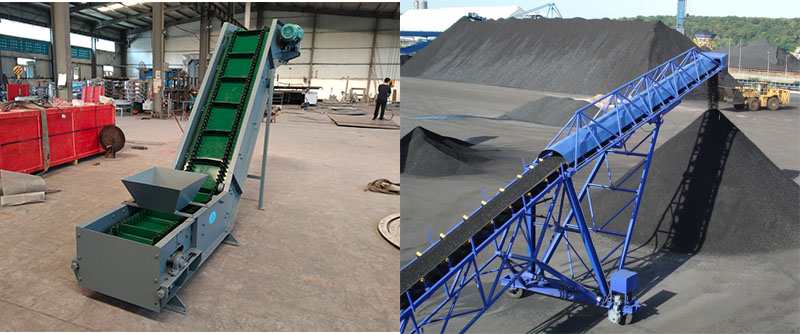
Overflow and Side Leakage Prevention: By deepening the idler roller trough angle (35° or 45°) or using side guard belts, combined with anti-overflow skirts in the feeding section, it ensures that coal does not roll off in the acceleration and inclined sections.
Fully Enclosed Dustproof: Depending on the site requirements, a high-strength rainproof cover or a fully enclosed conveyor corridor can be selected to completely eliminate coal dust and prevent environmental pollution.
Reduced transfer points: Our corrugated sidewall large-angle conveyor can achieve "horizontal + inclined + horizontal" single-unit integrated combined conveying, eliminating the need for transfer points where multiple machines need to be connected. This greatly reduces the secondary breakage rate of coal during the falling process.
What are the optional configurations for the Inclined Belt Conveyor for Coal?
Coal transport demands extremely high safety standards. To ensure long-term stable operation in harsh environments, the Inclined Belt Conveyor for Coal offers configurations including flame-retardant, anti-static, and tear-resistant conveyor belts, explosion-proof motors, and wet coal cleaning systems.
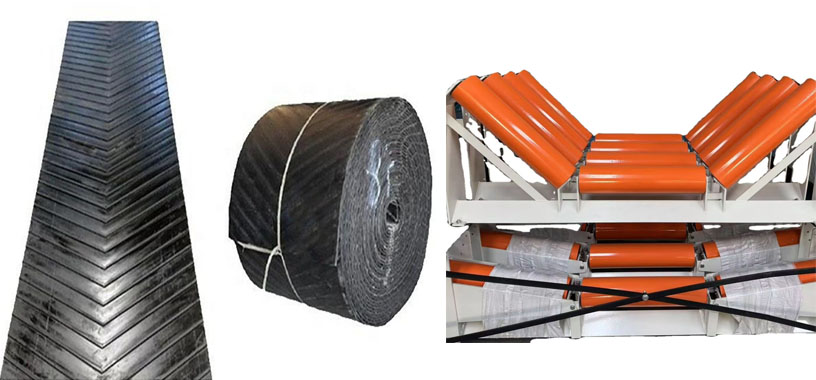
Flame-retardant and anti-static: Equipped with flame-retardant rubber belts conforming to MSHA/ISO/GB standards, the entire drive system features a high-level explosion-proof design, isolating the source of coal dust explosions caused by static sparks.
Tear-resistant base belt: For raw coal containing hard gangue, it features an embedded high-density steel wire rope core or multiple layers of EP fabric, with an outer layer covered with highly elastic, wear-resistant rubber.
Wet coal cleaning system: For highly viscous wet coal slurry, it is equipped with spring alloy cleaners and high-frequency vibrating drums to prevent coal adhesion and belt misalignment on the return trip.
Inclined Belt Conveyor for Coal Case
In a large coal mine's main inclined shaft project in Indonesia, ordinary smooth belt conveyors were previously used to transport coal. Due to the steep slope, frequent problems such as coal rolling, slippage, and severe spillage occurred, resulting in high downtime and maintenance costs. After replacement with Dahan's Inclined Belt Conveyor for Coal, equipped with 25° large-groove deep-groove idler rollers, herringbone pattern flame-retardant and tear-resistant belts, a fully enclosed dust cover at the head, and a V-shaped sweeper were added. The drive was upgraded to a variable frequency explosion-proof motor. The conveying capacity increased from 800t/h to 1050t/h, an increase of over 30%, downtime was reduced by approximately 50%, and coal dust concentration was reduced by more than 80%, meeting local environmental standards.
Why Partner with Dahan Machinery for Coal Conveying?
- 18+ Years of Manufacturing Expertise: Specialized in heavy-duty inclined belt conveyor systems engineered specifically for high-capacity, abrasive, and combustible coal handling.
- Rigorous Safety Compliance: All coal conveyors feature flame-retardant, anti-static belts and high-level explosion-proof drives meeting international standards.
- Customized Engineering Solutions: Tailor-made trough angles (35°/45°), corrugated sidewalls, and fully enclosed dust covers to eliminate material spillage.
- Global Project Proven: Successfully deployed across large-scale mines, power plants, and coal washing facilities worldwide with 24/7 technical support.
Need customized layout drawings or professional selection advice for your coal plant? Contact our engineering team today.
How to select a suitable Inclined Belt Conveyor for Coal?
Choosing a suitable and reliable Inclined Belt Conveyor for Coal requires a comprehensive evaluation of factors such as coal properties, conveying purpose, site environment, and supporting equipment. We offer free selection technical support; simply provide your basic requirements, and we will output preliminary layout drawings and key parameters. Material Characteristics: Coal particle size, moisture content, angle of repose, and abrasiveness. High moisture content requires a larger trough angle, and high abrasiveness requires a thicker belt cover rubber.
Conveying Task: Required maximum lifting height, horizontal projected length, and desired conveying capacity (tons/hour). This determines the belt conveyor power and bandwidth.
Environmental Conditions: Whether for underground use (explosion-proof requirements), minimum/maximum temperature, outdoor use (ozone aging resistance), and permissible noise limits.
Layout: Fixed or mobile? Is multiple intermediate unloading required? Is bidirectional operation required?
Connections: Front-end feeder type, rear-end unloading hopper, and whether a magnetic separator, metal detector, or electronic belt scale is required.
Inclined Belt Conveyor for Coal FAQs
Q: What is the maximum inclination angle of the coal conveyor belt?
A: When using standard trough idlers and smooth belts, the safe angle is generally 18°-20°; herringbone belts can achieve 25°-30°; if space is extremely limited and the angle is between 45°-90°, corrugated sidewall belts with large inclination angles must be recommended.
Q: Can it be used in locations with coal dust explosion hazards?
A: Absolutely. We can provide explosion-proof motors, flame-retardant and anti-static belts, and fully sealed covers that meet ATEX/IECEx/GB explosion-proof standards, fully meeting the safety requirements for use in underground high-gas and high-coal-dust areas.
Q: For long-distance hoisting, should the belt be a flame-retardant EP belt or a steel cord belt?
A: For generally lower hoisting heights (e.g., below 200m), a flame-retardant EP multi-layer belt can be used; for long-distance, high-tension applications, steel cord tear-resistant belts are recommended, depending on tension calculations.
Q: Can you provide a mobile inclined belt conveyor for coal?
A: Yes. We manufacture wheeled or tracked mobile inclined belt conveyors for use in yards, loading, or temporary transport. They are adjustable inclination and highly maneuverable.
Overflow and side leakage prevention: By deepening the idler roller trough angle (35° or 45°) or using sidewall belts, combined with overflow skirts in the feeding section, it is ensured that coal does not roll off in the acceleration and inclined sections.
Ready to Optimize Your Coal Conveying System?
Tell us your conveying capacity, lifting height, and site conditions. Our senior engineers will formulate the best configuration for your plant.
Email us directly or leave a message below:
info@belt-conveyors.net | Contact Us Online