E-mail: sale@xxdahan.com
Follow Us 


Selecting the right mobile conveyor starts with the application rather than the machine price or maximum catalog capacity.
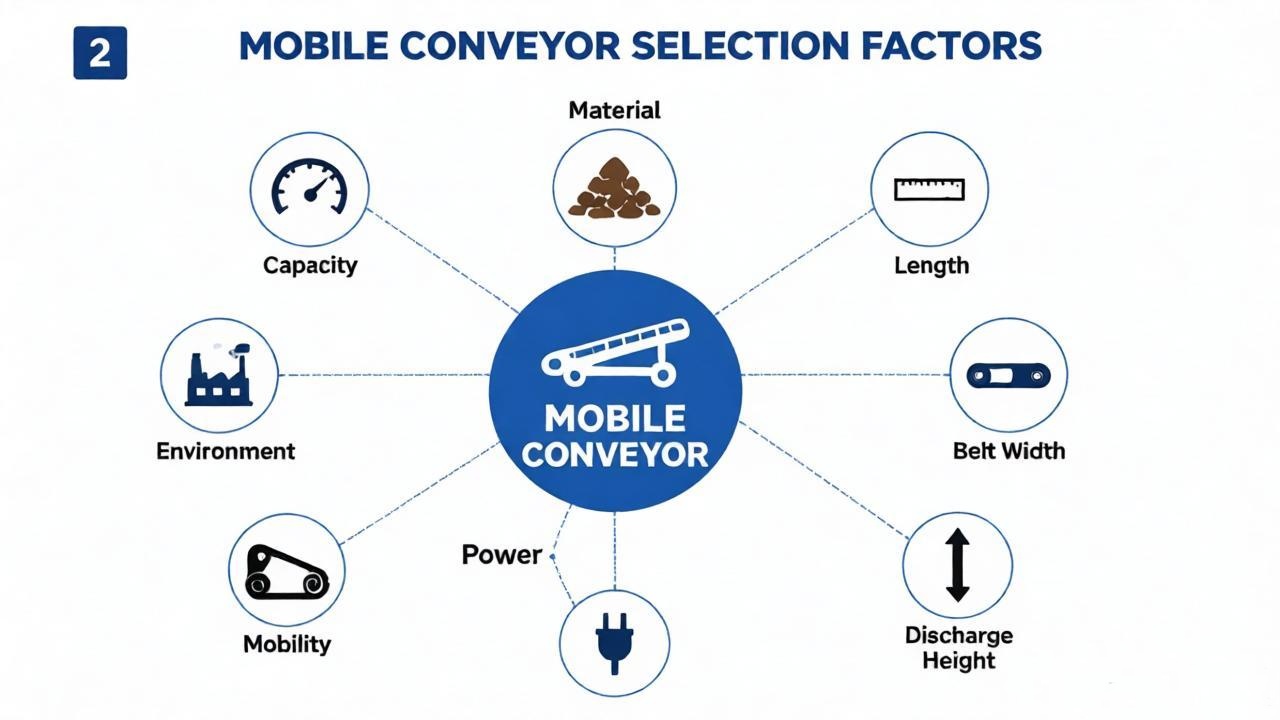
How to Select the Right Mobile Conveyor? depends on the material, required capacity, conveying distance, belt width, discharge height, incline, mobility, belt characteristics, working environment, and power supply.
The right configuration should provide the required capacity and reach while remaining stable, practical to move, and suitable for the actual working conditions.
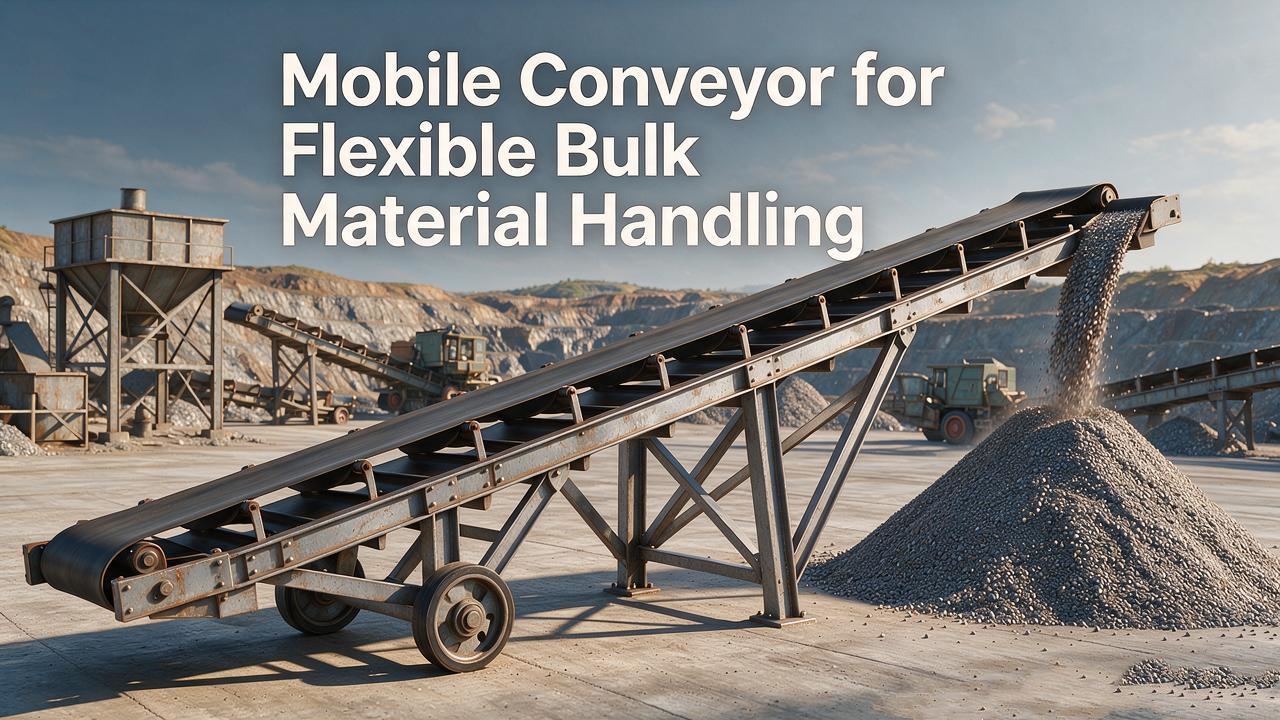
Before requesting a quotation, confirm these basic requirements:
| Selection Factor | What to Confirm |
|---|---|
| Material | Type, size, bulk density, moisture and temperature |
| Capacity | Required t/h or m³/h |
| Conveyor Length | Required conveying distance or working range |
| Belt Width | Material dimensions, loading condition and capacity |
| Discharge Height | Feeding and receiving heights |
| Incline | Required angle and material flow |
| Mobility | Movement frequency and ground condition |
| Belt Type | Material, surface and resistance requirements |
| Environment | Indoor, outdoor, dusty, wet or corrosive conditions |
| Power | Voltage, frequency and drive requirements |
These parameters should be evaluated together because mobile conveyor selection is a configuration decision, not a single-specification decision.
A mobile conveyor is a belt conveying system mounted on a movable support structure.
It is used when the conveying position needs to change between loading, unloading, storage, transfer, or stockpiling locations.
Its suitability depends on more than mobility.
Capacity, reach, discharge height, belt configuration, stability, and working conditions must also match the application.
Material characteristics affect several later decisions.
For bulk materials, consider particle size, bulk density, moisture, temperature, abrasiveness, and whether the material is sticky.
For bags, cartons, and other packages, consider dimensions, weight, shape, and stability.
These conditions can affect belt type, belt width, speed, incline, and loading arrangement.
Determine the required continuous conveying rate in t/h or m³/h.
Do not select a conveyor only because its maximum catalog capacity is higher than the target.
Actual performance depends on material characteristics, belt width, belt speed, loading condition, and incline.
There is no universal belt width for a specific capacity because different materials and operating conditions can require different configurations.
Measure the distance between the loading point and the furthest required discharge position.
For truck loading, warehouse transfer, and stockpiling, consider the full operating range rather than only the distance between two fixed points.
Choose enough length to reach the required area without adding unnecessary equipment size, weight, power demand, or repositioning difficulty.
Belt width should match material dimensions, loading condition, required capacity, and belt speed.
For bulk materials, maximum particle size and throughput are important.
For packages, sufficient lateral support is needed to keep loads stable.
A wider belt is not automatically a better choice.
Final width should be determined from the complete application rather than capacity alone.
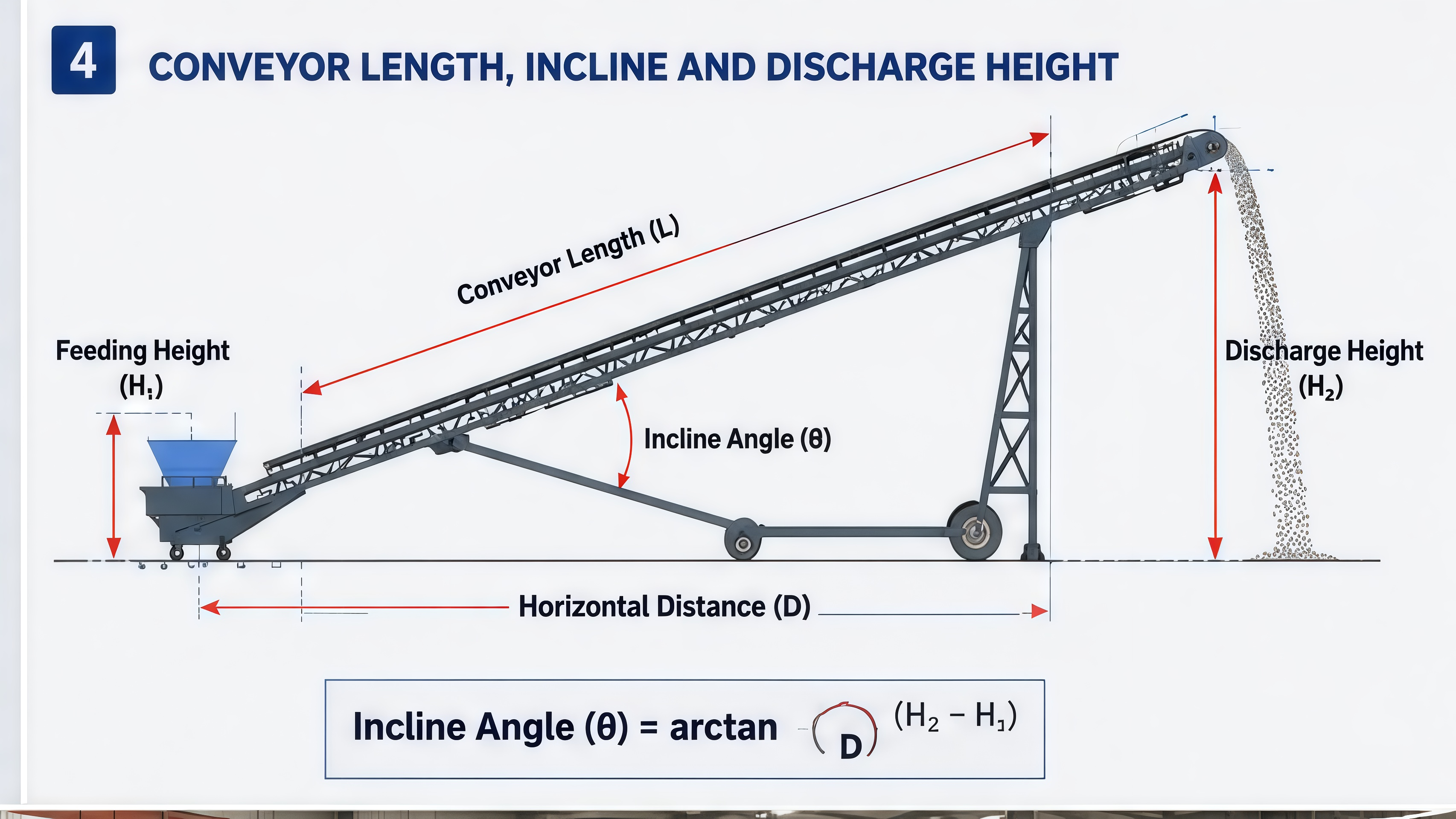
Determine the feeding height, horizontal distance, and required discharge height before selecting the conveyor geometry.
The suitable incline depends on material properties, moisture, particle or package shape, belt surface, and loading condition.
Inclined applications should also be checked for backward sliding or package instability.
For applications requiring additional grip, the belt surface or belt profile may need to be adjusted accordingly.
6. Mobility
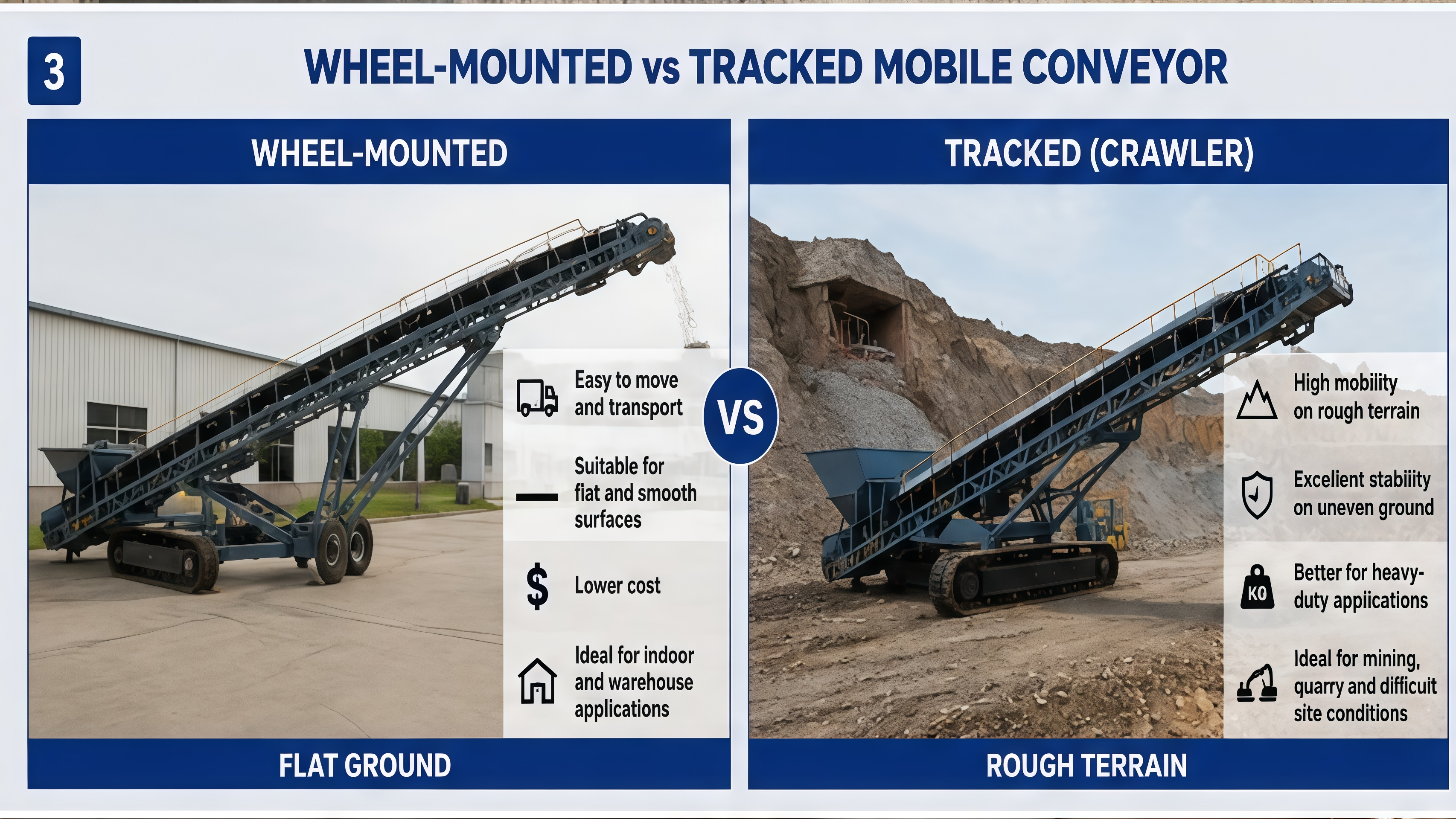
Determine how often the conveyor will be repositioned and what type of ground it will operate on.
Wheel-mounted systems are commonly suited to prepared or relatively flat surfaces, while tracked configurations can be more suitable for uneven outdoor terrain and heavy-duty applications.
Wheel-mounted and tracked conveyors should therefore be selected according to movement frequency, ground condition, stability, and handling requirements.
| Working Condition | Typical Configuration | Main Consideration |
|---|---|---|
| Indoor warehouse | Wheel-mounted | Easy repositioning on prepared floors |
| Frequent movement on flat ground | Wheeled mobile | Fast relocation |
| Temporary transfer | Portable or wheeled | Simple deployment |
| Uneven outdoor terrain | Tracked/crawler | Better ground adaptability |
| Quarry or aggregate site | Tracked/crawler | Mobility and stability |
Consider abrasion, oil, water, temperature, corrosive conditions, and hygiene requirements when selecting the belt material.
The belt surface should also match the conveying angle and the tendency of the material or packages to slide.
Indoor applications should consider floor space, turning area, ceiling clearance, and electrical supply.
Outdoor applications additionally require attention to rain, dust, temperature changes, ground conditions, corrosion, and electrical protection.
Drive requirements depend mainly on the material load, conveyor length, belt speed, incline, and mechanical resistance.
Confirm the available voltage and frequency before finalizing the drive system.
How to Select the Right Mobile Conveyor Step by Step?
The key is to evaluate these factors together rather than choosing a model from belt width or capacity alone.
For example, two applications with the same required throughput may need different conveyor lengths, inclines, discharge heights, and mobility arrangements.
| Requirement | Configuration Direction | Reason |
|---|---|---|
| General material transfer | Standard mobile conveyor | Routine repositioning |
| Different discharge heights | Adjustable conveyor | Changes receiving position |
| Variable working reach | Retractable or telescopic | Adjusts conveying reach |
| Frequent relocation on flat ground | Wheel-mounted | Easier repositioning |
| Uneven outdoor terrain | Tracked/crawler | Better terrain adaptability |
| Inclined conveying | Inclined belt configuration | Matches required elevation |
| Temporary conveying | Portable configuration | Easy deployment |
| Stockpiling | Mobile stacking conveyor | Changes discharge area |
A simple configuration should be preferred when it can meet the actual operating requirements.
Mobile Conveyor Selection Example
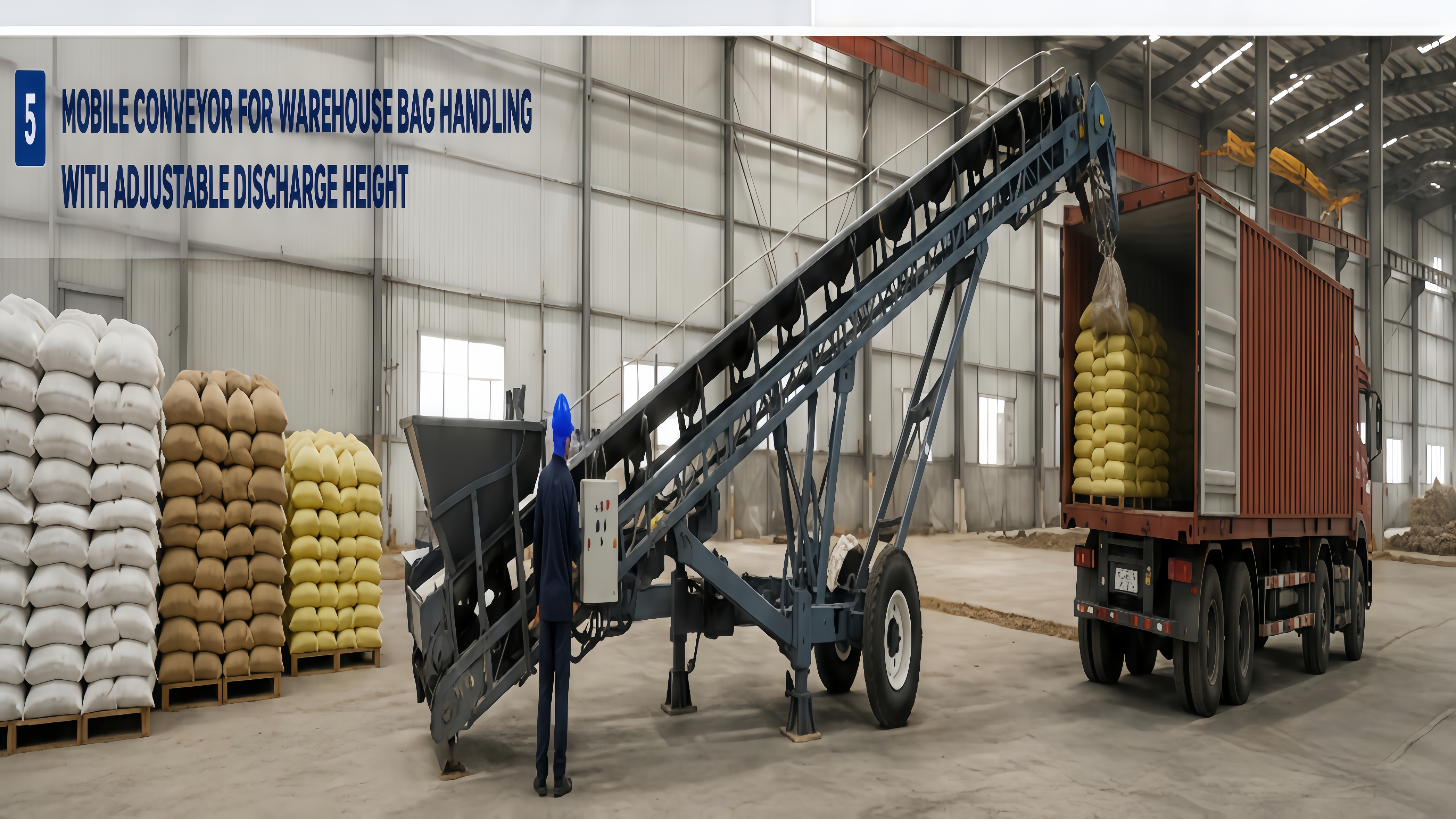
Consider a warehouse handling bagged material:
| Parameter | Requirement |
|---|---|
| Material | Bagged material |
| Capacity | 40 t/h |
| Conveying Distance | 10 m |
| Discharge Height | 3 m |
| Movement | Several times per day |
| Environment | Indoor warehouse |
The package dimensions determine the required belt width, while the 40 t/h target establishes the required conveying capacity.
The 10 m distance determines the approximate conveyor length, and the 3 m discharge height requires a suitable lifting arrangement.
Because the conveyor will be moved several times per day on an indoor floor, a wheel-mounted structure with suitable braking is a practical direction.
Final speed, drive power, belt characteristics, and dimensions should be confirmed from the complete application.
A low quotation may not provide the required capacity, dimensions, belt type, or mobility arrangement.
Maximum catalog capacity should not automatically be treated as the continuous operating capacity for every material and condition.
A conveyor may have enough horizontal length but still fail to reach the required receiving position.
The movement frequency and site surface should be considered before selecting wheels, tracks, brakes, and frame arrangements.
A complete inquiry helps the supplier determine the appropriate configuration more efficiently.
| Item | Information to Confirm |
|---|---|
| Material | Type, size, bulk density and condition |
| Capacity | Required t/h or m³/h |
| Length | Required conveying distance or working range |
| Belt Width | Required width, if known |
| Feeding Height | Loading point height |
| Discharge Height | Receiving point height |
| Incline | Required angle or height difference |
| Mobility | Movement frequency and ground condition |
| Belt | Material and surface requirements |
| Environment | Indoor or outdoor conditions |
| Power | Voltage and frequency |
| Upstream Equipment | Feeder, crusher, screen, hopper, etc. |
| Downstream Equipment | Truck, silo, hopper, stockpile, etc. |
Photos, layout drawings, package dimensions, and site measurements can also help confirm the final configuration.
Providing complete application information allows the supplier to determine a suitable belt width, conveyor length, discharge height, mobility arrangement, belt type, and drive configuration.
The right mobile conveyor should match the material, capacity, conveying distance, discharge height, mobility requirements, belt characteristics, environment, and available power.
Providing these application details allows the supplier to recommend a suitable configuration and prepare a quotation based on the actual working conditions.
Dahan can use the operating information to recommend a suitable mobile conveyor configuration and prepare a quotation based on the actual application.
CONTACT
WhatsApp:+86 18339211009
Email:sale@xxdahan.com
Add:China, Henan Province, Xinxiang City.Yanjin county forest park gate to the west 1000 meters north road