E-mail: sale@xxdahan.com
Follow Us 


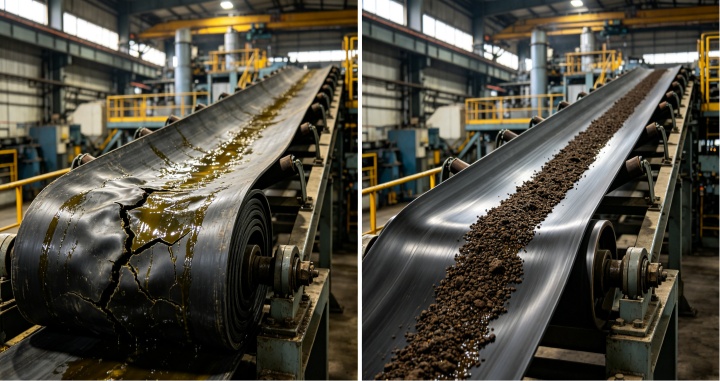
Standard conveyor belts fail quickly in oily environments—not from wear, but from chemical degradation. Natural rubber and SBR absorb hydrocarbons, swelling by 30% or more within 48 hours of mineral oil exposure. The belt distorts, loses tensile strength, tracks poorly, and splices fail. This is not a gradual process; it is rapid and costly.
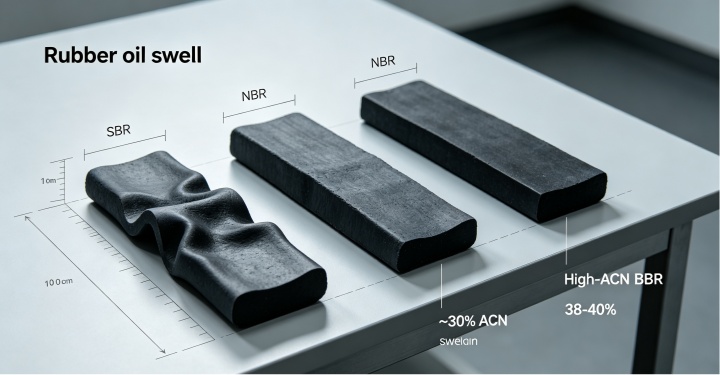
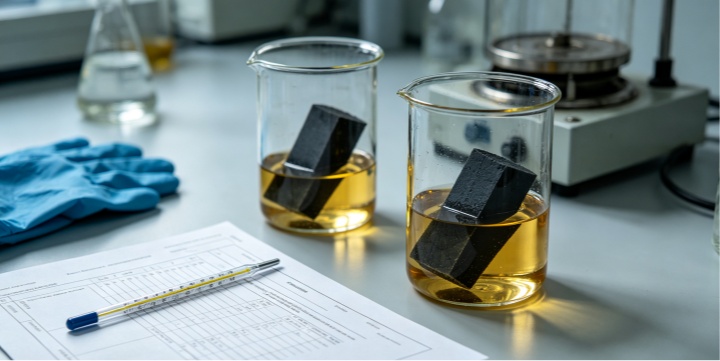
The solution is nitrile butadiene rubber (NBR). Its oil resistance comes from acrylonitrile (ACN) content—higher ACN gives lower oil swell. A standard NBR with ~30% ACN yields moderate resistance (volume swell ~15% under ISO 1817, 70°C, 48h). For severe mineral oil service, high‑ACN grades (38–40%) reduce swell to below 8% while retaining tensile strength above 15 MPa. The trade‑off: higher ACN reduces low‑temperature flexibility, so for sub‑zero operation a balanced compound is required.
This is the single most important decision point.
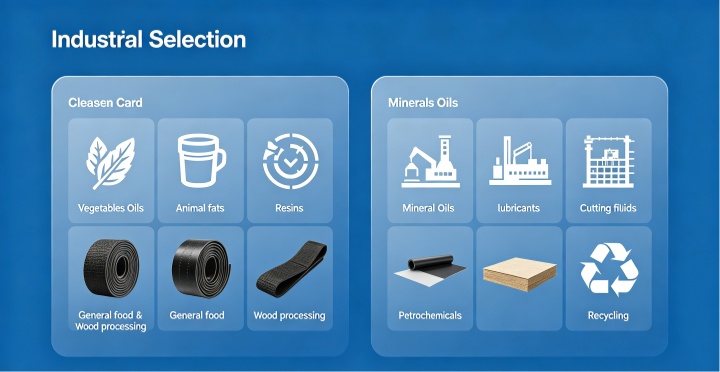
Vegetable oils, animal fats, resins → ROM grade (NBR/SBR blend) is sufficient. Typical applications: grain milling, meat processing, wood handling.
Mineral oils, lubricants, cutting fluids, petrochemicals → ROS grade (high‑ACN NBR) is mandatory. Fertiliser plants, automotive machining, waste recycling, and oil‑coated materials fall here.
Many suppliers offer only a single “moderate oil resistance” (MOR) compound. MOR works for vegetable oils but often fails with mineral oils—yet it is marketed as “oil‑resistant” without qualification. The DIN 22102‑G designation, frequently cited, sets no performance threshold; it only indicates the belt is "claimed" to resist grease. Always request the actual volume‑swell test result in the specific oil you handle.
Do not rely on marketing descriptions. Ask for test certificates and verify these numbers:
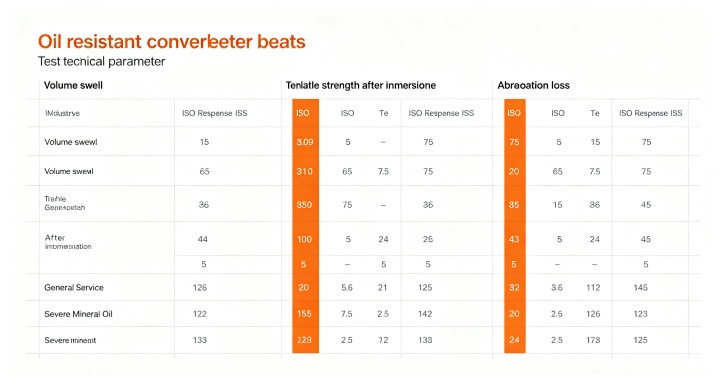
| Parameter | Standard | Acceptable (General) | Required (Severe Mineral Oil) |
| Volume Swell (70°C × 48h) | ISO 1817 | ≤ +15% | ≤ +8% |
| Tensile Strength (after immersion) | ISO 37 | ≥ 12 MPa | ≥ 15 MPa |
| Abrasion Loss | ISO 4649 | ≤ 200 mm³ | ≤ 100 mm³ |
Test Condition: 70°C × 48h immersion
Volume swell is the most critical. Swell above 10% typically causes tracking issues and cover separation. For abrasive materials (metal scrap, ores), abrasion loss must be low—otherwise the softened cover wears through rapidly, exposing the carcass to oil, which is irreversible.
Choose the carcass for your mechanical duty.The cover resists oil; the carcass carries the load. Selection depends on conveyor length and impact conditions:
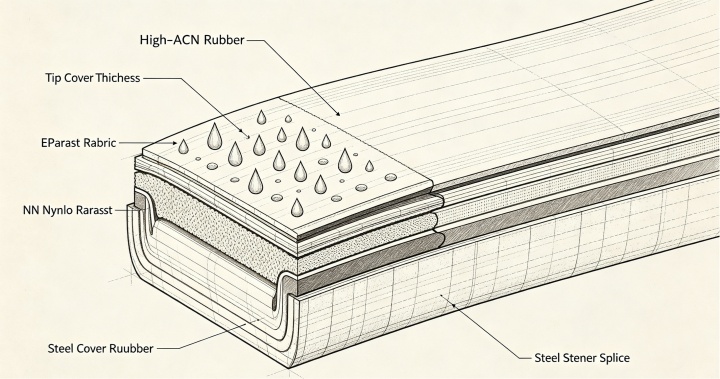
EP (polyester) – low elongation, high modulus, dimensionally stable. Preferred for medium‑to‑long conveyors.
NN (nylon) – higher impact resistance, better troughability. Suited for short, heavy‑drop applicat – for very long, high‑capacity systems. Splice design is critical because oil contamination weakens steel‑to‑rubber adhesion.
If oil penetrates through the cover into the carcass, the belt is beyond repair. Therefore, for oily duties, specify a carrying‑side cover thickness of at least 4–5 mm—do not economise on cover gauge.
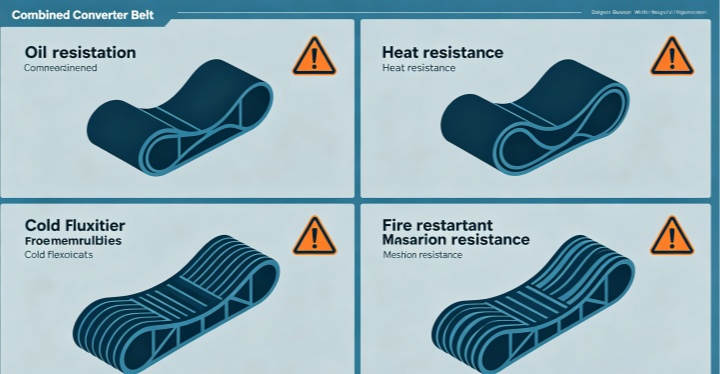
Sometimes oil resistance is not the only demand. Common combinations:
Heat + oil – for foundry sand or hot waste (operating temperature >80°C)
Cold + oil – for outdoor winter operation (down to -20°C or lower; note that high‑ACN NBR becomes stiff at low temperatures)
Fire‑retardant + oil – for underground mining or chemical plants with fire safety regulations
Each combination requires a specific formulation. Standard ROS belts are not automatically heat‑ or cold‑resistant; verify the temperature range with the supplier.
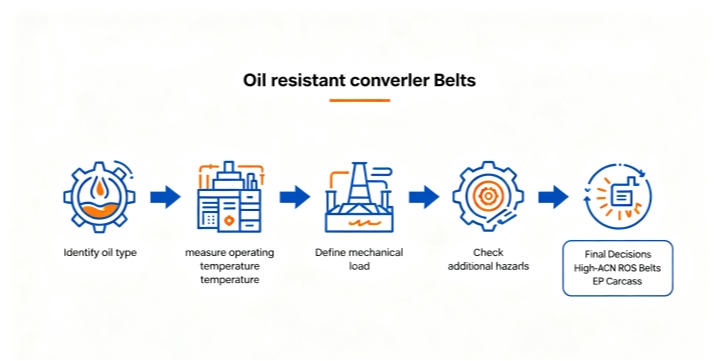
A practical approach:
Determine the oil type – mineral or vegetable? If uncertain, choose ROS (it covers both).
Measure the operating temperature – maximum continuous surface temperature.
Define the mechanical load and distance – select carcass type (EP/NN/steel).
Request test data – volume swell in *your* oil, not generic values.
Check additional hazards – fire, abrasion, extreme cold.
This sequence removes guesswork. A properly selected ROS belt with high‑ACN cover and EP carcass typically pays for itself within six months compared to a standard belt that fails every two months—when downtime, labour, and replacement costs are included.
References: ISO 1817 (volume swell), ISO 37 (tensile), ISO 4649 (abrasion). Always consult the belt manufacturer for lot‑specific test reports.
CONTACT
WhatsApp:+86 18339211009
Email:sale@xxdahan.com
Add:China, Henan Province, Xinxiang City.Yanjin county forest park gate to the west 1000 meters north road