Steel Cord Conveyor Belt
Steel Cord Conveyor Belt
High-Tensile Conveyor Belt for Long-Distance and Heavy-Duty Material Handling
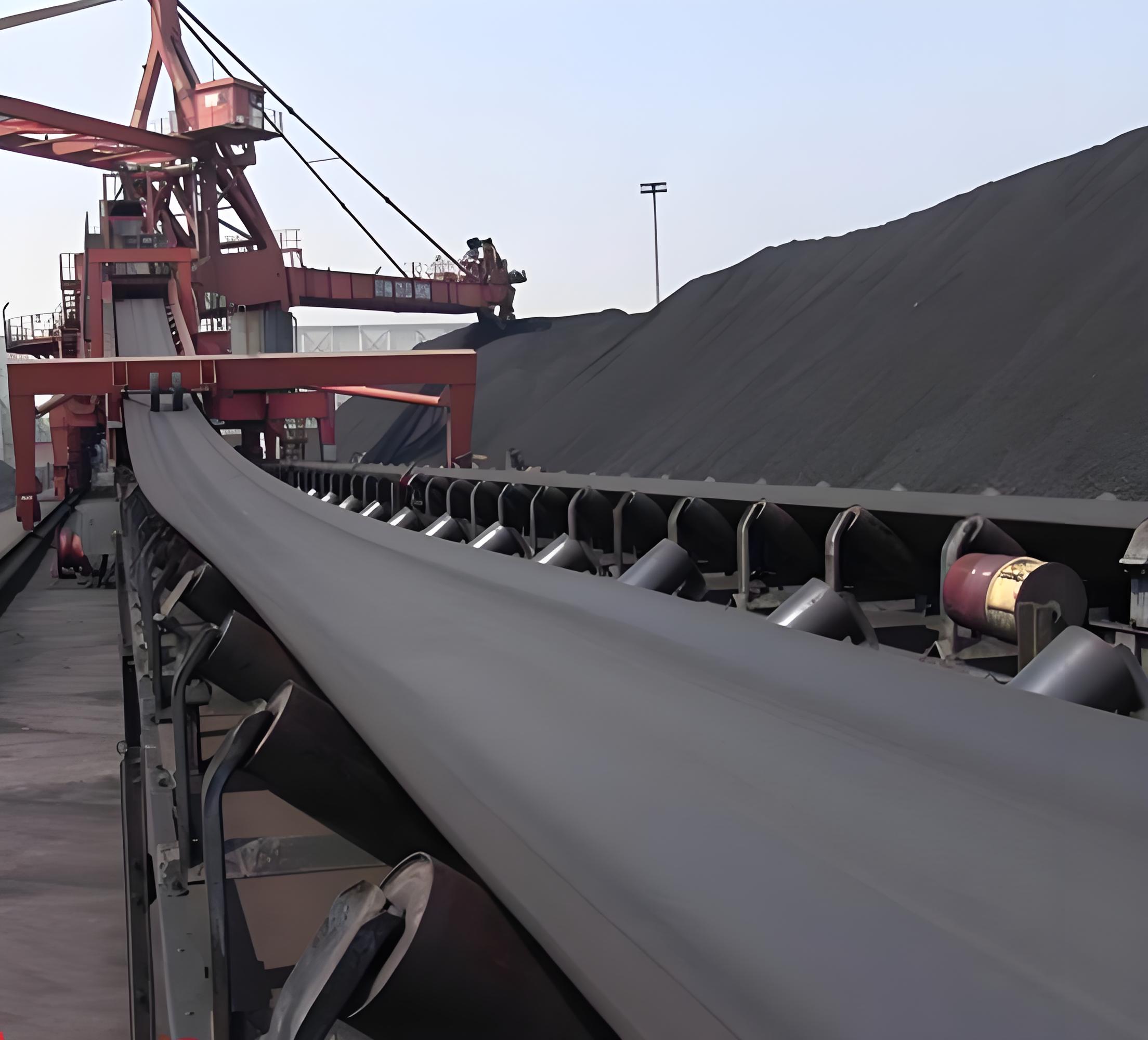
A Steel Cord Conveyor Belt is designed for high-tension, long-distance and heavy-duty bulk material conveying. Longitudinal steel cords provide high tensile strength and low elongation for demanding conveyor systems used in mining, cement, ports, power plants, steel plants and aggregate handling.
Key Specifications
Applications
Mining · Cement · Ports · Power Plants · Steel Plants · Aggregates
Send your belt width, ST grade, belt length, material, capacity, belt speed and pulley diameter for specification evaluation.
Request a Quote
Steel Cord Conveyor Belt
High-Tensile Conveyor Belt for Long-Distance and Heavy-Duty Material Handling
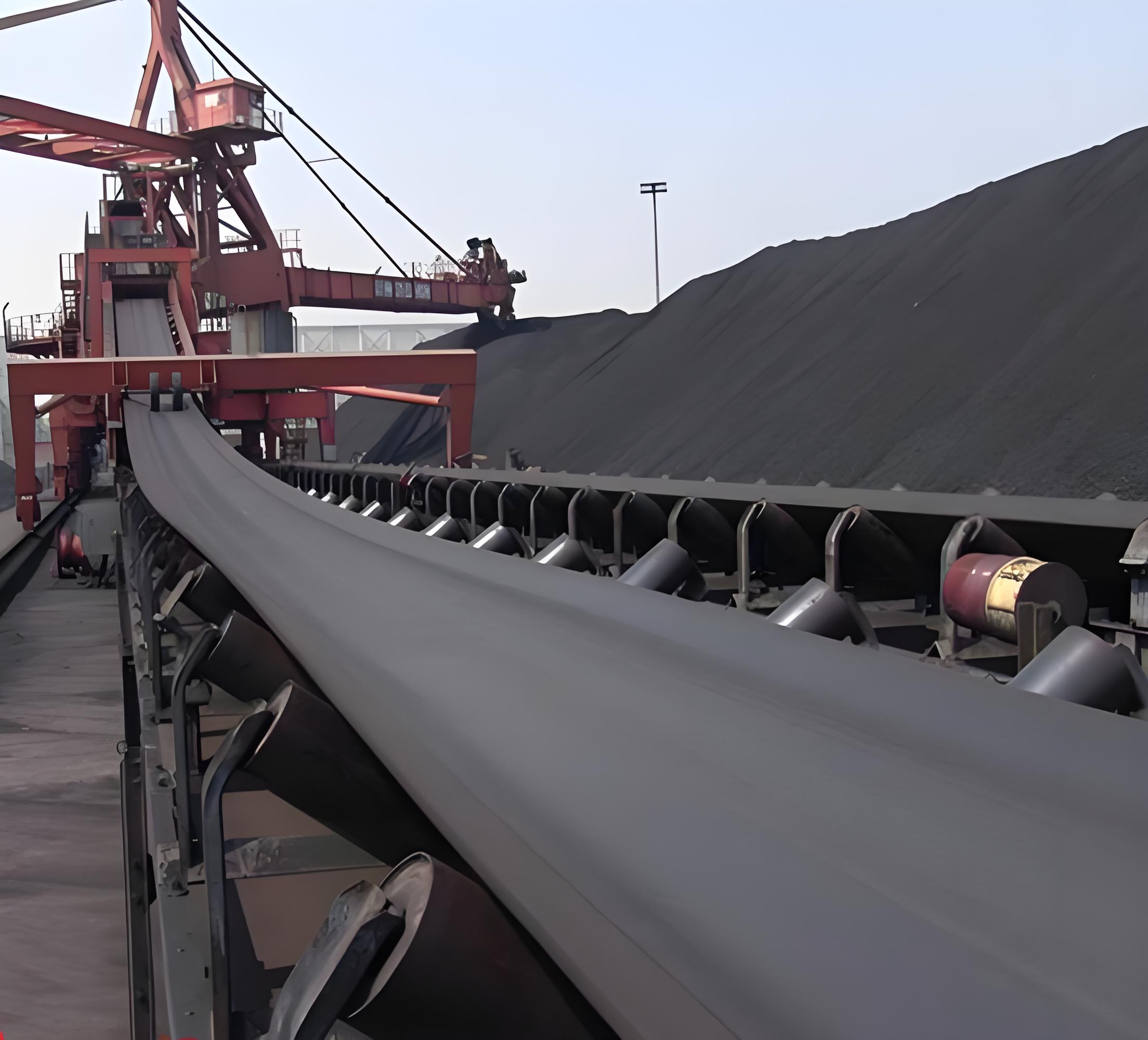
A Steel Cord Conveyor Belt is designed for high-tension, long-distance and heavy-duty bulk material conveying. Longitudinal steel cords provide high tensile strength and low elongation for demanding conveyor systems used in mining, cement, ports, power plants, steel plants and aggregate handling.
Key Features
High longitudinal tensile strength
Low elongation under operating tension
Suitable for long-distance conveying
Multiple cover rubber options
Different ST strength grades
Specifications based on conveyor requirements
Get a QuoteWhat Is a Steel Cord Conveyor Belt?
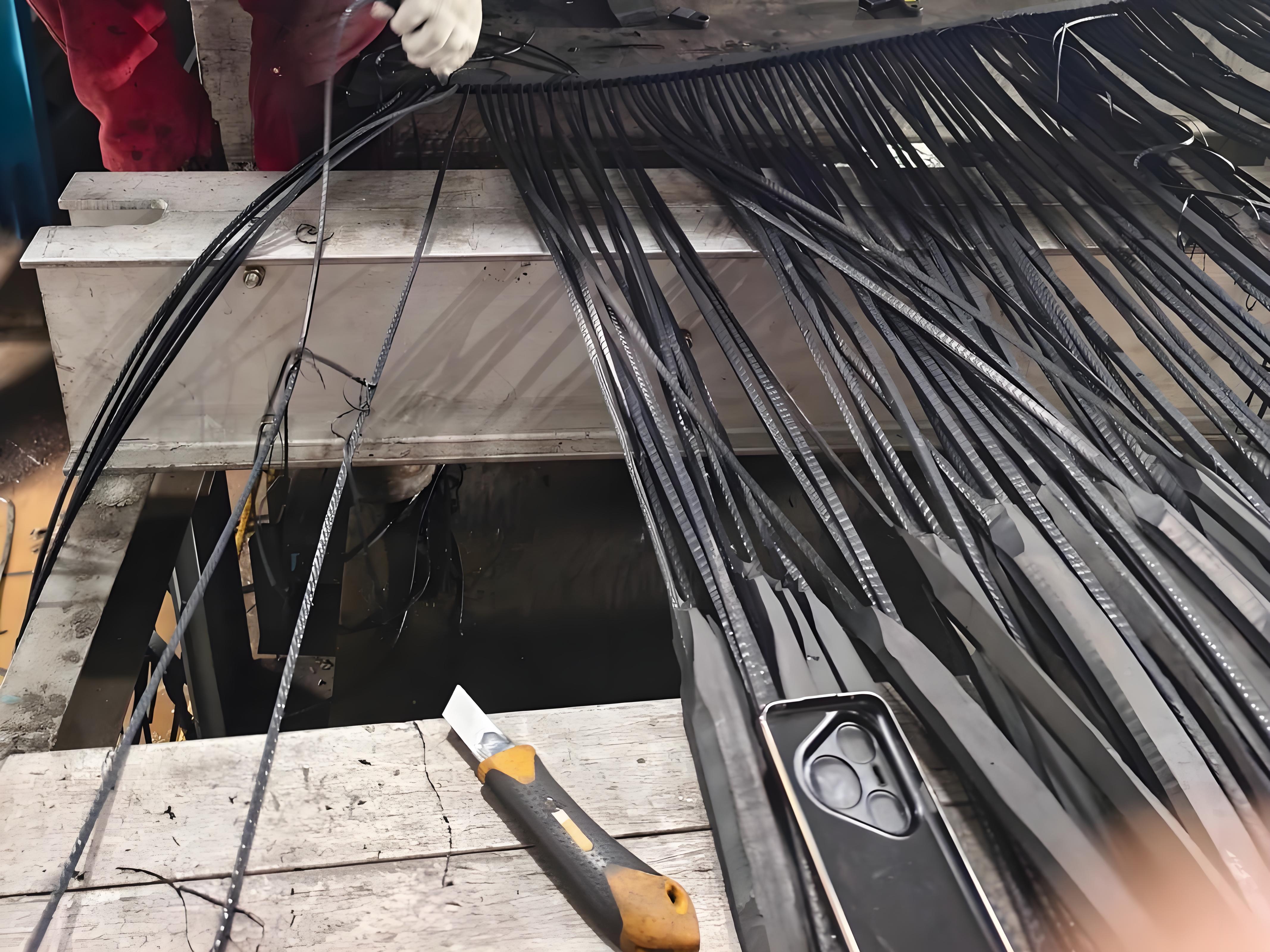
A Steel Cord Conveyor Belt uses longitudinal steel cords embedded in rubber as the primary tension-bearing reinforcement. The steel cords run continuously along the belt and are bonded with core rubber to form a high-strength carcass.
This construction is commonly selected for conveyors where belt tension, conveying distance and material capacity are significant factors.
The correct specification should be determined by considering belt width, conveyor length, material capacity, belt speed, maximum belt tension, pulley diameter, material characteristics and operating temperature.
Key Advantages
High Tensile Strength — Suitable for conveyor systems operating under high belt tension.
Low Elongation — Steel cord reinforcement helps maintain stable belt movement under operating tension.
Long-Distance Conveying — Suitable for long conveyor routes requiring controlled elongation.
Application-Specific Covers — Cover rubber can be selected according to abrasion, temperature, oil, fire and other operating conditions.
Construction
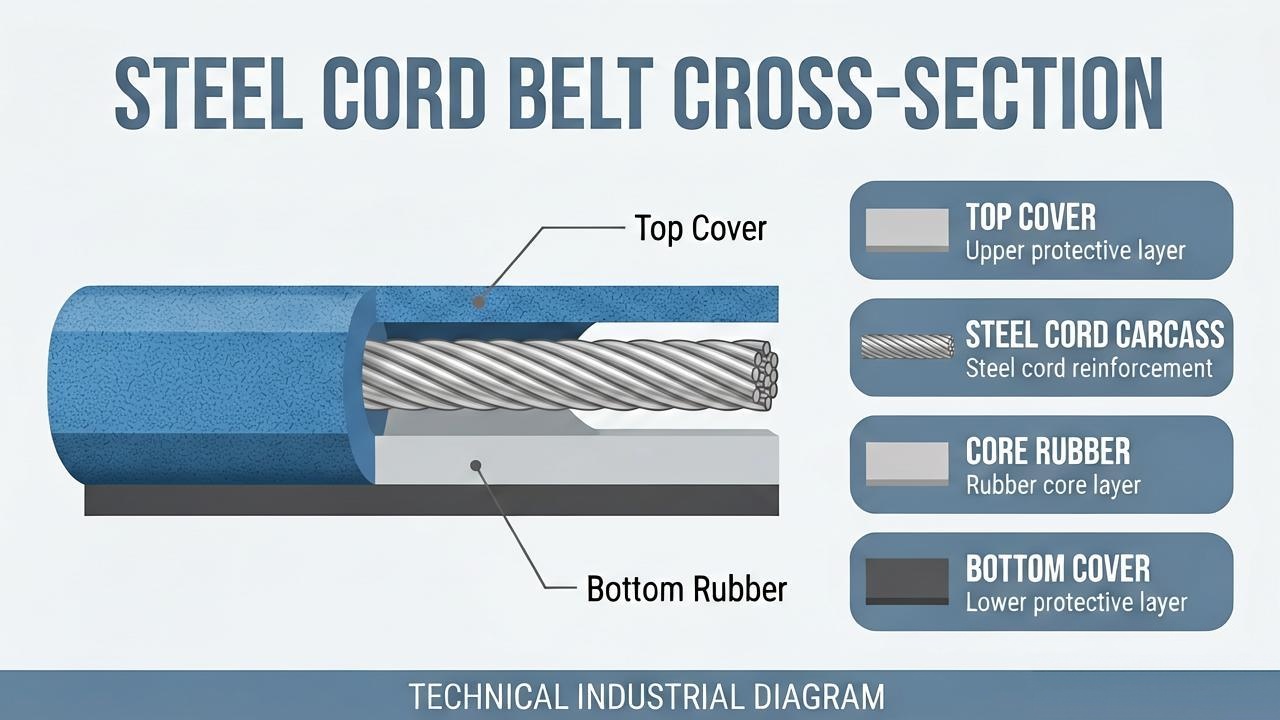
The belt consists mainly of a top cover, steel cord carcass, core rubber and bottom cover.
Steel Cord Carcass
Longitudinal steel cords carry the main tensile load. Cord diameter, spacing and arrangement depend on the selected strength grade.
Core Rubber
Core rubber surrounds the steel cords and helps maintain adhesion between the reinforcement and rubber layers.
Top and Bottom Covers
The rubber covers protect the carcass from abrasion, impact and environmental conditions. Cover thickness and rubber compound should be selected according to the conveying material and operating environment.
Technical Specifications
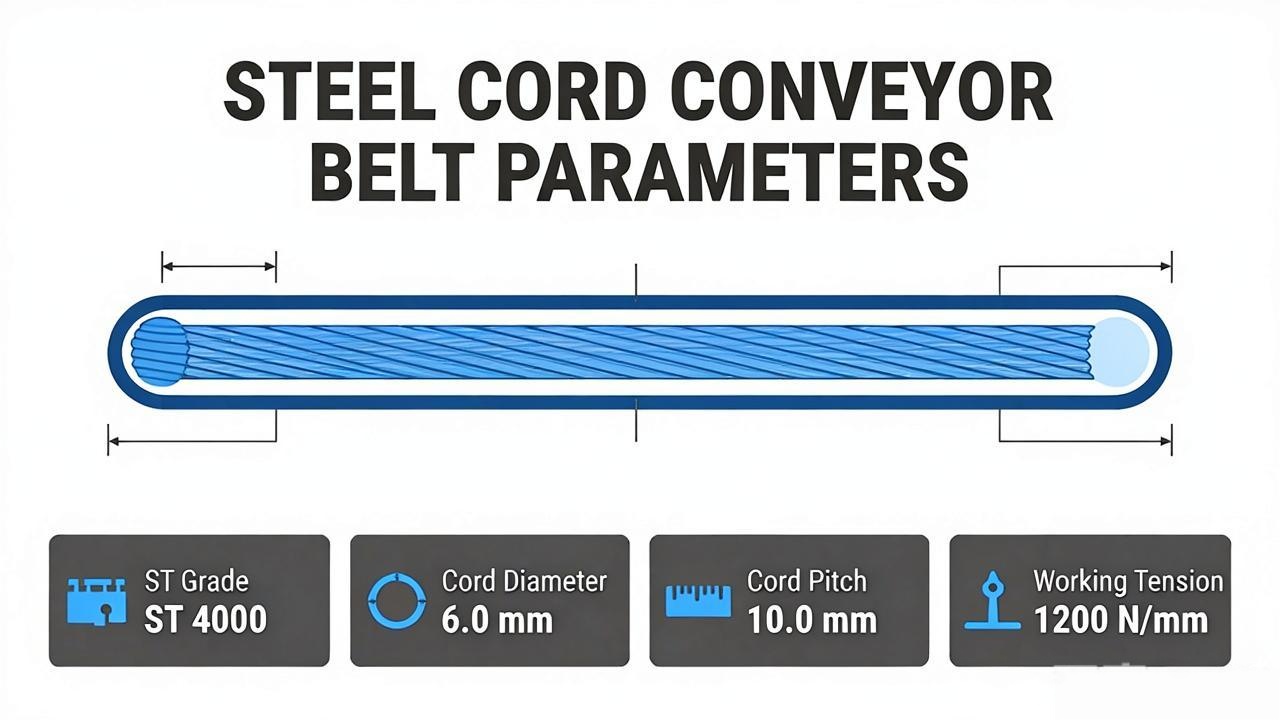
Steel cord belts are commonly specified by ST grade, cord diameter, cord pitch, cord structure, cover thickness, working tension and pulley requirements.
The exact specification varies according to belt construction, so final values should be confirmed against the actual product specification before production.
| Parameter | Specification |
|---|---|
| ST Grade | According to project requirements |
| Tensile Strength | According to ST grade |
| Cord Diameter | According to belt construction |
| Cord Pitch | According to belt construction |
| Cord Structure | According to belt design |
| Working Tension | According to ST grade |
| Cover Thickness | According to application |
| Belt Width | Customized according to conveyor requirements |
| Minimum Pulley Diameter | According to belt construction |
| Belt Length | Customized |
Belt Width and Steel Cord Quantity
Belt width and steel cord quantity should be considered together when selecting the belt construction.
A wider belt generally requires an appropriate steel cord arrangement to distribute longitudinal tension across the belt. The required cord quantity depends on belt width, ST grade, cord diameter and construction.
For accurate selection, provide the required belt width and ST grade when requesting a quotation.
How to Select the ST Grade?
ST indicates the nominal longitudinal tensile strength of the belt in N/mm. A higher ST grade is not automatically the best choice.
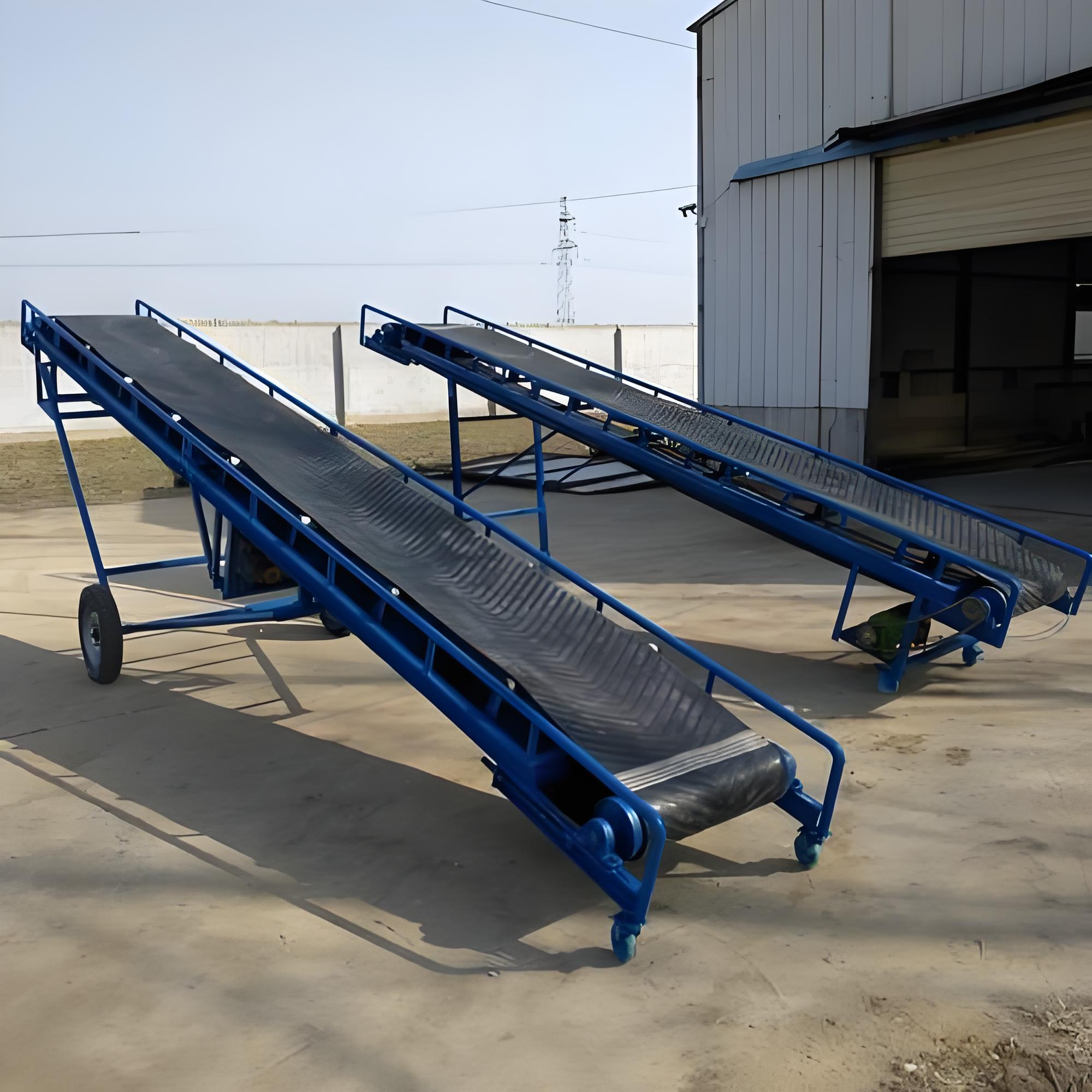
The selection should begin with the maximum operating belt tension and then consider the complete conveyor system.
| Conveyor Requirement | Main Selection Factor |
|---|---|
| Long conveyor | Maximum belt tension |
| High conveying capacity | Belt width and belt speed |
| Heavy or abrasive material | Strength and cover properties |
| Small pulley arrangement | Minimum pulley diameter |
| High temperature | Cover compound and temperature |
| Replacement belt | Existing belt specification and splice requirements |
The final specification should consider ST grade, belt width, steel cord construction, cover properties and pulley arrangement together.
Cover Rubber Options
| Cover Requirement | Typical Application |
|---|---|
| Abrasion Resistant | Ore, coal, stone and aggregates |
| Heat Resistant | Hot conveyed materials |
| Fire Resistant | Systems requiring fire resistance |
| Cold Resistant | Low-temperature environments |
| Oil Resistant | Oil-containing materials |
| Chemical Resistant | Specific chemical exposure |
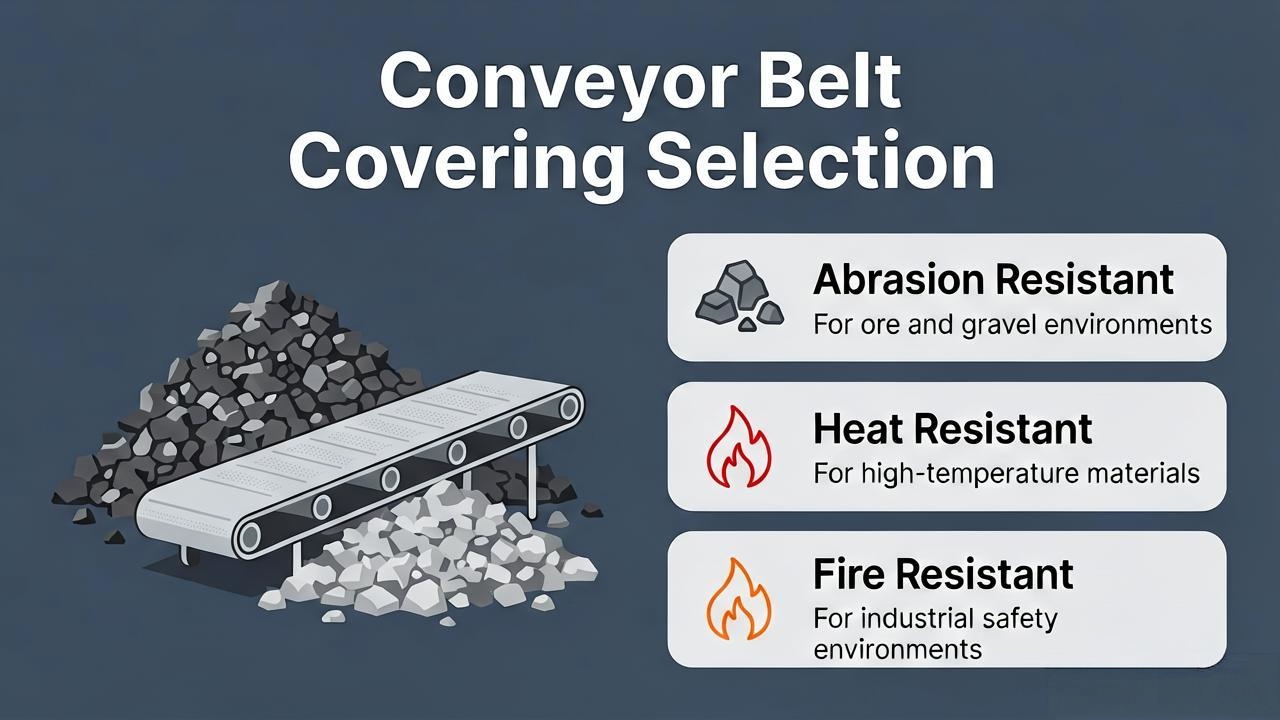
Cover selection should be based on the actual conveying material and operating conditions.
Applications
Mining
For ore, coal and other bulk minerals where high tension and abrasion resistance are important.
Cement
For limestone, clinker and other heavy bulk materials.
Ports
For long-distance and high-capacity bulk material conveying systems.
Power Plants
For continuous transportation of bulk fuels and raw materials.
Steel Plants
For heavy-duty material handling under demanding operating conditions.
Quarries and Aggregates
For abrasive crushed materials where belt strength and cover durability are important.
Minimum Pulley Diameter
Pulley diameter should be compatible with the selected belt construction.
Repeated bending around pulleys that are too small can increase bending stress and affect belt performance and service life. Pulley dimensions should therefore be checked together with belt strength, cord construction and splice requirements.
Splicing
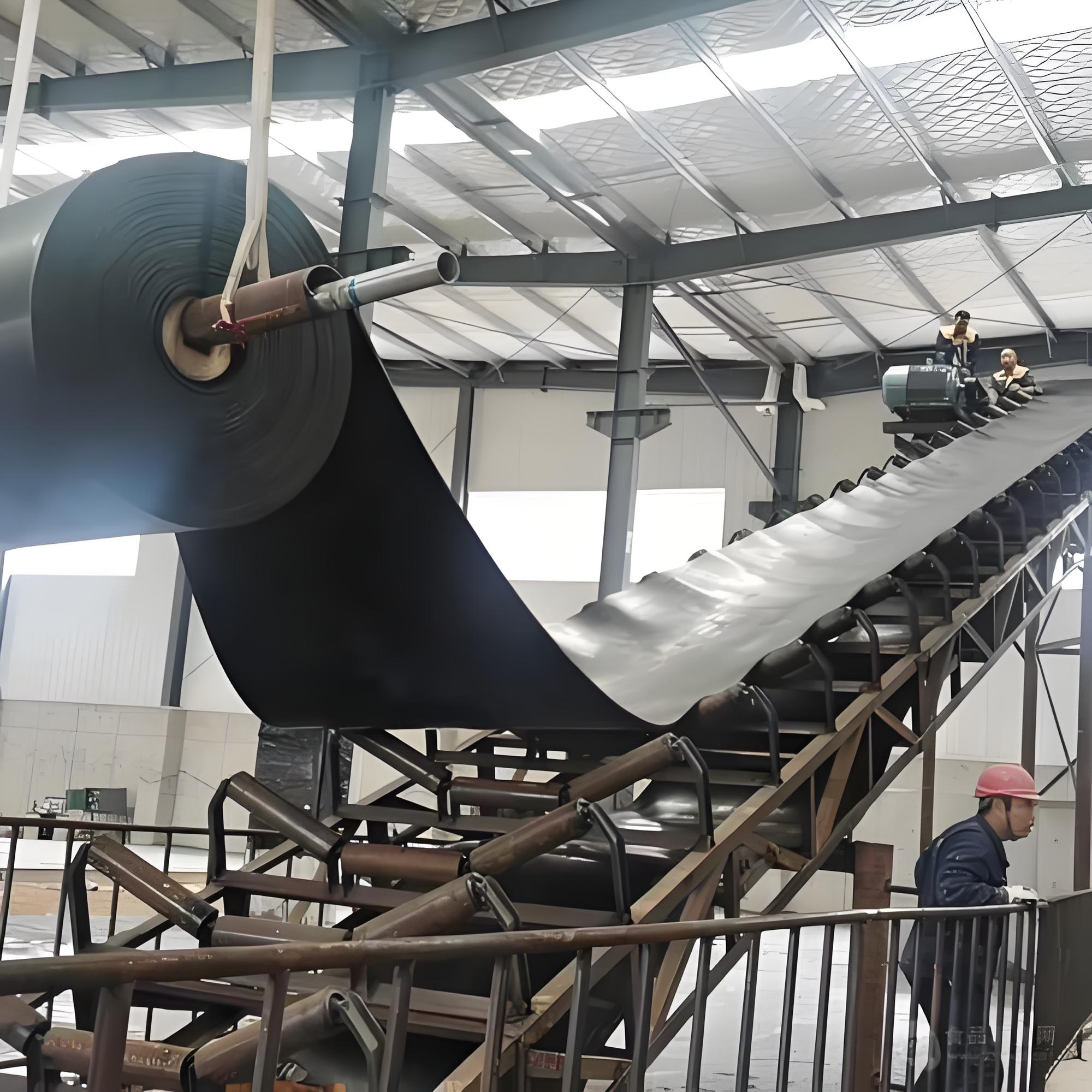
Hot vulcanized splicing is commonly used for joining steel cord belts. The splice must transfer belt tension through the joint while maintaining the required belt geometry.
Splicing requirements depend on:
Belt strength
Belt width
Steel cord arrangement
Cord diameter
Splice configuration
Installation conditions
The splice design should be determined according to the actual belt construction.
Customization
Dahan can provide specifications according to project requirements, including:
Belt width
Belt length
ST strength grade
Steel cord construction
Cover thickness
Rubber properties
Operating temperature requirements
Splicing requirements
For replacement applications, provide the existing belt marking, technical specification and conveyor parameters whenever available.
Replacement Belt
For replacement projects, the existing belt specification can help determine a compatible construction.
Useful information includes:
Existing belt width
ST grade
Belt length
Cover thickness
Material conveyed
Belt speed
Pulley diameter
Existing splice requirements
Providing the existing belt information can reduce specification errors during replacement.
Information Required for a Quotation
1. Belt width
2. Belt length
3. Conveyor center distance
4. Material being conveyed
5. Material capacity
6. Belt speed
7. Conveyor inclination
8. Maximum belt tension
9. Pulley diameter
10. Operating temperature
11. Required cover properties
12. Required ST grade or existing belt specification
If the ST grade is unknown, the available conveyor parameters can be submitted for preliminary specification evaluation.
Frequently Asked Questions
What does ST mean?
ST indicates the nominal longitudinal tensile strength of the belt in N/mm.
How do I choose the correct ST grade?
Start with the maximum operating belt tension, then consider belt width, conveyor length, pulley arrangement and material conditions.
What belt width should I choose?
Belt width depends mainly on conveying capacity, material characteristics, belt speed and conveyor configuration.
What cover thickness should I choose?
Cover thickness should be selected according to material size, impact, abrasion, temperature and operating conditions.
What information is needed for a quotation?
Belt width, length, capacity, speed, conveyor length, pulley diameter, belt tension and material characteristics are useful starting information.
How is the belt spliced?
Hot vulcanized splicing is commonly used, with the splice design matched to the belt construction.
Request a Quote
Send your belt width, ST grade, belt length, material, capacity, belt speed and pulley diameter.
If the ST grade is unknown, provide the available conveyor parameters and existing belt information for specification evaluation.
Dahan will review the operating conditions and provide a suitable belt specification for your application.