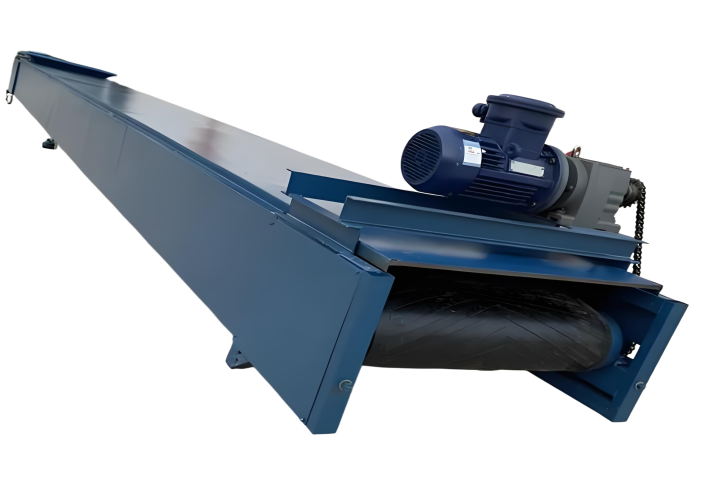
Tubular Belt Conveyor for Coal
Key Features
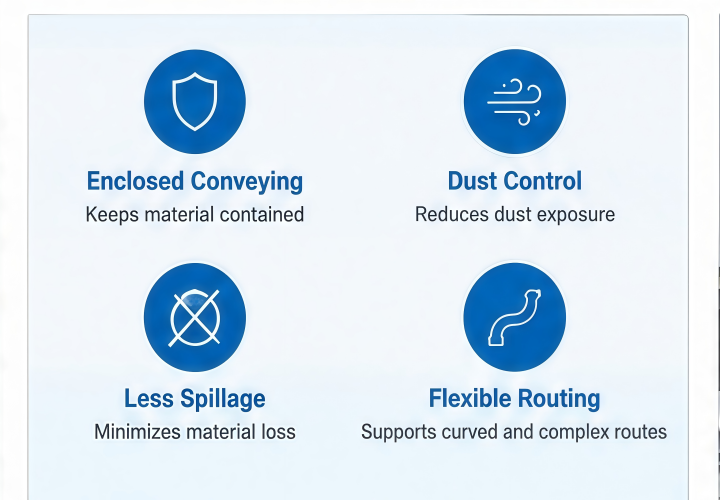
Enclosed coal conveying
Reduced coal spillage
Reduced direct dust exposure
Suitable for selected curved routes
Project-based conveyor configuration
Tubular Belt Conveyor for Coal
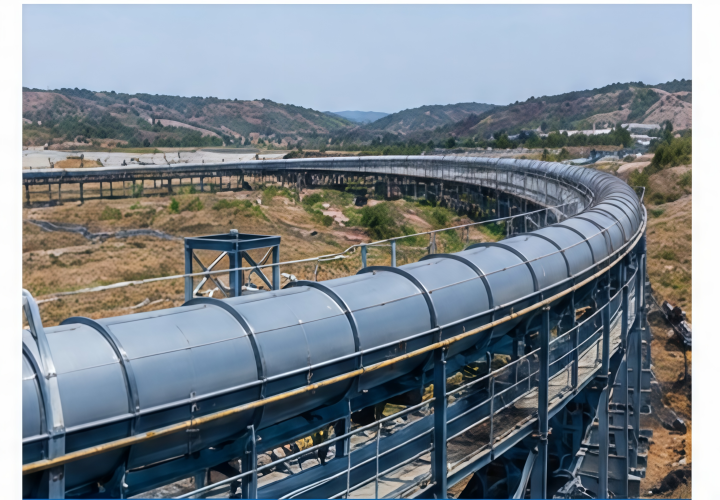
A Tubular Belt Conveyor for Coal is an enclosed bulk material conveying system that forms the conveyor belt into a closed tubular shape around coal during the main conveying section. Also known as a pipe belt conveyor or pipe conveyor, it is suitable for coal handling projects where material containment, reduced spillage, dust control, and flexible routing are important.
Unlike a conventional troughed belt conveyor, the belt gradually closes after loading, remains tubular during conveying, and opens again before discharge. It can be used in coal mines, coal preparation plants, stockyards, ports, terminals, and power plant coal handling systems.
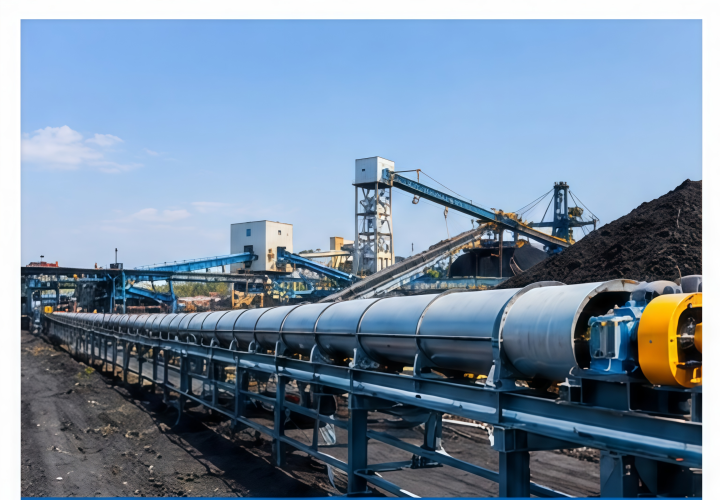
Dahan develops conveyor configurations according to coal properties, required capacity, conveying distance, elevation, route geometry, and installation conditions. Final specifications should be determined from actual project data.
What Is a Tubular Belt Conveyor for Coal?
A Tubular Belt Conveyor for Coal uses a flexible conveyor belt supported by specially arranged idlers. After coal enters the loading section, the belt progressively changes from an open carrying shape into a closed tubular profile.
The coal remains enclosed through the main conveying section. Near the discharge point, the belt gradually opens so the material can be transferred to downstream equipment.
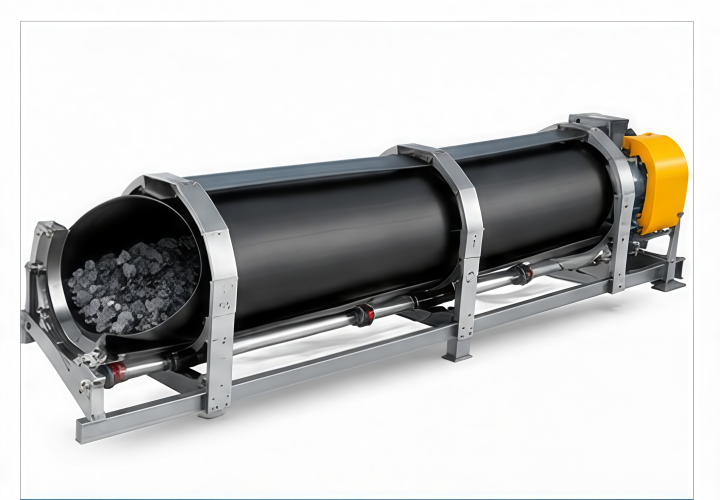
The main purpose of the tubular configuration is to keep the conveyed coal within the belt during transport while providing more flexibility for certain site layouts than a conventional open belt conveyor.
How Does a Tubular Belt Conveyor Work?
Coal Feeding
Coal enters through a suitable hopper, feeder, or transfer arrangement. Stable and reasonably uniform feeding helps maintain consistent belt forming.
Belt Forming
After loading, forming idlers progressively close the belt around the coal until the required tubular profile is established.
Enclosed Conveying
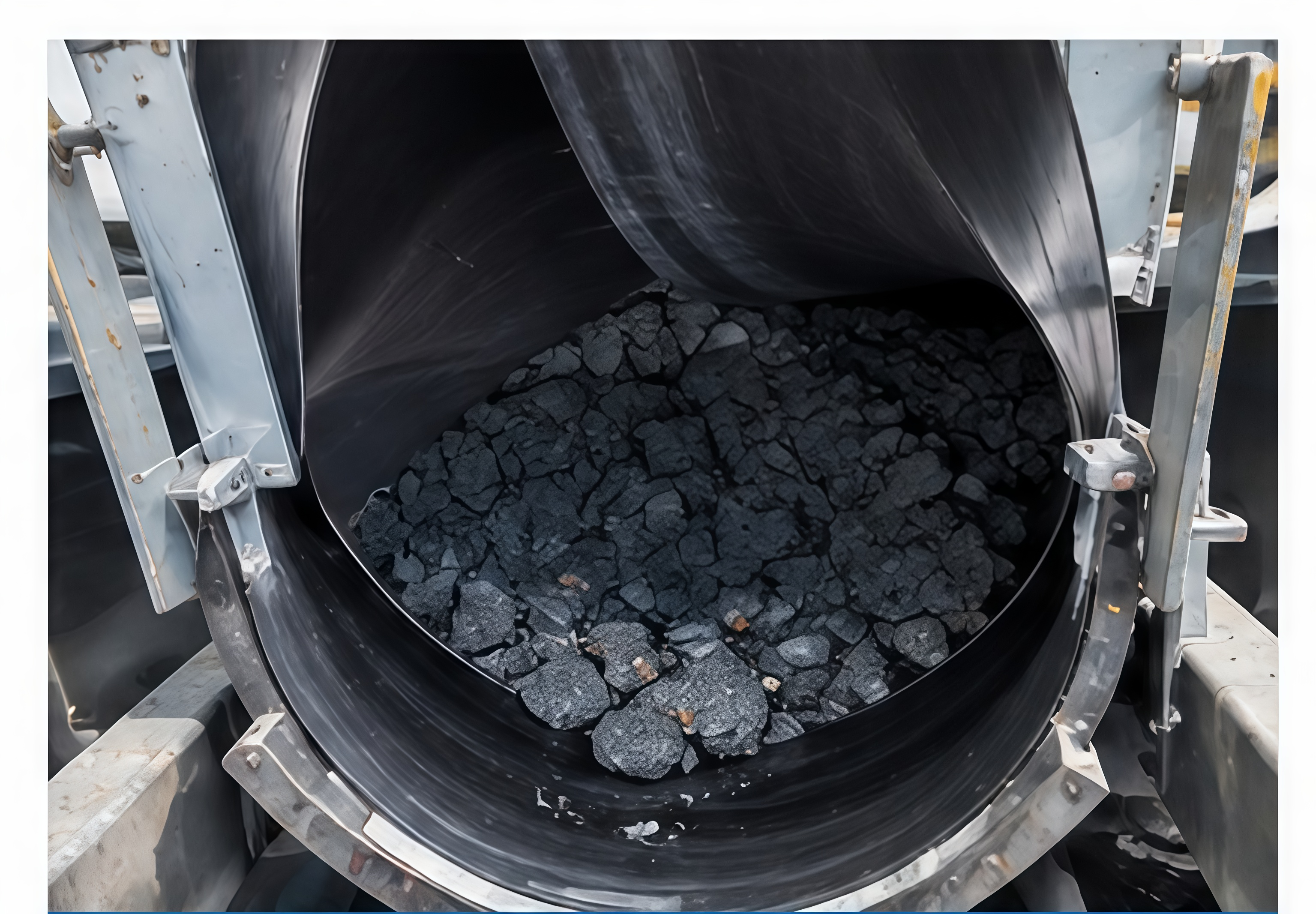
The coal travels inside the closed belt while the idler arrangement supports and maintains the tubular shape.
Curved Conveying
Where the route and conveyor design permit, the system can incorporate suitable horizontal or vertical curves. This can provide additional routing options around roads, buildings, waterways, existing equipment, or restricted areas.
Belt Opening and Discharge
Before the receiving point, the belt gradually opens to an open profile and the coal is discharged to the next conveyor, stockpile system, bunker, crusher, or other equipment.
Why Use a Tubular Belt Conveyor for Coal?
Enclosed Coal Conveying
The tubular belt surrounds the coal during the main conveying route, helping contain material and reduce direct exposure to the surrounding environment.
Reduced Coal Spillage
Because coal is enclosed rather than carried on an open surface, normal side spillage can be reduced along the tubular section.
Dust Control
The enclosed route limits direct wind exposure and can help reduce material release along the main conveying section. Loading, transfer, and discharge points may still require separate dust-control measures.
Flexible Route Arrangement
A tubular conveyor can be engineered for suitable horizontal and vertical curves, providing additional routing options where a conventional straight conveyor is difficult to install.
Long-Distance Coal Handling
Tubular belt conveyor systems can be designed for long conveying routes and high throughput. The appropriate capacity, pipe diameter, belt speed, belt strength, and drive arrangement depend on the complete project conditions.
Tubular Belt Conveyor vs Conventional Belt Conveyor
Both systems can transport coal, but their design priorities are different.
| Item | Tubular Belt Conveyor | Conventional Troughed Belt Conveyor |
|---|---|---|
| Material containment | Enclosed during the main conveying route | Material remains exposed |
| Spillage control | Reduced along the enclosed section | Additional control may be required |
| Dust exposure | Lower direct exposure along the conveying route | Coal remains exposed |
| Weather exposure | Reduced during enclosed conveying | Higher unless separately covered |
| Route flexibility | Suitable for selected curves | More conventional routing |
| Complex site layout | Can provide additional routing options | May require a different corridor |
| Typical use | Containment and complex routing | Simple and relatively straight routes |
A conventional belt conveyor may remain a practical choice for a simple route with limited containment requirements. A tubular system is more attractive when enclosed conveying or route flexibility is an important project requirement.
Technical Specifications and Design Parameters
Tubular conveyor specifications should be determined from the actual coal and project conditions rather than from a single standard size.
| Parameter | Design Basis |
|---|---|
| Material | Coal |
| Capacity | Required throughput in t/h |
| Pipe Diameter | Calculated from capacity, loading, coal properties, and belt speed |
| Belt Width | Matched to the tubular conveyor configuration |
| Belt Speed | Selected according to capacity and material characteristics |
| Conveying Length | Complete route from loading to discharge |
| Lifting Height | Total vertical elevation |
| Maximum Lump Size | Based on coal size and loading conditions |
| Bulk Density | Used in capacity and loading calculations |
| Moisture Content | Considered for feeding and material flow |
| Belt Strength | Selected according to calculated belt tension |
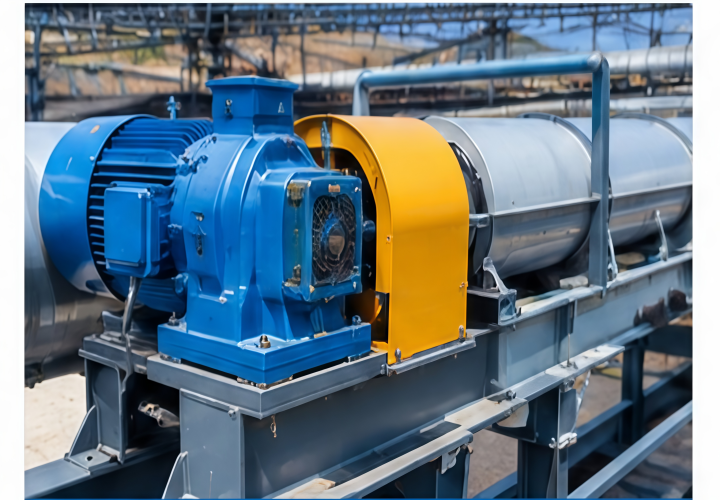
| Drive System | Determined from resistance, elevation, and operating duty |
| Tensioning System | Selected according to belt length and system requirements |
| Route | Straight, curved, inclined, or combined |
| Support Structure | Designed according to load and installation conditions |
Pipe diameter, belt speed, belt strength, and drive requirements should be determined together because changing one major design parameter can affect the rest of the conveying system.
How to Select a Tubular Belt Conveyor for Coal?
Coal Characteristics
Important information includes coal type, bulk density, moisture content, particle size, maximum lump size, abrasiveness, and temperature.
These properties influence the loading arrangement, conveying cross section, belt selection, and operating conditions.
Required Capacity
Capacity is normally specified in tonnes per hour.
Required throughput is a major input for determining pipe diameter and belt speed. Normal and peak requirements should be considered where applicable.
Conveying Distance and Elevation
The complete conveying route should include horizontal length and elevation changes.
Long routes and significant lifting requirements can increase belt tension and drive power, so they should be included in the preliminary design.
Conveyor Route
The design should consider roads, buildings, waterways, existing structures, loading points, discharge points, and available installation space.
This is especially important when the project depends on the route flexibility of a tubular conveyor.
Pipe Diameter and Belt Speed
Pipe diameter and belt speed should be selected together with capacity, bulk density, maximum lump size, and loading conditions.
The final combination should be established through project calculations rather than a generic specification.
Belt and Drive Requirements
Once the capacity and route are established, the required belt strength, belt tension, drive power, pulleys, idlers, and tensioning equipment can be determined.
Coal Handling Applications
Coal Mines
For transporting raw coal from receiving areas to stockpiles, preparation plants, transfer stations, or other processing sections.
Coal Preparation Plants
For conveying coal between processing and storage areas where controlled material handling and containment are important.
Coal Stockyards
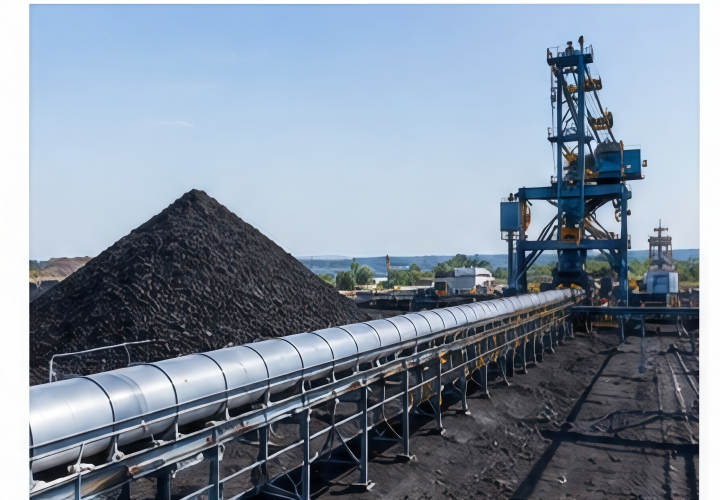
For connecting receiving points, stockpiles, and downstream equipment while keeping coal enclosed along the main route.
Ports and Coal Terminals
For outdoor coal handling where reducing material exposure and normal spillage is important.
Coal-Fired Power Plants
For conveying coal between receiving, storage, transfer, and fuel handling areas, particularly where route restrictions or containment requirements exist.
What Information Is Needed for a Tubular Belt Conveyor Quote?
Complete project information helps make the preliminary design more accurate.
| Project Information | Recommended Data |
|---|---|
| Material | Coal type |
| Capacity | Required t/h |
| Bulk Density | t/m³ |
| Maximum Lump Size | mm |
| Moisture | % |
| Conveying Length | m |
| Lifting Height | m |
| Route | Straight, curved, inclined, or combined |
| Installation Location | Mine, preparation plant, stockyard, port, power plant, etc. |
| Operating Hours | Continuous or intermittent |
| Environment | Indoor or outdoor |
| Power Supply | Voltage and frequency |
| Layout Drawing | Conveyor route or site sketch |
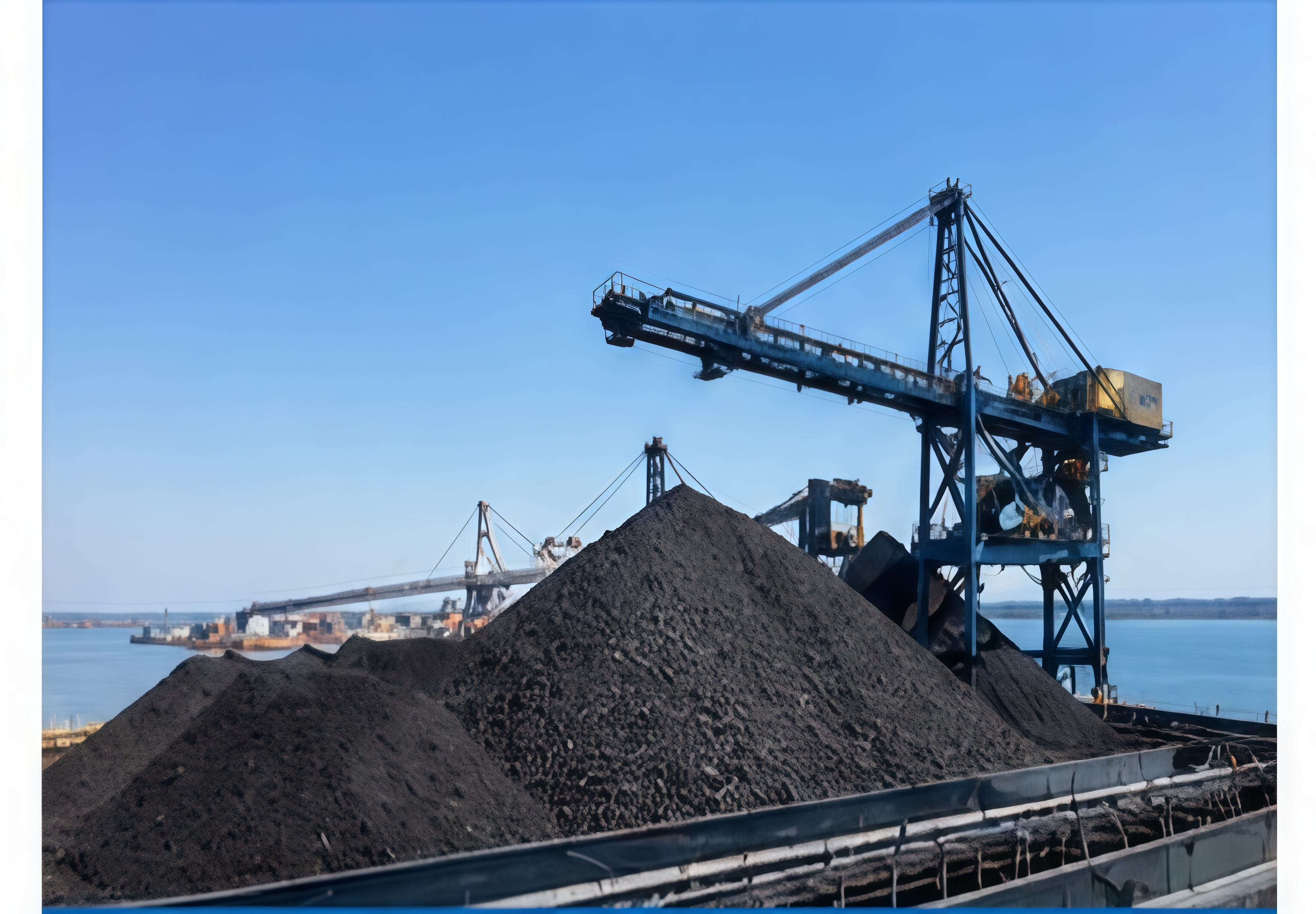
A route drawing is particularly useful when the conveyor includes curves, elevation changes, waterways, roads, buildings, or restricted installation areas.
Dahan can use these project parameters as the basis for a preliminary conveyor configuration and quotation.
Maintenance and Safety Considerations
Regular inspection should cover the belt, idlers, pulleys, bearings, drive system, tensioning equipment, and belt-forming sections.
Particular attention should be given to forming and transition areas because their condition affects tubular belt stability. Coal accumulation around moving components should also be controlled.
Frequently Asked Questions
Is a tubular conveyor suitable for coal?
Yes. It can be used in coal mines, preparation plants, stockyards, ports, terminals, and power plant coal handling systems. Final suitability depends on material properties, capacity, route, and installation conditions.
Does a tubular conveyor eliminate coal dust?
No. It can reduce direct exposure and help contain material along the enclosed section, but loading, transfer, and discharge areas may still require dust-control measures.
Can a tubular conveyor handle curved routes?
It can be engineered for suitable horizontal and vertical curves. The actual route should be checked together with belt construction, idler arrangement, tension, and support structure.
How is the pipe diameter selected?
Pipe diameter is determined from required capacity, coal bulk density, maximum lump size, belt speed, loading conditions, and the overall conveyor design.
What information is required for a quotation?
The main information includes coal type, capacity, bulk density, maximum lump size, moisture, conveying length, lifting height, route layout, operating environment, and power supply. A route drawing is especially useful for complex projects.
Is a tubular conveyor always better than a conventional belt conveyor?
No. A conventional troughed belt conveyor may be more suitable for a simple, straight route. A tubular conveyor becomes more attractive when enclosed conveying and route flexibility are important.
Request a Tubular Belt Conveyor Proposal
The correct conveyor configuration depends on coal properties, required capacity, conveying distance, elevation, route geometry, and operating conditions.
Dahan can evaluate these factors and develop a suitable configuration for coal handling applications.
For a preliminary quotation, provide the coal type, required capacity, conveying length, lifting height, maximum lump size, bulk density, and conveyor route. A layout drawing or site sketch is also useful for complex projects.
A project-based review can then determine a suitable pipe diameter, belt configuration, drive arrangement, and supporting equipment.
Request a Tubular Belt Conveyor proposal for your coal handling project.