E-mail: sale@xxdahan.com
Follow Us 


An electrostatic fine powder plastic screw conveyor is used to transport micron-sized fine powders that are prone to generating static electricity. The screw blades in contact with the fine powder and the inner wall of the trough are made of plastic. Plastic itself has low frictional charge, which prevents the powder from adhering to the inner wall. Plastic has low thermal conductivity, so it does not easily heat up during long-term transport, preventing the fine powder from denaturing or melting when transporting heat-sensitive fine powders. Using plastic also avoids the contamination of the fine powder by metal ions and rust.
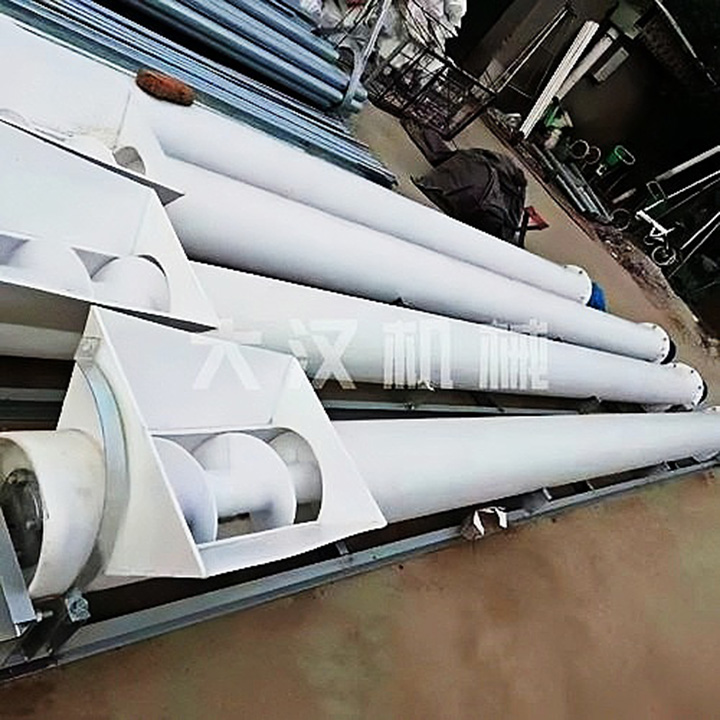
A motor drives a screw shaft with spiral blades to rotate within a closed U-shaped or circular plastic trough. Fine powder falls into the gap of the screw shaft from the inlet.
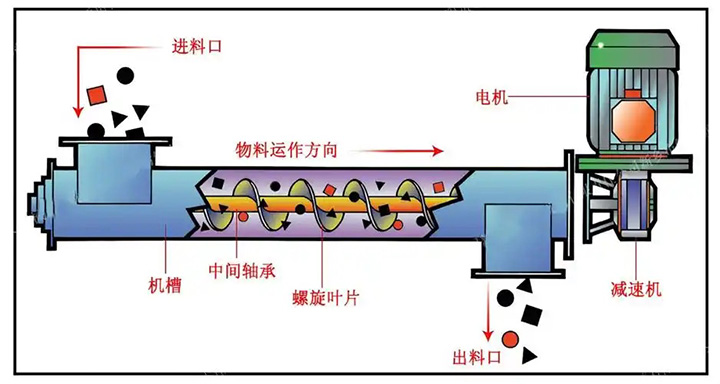
As the screw shaft rotates, the spiral blades push the powder forward, discharging it from the outlet. When the screw shaft and trough are made of conductive plastic, the static electricity generated by the powder's friction with the inner wall of the trough during its forward movement is promptly conducted away by the grounding device on the casing, preventing it from adhering to the inner wall. Furthermore, the very smooth inner wall of the plastic minimizes friction, allowing the fine powder to move smoothly forward without clogging or residue. When using ordinary plastic, an electrostatic bar can be installed to neutralize the static electricity carried by the powder.
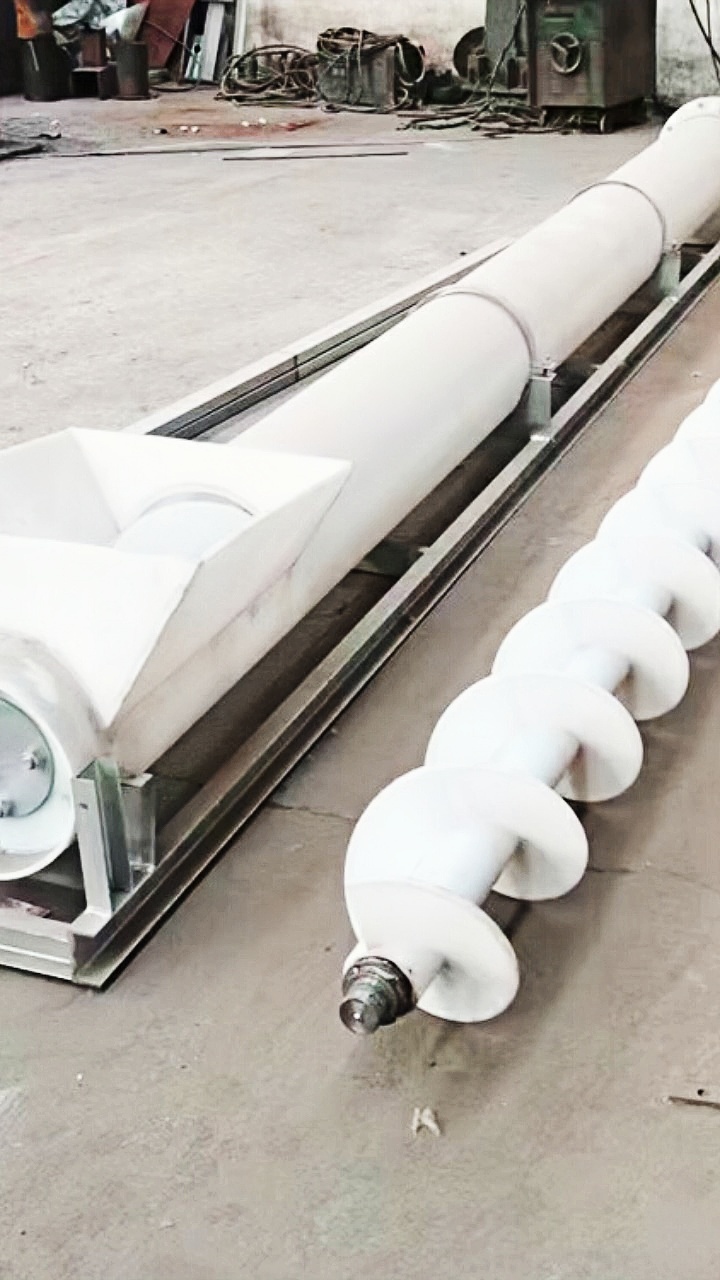
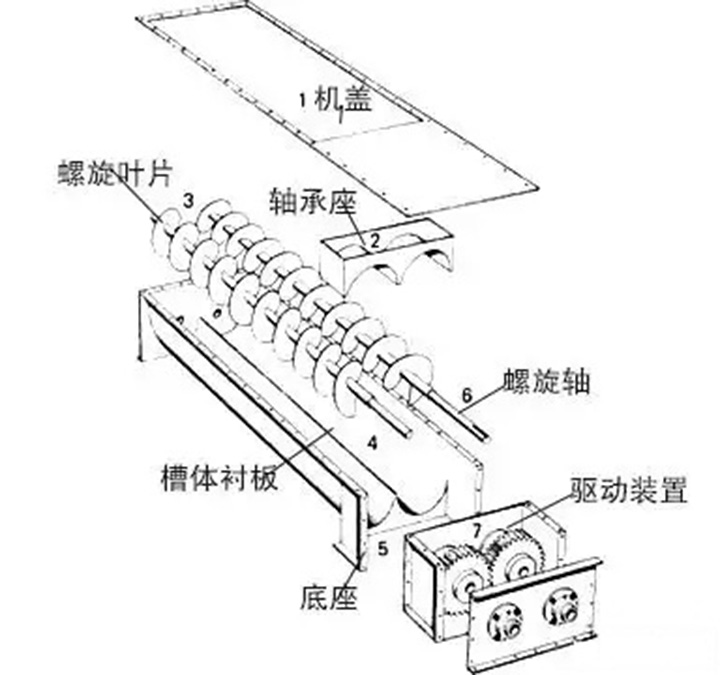
The electrostatic fine powders plastic screw conveyor consists of a drive unit, screw shaft, trough, inlet and outlet, electrostatic discharge device, and support structure.
Drive Unit: Includes a motor and reducer, installed at one end of the conveyor. The motor increases power, which is then transmitted to the screw shaft after the speed is adjusted by the reducer.
Screw Shaft: Drives the screw blades on the shaft to rotate, pushing the fine powder forward.
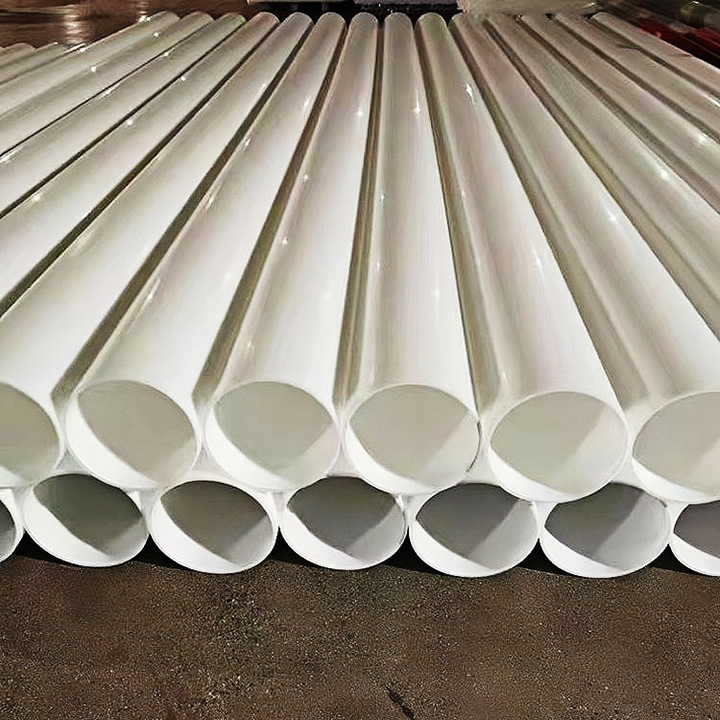
Trough: The outer casing that houses the screw shaft. It is available in U-shaped trough and cylindrical tube types. The U-shaped trough has a simple structure, is easy to observe and maintain, and is suitable for horizontal or small-angle conveying; the cylindrical tube type has a fully enclosed structure to prevent dust leakage and can convey horizontally, inclined, or vertically.
| Parameter Name | Typical Range | Description |
| Spiral Diameter | 100 ~ 300 mm | Selected based on conveying capacity and material characteristics |
| Conveying Length | 1 ~ 15 m | Customizable, up to 20 meters maximum |
| Conveying Capacity | 0.5 ~ 10 m³/h | Depends on spiral diameter and rotation speed |
| Spiral Rotation Speed | 10 ~ 60 r/min | Low-speed operation to reduce static electricity generation |
| Motor Power | 0.55 ~ 7.5 kW | Matched according to conveying length and capacity |
| Trough Type | U-shaped trough / Round tube type | U-shaped for easy observation, round tube for good sealing |
| Working Angle | 0° ~ 30° | Horizontal or small inclination conveying |
| Spiral Material | Anti-static plastic / Conductive plastic / UHMWPE / PTFE | Material-contact parts are plastic |
| Trough Lining Material | Anti-static plastic / UHMWPE / PTFE | Smooth and wear-resistant, reduces adhesion |
| Static Electricity Treatment | Conductive plastic + grounding / Static bar + ion fan | Prevents powder adsorption and clogging |
| Sealing Method | Labyrinth seal / Packing seal / Gas seal | Prevents dust leakage |
| Inlet Size | Customized as needed, connects to upstream equipment | |
| Outlet Size | Customized as needed, connects to downstream equipment | |
| Working Voltage | 220V / 380V | 50Hz three-phase or single-phase |
| Protection Rating | IP54 / IP55 | Dust-proof and splash-proof |
Electrostatic fine powders plastic screw conveyors are mainly used for conveying fine powders that are sensitive to metal ions and easily generate static electricity.
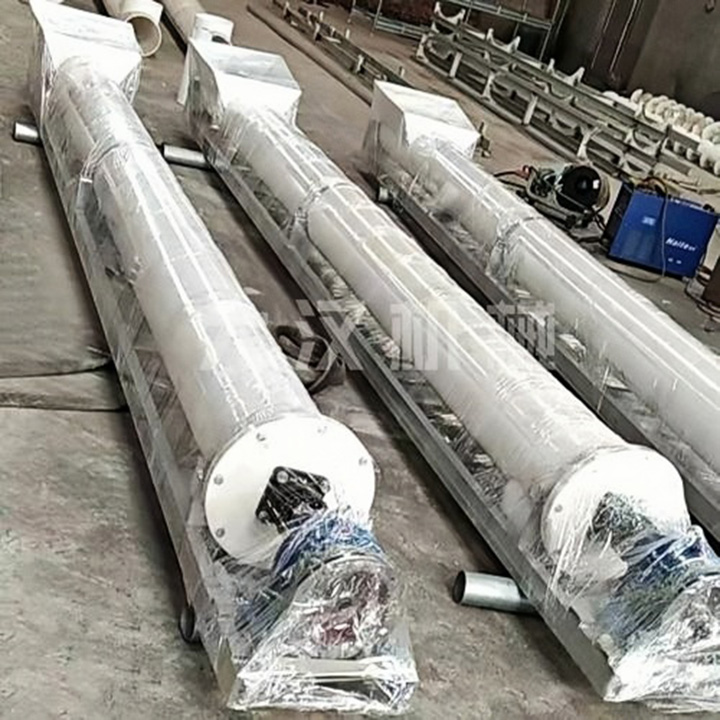
They are widely used in industries such as plastic powder, 3D printing, powder coatings, lithium battery materials, chemical industry, and electronic materials. They can convey fine powders such as PVC resin powder, 3D printing plastic powder, epoxy resin powder, lithium iron phosphate powder, graphite powder, pigment powder, silicon micro powder, and titanium dioxide, avoiding the problem of powder contamination during metal equipment conveying and reducing powder adhesion to the inner wall during conveying.
CONTACT
WhatsApp:+86 18339211009
Email:sale@xxdahan.com
Add:China, Henan Province, Xinxiang City.Yanjin county forest park gate to the west 1000 meters north road