E-mail: sale@xxdahan.com
Follow Us 


Is your Inclined Belt Conveyor losing material due to rollback or belt slippage? Learn the root causes and step-by-step fixes to keep your inclined belt conveyor running efficiently.
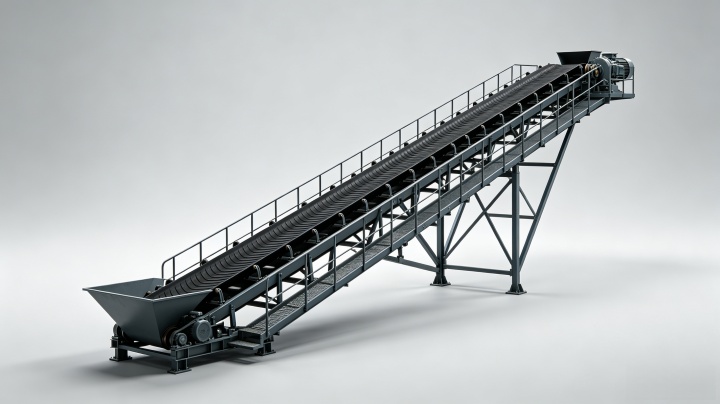
An inclined belt conveyor is one of the most cost-effective ways to transport bulk materials vertically while saving floor space. But if you've ever watched material slide back down the belt while the belt keeps moving, you know the frustration firsthand.
Material rollback and belt slippage are the two most common complaints we hear from plant managers, maintenance engineers, and procurement professionals who operate an inclined belt conveyor in mining, quarrying, aggregate, or recycling operations. These problems don't just reduce throughput—they increase wear on the belt, waste energy, create safety hazards, and drive up maintenance costs.
The good news? Most of these issues are preventable with the right diagnosis. In this guide, we'll walk you through exactly why an inclined belt conveyor suffers from rollback and slippage, and more importantly, how to fix each cause step by step.
When you run an inclined belt conveyor, gravity is working against you. Material rollback occurs when the friction between the belt surface and the bulk material isn't strong enough to overcome the downward pull. Here are the five most common root causes:
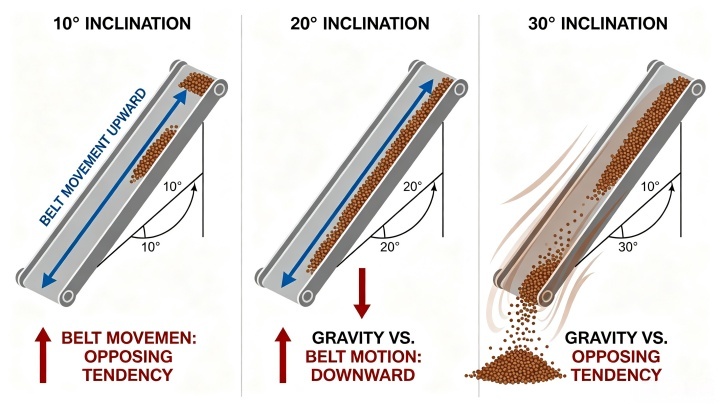
Most standard smooth-surfaced belts on an inclined belt conveyor work reliably at angles up to 20°–28°. Beyond that, you need a different belt design. For angles between 16° and 45°, a chevron or cleated belt is required to physically block material from sliding backward.
Different materials have different friction coefficients. Wet clay, fine sand, or recycled glass, for example, have much lower friction than dry gravel. If the belt surface on your inclined belt conveyor is too smooth or worn out, these materials simply won't grip.
If the belt on your inclined belt conveyor isn't tight enough, it loses grip on the drive pulley. This causes belt slippage—the belt moves, but the material either stays put or moves slower than the belt speed, creating a backlog and spillage at the tail end.
Oil, dust, or moisture on the belt reduce friction. This is especially common in recycling plants and quarry operations where dust is unavoidable. A contaminated belt on an inclined belt conveyor is essentially a slippery slide that material cannot climb.
Exceeding the recommended load capacity puts too much strain on the belt and drive motor, causing both slippage and rollback. An overloaded inclined belt conveyor also accelerates belt wear and increases power consumption.
Belt slippage is often confused with rollback, but they are different problems. Slippage happens between the belt and the drive pulley, while rollback happens between the belt surface and the material. On an inclined belt conveyor, slippage typically occurs because:
Slippage is dangerous because it leads to belt burn, pulley wear, and total system failure if not addressed quickly.
Instead of guessing, follow this systematic approach to identify and fix the root cause of rollback and slippage on your inclined belt conveyor.
This is the quickest fix and often the most common cause of belt slippage.
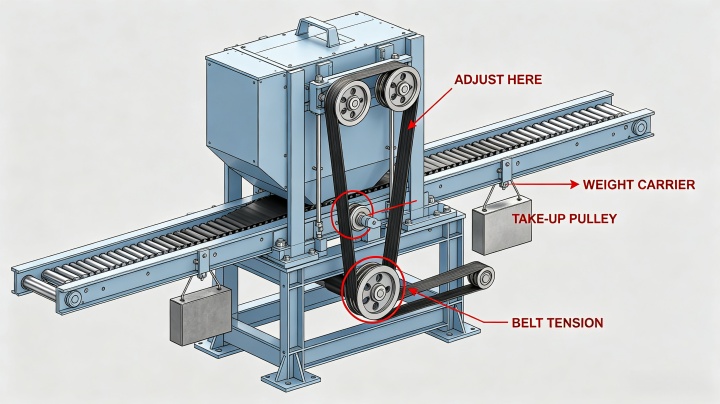
How to check: Most inclined belt conveyor systems have a take-up pulley for tension adjustment. Use a tension gauge to measure if the belt tension falls within the manufacturer's recommended range.
How to fix: If tension is low, adjust the take-up system to tighten the belt. Important: Do not over-tension—excessive tension reduces bearing and motor life.
Check the belt: Look for excessive wear, fraying, or smooth spots. If the belt surface on your inclined belt conveyor is worn, it loses grip and needs replacement.
Check the drive pulley: Worn or smooth pulleys reduce friction. The lagging (rubber coating) on the pulley should have a rough texture. If it's glazed or worn, re-lagging is needed.
Clean everything: Use a clean cloth with mild detergent to remove oil, dust, or debris from both the belt and pulleys. Let them dry thoroughly before restarting.
How to measure: Use a digital protractor or an inclinometer on your smartphone.
If the angle exceeds 28° with a standard belt, you need a different belt type. For an inclined belt conveyor operating at 16°–45°, upgrade to a chevron belt (also called a V-belt) with raised cleats that physically block material from sliding back.
For extreme angles up to 90°: Consider a corrugated sidewall belt or pocket belt with individual compartments to carry material vertically without any rollback.
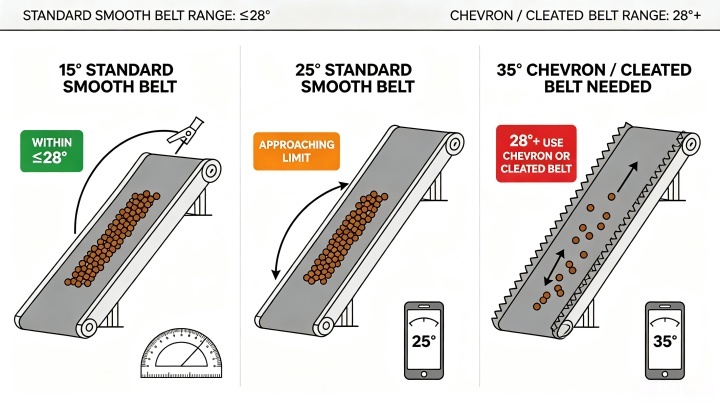
Is your material wet, oily, or very fine? These materials naturally have lower friction. You may need a belt with a textured grip surface to increase traction on your inclined belt conveyor.
Is your feed consistent? Uneven load distribution can cause the belt to wander off-center, leading to spillage and side rollback. Adjust the feeding method to ensure materials are evenly distributed across the belt width.
Check your inclined belt conveyor's rated capacity and compare it against your actual throughput.
Reduce the instantaneous load to avoid overloading the motor. Consistent, steady feeding is more efficient than intermittent heavy dumping.
Once you've fixed the immediate problems, follow this maintenance schedule to keep your inclined belt conveyor operating at peak performance:
| Frequency | Maintenance Task | Why It Matters |
| Weekly | Inspect belt joints and edges for wear. Check belt tracking and adjust if needed. | Prevents small wear from becoming a tear that causes tracking loss on your inclined belt conveyor. |
| Monthly | Check motor and structural bolts for tightness. Lubricate bearings. Listen for unusual noises. | Catches alignment issues and component wear before they cause belt slippage. |
| Semi-Annually | Full system cleaning. Inspect drive components (motor, gearbox, pulleys). Check belt tension with a gauge. | Prolongs the life of the entire inclined belt conveyor system. |
Pro Tip: Always keep a few spare belts or belt sections on hand. When a belt fails mid-production on your inclined belt conveyor, waiting for a new one means costly downtime. Having a spare allows for immediate replacement and minimal production loss.
If you're sourcing a new inclined belt conveyor—or upgrading your current one—use this checklist to avoid the headaches described above:
Some issues require more than DIY fixes. Call a professional if:
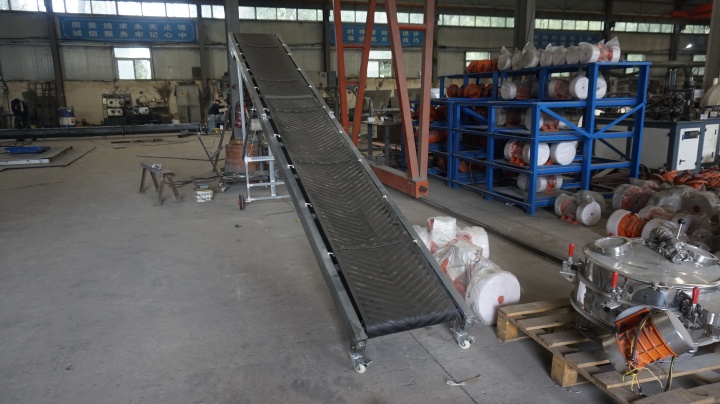
An inclined belt conveyor is a powerful piece of equipment when selected and maintained correctly. Material rollback and belt slippage are not inevitable—they are symptoms of correctable issues. By systematically checking belt tension, surface condition, incline angle, and load distribution, you can eliminate these problems and get your inclined belt conveyor operating at maximum efficiency.
For extreme angles, consider a corrugated sidewall belt which is a specialized type of inclined belt conveyor for near-vertical applications.
Remember: the right belt for your material and incline angle is non-negotiable. A standard belt might work on a flat floor, but on an incline, you need an inclined belt conveyor engineered for the specific demands of your operation.
Have a specific application challenge? Drop us a message with your material type, required incline angle, and desired throughput. Our engineers will recommend the right inclined belt conveyor configuration for your exact needs—no obligation, just expert advice.
CONTACT
WhatsApp:+86 18339211009
Email:sale@xxdahan.com
Add:China, Henan Province, Xinxiang City.Yanjin county forest park gate to the west 1000 meters north road