E-mail: sale@xxdahan.com
Follow Us 


Choosing the right Sidewall Belt Conveyor for high-angle or vertical lifting is one of the most critical decisions in bulk material handling. Get it wrong, and you will face chronic material spillage, cleat failure, frequent downtime, and skyrocketing maintenance costs. Get it right, and you achieve efficient, space-saving vertical transport with minimal operational headaches.
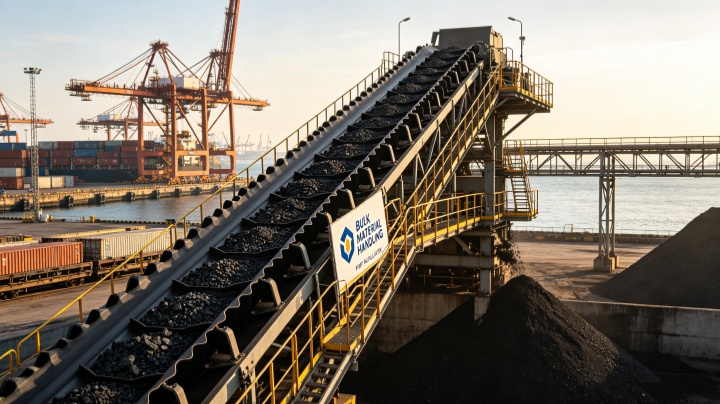
This guide outlines five essential selection points to help you make the right choice.
Before looking at any specifications, you must thoroughly understand the material you intend to convey. This is the foundation of proper selection.
Key material factors to evaluate:
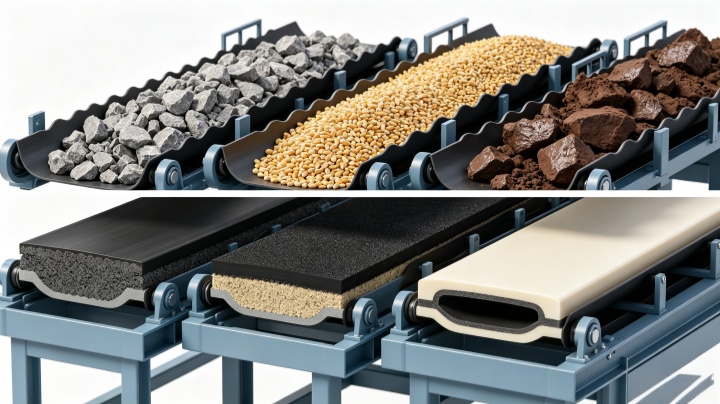
Pro Tip: When requesting a quote, provide a material sample or detailed specifications (density, moisture range, particle distribution) so engineers can recommend the optimal compound and belt design.
Once you understand your material, define your operational needs clearly. These parameters directly determine belt width, speed, and power requirements.
Critical operational parameters:
| Parameter | Why It Matters |
| Throughput (TPH or m³/h) | Sidewall belts are sized by containment volume. Provide both average and peak TPH so pocket depth and cleat spacing can be calculated accurately. |
| Incline Angle | Cleat height and pocket geometry depend on the angle. Shallow slopes (under 30°) use lower cleats; steep runs (30°–90°) require deep pockets with full sidewall profiles. |
| Lifting Height & Horizontal Length | Longer conveying distances subject the belt to greater tension. For long distances, choose belts with higher tensile strength (e.g., steel cord core) to avoid stretch or fracture. |
| Belt Speed | Typical speeds range from 0.8 to 2.0 m/s for most applications. Higher speeds increase throughput but also increase wear and energy consumption. Find the balance for your needs. |
Belt Width & Capacity Reference (at 45° incline, 1m/s speed):
| Belt Width (mm) | Sidewall Height (mm) | Capacity (m³/h) |
| 500 | 100 | 44 |
| 800 | 160 | 91 |
| 1000 | 200 | 133 |
| 1200 | 300 | 354 |
| 1400 | 400 | 566 |
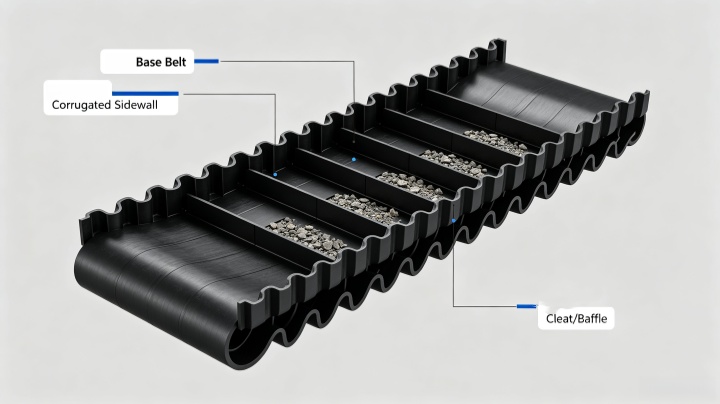
The belt itself is the heart of the system. A sidewall conveyor belt consists of three key components: the base belt, corrugated sidewalls, and transverse cleats (baffles).
Choose the carcass type based on your application:
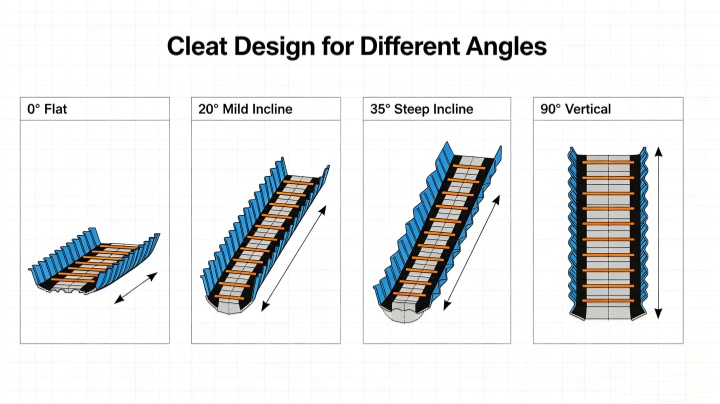
The cleat shape must match your incline angle:
| Incline Angle | Recommended Cleat Type |
| 18° < β ≤ 40° | T-type |
| 40° < β ≤ 60° | C-type |
| 60° < β ≤ 90° | TC-type (combined) |
Sidewall height determines containment capacity. Common heights range from 40mm to 400mm, with larger heights allowing greater material volume and handling larger particle sizes.
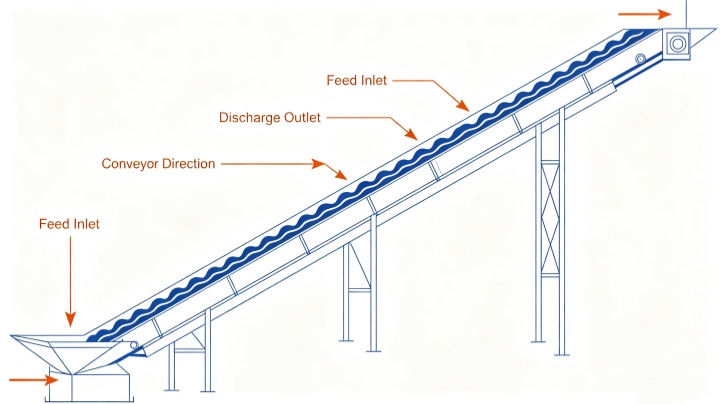
Sidewall belt conveyors offer exceptional layout flexibility. Their unique belt design allows for multiple bends in the same vertical plane, creating various configurations to suit your site constraints.
Key layout types:
Advantages of flexible layout:
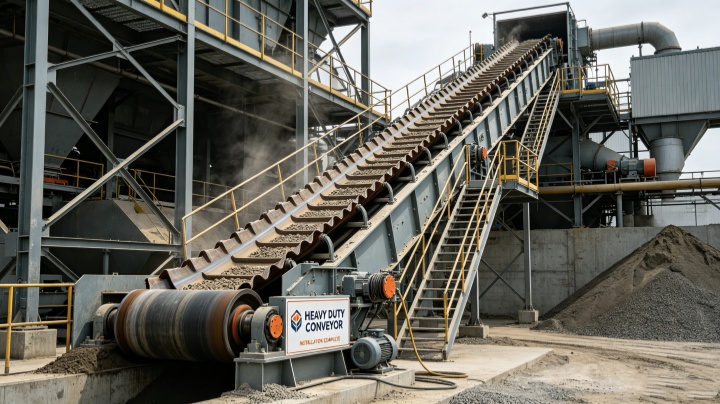
The belt doesn't work in isolation. Proper integration with supporting components is essential for reliable operation.
Critical supporting components:
Design for Maintainability:
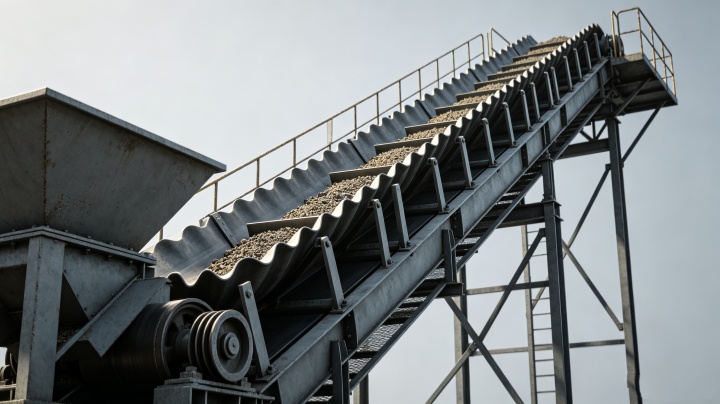
Selecting the right sidewall belt conveyor for high-angle and vertical lifting requires a systematic approach. By carefully evaluating your material characteristics, defining operational parameters, choosing the correct belt construction, planning an efficient layout, and matching with appropriate supporting equipment, you will achieve a reliable, cost-effective conveying solution that performs for years.
Key Takeaways for Your Selection:
When Requesting a Quote, Always Provide:
Need help with your sidewall belt conveyor selection? Contact our engineering team with your project specifications for a customized recommendation.
CONTACT
WhatsApp:+86 18339211009
Email:sale@xxdahan.com
Add:China, Henan Province, Xinxiang City.Yanjin county forest park gate to the west 1000 meters north road