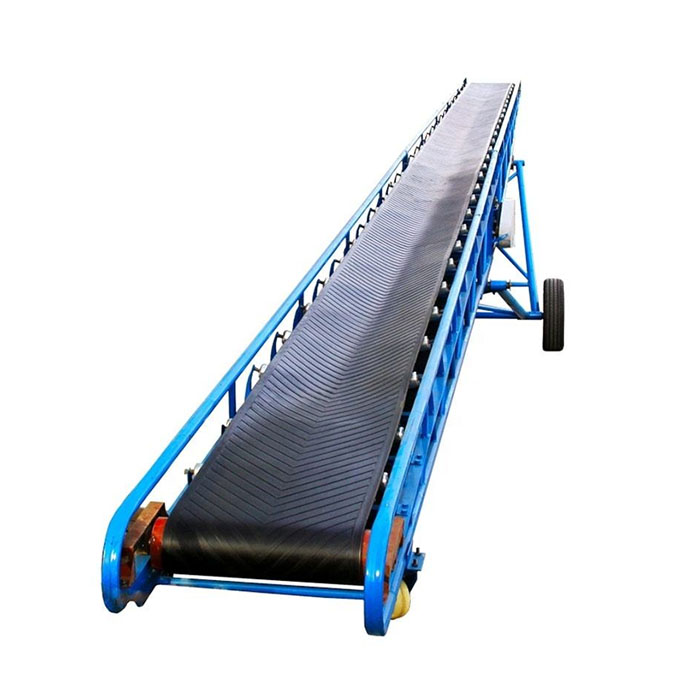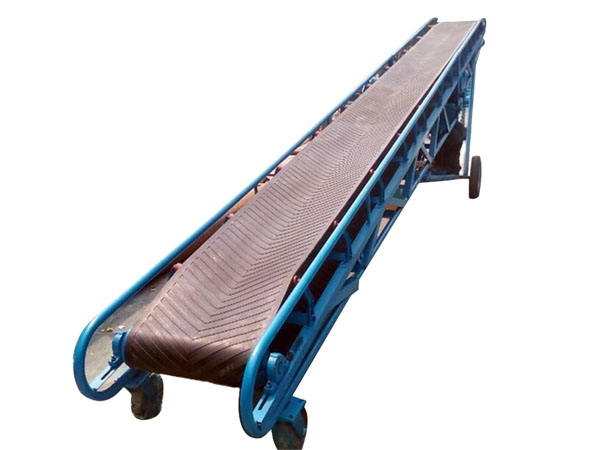
Coal Mining Rubber Conveyor Belt
Belt width: 500mm—2000mm
Belt speed: 1.6m/s—4.0m/s
Conveying capacity: 50t/h—1000t/h
Conveying distance: ≤200m
Flame retardant performance: MT/T 914-2019
What is a Coal Mining Rubber Conveyor Belt?
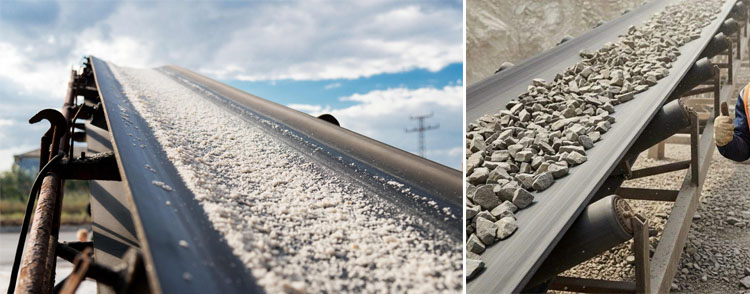
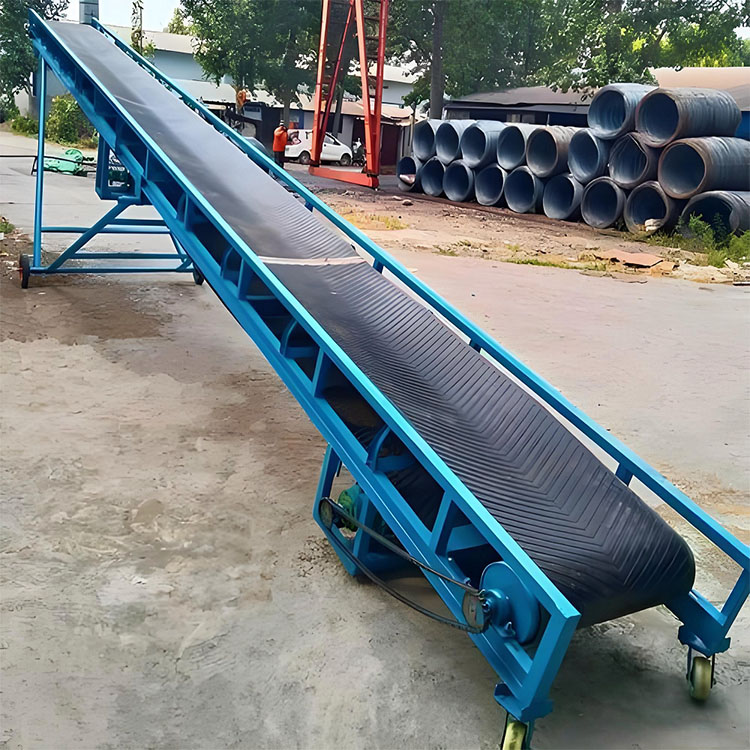
A Coal Mining Rubber Conveyor Belt is a machine that uses a rubber conveyor belt to transport coal placed on the belt surface to a designated location. It can continuously transport coal mined underground to the surface, forming a continuous coal flow transportation system. It is also used to replace traditional mining cars or trucks, reducing loading and unloading processes and manual intervention. Its belt width ranges from 400 mm to 2000 mm, and the belt speed is generally adjustable between 1.6 m/s and 4 m/s. The conveying capacity can reach 200 tons per hour or even higher, suitable for underground coal flow transportation systems and continuous ore loading. In long-distance transportation scenarios, the distance of a single conveyor can reach over 200 meters.
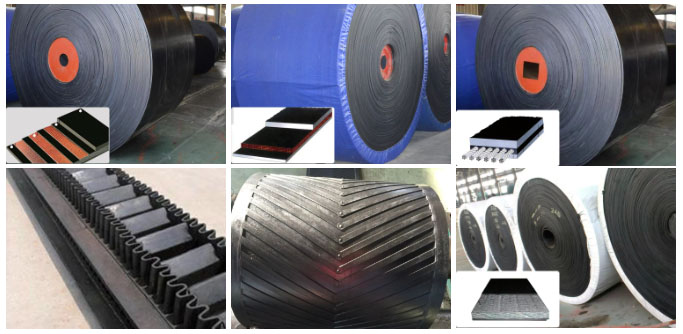
Coal Mining Rubber Conveyor Belt is mainly divided into three categories: fabric core conveyor belts, ST series steel cord core conveyor belts, and solid woven flame-retardant conveyor belts (PVC/PVG). The rubber coating can be customized to various types depending on the application environment, including general-purpose, wear-resistant, heat-resistant, cold-resistant, acid and alkali-resistant, and flame-retardant types. When used in underground coal mines, the conveyor belt must comply with MT/T 914-2019 standards, possessing flame-retardant and anti-static properties to ensure safe production.
What are the applications of Coal Mining Rubber Conveyor Belt?
Coal Mining Rubber Conveyor Belt can be used for the entire coal production process, transporting lump coal and pulverized coal, moving coal blocks from one location to another.
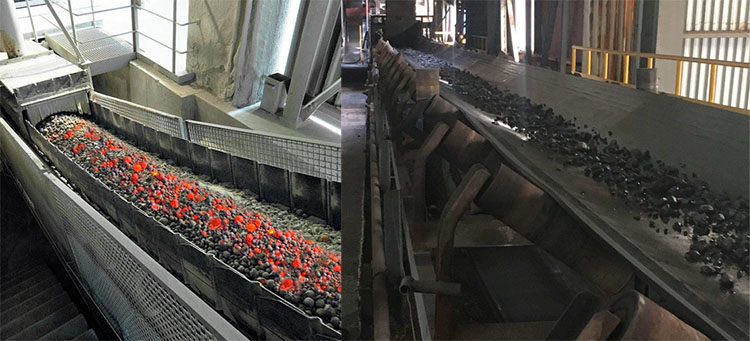
Underground mining face conveying: After the coal mining machine extracts raw coal, the Rubber Conveyor Belt immediately transports the coal blocks from the mining face, transferring them step-by-step to the main transport roadway via transfer conveyors and roadway belt conveyors, forming a continuous coal flow system.
Main roadway transportation: In the main haulage roadways of the mine, long-distance, high-capacity steel wire rope conveyor belts are used to centrally transport coal from various mining areas to the bottom coal bunker or directly to the surface.
Open-pit mine transportation: Rubber Conveyor Belts handle long-distance transportation from the mining area to the crushing station, coal washing plant, or coal storage yard, replacing mining trucks and significantly reducing energy consumption and operating costs.
Internal transfer within the coal preparation plant: In the coal preparation process, after crushing, screening, and washing, coal lumps are transferred between different equipment via multiple Rubber Conveyor Belts, ultimately being delivered to the finished coal bunker or loading system.
Port and coal storage yard loading and unloading: At coal distribution centers, Rubber Conveyor Belts are used for loading and unloading trains/ships, stockpiling in storage yards, and coal blending operations, achieving efficient large-volume coal flow.
What are the advantages of the Coal Mining Rubber Conveyor Belt?
Coal Mining Rubber Conveyor Belt boasts exceptional impact resistance and abrasion resistance for coal transportation. Considering the flammable nature of coal, the conveyor belt features a flame-retardant and anti-static configuration, ensuring high safety.
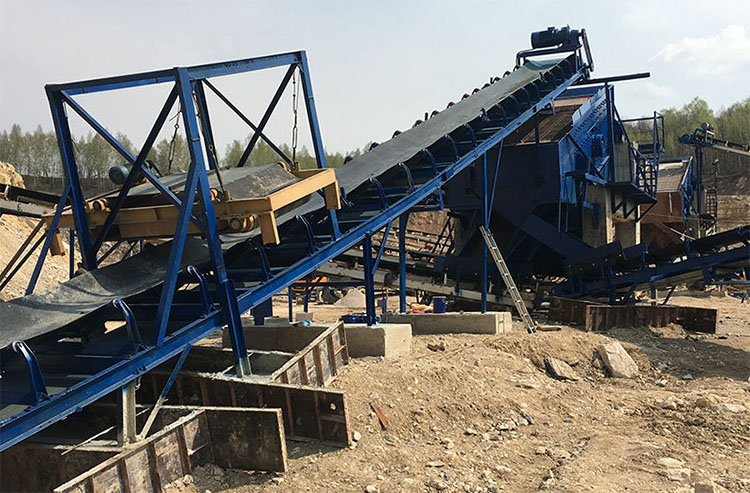
Impact Resistance: The conveyor belt's cover rubber utilizes a high-elasticity, high-hardness balanced formula. When coal chunks fall from the transfer point, generating significant impact force, especially large 200-400mm pieces directly impacting the belt surface, it effectively absorbs the impact energy, preventing damage to the belt core and preventing cracks in the belt surface.
High Abrasion Resistance and Long Service Life: Coal chunks slide and tumble on the belt surface, and gangue has sharp edges. The top cover rubber, tested according to DIN 53516, exhibits extremely low abrasion (typically ≤120 mm³), improving abrasion resistance by more than 50% compared to ordinary conveyor belts, directly reducing replacement costs due to coal wear.
Flame Retardant and Anti-static Safety: Coal mine air may contain methane/coal dust; friction during conveyor belt operation must prevent the spread of sparks and flames. The rubber compound of the coal mining rubber conveyor belt contains a large amount of flame retardant and conductive carbon black, with a surface resistivity ≤3×10⁸ Ω. It passes an alcohol torch combustion test to ensure that even if coal blocks cause frictional high temperatures, it will not become an ignition source.
Weather-resistant and aging-resistant, suitable for surface coal yards: Rubber conveyor belts used on the ground need to withstand ultraviolet radiation, rain, snow, and temperature differences. The cover rubber of the coal mining rubber conveyor belt contains a highly effective anti-aging agent, maintaining its elasticity and preventing cracking even after many years of use when transporting coal in open-pit coal yards.
How does the Coal Mining Rubber Conveyor Belt work?
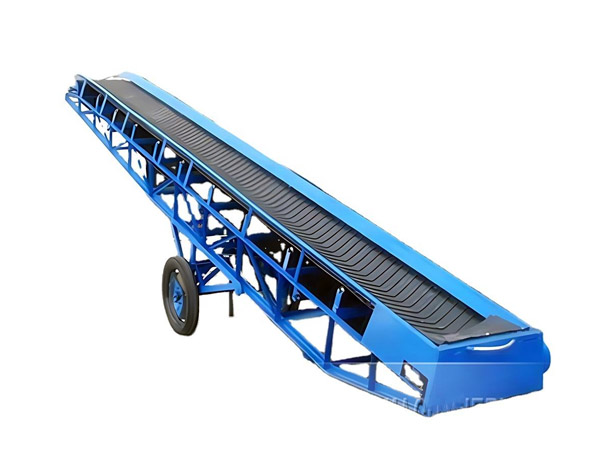
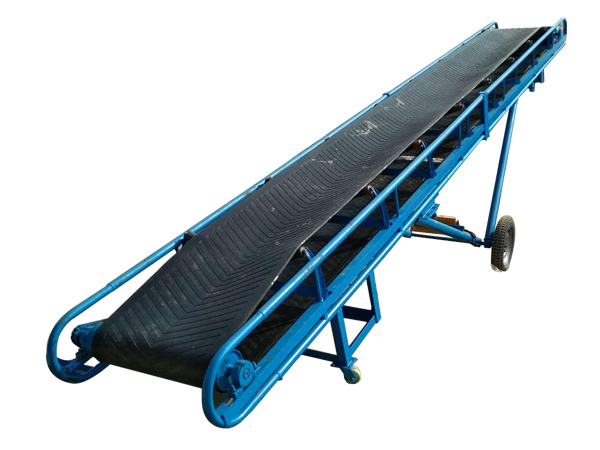
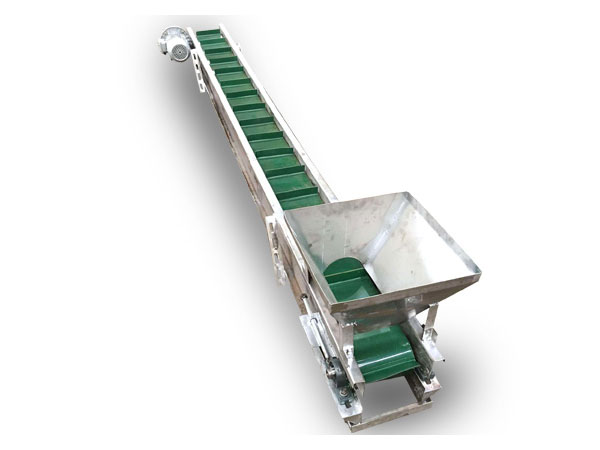
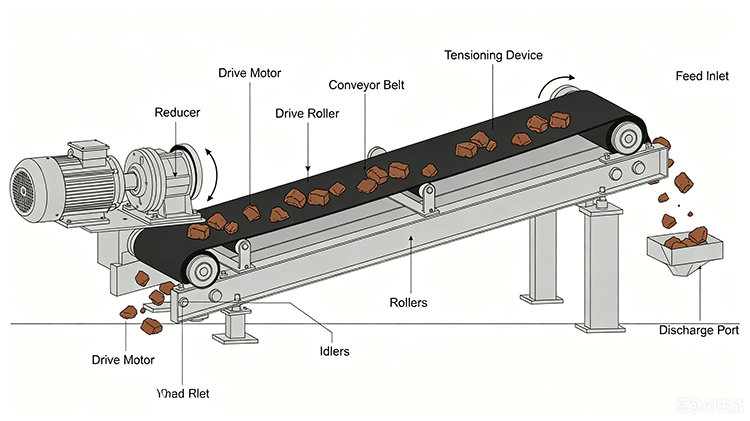
The Coal Mining Rubber Conveyor Belt consists of a drive unit, conveyor belt body, rollers, idlers, tensioning device, etc. When the drive motor starts, it drives the drive roller to rotate through the reducer. The drive roller, relying on the friction between itself and the conveyor belt, propels the rubber belt forward. After the coal blocks fall onto the belt surface from the feed inlet, they move forward with the rubber belt and finally fall off at the discharge port by gravity or a discharge device, completing one conveying cycle.
Coal Mining Rubber Conveyor Belt Parameters
|
Tape Width (mm) |
Conveying Length (m) Power (kW) |
Conveying Speed (m/s) |
Conveying Capacity (t/h) |
||
| 400 |
≤10 3 |
12-15 3-4 |
15-30 4-7.5 |
1.25-2.0 | 30-60 |
| 500 |
≤10 3 |
12-15 4-5.5 |
15-30 5.5-7.5 |
1.25-2.0 | 40-80 |
| 650 |
≤10 4 |
12-15 7.5 |
15-30 7.5-11 |
1.25-2.0 | 80-120 |
| 800 |
≤10 4 |
12-15 7.5 |
15-30 7.5-15 |
1.25-2.0 | 120-200 |
| 1000 |
≤10 5.5 |
10-20 7.5-11 |
20-40 11-22 |
1.25-2.0 | 200-320 |
| 1200 |
≤10 7.5 |
10-20 7.5-15 |
20-40 15-30 |
1.25-2.0 | 290-480 |
| 1400 |
≤10 11 |
10-20 15-22 |
20-40 22-45 |
1.25-2.0 | 400-680 |
| 1600 |
≤10 15 |
10-20 22-30 |
20-50 30-75 |
1.25-2.0 | 600-1080 |
| 1800 |
≤10 18.5 |
10-20 30-45 |
20-50 45-110 |
1.0-2.0 | 800-1500 |
| 2000 |
≤10 22 |
10-20 45-55 |
20-50 55-132 |
1.0-2.0 | 1000-2000 |
| 2400 |
≤10 30 |
10-20 55-75 |
20-50 75-185 |
1.0-2.0 | 1500-3000 |
What specifications are available for Coal Mining Rubber Conveyor Belt?
The specifications and lengths of Coal Mining Rubber Conveyor Belts are very flexible and can be customized according to customer needs.
Width Specifications: Standard widths include 400mm, 650mm, 800mm, 1000mm, 1200mm, 1400mm, 1600mm, 1800mm, and 2000mm, etc. Non-standard widths can also be produced according to special requirements.
Core Layer Specifications: For layered belts, the number of core layers is usually 3-8; for wire rope core belts, the wire rope diameter and arrangement density determine the strength grade; for solid core flame-retardant belts, the core structure is integrally formed without layering.
Cover Layer Thickness: The upper cover layer is usually between 3mm and 12mm, and the lower cover layer is usually between 1.5mm and 4.5mm. The appropriate thickness can be selected according to the coal particle size, abrasiveness, and impact strength. When conveying large pieces of coal or conveyor belts containing foreign objects such as iron, it is recommended to use conveyor belts with a thicker top cover or good impact and tear resistance.
Length Selection: The length of coal mine rubber conveyor belts is not a fixed value, but is determined according to the actual distance of the conveying path. Single conveyor belts can be produced in lengths ranging from tens of meters to thousands of meters. Users need to provide information such as the center distance between the head and tail rollers and the number of curves in the conveying line, so that the manufacturer can accurately calculate and customize production. Conveyor belts are generally delivered in rolls, with standard roll lengths of 100 meters, 200 meters, or 500 meters, depending on the width and thickness. Seamless, ring-shaped conveyor belts can also be made according to customer requirements.
Coal Mining Rubber Conveyor Belt Case
A large European and American coal mine was transporting raw coal with a lump size of 0-350 mm in its underground roadway, containing a significant amount of gangue. The transport capacity was 2500 t/h, and the machine length was 1200 meters. The original ordinary flame-retardant belt experienced severe wear of the cover rubber within 3 months, resulting in significant core exposure. We recommended using PVG1600S coal mine rubber conveyor belts, with a 10 mm thick top cover and a 4 mm thick bottom cover. After replacement, the belt exhibited excellent impact resistance, uniform wear within one year, no deep cracks on the surface, and its lifespan was extended to more than twice that of the original belt, reducing the frequency of downtime for replacement.