E-mail: sale@xxdahan.com
Follow Us 


In high-capacity underground and surface extraction, bulk material haulage directly dictates daily output. Traditional conveyor setups frequently encounter performance restrictions due to severe mineral abrasions, high impact loads at transfer points, and excessive energy consumption over long distances.
Our heavy-duty mining belt conveyors are engineered to address these operational constraints. By maintaining steady, continuous material flow from extraction faces to primary processing plants, these systems help mining facilities sustain target tonnage while reducing unplanned maintenance intervals.
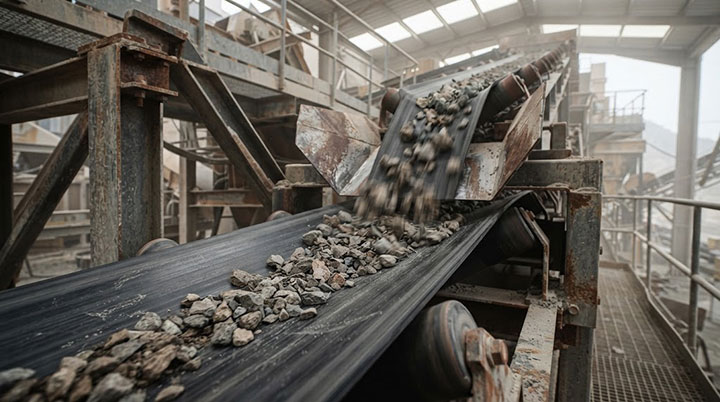
Selecting the right mining conveyor requires exact matching between operational capacity and physical material properties. Review our core engineering parameters below:
| Core Parameter | Standard Configuration Range | Custom Heavy-Duty Options |
|---|---|---|
| Belt Width (mm) | 800 mm – 1600 mm | Up to 2400 mm for high-capacity bulk |
| Handling Capacity (t/h) | 500 t/h – 3500 t/h | Engineered for surge loads up to 5000 t/h |
| Max Conveying Distance | Single flight up to 2 km | Multi-drive modular systems for long-distance |
| Tensile Strength | EP/NN Fabric Core (Up to 630 S/N) | Steel Cord ST1000 – ST4500 |
| Operating Environment | -25°C to +40°C standard | Arctic cold-resistant or high-heat variants |
Need custom sizing or specific load calculations? Our engineering team provides tailor-made configurations based on your site layout.
A reliable mining conveyor relies on rugged, failure-resistant sub-assemblies. Every mechanical and material component is selected to withstand continuous heavy shock loads and aggressive mineral dust:
Constructed with multi-ply synthetic fabrics or high-tensile steel cords, the belt carcass features specialized rubber covers that meet strict safety standards for anti-static and flame-retardant performance in enclosed underground tunnels.
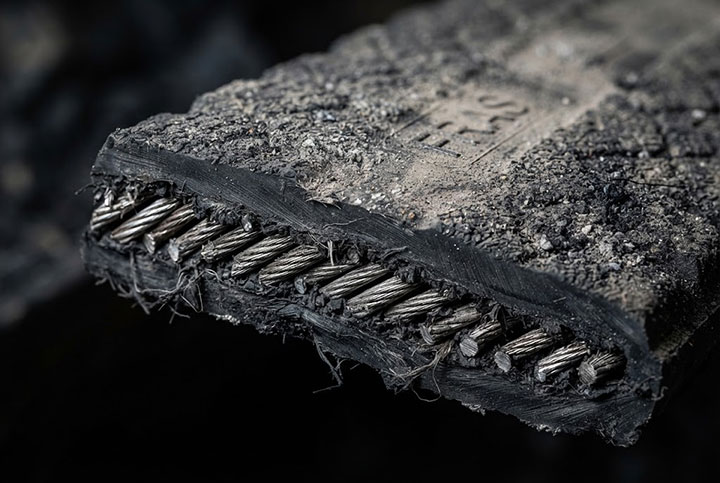
Powered by industrial gearboxes and high-efficiency electric motors, the drive assembly delivers smooth, controlled torque transmission to prevent belt slip during heavy-load startups and multi-stage inclined transport.
Strategic placement of rubber-ring impact idlers beneath loading zones absorbs the kinetic energy of falling rock, preventing carcass puncture and protecting structural alignment over years of service.
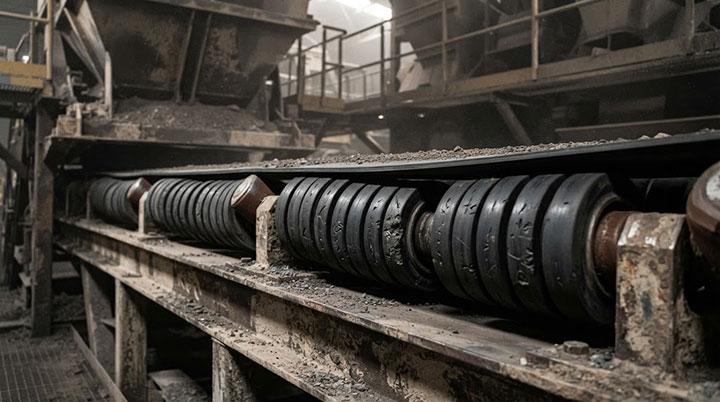
Mining environments differ substantially between confined subterranean shafts and open-air processing yards. Review the operational demands and recommended conveyor specifications for each environment below:
| Operating Environment | Key Environmental Challenges | Recommended Structure & Framework | Recommended Belt Type & Material |
|---|---|---|---|
| Underground Longwall & Tunnelling | Confined space, high humidity, strict fire and explosion safety protocols, damp coal or metal shafts. | Low-profile modular frames, compact drive assemblies, easy-to-relocate tail and head sections. | FRAS (Flame-Resistant and Anti-Static) rubber covers with high-tensile multi-ply fabric or steel cords. |
| Surface Stockyards & Open-Pit Plants | High-capacity throughput, severe weather exposure (wind, UV, rain), long-distance spans, heavy impact at crushers. | Elevated heavy-duty truss structures, weatherproof covers, heavy structural channel stringers. | Abrasion-resistant thick top covers, heavy-gauge steel cord (ST series) for high tensile strength and longevity. |
Operational showcase: High-capacity belt conveyor systems in surface stockyard and port applications.
Selecting the correct configuration prevents premature wear and ensures full compliance with local mining safety standards.
For industrial plant managers and project procurement teams, purchase price is only part of the financial equation. Evaluating the Total Cost of Ownership (TCO) reveals how efficient engineering impacts long-term operational expenses:
Low-friction idler assemblies, precision mechanical alignment, and premium-efficiency drive configurations lower continuous power draw during multi-shift operations.
Durable carcass construction and reliable splice integrity prevent catastrophic belt failures, protecting the facility from costly production halts.
High-abrasion rubber covers and heavy-duty structural frames extend service intervals, reducing the frequency and labor cost of component change-outs.
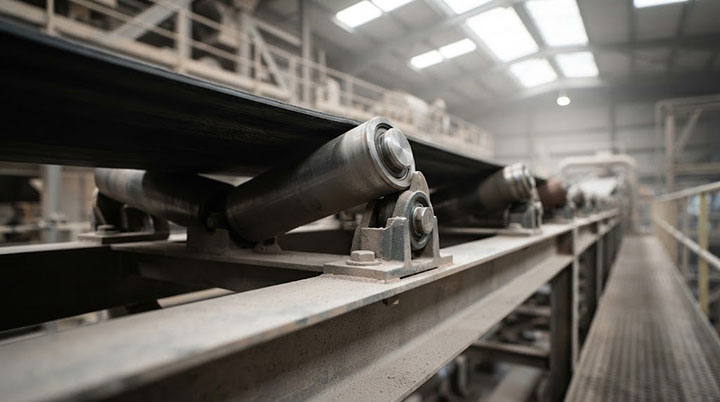
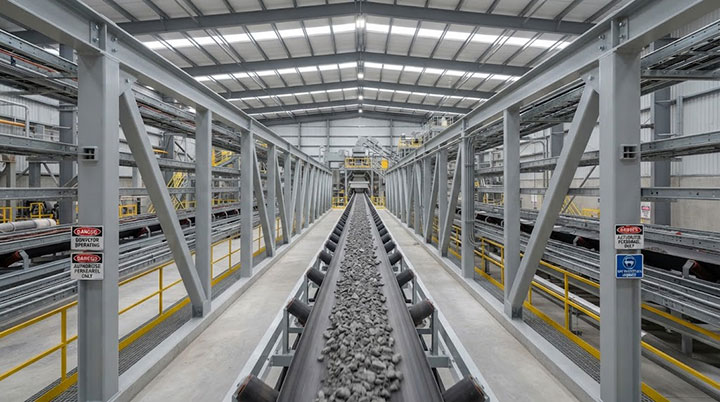
A well-engineered conveying system typically achieves a return on initial capital investment through energy savings and reduced maintenance labor within the first few years of operation.
Material spillage and belt mistracking are two of the most persistent operational headaches in mineral processing facilities. Left unchecked, they accelerate component wear, create safety hazards, and require constant manual cleanup.
Our conveyor systems incorporate several structural safeguards to ensure stable, clean running performance:
Precision Training Idlers: Strategically positioned self-aligning rollers automatically correct minor belt drift before mistracking causes edge damage.
Multi-Stage Cleaning Systems: Primary polyurethane blade scrapers at the discharge head and secondary return-side ploughs remove sticky fines, preventing material carryback and subsequent build-up on return rollers.
Sealed Transfer Chutes and Skirting: Heavy-duty rubber skirting and adjustable sealing arrangements at loading points contain fugitive dust and prevent bulk material from spilling over the belt edges.
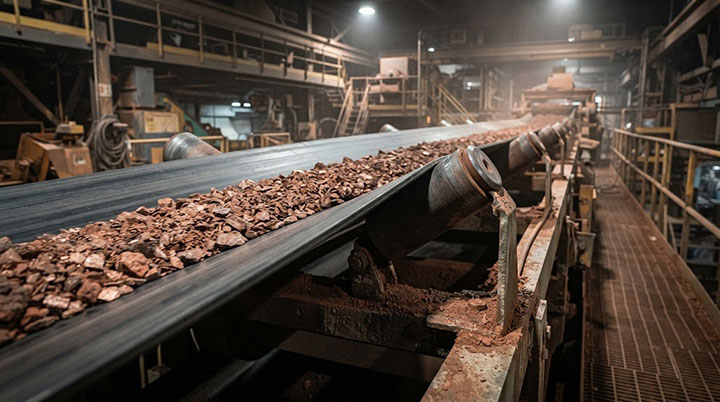
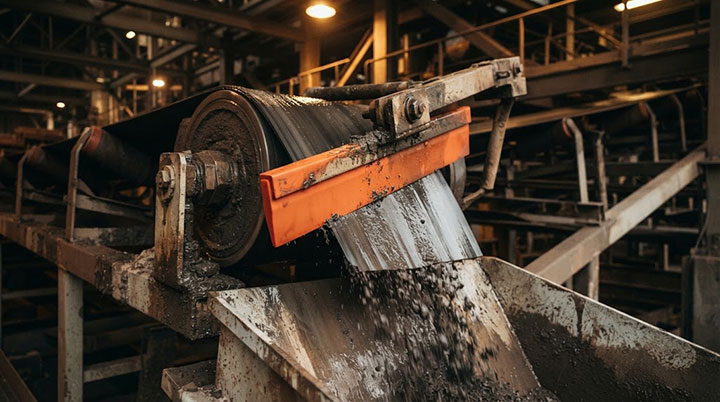
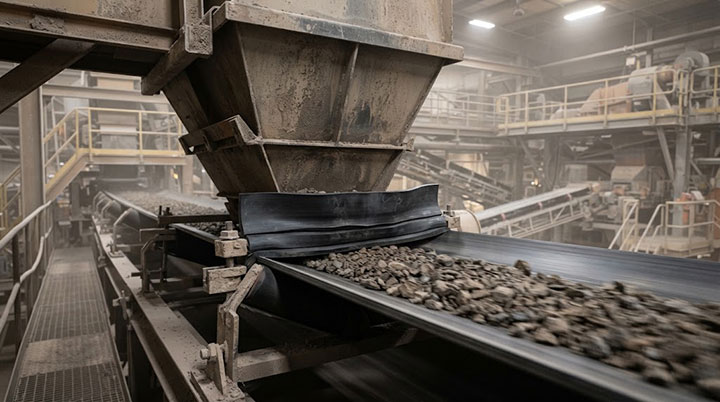
As a direct manufacturer with decades of industrial fabrication experience, we maintain strict quality control across every production stage—from structural steel welding and belt assembly to rigorous pre-shipment testing.
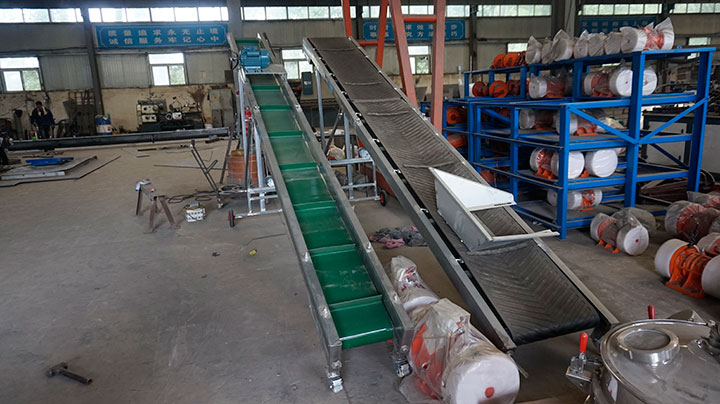
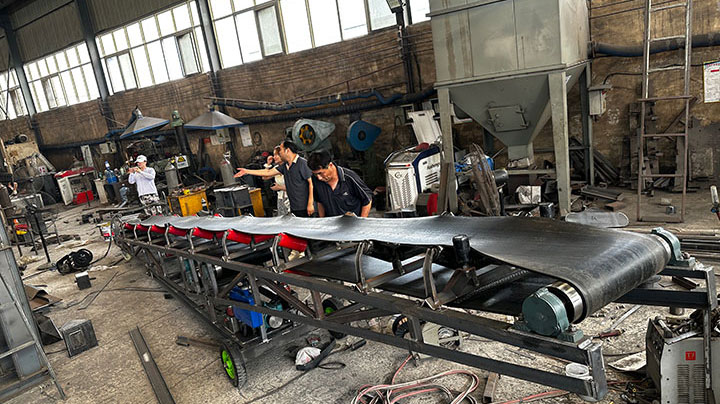
Whether you require standard modular units or specialized mobile systems like our custom hydraulic-lifting conveyors for silica sand, our facility is fully equipped to bring your engineering requirements to life with precision and reliability.
Every mining site presents unique topographical layouts, spatial constraints, and throughput demands. Standard off-the-shelf equipment rarely fits complex subterranean tunnels or specific processing plant architectures.
We provide full Engineer-to-Order (ETO) customization to match your exact site specifications. Our engineering team collaborates directly with your project planners to configure:
Share your project parameters with us, and we will generate a fully compatible system layout and technical proposal.
Submit your material specifications and distance requirements to get a custom engineering proposal.
Fabric cores (EP or NN) are ideal for medium-duty, shorter-distance transport where flexibility and lower initial costs are prioritized. Steel cord belts are specifically engineered for high-tension, long-distance, and high-impact applications, offering superior dimensional stability and resistance to stretching under heavy loads.
To prevent sudden torque spikes and belt slippage during heavy-load startups, our systems incorporate soft-start controllers, variable frequency drives (VFD), or hydraulic take-up units that regulate acceleration and maintain consistent belt tension.
Transfer points utilize enclosed chute designs, adjustable multi-layered polyurethane skirting, and strategic dust-suppression water spray or extraction connection points to contain fugitive dust and eliminate material loss at drop zones.
Contact our senior engineers today for expert consultation and fast pricing response.
CONTACT
WhatsApp:+86 18339211009
Email:sale@xxdahan.com
Add:China, Henan Province, Xinxiang City.Yanjin county forest park gate to the west 1000 meters north road