E-mail: sale@xxdahan.com
Follow Us 


Operating under extreme thermal conditions requires specialized belting designed to resist structural hardening, thermal oxidation, and premature rubber cracking. Our high-temperature conveyor belts are engineered to maintain stable tensile strength and continuous material flow across demanding heavy-industrial sectors.
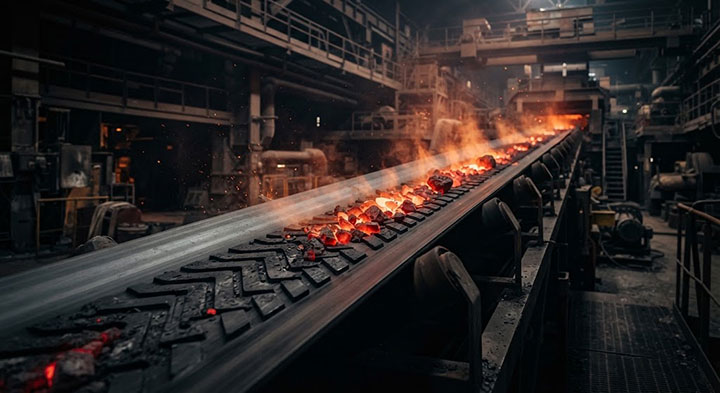
Selecting the correct thermal tier prevents premature rubber degradation. Our industrial conveyor belts are categorized into four distinct continuous and peak temperature thresholds based on heavy-duty operational demands:
| Thermal Tier | Max Continuous Temp | Max Peak Temp | Primary Compound | Typical Industry Use |
|---|---|---|---|---|
| T1 Grade | Up to 100°C (212°F) | 120°C (248°F) | Standard SBR / EPDM Blend | General bulk material transfer |
| T2 Grade | Up to 125°C (257°F) | 150°C (302°F) | Enhanced EPDM | Medium-heat aggregate & cement |
| T3 Grade | Up to 150°C (302°F) | 175°C (347°F) | High-Density EPDM | Steel plant sintering & coke |
| T4 Grade | 175°C+ (347°F+) | 200°C - 230°C+ | Specialized Heat-Resistant Compound | Extreme foundry and hot slag |
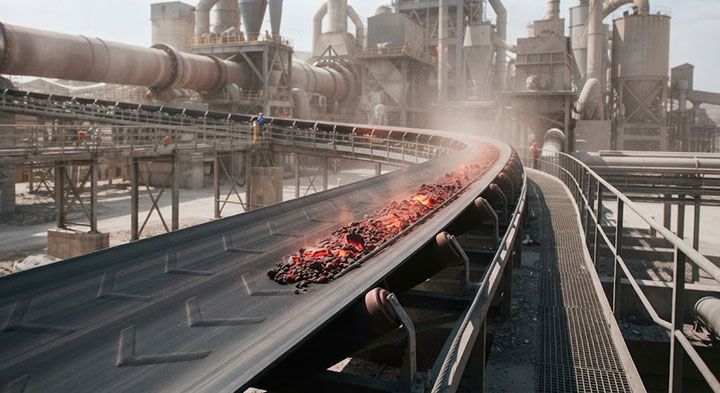
Engineering Note: Exceeding the maximum continuous temperature limit causes internal polymer cross-linking failure, leading to rapid cover hardening and micro-cracking.
Thermal durability depends heavily on the chemical formulation of the outer rubber and the tensile strength of the inner carcass. We engineer our belts using two structural pillars.
EPDM & Special Compound Covers: Formulated to resist thermal oxidation and embrittlement, maintaining rubber elasticity under continuous high-heat exposure without premature surface hardening.
High-Modulus Carcass Options: Built with EP (Polyester-Polyamide) canvas for low elongation and stable tension, or Steel Cord for high-tension, long-distance heavy industry routes where thermal stretch must be minimized.
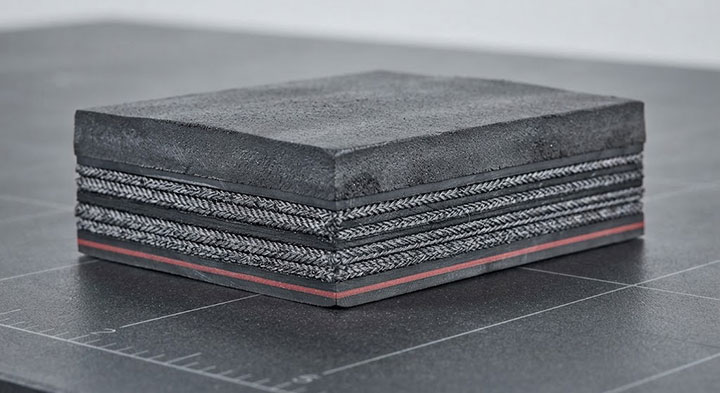
Structural Advantage: Proper carcass adhesion prevents inner ply separation caused by heat buildup during continuous friction cycles.
Different high-temperature environments demand tailored rubber formulations to prevent localized thermal breakdown. Our belts are engineered for extreme sector-specific challenges:
Steel Plant Sintering Lines: Designed to withstand abrasive, sharp-edged hot iron ore sinter ranging from 150°C to 180°C, resisting both heavy impact and thermal carving.
Cement Plant Clinker Transport: Built to handle burning-hot rotary kiln clinker, preventing cover blistering and severe cracking under continuous cyclical loading.
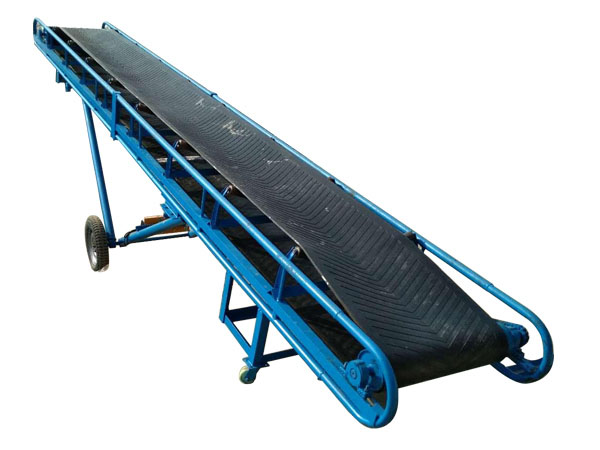
Video: Watch our heavy-duty belt conveyor operating smoothly under high-capacity industrial transport conditions.
Application Focus: Selecting the correct compound thickness directly absorbs the thermal shock of sudden high-impact loading.
Standard EPDM rubber performs well under dry heat, but complex working conditions often require dual-protection compounds to avoid premature belt failure.
Heat & Oil Resistance: Deployed in recycling or oily coke handling where hot materials are contaminated with industrial lubricants or petroleum residue, preventing rubber swelling and rapid softening.
High Heat & Heavy Abrasion: Reinforced with specialized anti-wear carbon black fillers to withstand the dual attack of extreme temperatures and abrasive sliding friction.
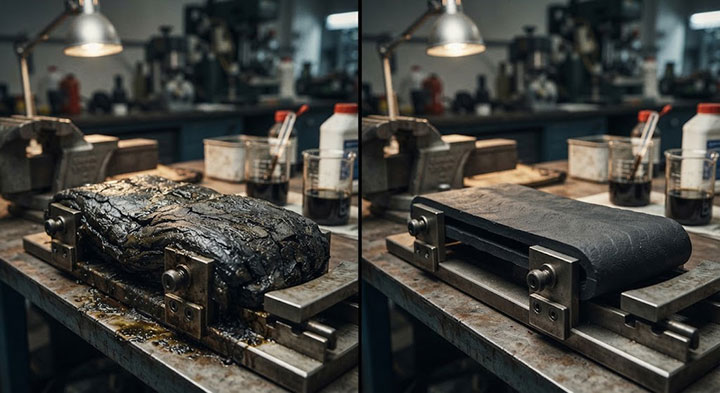
Engineering Insight: Using a purely heat-resistant belt in oily environments will cause the polymer matrix to degrade within weeks.
To meet rigorous international engineering bids, our belts comply with strict mechanical benchmarks, ensuring safety margins under high tension and thermal stress:
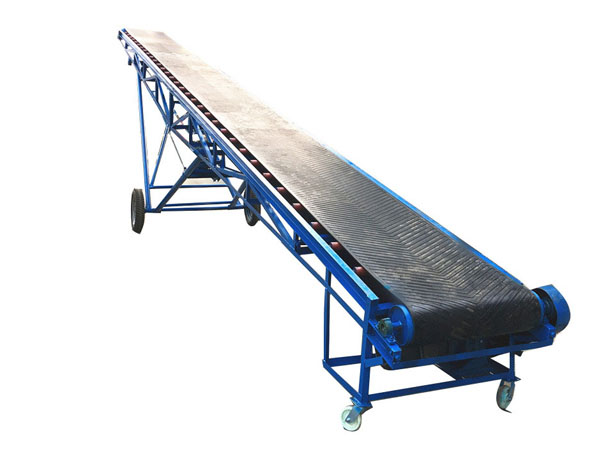
Video: Observe our high-strength conveyor belt in action, demonstrating reliable performance during long-distance bulk material transport.
Compliance Check: Independent laboratory batch testing ensures every roll meets predictable mechanical load limits.
Maximizing the operational lifespan of a high-temperature conveyor belt requires addressing root causes of thermal stress on-site:
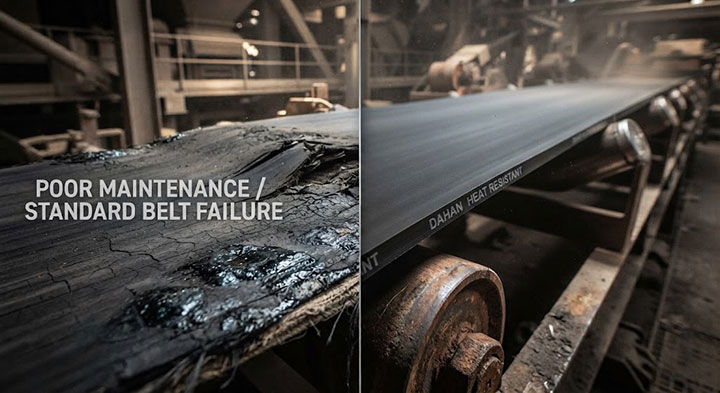
Maintenance Tip: Routine inspection of skirting and clearance gaps prevents hot fines from getting trapped and abrading the edges.
Every industrial conveying layout has unique geometric and structural demands. We support full custom configurations to match your operational specifications:
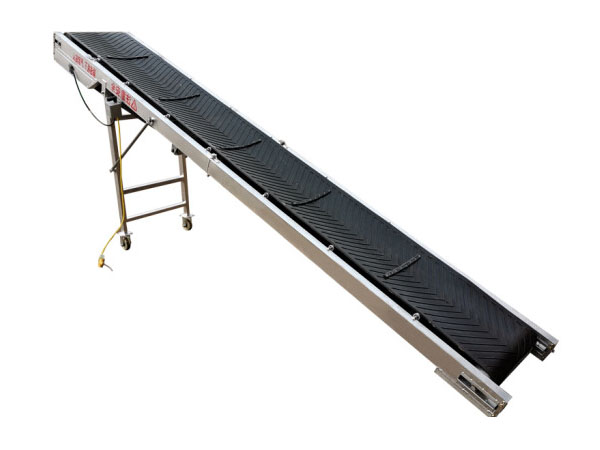
Custom Dimensions & Cleats: Available in precise custom widths, lengths, and rubber thicknesses, with optional high-temp chevron cleats or sidewalls for incline material transfer.
Splicing & Joining Solutions: Recommended hot vulcanized splicing kits or mechanical fastener options designed to withstand high operational tension without failing under thermal stress.
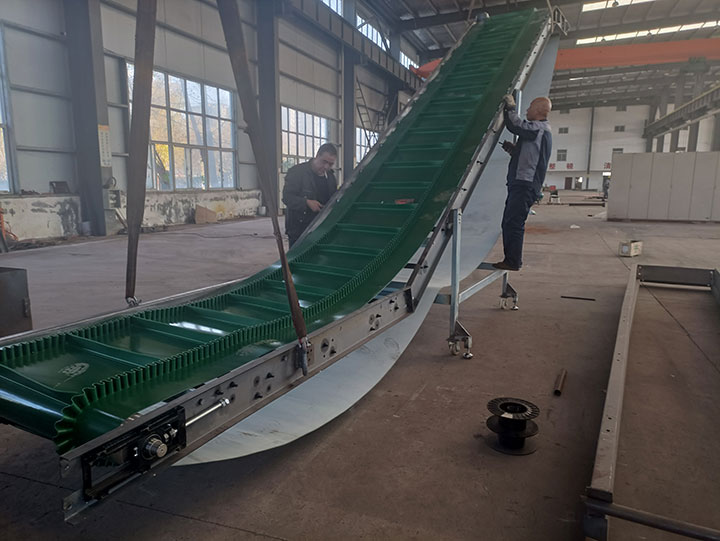
Inquiry Support: Contact our engineering team with your band width, material temperature, and tension requirements for a tailored configuration proposal.
Standard heat-resistant EPDM belts can handle continuous temperatures up to 150°C (302°F) and peak loads reaching 175°C to 200°C, depending on the specific T-grade rating selected.
Yes. We recommend hot vulcanized splicing using matching high-temperature repair compounds to ensure the joint maintains equal tensile strength and thermal resistance as the rest of the belt.
Choose T2 for medium-temperature materials like cement clinker up to 125°C, and T3 for high-intensity applications like steel plant sintering ore up to 150°C. Always factor in peak temperature spikes rather than just average operating heat.
Need Expert Advice? Submit your application parameters through our contact form to receive a professional material recommendation within 24 hours.
CONTACT
WhatsApp:+86 18339211009
Email:sale@xxdahan.com
Add:China, Henan Province, Xinxiang City.Yanjin county forest park gate to the west 1000 meters north road