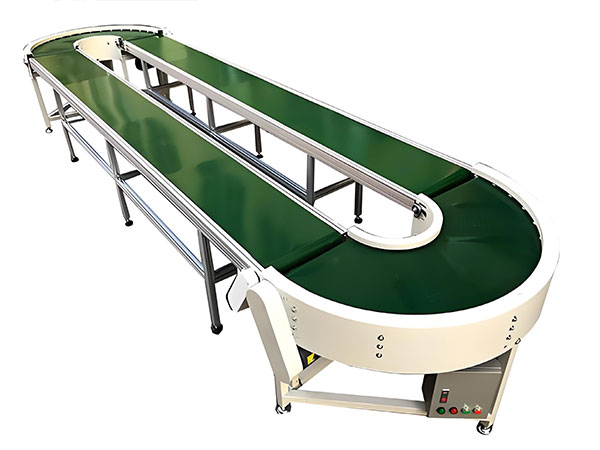
Curved Belt Conveyor
Handles angles from 15° up to 180°; spiral configurations up to 360°.
Belt widths: 300 mm to 2,400 mm.
Conveying speeds up to 3.0 m/s (550+ feet per minute).
Available in flat belt, troughed belt, and pipe belt configurations.
Suitable for light-duty package handling and heavy-duty bulk materials.
Modular design enables belt changes in as little as 15 minutes.
Customizable radius, angle, width, frame material, and drive.
What is a Curved Belt Conveyor?
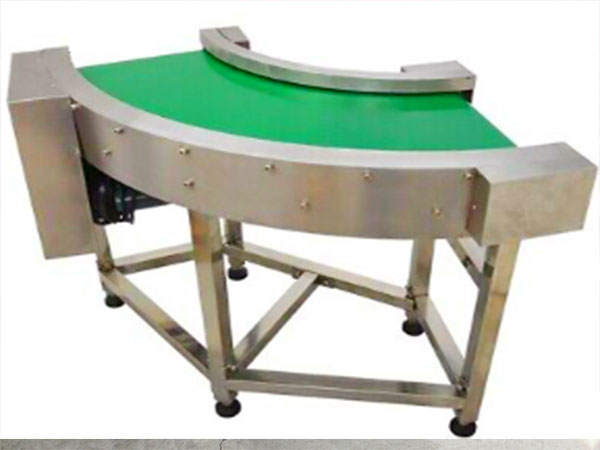
A curved belt conveyor is a material‑handling system that transports goods and bulk materials along curved paths to change conveying direction without extra transfer points. It uses conical rollers and guiding structures to offset inner‑outer speed difference during turning.
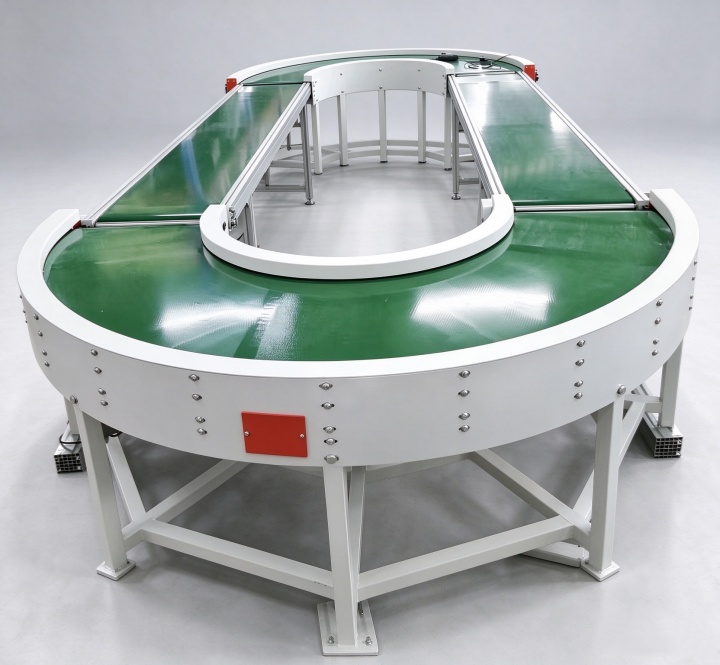
A curved belt conveyor is a custom continuous handling unit that redirects material flow along curved routes. It eliminates intermediate transfer stations and enables flexible line layout within limited floor space for steady transport of various goods.
How a Curved Belt Conveyor Works?
Curved belts present a fundamental engineering challenge: the belt's outer edge travels a greater distance than the inner edge during a turn, creating a natural speed differential across the belt's width. To address this, curved conveyors rely on positive guiding systems (urethane bead guides or chain guides), flexible belt construction that absorbs differential stretching, and precision alignment mechanisms.
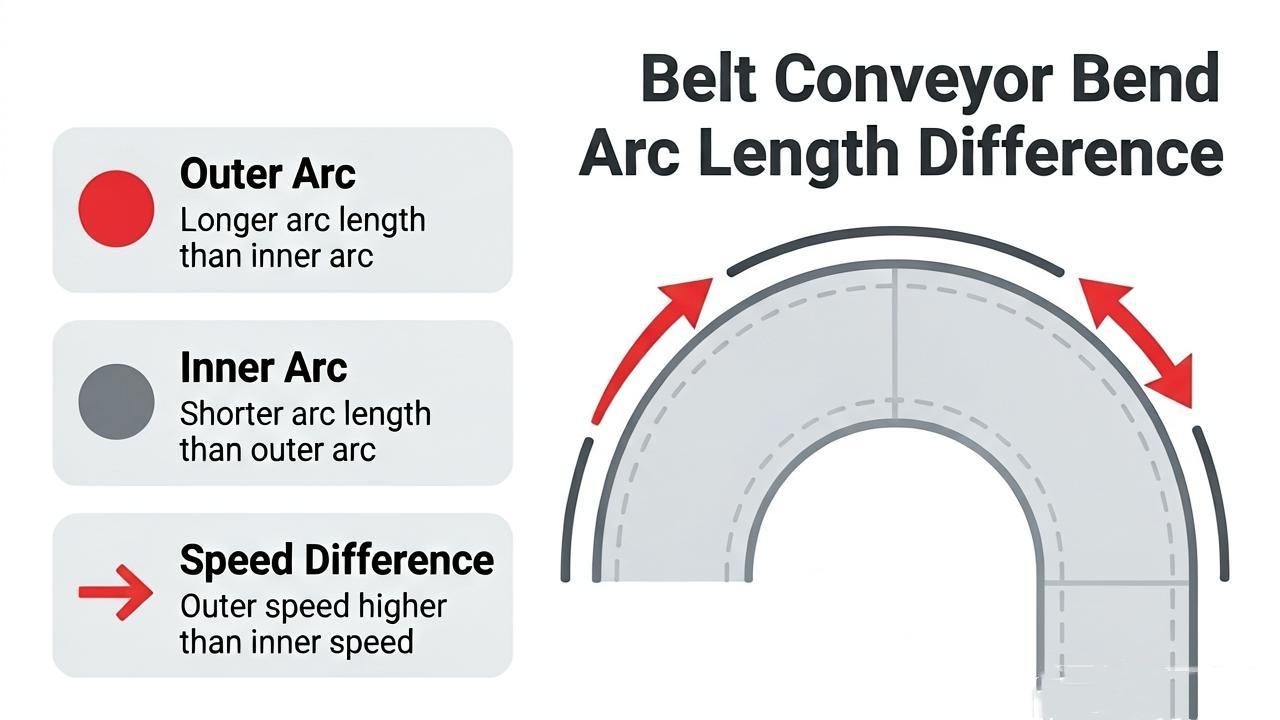
Curved belts are typically fabricated from circular-cut belt material, spliced in a conical shape to conform to the curve. A curved belt consists of a transversely stable belt body with corrugated edges and carriers. The belt is rigid in the transverse direction, requiring support or guidance only at the sides.
Drive Systems:
Friction Drive – simpler and more cost-effective.
Positive Drive (chain or toothed profile) – better grip, handles more torque and heavier loads, longer belt life.
The Role of Conical Rollers:
In curved belt conveyor design, conical rollers play a critical role in managing the speed differential between the inner and outer edges of the belt. As the belt travels through a curve, the conical shape compensates for the varying distances each portion of the belt must travel—the larger diameter at the outer edge moves faster, while the smaller diameter at the inner edge moves slower. This geometry helps maintain proper belt tension and tracking through the curve, reducing edge wear and minimizing the risk of belt distortion.
How to Select a Curved Belt Conveyor?
When selecting a curved conveyor solution, two primary options exist: belted curved conveyors and modular plastic belt conveyors. Understanding the differences is critical for making the right choice.
| Aspect | Curved Belt Conveyor | Modular Plastic Belt Conveyor |
| Straight Sections Required | None—curves directly connect to infeed and outfeed | Requires straight sections before and after the curve |
| System Footprint | Smaller overall footprint | Larger footprint due to straight section requirements |
| Product Handling | Smooth fabric surface, gentle on delicate items | Rigid plastic surface may scuff or mark products |
| Belt Changes | As fast as 15 minutes | More complex, requiring disassembly of modular sections |
| Applications | Bulk materials, packages, delicate items | Packages, heavier unit loads |
| Cost | Higher initial cost, lower maintenance | Lower initial cost, higher maintenance over time |
Technical Specifications
| Parameter | Range |
| Curve Angle | 15°, 30°, 45°, 60°, 90°, 180° (custom available) |
| Belt Width | 300 – 2,400 mm |
| Conveying Speed | Up to 3.0 m/s |
| Load Capacity | Customized per application |
| Belt Types | Smooth, profiled, or corrugated-edge with carriers |
| Frame Material | Carbon steel, stainless steel, or aluminum |
| Drive | Drum motor or direct-coupled gearbox |
| Operating Temperature | -25°C to +60°C |
| Mounting Shape | Straight, inclined, L-shaped, or Z-shaped |
When to Choose a Curved Belt Conveyor:
A curved belt conveyor is your ideal choice for compact factory layouts, gentle transport of fragile goods, fast belt replacement to reduce downtime, mixed bulk and packaged material handling, and seamless integration with your existing conveyor lines.
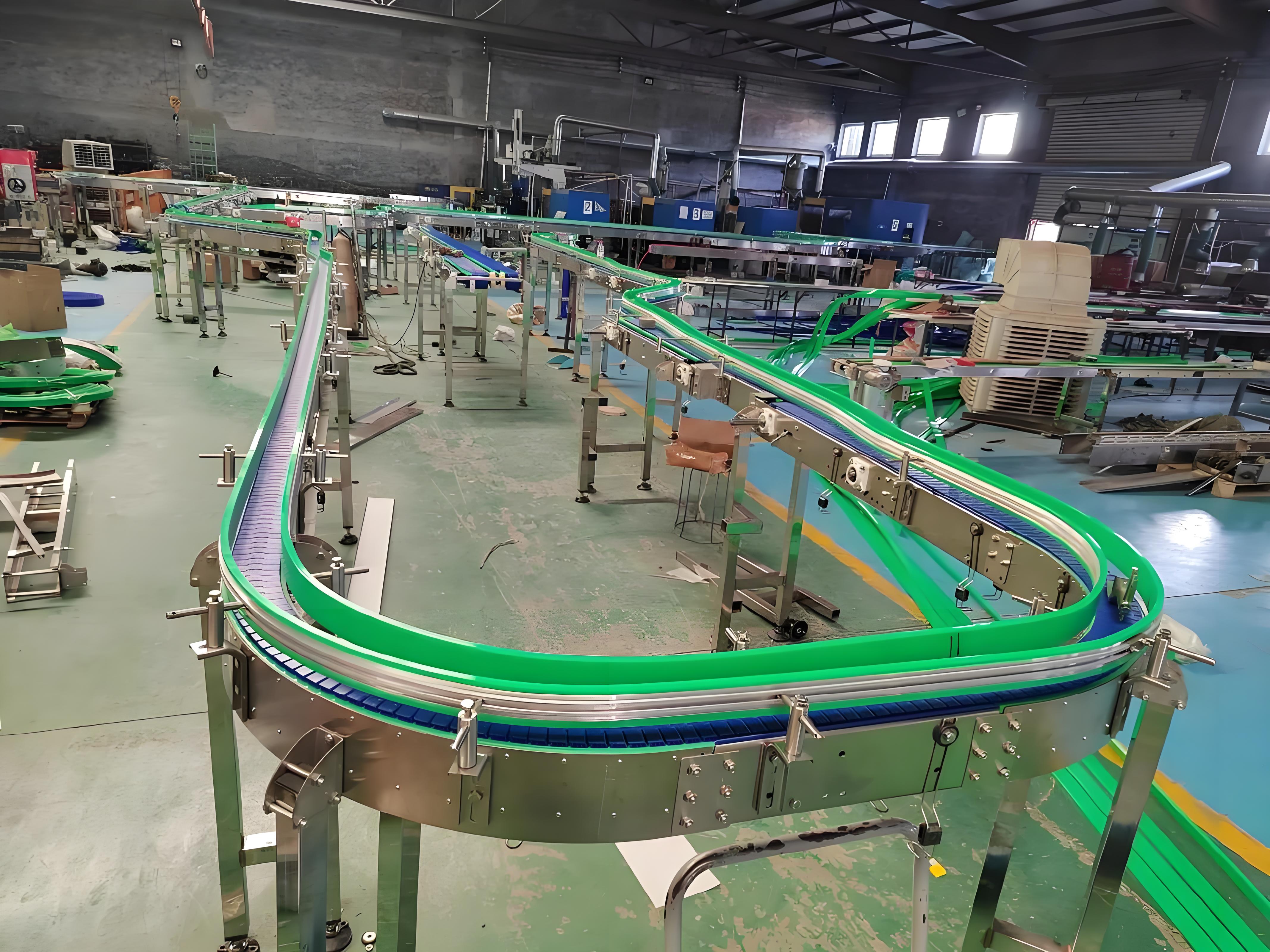
When floor space is limited and the system must fit into a compact layout;
When handling delicate items that could be damaged by a rigid plastic surface;
When minimizing downtime is critical—rapid belt changes keep operations running;
When the application involves both bulk materials and packaged goods;
When the conveyor needs to integrate with existing belted systems.
When to Consider Modular Plastic Belt Conveyor:
When handling extremely heavy unit loads that exceed fabric belt capacity;
When the application requires frequent washdowns with harsh chemicals;
When budget is the primary constraint and space is not an issue.
Key Features & Benefits
This curved belt conveyor delivers robust durability for continuous heavy-duty operation. Its optimized belt guiding structure lowers breakage risk, and the modular design allows belt replacement within 15 minutes. It saves floor space by removing extra straight conveyor segments, transports fragile goods smoothly without scratches, and supports fully customized curve angles, radii, belt widths and belt materials.
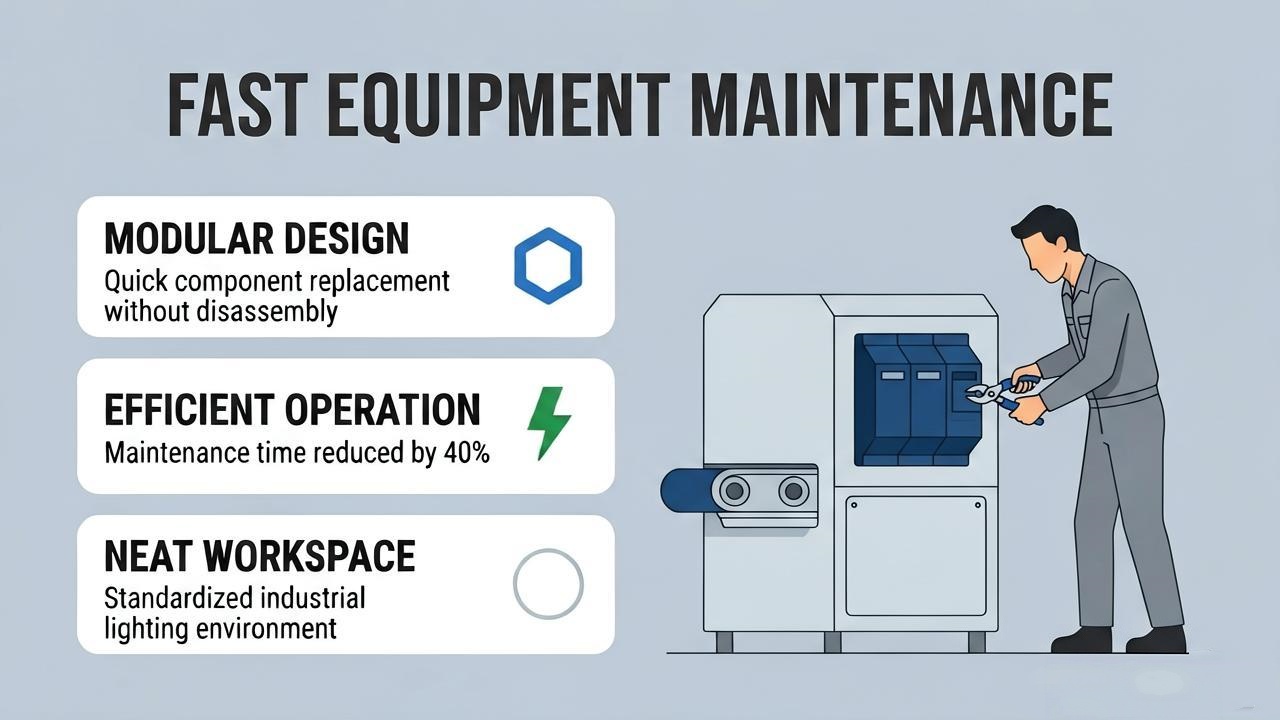
Exceptional Durability – Built for high-volume, heavy-duty applications where equipment runs almost constantly and downtime must remain minimal.
Performance-Focused Engineering – Advanced curved conveyors feature offset joints and double seam-secured belt beading, providing guiding profiles substantially stronger than traditional belt beading—directly reducing common breakage risks.
Quick Belt Changes – Modular design enables belt replacement in as little as 15 minutes, instead of hours.
Space Optimization – Eliminates the need for straight sections before and after curves, substantially reducing the system's footprint.
Smooth Product Handling – Fabric belting is gentle on delicate items, ensuring accurate product positioning through turns without scuffing.
Custom Engineering – Each curved belt conveyor can be tailored to specific curve angles, radii, belt widths, and material types.
Applications
Curved belt conveyors serve a wide range of industries including airports, e‑commerce, mining, ports, cement plants, warehouses, food processing and manufacturing, enabling directional changes for baggage, parcels, bulk materials and packaged goods to fit complex production and logistics layouts.
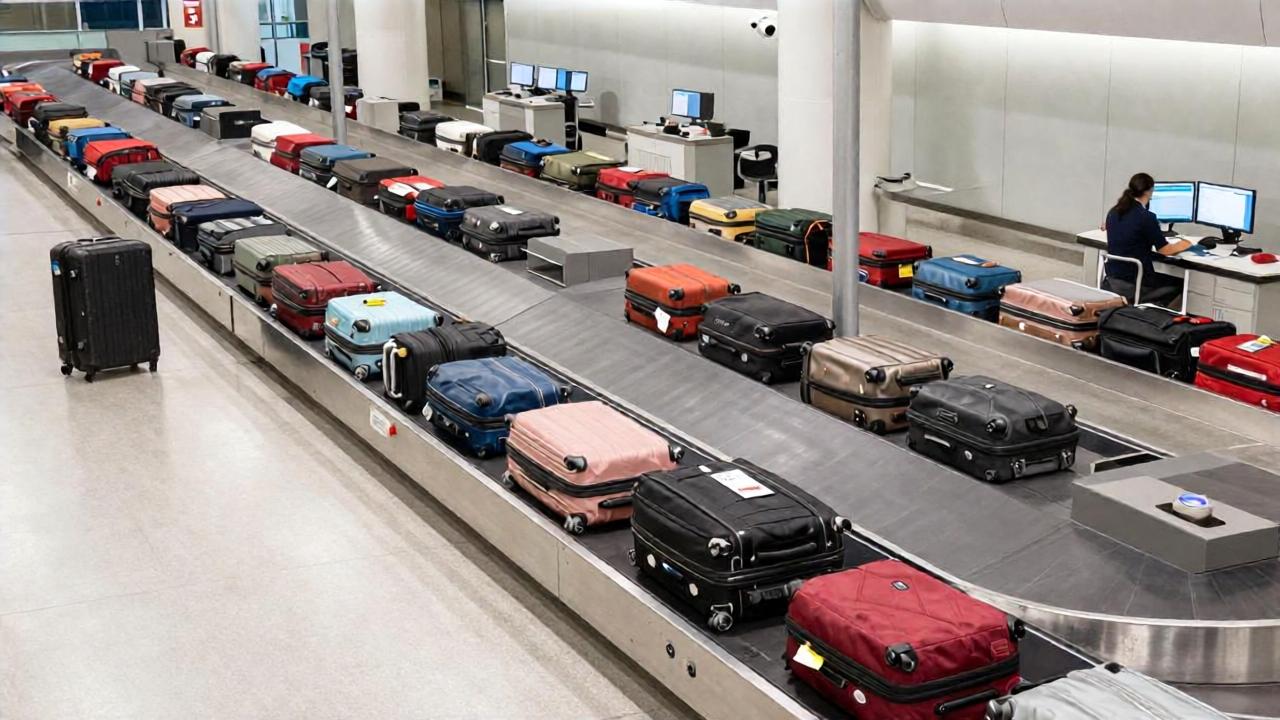
Airports – The Largest User – Airport baggage handling systems contain numerous curved belt conveyors, designed to run constantly with minimal downtime to meet strict timing requirements.
E-Commerce & Parcel Distribution – Essential for 90° or 180° directional changes in fulfillment centers while maintaining package orientation.
Mining & Quarrying – Overland curved conveyors follow terrain contours, avoiding obstacles or unfavorable terrain.
Ports & Docks – Moving bulk materials between ships and storage.
Cement & Aggregate Plants – Navigating complex layouts with tight spaces.
Warehousing & Distribution – Directional changes in sorting and fulfillment lines.
Food Processing – Stainless steel options with food-grade belting.
Manufacturing & Packaging – Tight transfers and space maximization.
Customization Options
This curved belt conveyor supports customization of curve angle, belt width and belt type, with multiple frame materials, drive modes and mounting shapes available, plus optional accessories such as side guards, guide rails and scrapers to match your project needs.
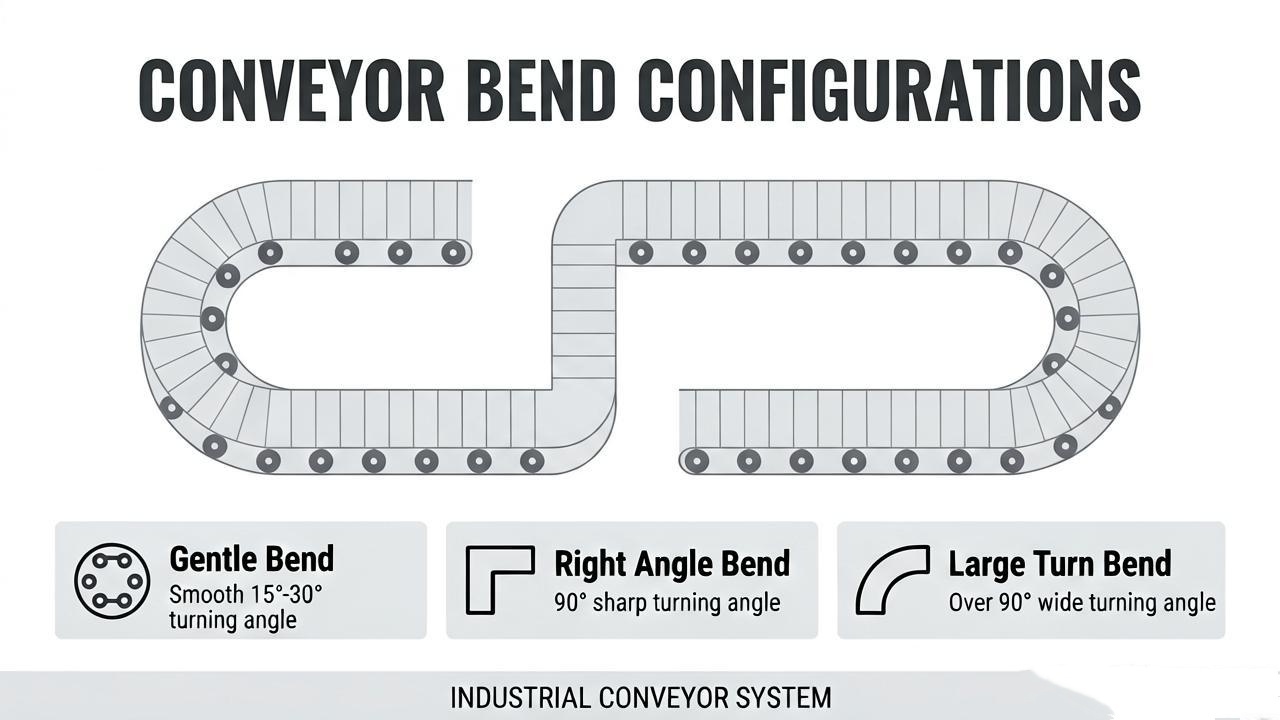
Curve Angle – Standard 15° to 180°; custom angles available;
Belt Width – 300 mm to 2,400 mm;
Belt Type – Smooth, profiled, or corrugated-edge with carriers;
Frame Material – Carbon steel, stainless steel (304/316), or aluminum;
Drive Configuration – Drum motor or direct-coupled gearbox;
Mounting Shape – Straight, inclined, L-shaped, or Z-shaped;
Optional Accessories – Side guards, guide rails, cleaning scrapers, dosing units, weighing installations.
Quality & Certification
Comprehensive quality management systems.
Rigorous in-house testing and quality inspection.
1-year warranty on all conveyor systems.
72-hour on-site service response.
Frequently Asked Questions
What is a curved belt conveyor?
A material handling system that transports products or bulk materials along a curved path, enabling directional changes without transfer points.
What angles can a curved belt conveyor handle?
Standard angles: 15°, 30°, 45°, 60°, 90°, and 180°. Custom angles available. Spiral configurations handle up to 720°.
How does it handle the speed difference between inner and outer edges?
Through positive guiding systems (urethane bead or chain guides), flexible belt construction that absorbs differential stretching, and precision alignment mechanisms.
What is the role of conical rollers in a curved belt conveyor?
Conical rollers compensate for the speed differential between the inner and outer edges of the belt during a turn. The larger diameter at the outer edge moves faster while the smaller diameter at the inner edge moves slower, maintaining proper belt tension and tracking through the curve while reducing edge wear and minimizing belt distortion.
What is the difference between friction drive and positive drive?
Friction drive is simpler and more cost-effective. Positive drive mechanically engages the belt with chains or sprockets, offering better grip, handling more torque, and longer belt life.
Can a curved belt conveyor handle heavy-duty bulk materials?
Yes. Built for speeds up to 550 feet per minute, these systems are widely deployed in mining, quarrying, and port operations. In one large-scale overland project, a curved belt conveyor was selected specifically because it eliminated three transfer stations and reduced material degradation by over 30% compared to the straight-conveyor alternative. Such real-world deployments demonstrate the system's proven capability for heavy-duty bulk handling.
What belt materials are available?
Smooth fabric belts, profiled belts, and corrugated-edge belts with carriers. Food-grade options available.
How long does a belt change take?
As little as 15 minutes with modular design.
What industries use curved belt conveyors?
Airports (the largest user), e-commerce fulfillment, parcel handling, distribution centers, mining, ports, cement, food processing, manufacturing, and packaging.
Can a curved belt conveyor be customized?
Yes—curve angle, radius, belt width, belt material, frame material, drive, and mounting shape all customizable.
Why Choose a Curved Belt Conveyor
A curved belt conveyor reduces equipment count, lowers energy consumption, and minimizes moving parts requiring maintenance. For overland applications, it follows natural terrain, avoiding costly tunnels or bridges. In factories, it frees valuable floor space. Curved belt conveyors integrate seamlessly with straight conveyors, flexible gravity conveyors, and other material handling equipment.

With extensive engineering expertise and decades of project experience in material handling, manufacturers deliver curved belt conveyor systems built for durability, efficiency, and long service life. Engineered for reliable performance in demanding environments, these systems continue to be a trusted solution for complex material handling challenges worldwide.
Contact our engineering team to discuss your specific curve angle, load capacity, and space constraints。