Telescopic Belt Conveyor
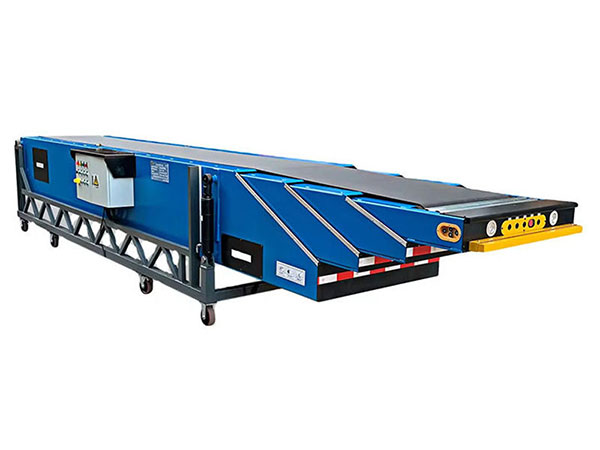
The conveyor can be configured according to the required extension length, belt width, loading capacity, working height, and installation conditions. Fixed and mobile arrangements are available for different loading areas.
Application: Truck, trailer, and container loading and unloading
Belt Width: Customizable according to material and capacity
Extension Length: Selected according to vehicle size and working distance
Configuration: Fixed or mobile
Control: Electric drive with adjustable conveying speed
Need a conveyor matched to your loading area? Send us the vehicle or container dimensions, required conveying length, material details, and capacity. We can recommend a suitable telescopic configuration.
How the Telescopic Conveyor Moves Material
The belt runs continuously while the telescopic boom moves in and out to change the discharge position. As the conveyor extends, the belt follows the telescopic sections, allowing material to reach farther into a truck, trailer, or container without moving the conveyor base.
Telescopic Belt Conveyor working process and telescopic movement.
During loading, the operator can adjust the boom as the available space inside the vehicle changes. During unloading, the conveyor can be retracted as material is removed, keeping the conveying point close to the working area.
Telescopic movement and belt conveying can be controlled independently, allowing the extension position and belt speed to be adjusted according to the loading position, material flow, and available space.
Design Features That Affect Conveyor Performance
A telescopic belt conveyor is not defined by extension length alone. The telescopic structure, belt support, drive system, and discharge end all affect how steadily the conveyor operates at different extension positions.
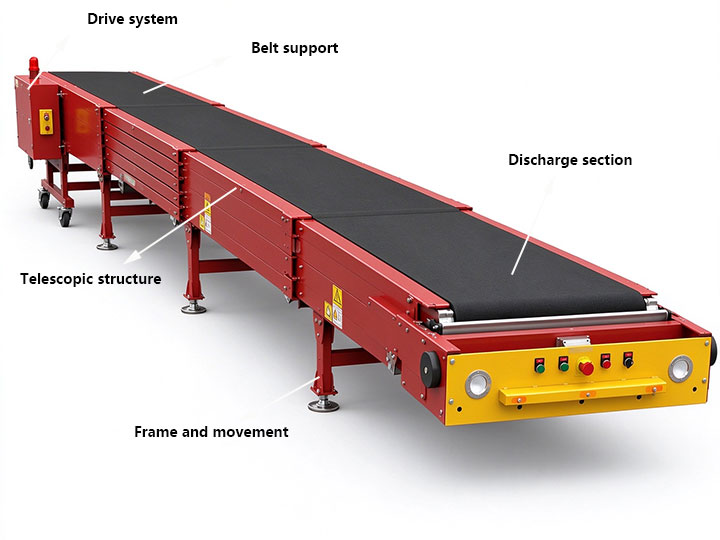
Telescopic structure: The sliding sections need sufficient rigidity to remain stable throughout the extension range.
Belt support: Rollers and other support components help keep the belt properly guided as the conveyor length changes.
Drive system: Motor and transmission selection should match the required belt speed, material load, and operating conditions.
Discharge section: The end of the boom should provide a suitable discharge point for the available loading space.
Frame and movement: The base and extension mechanism should suit the installation method and expected frequency of movement.
For this reason, the conveyor should be designed around the actual loading task rather than selected by overall length alone. Vehicle dimensions, material characteristics, capacity, and available floor space all affect the final configuration.
Telescopic Belt Conveyor Dimensions and Specifications
The dimensions of a telescopic belt conveyor depend on the loading area and the required reach. The main considerations are how far the conveyor needs to extend and how much material it must handle during loading or unloading.
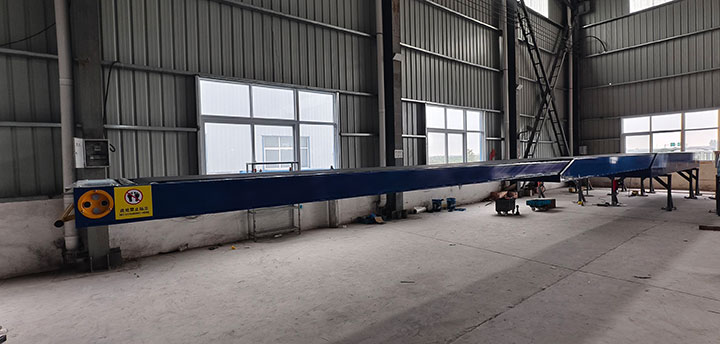
- Overall Length: Determines the available conveying distance when the conveyor is retracted.
- Extension Length: Defines how far the boom can reach into a truck, trailer, or container.
- Belt Width: Selected according to material size, loading method, and required capacity.
- Belt Speed: Matched to the material flow and required loading or unloading rate.
- Working Height: Considered according to the vehicle opening, dock height, or installation position.
- Load Capacity: Determined by material type, bulk density, feed rate, and operating conditions.
Because loading areas vary, conveyor dimensions and operating parameters can be configured for the application. Vehicle type, available space, required reach, material, and capacity should be confirmed before finalizing the design.
Choosing the Right Telescopic Arrangement
The right telescopic arrangement depends mainly on the installation location and how the loading position changes during operation. A fixed arrangement suits a dedicated loading station, while a mobile design is useful when one conveyor serves different positions.
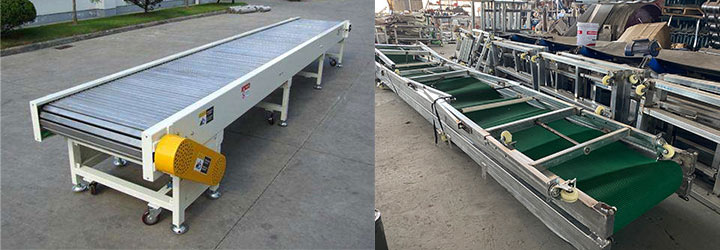
For a fixed loading area, the conveyor can be installed at a predetermined working height and aligned with the vehicle entrance. This is suitable when trucks or containers regularly use the same loading point.
A mobile arrangement allows the conveyor to be repositioned when loading locations change. Wheels, supporting structures, or other movement mechanisms can be selected according to the floor condition and operating method.
The extension range should match the actual vehicle dimensions. A longer reach is not necessarily better; it should provide enough travel to place the conveying end where it is needed during loading or unloading.
Loading Trucks with a Telescopic Belt Conveyor
When loading a truck, the discharge point may need to move deeper into the cargo area as available space changes. A telescopic belt conveyor allows the boom to extend toward the rear of the truck, keeping the discharge point closer to the current loading position.
The operator can adjust the extension as the cargo is distributed. This allows the loading position to change from outside the vehicle while the conveyor continues to move material.
For truck loading, the conveyor length, extension range, belt width, and working height should match the truck body and required capacity. Material characteristics and the loading method should also be considered when selecting the belt speed and discharge arrangement.
Reaching into Containers and Trailers
Containers and enclosed trailers can be difficult to load from a fixed conveyor position because much of the available space is inside the vehicle. A telescopic conveyor brings the conveying end farther inside, placing material closer to the required loading position.
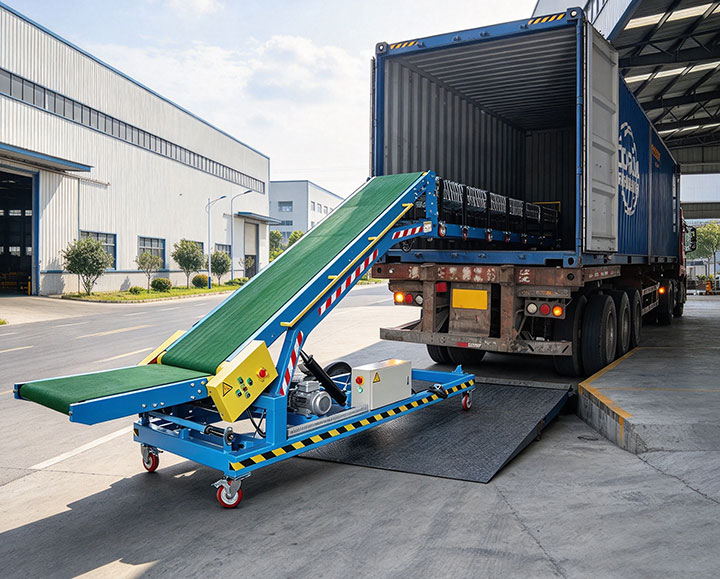
As loading progresses, the boom can be extended or retracted to follow the available space inside the container or trailer. This is useful when the conveyor base needs to remain outside the vehicle.
The entrance height, internal length, floor condition, and required extension range should be checked before installation. These dimensions determine whether the conveyor can reach the intended loading area with sufficient operating clearance.
Where This Conveyor Fits in a Material Handling System
A telescopic belt conveyor is often used as the final conveying section between a material handling line and a truck, trailer, or container. It can receive material from an upstream conveyor, feeder, hopper, packing line, or other transfer equipment.
For example, packaged products can move from a production or packing line onto the telescopic conveyor and directly into the vehicle. For unloading, the conveying direction can be reversed to transfer material from the vehicle to a downstream conveyor or receiving point.
Transfer height, belt width, material flow, available floor space, and control coordination should be considered when connecting the telescopic conveyor with other equipment.
What Can Be Conveyed on a Telescopic Belt?
Telescopic belt conveyors are commonly used for materials that can be transported continuously on a flat or slightly inclined belt. The belt and conveyor configuration should be selected according to the material and loading conditions.
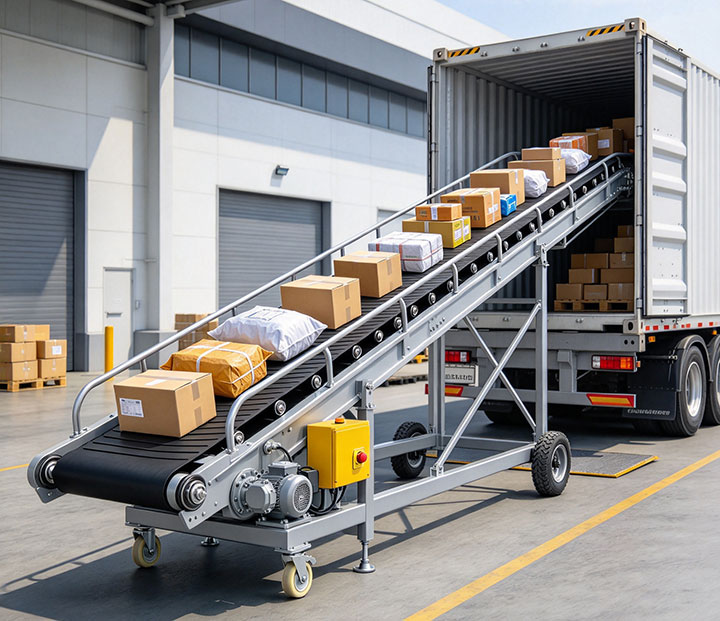
Typical applications include cartons, bags, parcels, boxes, packaged products, and other unit loads. Bulk materials such as grains or granules can also be handled when the belt design and loading method are suitable for the material.
Material size, weight, surface condition, temperature, moisture, and flow characteristics should be considered when selecting the conveying system. Fragile or irregular products may also require controlled belt speed and a suitable loading method.
What to Check Before Ordering a Telescopic Belt Conveyor
Before ordering a telescopic belt conveyor, the loading conditions should be clearly defined. The conveyor needs to fit both the material handling requirements and the available space at the loading point.
- Vehicle information: Truck, trailer, or container type and internal dimensions.
- Required reach: Distance the conveyor needs to extend into the loading area.
- Material: Product type, unit weight or bulk density, particle size, and handling condition.
- Capacity: Required conveying rate or number of products to be handled per hour.
- Installation: Available floor space, entrance height, working height, and fixed or mobile installation.
- Operating method: Required belt speed, extension control, and loading or unloading frequency.
Providing these details at the quotation stage helps determine the belt width, conveyor dimensions, extension range, drive system, and overall arrangement without relying on a standard configuration that may not suit the actual operation.
Built-In Safety and Operator Controls
A telescopic belt conveyor has moving belts and extending sections, so the controls should allow the operator to manage conveying and telescopic movement from a suitable operating position.
The control arrangement can be configured according to the installation and working method. Common functions include belt start and stop, telescopic extension and retraction, and emergency stop. Where required, limit or protection devices can be incorporated to help control movement within the designed operating range.
The working area should provide sufficient clearance around the conveyor and its moving sections. Guards, emergency-stop devices, electrical protection, and other safety components should be selected according to the machine configuration and applicable operating requirements.
Keeping the Telescopic Conveyor Running Smoothly
Routine maintenance mainly involves the belt, rollers, drive system, and telescopic mechanism. Keeping these components clean and correctly adjusted helps maintain stable operation during repeated extension and retraction.
- Check belt tracking and tension and correct any abnormal deviation.
- Inspect rollers, bearings, and drive components for unusual noise or wear.
- Keep the telescopic sections and movement path free from accumulated material or other obstructions.
- Inspect electrical connections, controls, and emergency-stop devices during routine service.
- Check fasteners and structural components periodically, particularly on frequently used equipment.
The maintenance interval depends on operating frequency, material characteristics, working environment, and conveyor configuration. Any abnormal belt movement, noise, or telescopic movement should be checked before continued operation.
A Telescopic Conveyor Built for Your Loading Application
There is no single telescopic belt conveyor arrangement that suits every loading station. The design should match the vehicle entrance, required reach, material flow, and available installation space.
Based on these conditions, the conveyor can be configured with a suitable belt width, extension range, working height, drive system, and fixed or mobile arrangement. Connections with existing conveyors or packing equipment can also be considered when the telescopic conveyor forms part of a complete handling line.
For a practical recommendation, send us the vehicle or container dimensions, material information, required capacity, available space, and required conveying distance. These details help determine a suitable conveyor configuration for the loading operation.
Frequently Asked Questions
Can a telescopic belt conveyor be used for both loading and unloading?
Yes. The conveying direction can be arranged for either loading or unloading. The required belt direction, extension range, working height, and connection with other equipment should be determined according to the application.
Can the conveyor be customized for different truck or container sizes?
Yes. The conveyor dimensions and telescopic range can be configured according to the vehicle entrance, internal dimensions, required reach, material, and conveying capacity.
What information is needed to select a telescopic belt conveyor?
Please provide the material type, required capacity, truck or container dimensions, required conveying distance, working height, available installation space, and whether the conveyor should be fixed or mobile. Photos or drawings of the loading area can also help with configuration.
Tell Us Your Loading Requirements
If you are looking for a telescopic belt conveyor for truck, trailer, or container loading, send us the basic details of your application. We can review the working conditions and recommend a suitable conveyor arrangement.
Please include the material type, required capacity, vehicle or container dimensions, required extension length, working height, and available installation space. Photos, drawings, or videos of the loading area are also useful when available.