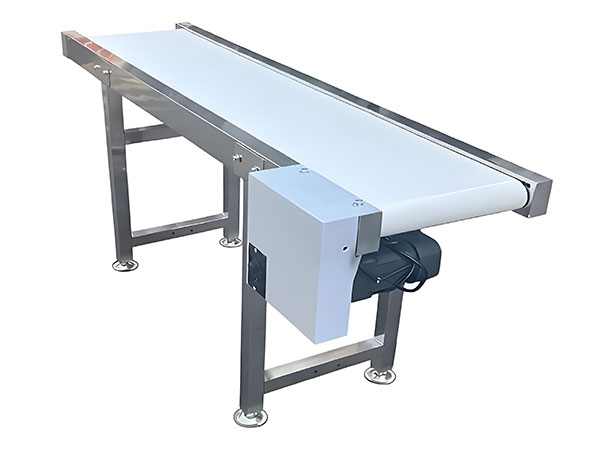
Mini Belt Conveyor
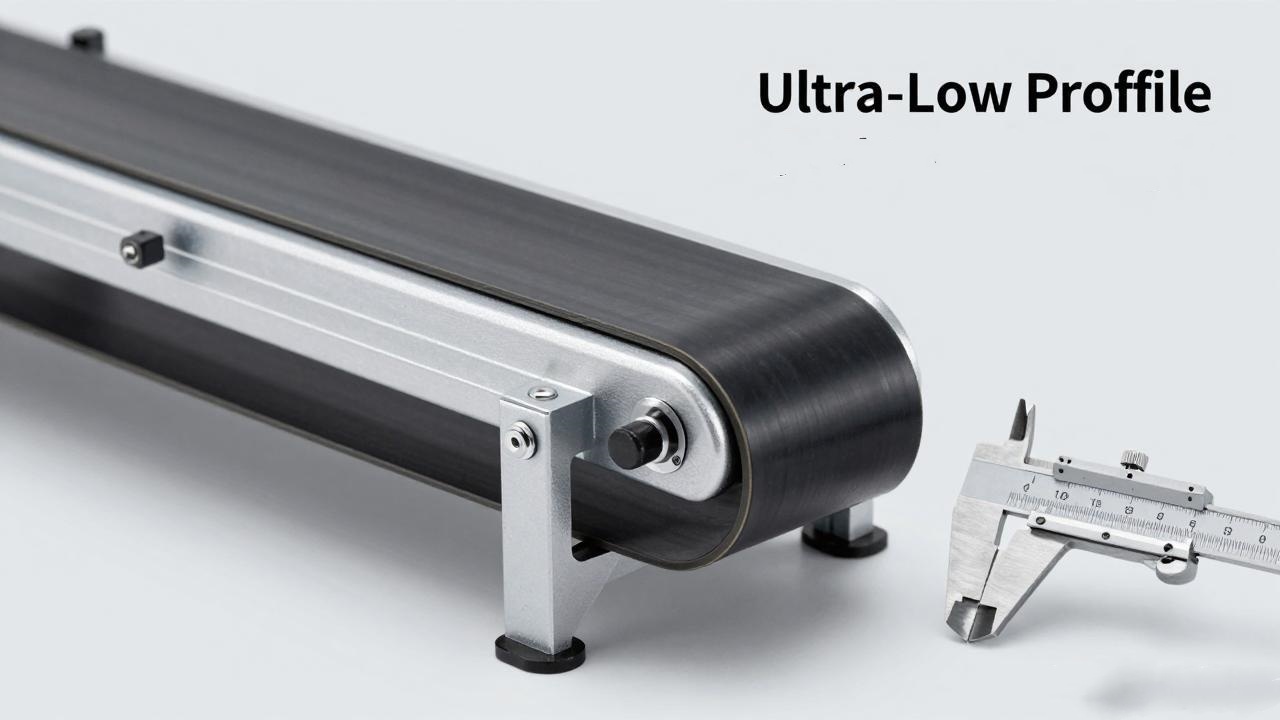
Compact, low-profile design — heights as low as 19–50 mm.
Three standard series: DH-M100, DH-M200, DH-M300.
Belt widths: 100 / 150 / 200 / 300 / 400 / 500 mm.
Conveyor lengths: 0.5 / 1 / 1.5 / 2 / 3 / 5 m (customizable).
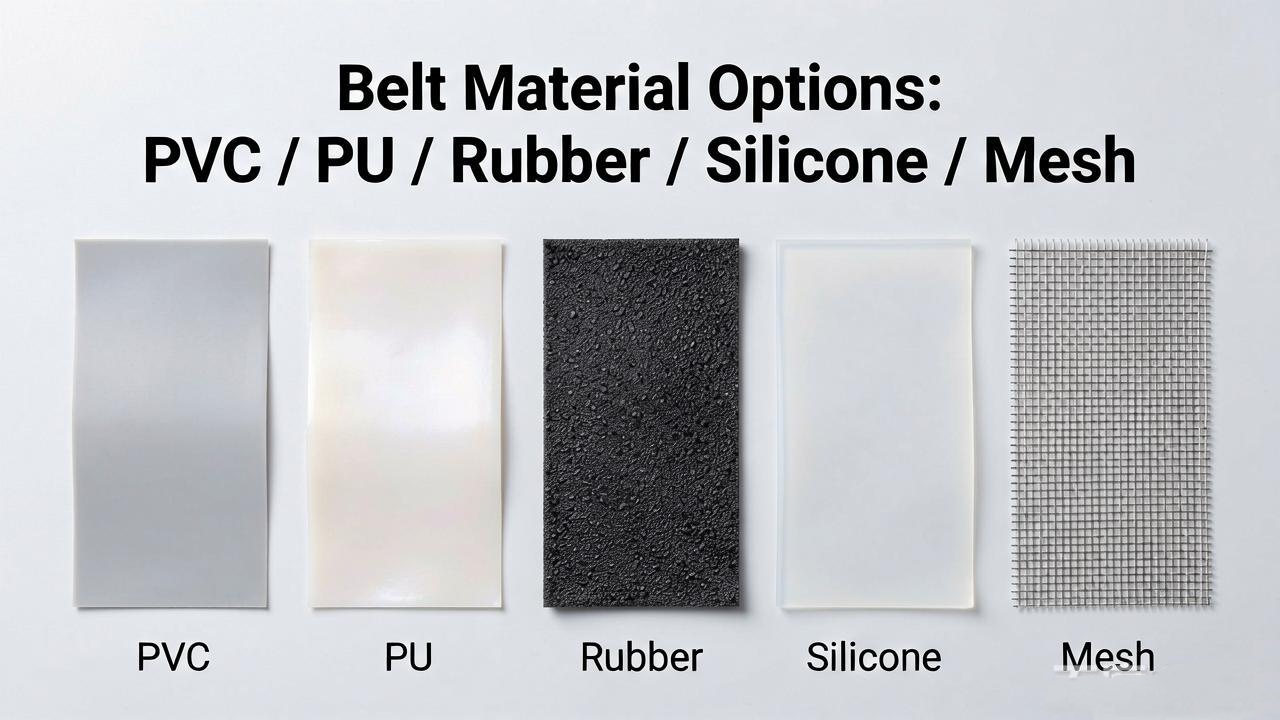
Belt materials: PVC, PU, rubber, silicone, mesh.
Speed range: 3 – 122 m/min, adjustable.
Load capacity: up to 68 kg (evenly distributed).
Frame options: aluminum alloy, powder-coated steel, stainless steel (SS304).
Drive types: end drive, mid drive, bottom drive.
Power supply: 24V DC / 110V / 220V / 380V.
What Is a Mini Belt Conveyor?
A mini belt conveyor is a compact material handling system engineered for moving small parts, lightweight products, and delicate items in space‑constrained environments.Unlike standard industrial conveyors, a mini belt conveyor features a low‑profile design — with belt heights as low as 19–50 mm — making it ideal for integration into automated production lines, packaging machinery, laboratory workstations, and cleanroom facilities.
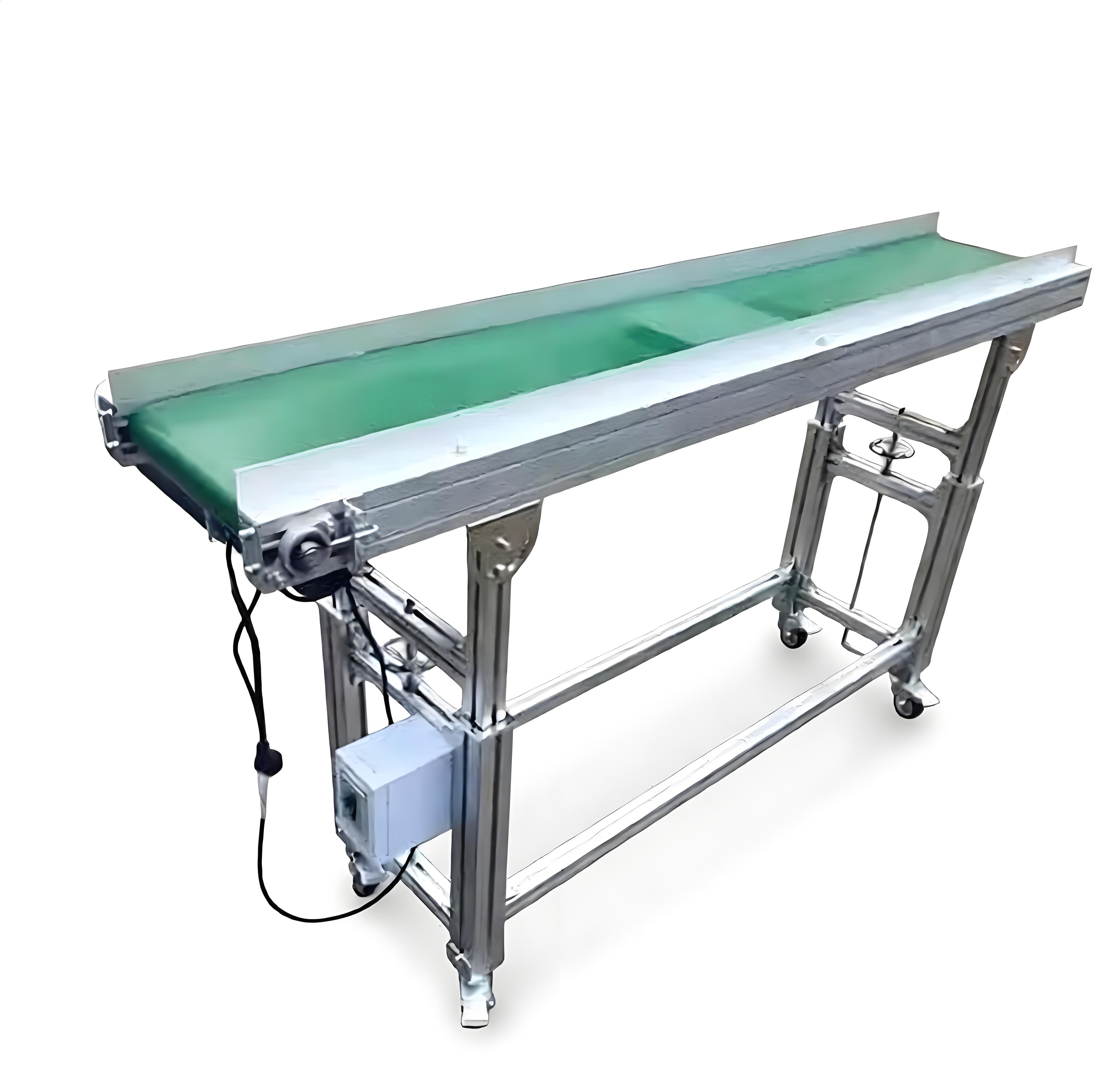
A mini belt conveyor typically offers belt widths from 50 mm to 600 mm, with conveyor lengths from 0.3 m to 10 m per unit. A mini belt conveyor can handle products weighing from a few grams up to 68 kg, making it suitable for a wide range of light‑duty applications.
Founded in 2008, we are an ISO 9001:2015 certified manufacturer specializing in the design and production of mini belt conveyor systems. Our products are CE approved and exported to over 50 countries worldwide, serving customers across electronics, pharmaceutical, and food processing industries.
Key Highlights
Ultra‑Low Profile – Frame heights as low as 19 mm, fitting into the tightest spaces
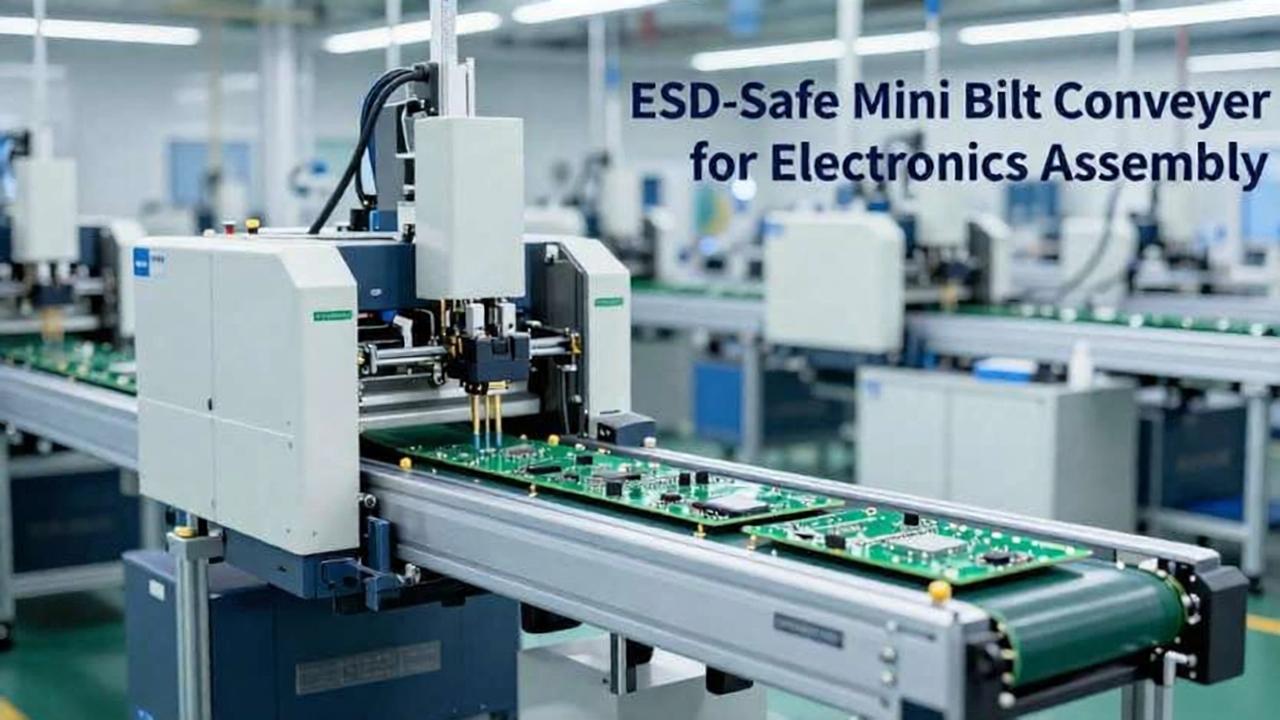
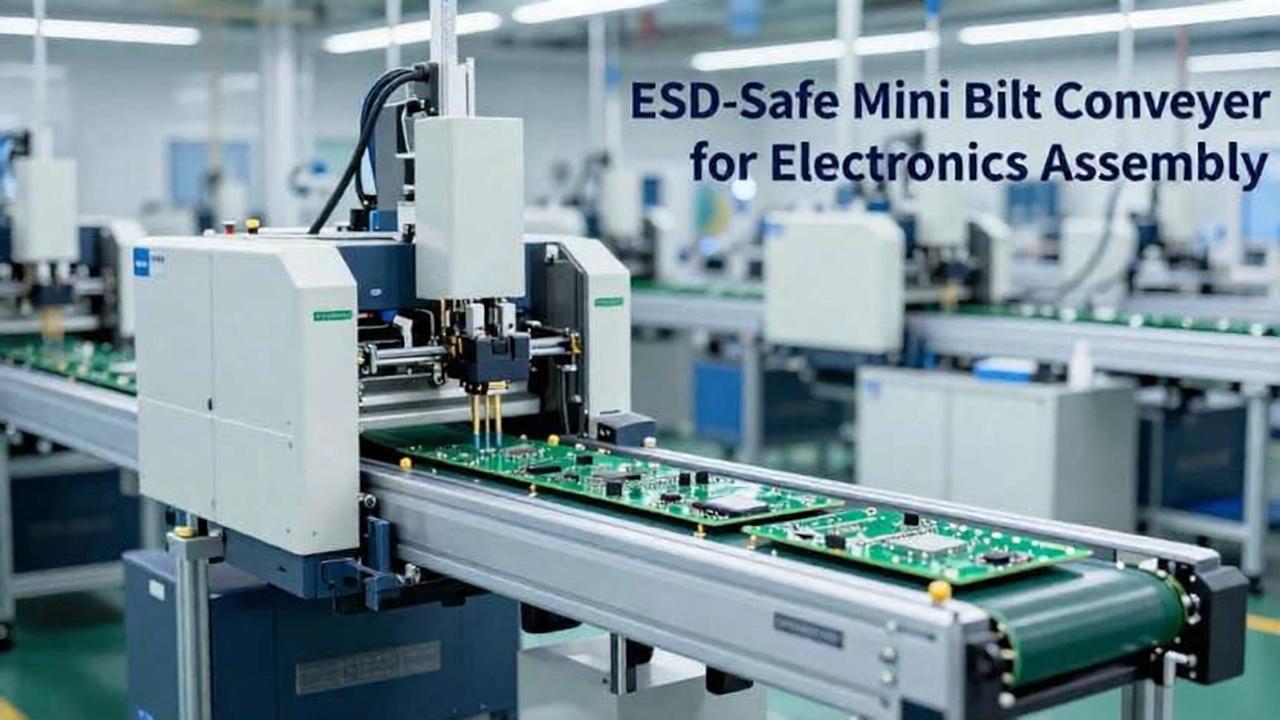
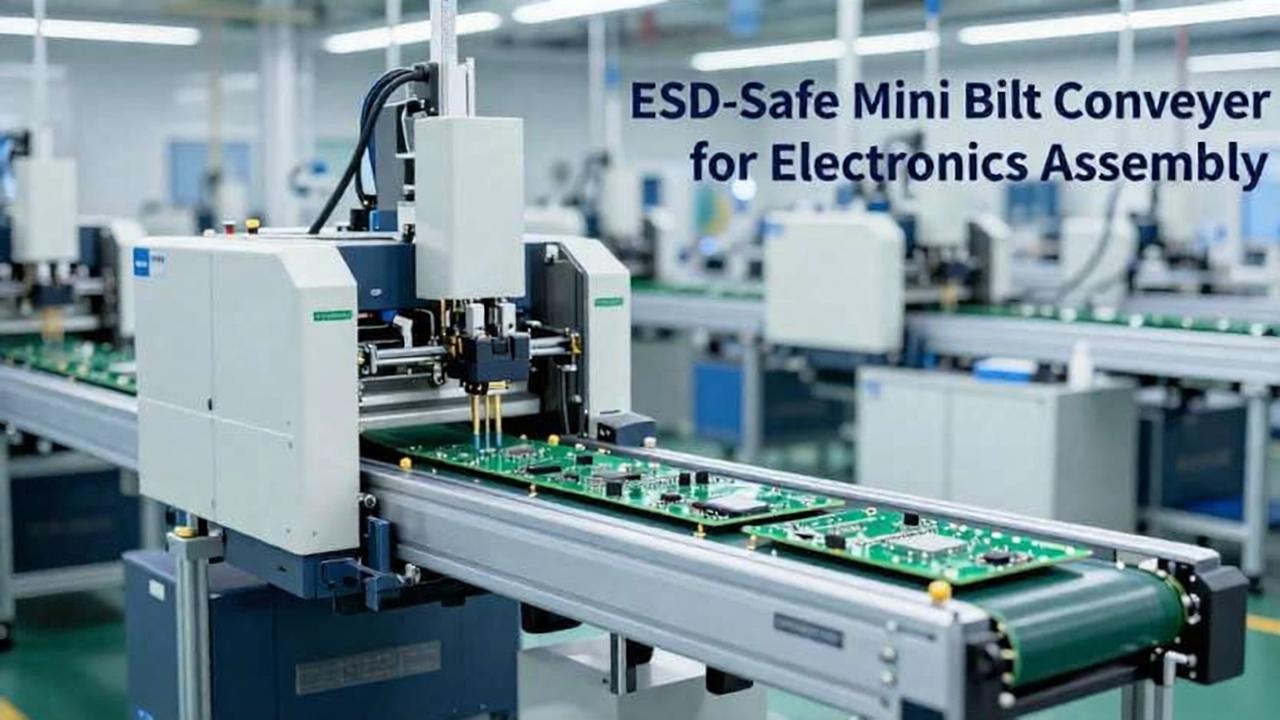
ESD‑Safe Options – Static‑dissipative belts for electronics assembly
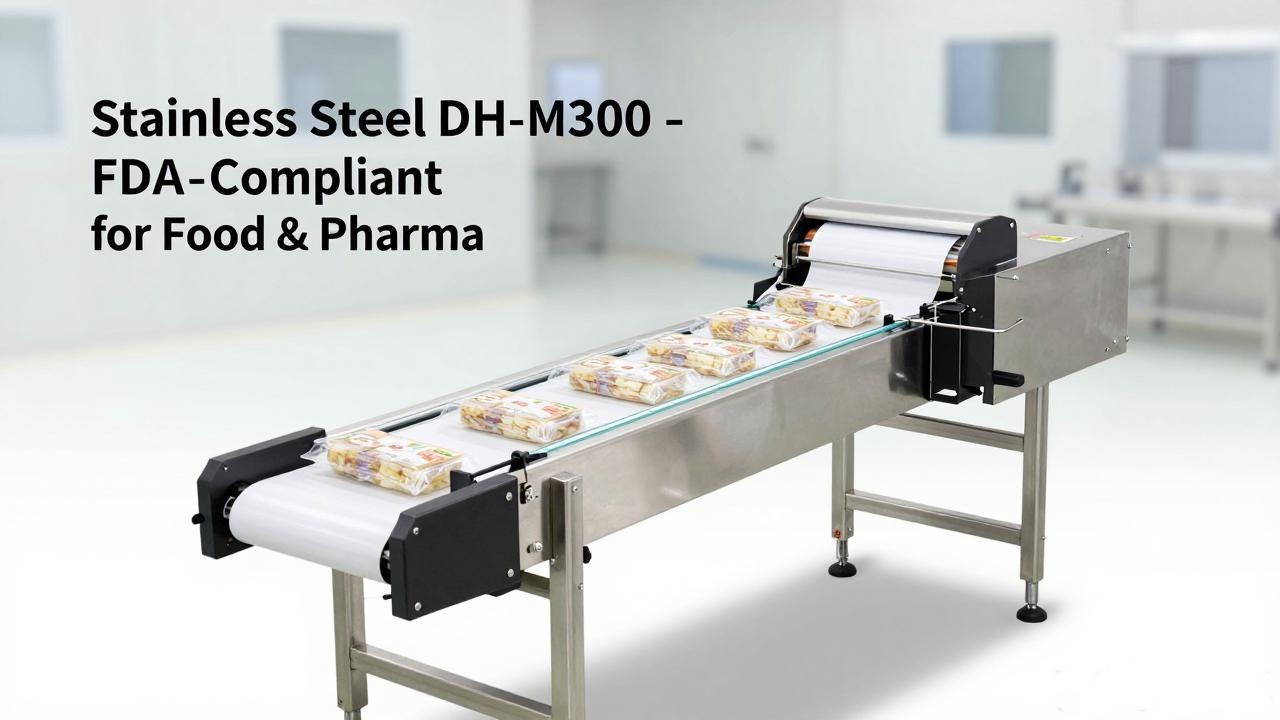
Food‑Grade Compliance – FDA 21 CFR compliant materials for food and pharma
Clean Room Compatible – Stainless steel models suitable for Class 100 environments
Available Series
Our mini belt conveyor is available in three standard series:
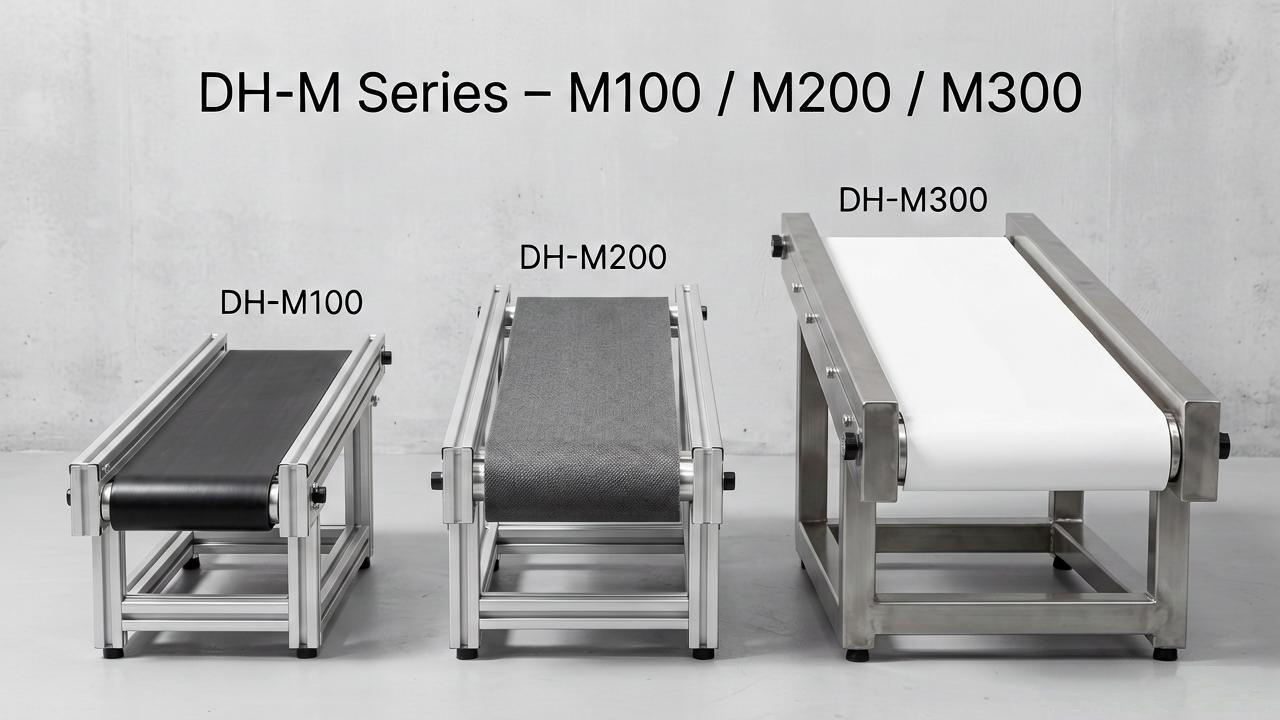
DH‑M100 Series – Ultra‑low profile design with frame height as low as 19 mm, ideal for space‑constrained electronics assembly lines and light‑duty conveying applications. Available in belt widths of 100, 150, and 200 mm with load capacity up to 20 kg.
DH‑M200 Series – High‑speed conveying up to 122 m/min for packaging lines and general manufacturing. Available in belt widths of 200, 300, 400, and 500 mm with load capacity up to 68 kg.
DH‑M300 Series – Stainless steel construction with FDA‑compliant belt materials for food processing and pharmaceutical applications. Available in belt widths of 100, 200, 300, and 400 mm with load capacity up to 50 kg. Suitable for cleanroom environments up to Class 100.
| Series | Belt Widths | Load Capacity | Frame Material | Best For |
| DH‑M100 | 100 / 150 / 200 mm | Up to 20 kg | Aluminum Alloy | Electronics assembly, light‑duty conveying |
| DH‑M200 | 200 / 300 / 400 / 500 mm | Up to 68 kg | Aluminum / Powder‑Coated Steel | General manufacturing, packaging lines |
| DH‑M300 | 100 / 200 / 300 / 400 mm | Up to 50 kg | Stainless Steel (SS304) | Food processing, pharmaceutical, cleanroom |
Each series of the mini belt conveyor can be customized in length, belt material, speed, and incline angle.
Key Features & Benefits
DH mini belt conveyor saves space. DH-M100 has a frame height as low as 19 mm for tight spaces. It precisely handles small and fragile items to reduce damage.
Space‑Saving Design: The mini belt conveyor fits into tight production spaces and under overhead equipment. The DH‑M100 series features a frame height as low as 19 mm, freeing up floor space that larger machines cannot access.
Precise Product Handling: Delivers accurate tracking and positioning for small or fragile parts — from pharmaceutical drugs and surgical supplies to syringes, stents, and small bottles — reducing the risk of damage during transport.
Proven Performance in Electronics Assembly: In a recent installation at a electronics manufacturer in Shenzhen, the DH‑M100 mini belt conveyor replaced manual PCB transfer between SMT machines. The result: PCB handling damage dropped by 60%, and the system was fully integrated into the existing production line within 4 hours of delivery. The conveyor now runs 24/7 with zero downtime in the first six months of operation.
Flexible Belt Options: Choose from PVC, PU, rubber, silicone, or mesh belts. Anti‑static belts are essential for electronics assembly (DH‑M100 series), while food‑grade, FDA‑approved belts are required for food and pharmaceutical applications (DH‑M300 series).
Adjustable Speed Control: Equipped with variable speed drives, the mini belt conveyor offers speeds from 3 m/min to 122 m/min, allowing fine‑tuning to match production.
Durable & Low Maintenance: Built with aluminum alloy, powder‑coated steel, or stainless steel frames for long service life. Simplified design reduces upkeep requirements.
Easy Integration: Compatible with robots, sensors, pick‑and‑place systems, and existing production lines across all three series.
How a Mini Belt Conveyor Works
A mini belt conveyor operates through a simple yet precise mechanism. The drive motor powers a drive pulley, which moves the conveyor belt around the system. The belt returns via idler pulleys at the opposite end, creating a continuous loop.
Drive Configurations – Three common setups are available:End Drive: Motor at one end, most common and straightforward to maintain
Center Drive: Motor in the middle, allowing both infeed and outfeed ends to be fully open
Bottom Drive: Motor underneath the belt, minimizing overall height
Speed Control – Belt speed is regulated via DC motor with voltage control or AC motor with Variable Frequency Drive (VFD), offering precise speed adjustment from 1 to 100 m/min.
Belt Tracking – Precision tracking mechanisms, including crowned pulleys and adjustable tracking rollers, keep the belt centered to prevent edge wear and maintain product positioning accuracy.
Technical Specifications
Custom sizes and configurations are available upon request for all series.
| Parameter | DH‑M100 Series | DH‑M200 Series | DH‑M300 Series |
| Belt Width | 100 / 150 / 200 mm | 200 / 300 / 400 / 500 mm | 100 / 200 / 300 / 400 mm |
| Conveyor Length | 0.5 / 1 / 1.5 / 2 / 3 m | 1 / 2 / 3 / 5 m | 0.5 / 1 / 1.5 / 2 / 3 m |
| Belt Speed | 3 – 50 m/min | 3 – 122 m/min | 3 – 50 m/min |
| Max Load Capacity | Up to 20 kg | Up to 68 kg | Up to 50 kg |
| Frame Material | Aluminum Alloy | Aluminum / Powder‑Coated Steel | Stainless Steel (SS304) |
| Motor Power | 25 – 90 W | 40 – 200 W | 40 – 120 W |
| Power Supply | 110V / 220V / 24V DC | 110V / 220V / 380V | 110V / 220V / 24V DC |
| Drive Type | End Drive | End / Mid / Bottom Drive | End / Mid Drive |
| Belt Materials | PVC, PU, Silicone | PVC, PU, Rubber, Mesh | PVC, PU, Silicone (FDA) |
Belt Material Comparison
| Material | Temperature Range | Best Applications |
| PVC | -10°C to +60°C | Standard light‑duty conveying |
| PU | -20°C to +80°C | Food, pharmaceutical, oily environments |
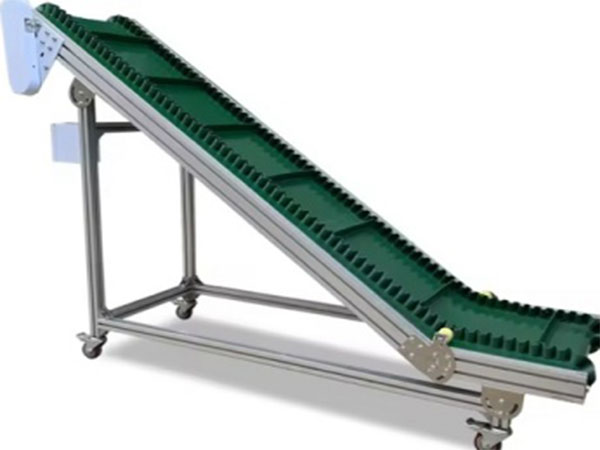
| Rubber | Varies | General industrial, incline conveying |
| Silicone | -60°C to +230°C | Food processing, high‑temperature applications |
| Mesh | Varies | Drying, cooling, washing applications |
Applications
This mini belt conveyor covers multiple applications. DH-M100 with ESD belts transports circuit boards and chips for electronics assembly. DH-M300 stainless steel version meets Class 100 cleanroom standards for pharma and medical goods, and its FDA-compliant materials are available for food processing. It can act as infeed, outfeed or accumulation conveyor for packaging machines, integrate with robot pick-and-place systems, and transport samples in labs and cleanrooms.
Electronics Assembly:Transfers circuit boards, microchips, and sensors between processes. The DH‑M100 mini belt conveyor with ESD‑safe belts is standard in SMT and electronics assembly lines.
Pharmaceutical & Medical:Handles pharmaceutical drugs, surgical supplies, respiratory masks, syringes, stents, and small medical devices. The DH‑M300 stainless steel mini belt conveyor meets cleanroom requirements up to Class 100.
Food Processing:Conveys packaged food items with food‑grade belt options. The DH‑M300 mini belt conveyor uses FDA‑compliant materials.
Packaging Lines:Serves as infeed, outfeed, or accumulation conveyor for packaging machinery.
Automated Assembly & Robotics:Integrates with robotic pick‑and‑place systems for precision part movement.
Laboratory & Cleanroom:Transports samples and test materials in controlled environments.
How to Choose the Right Mini Belt Conveyor
Selecting the right mini belt conveyor requires consideration of three core factors:、
Product & Load Requirement: Weight: DH‑M100 handles up to 20 kg; DH‑M200 up to 68 kg; DH‑M300 up to 50 kg;Size: Belt width must accommodate your largest product with clearance';urface: Delicate or sticky products may require specific belt materials like silicone or PU
Operating Environment: Temperature: Standard PVC belts operate up to +60°C; silicone belts handle up to +230°C;Hygiene: Food and pharmaceutical applications require stainless steel DH‑M300 with FDA‑compliant belts;ESD: Electronics assembly requires ESD‑safe belts, available on DH‑M100 series
Installation & Control: Space: Low‑profile models with heights as low as 19 mm are available in DH‑M100 series;Drive: End drive (most common), mid drive (open infeed/outfeed), or bottom drive (minimizes height);Control: Variable speed via VFD or DC controller; PLC integration available
Common Selection Mistakes to Avoid
When purchasing a mini belt conveyor, many buyers overlook critical factors that lead to performance issues or costly rework. Here are the most common mistakes and how to avoid them.
Mistake 1 – Choosing the Wrong Belt Material:
Selecting a belt based solely on price often leads to premature failure. For example, standard PVC belts degrade quickly in oily environments, while PU belts offer superior chemical resistance. For electronics assembly, failing to specify ESD‑safe belts can result in static damage to sensitive components. Always match the belt material to your specific operating conditions — not just to your budget.
Mistake 2 – Underestimating Installation Space Constraints
Many buyers measure only the conveyor footprint, forgetting to account for maintenance access, belt tensioning clearance, and motor protrusion. A mini belt conveyor with end drive requires additional space at one end for motor access, while center drive configurations keep both ends clear. Low‑profile bottom drive options minimize overall height but may limit access for adjustments. Measure twice — including clearance for maintenance.
Mistake 3 – Ignoring Future Expansion Needs
A mini belt conveyor purchased for today's production volume may become a bottleneck as your business grows. Consider whether you may need to increase speed, add sensors, or integrate with additional equipment in the future. Choosing a series with VFD‑ready motors and PLC compatibility (available across all DH‑M series) allows for easy upgrades without replacing the entire conveyor.
Mistake 4 – Overlooking Belt Tracking Adjustments
Belt misalignment is one of the most common complaints with mini belt conveyors. However, most tracking issues can be resolved with simple adjustments. Ensure the conveyor you select has accessible tracking mechanisms — preferably with visual indicators — and that your team is trained on basic tracking adjustments before installation.
Frequently Asked Questions
What series of mini belt conveyor is best for electronics assembly?
The DH‑M100 mini belt conveyor is specifically designed for electronics assembly, offering ESD‑safe belt options and belt widths of 100mm, 150mm, and 200mm.
Which mini belt conveyor series is suitable for food processing?
The DH‑M300 stainless steel mini belt conveyor is designed for food processing and pharmaceutical applications, featuring FDA‑compliant belt materials and easy‑to‑clean construction.
What is the maximum temperature a mini belt conveyor can operate at?
Standard PVC belts operate up to +60°C. PU belts extend to +80°C. Silicone belts on the DH‑M300 mini belt conveyor handle continuous temperatures up to +230°C.
How fast does a mini belt conveyor run?
Speed ranges from 3 m/min to 122 m/min, depending on the series and drive configuration. The DH‑M200 offers the widest speed range.
Can a mini belt conveyor be used in a cleanroom?
Yes. The DH‑M300 stainless steel mini belt conveyor with sealed bearings and non‑shedding belts is suitable for cleanroom environments up to Class 100.
Is the mini belt conveyor customizable?
Yes. Length, width, belt material, frame material, frame height, and incline angle can all be customized across all three series.
What should I do if the belt tracks to one side?
Belt misalignment on a mini belt conveyor is usually corrected by adjusting the tracking mechanism at the tail end. Turn the adjustment bolt on the side the belt is moving toward, in small increments (¼ turn at a time), until the belt centers. Check belt tension and roller alignment if the issue persists.
How do I determine the right belt speed for my application?
The optimal speed for a mini belt conveyor depends on your upstream and downstream equipment cycle times. Start with the speed of your feeding equipment and adjust the VFD or DC controller to match. For manual loading, 5‑10 m/min is typical for assembly operations. For automated lines, match the speed of the fastest upstream machine.
What maintenance does a mini belt conveyor require?
A mini belt conveyor requires regular visual inspection of belt condition and tracking. Clean the belt surface daily in food or pharmaceutical applications. Motor bearings should be checked annually. Belt replacement is typically needed every 2‑3 years depending on usage intensity. Keep spare belts in stock to minimize downtime during replacement.
For more information about our mini belt conveyor solutions, please contact us.