E-mail: sale@xxdahan.com
Follow Us 


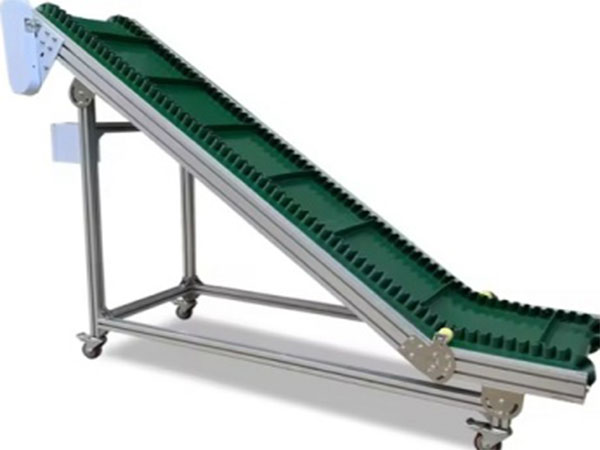
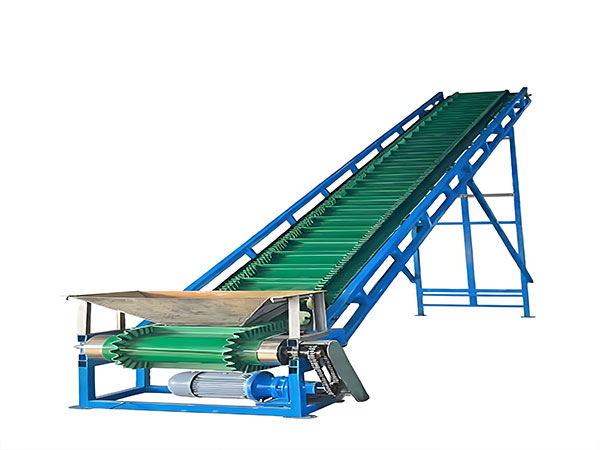
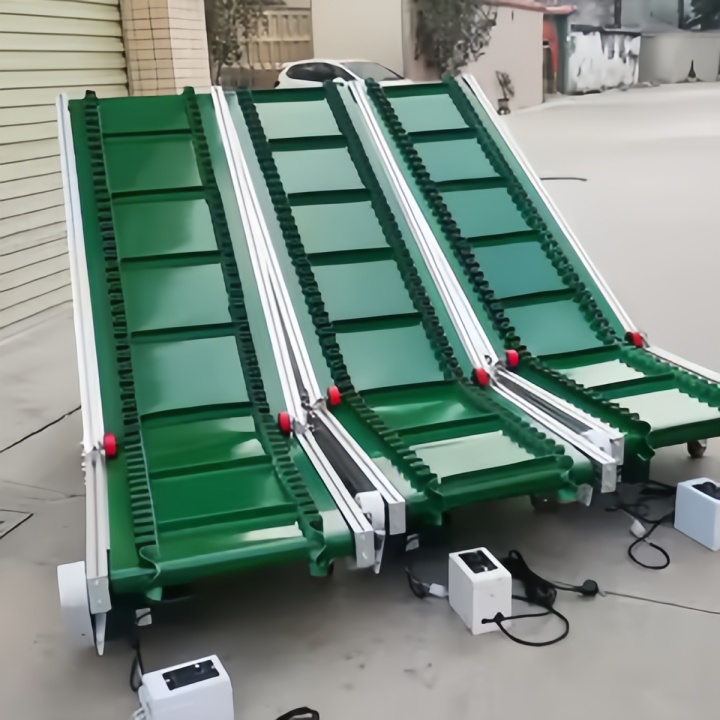
A vertical belt conveyor transports bulk materials by means of integrally formed corrugated sidewalls and transverse cleats. Ordinary flat belts cannot convey materials vertically.
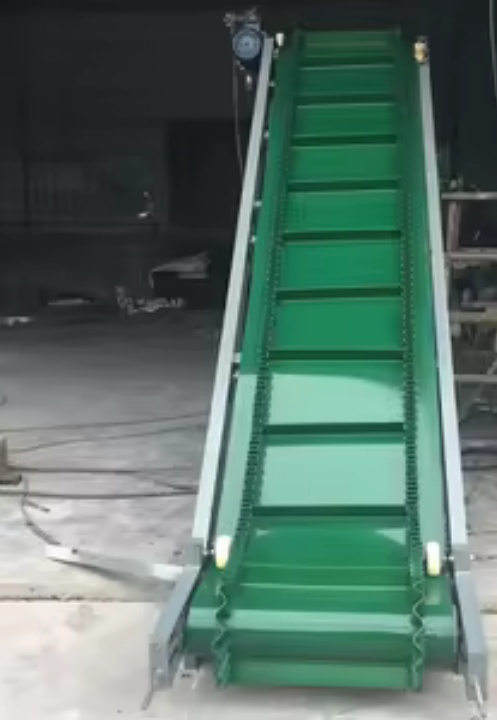
This type of conveyor holds materials with sidewalls and cleats, which is its core difference from other belt conveying equipment.
The first thing to check when selecting a vertical belt conveyor is whether materials will slide down or get stuck between cleats. For free-flowing, fine granular materials, short cleats with small spacing are adopted.
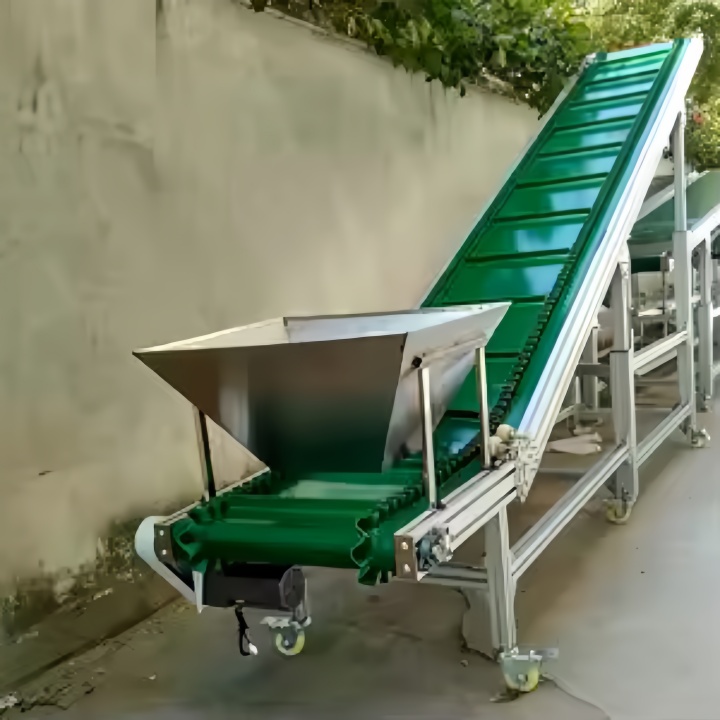
For lumpy materials with high specific gravity, taller cleats are selected together with corrugated sidewalls of matching height. For sticky materials, attention should be paid to the joint structure between cleats and sidewalls; large gaps tend to trap and cake materials. For fine powder materials, the tight fit of sidewalls should be guaranteed to prevent powder leakage from the sides.
The advantage of the vertical belt conveyor lies in vertical or near-vertical conveying. When the inclination angle exceeds 45°, ordinary belts can hardly work properly, so vertical belt conveyors are adopted.
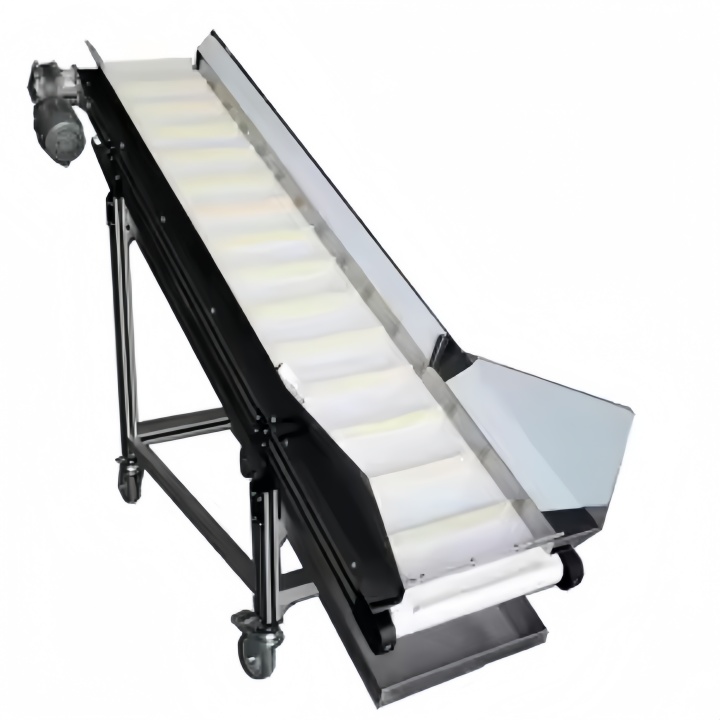
The lifting height determines the total belt length, frame section layout and tensioning arrangement. A higher lifting height brings greater risks of belt elongation and deviation. For long-distance vertical lifting, the tensile strength of the belt needs to be checked, which is not a key consideration for flat belt conveyors.
The vertical belt conveyor is a custom composite structure: base belt, corrugated sidewalls and cleats are vulcanized into one piece. Ordinary conveyor belts cannot be used directly.
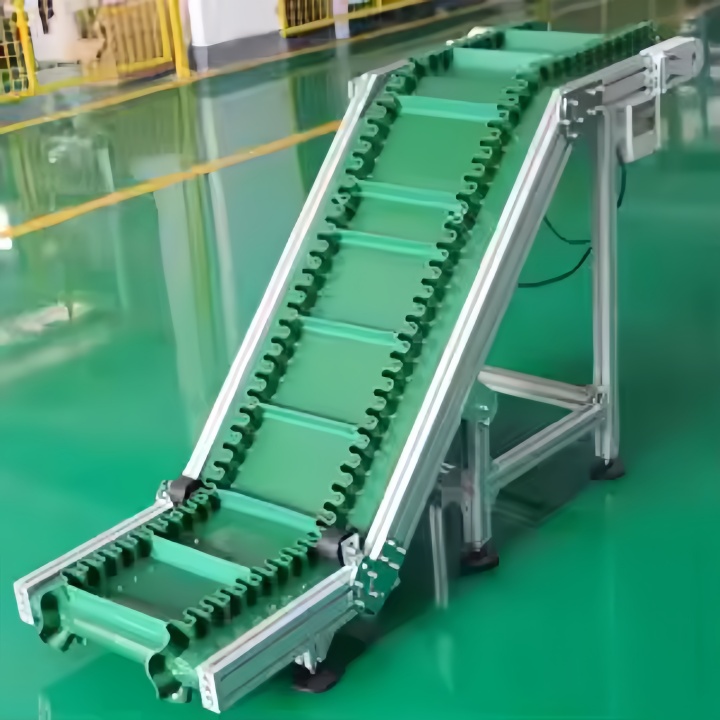
For dry bulk sand, gravel and grain: rubber base belt paired with standard rubber sidewalls and cleats. For food, wet or corrosive conditions: PU base belt with food-grade sidewalls. For high-temperature materials: heat-resistant integrated sidewall belts are required. The flexibility of sidewalls should be confirmed. At the vertical bend, sidewalls need to pass around pulleys smoothly. Overly stiff sidewalls are prone to cracking.
When lifting vertically upward, the load acts against gravity, creating larger impact loads during startup. Compared with horizontal belt conveyors, the safety margin of motors and reducers should be increased appropriately.Vertical conveyors are mostly equipped with weight tensioning or screw tensioning devices to counteract tension from the belt’s self-weight and carried materials and avoid belt slipping.
The curved transition section is unique to vertical belt conveyors. Curved space is required at both the upper and lower ends. Apart from the vertical straight section height, space for the curved transitions must be reserved. The inlet and outlet positions need to align with curved sections. Feeding directly onto the curved segment may damage the cleats.
To sum up, the selection of vertical belt conveyors centers on the special structure of corrugated sidewalls and cleats. It requires comprehensive evaluation of material characteristics, lifting height, belt tensile performance and on-site space. Proper matching of all parameters helps avoid problems such as material spillage, belt cracking and slipping.
CONTACT
WhatsApp:+86 18339211009
Email:sale@xxdahan.com
Add:China, Henan Province, Xinxiang City.Yanjin county forest park gate to the west 1000 meters north road