E-mail: sale@xxdahan.com
Follow Us 


Foldable Belt Conveyors are transforming material handling by solving the hidden costs of shipping, storage, and inflexibility. Unlike traditional systems, a foldable conveyor collapses to a fraction of its size, slashing freight charges and freeing up valuable warehouse space. This guide explores how foldable belt conveyor technology delivers tangible ROI for warehouses, distribution centers, and mobile operations.
When it comes to material handling equipment, the upfront purchase price is only part of the equation. The real costs—shipping oversized machinery across borders, storing idle equipment in expensive warehouse space, and the labor required to install and relocate traditional conveyors—often go unnoticed until the invoice arrives.
![<p>When it comes to material handling equipment, the upfront purchase price is only part of the equation. The real costs—shipping oversized machinery across borders, storing idle equipment in expensive warehouse space, and the labor required to install and relocate traditional conveyors—often go unnoticed until the invoice arrives.</p> <p>Enter the foldable belt conveyor: a solution that addresses these hidden expenses head-on. By rethinking how conveyor systems are transported, stored, and deployed, foldable designs are reshaping the economics of material handling. Here's how.</p> <h2>The Hidden Costs of Traditional Conveyor Systems</h2> <p>If you're still using fixed, non-collapsible conveyors, you're likely paying for more than just the equipment itself.</p> <h3>Shipping: The Oversized Freight Problem</h3> <p>Traditional belt conveyors are long, bulky structures that command premium shipping rates. Their fixed length and rigid frames mean they must be shipped as oversized cargo, often requiring specialized flatbed trucks, extra handling equipment, and sometimes even escort vehicles for oversized loads.</p> <p>The result? <strong>Shipping costs can rival or even exceed the equipment's purchase price, especially for international orders.</strong> As one patent specifically notes, the motivation behind foldable conveyor development is that "in a folded state [the conveyor is] more compact than its unfolded state and thus cheaper to ship". This isn't a minor saving—it's a fundamental redesign of the logistics equation.</p> <h3>Storage: Wasted Floor Space When Not in Use</h3> <p>Warehouse space is expensive. According to industry estimates, industrial storage costs can run from several dollars to over twenty dollars per square foot annually. Fixed conveyors, when not in operation, still consume that space. They cannot be moved aside, stored away, or packed into compact areas.</p> <p>Even when stored temporarily, traditional conveyors require dedicated floor space that could otherwise be used for inventory, workstations, or additional equipment.</p> <h3>Installation and Mobility: Labor-Intensive Setups</h3> <p>Traditional conveyors aren't designed to be moved. Once installed, they stay put. Relocating them requires disassembly, heavy lifting equipment, and often specialized technicians. For operations that handle seasonal inventory or fluctuating production volumes, this lack of flexibility creates unnecessary labor costs and downtime.</p> <h2>How Foldable Belt Conveyors Change the Equation</h2> <h3>1. Dramatically Reduced Shipping Costs</h3> <p>Foldable conveyors are designed with a pivot hinge mechanism that allows the conveyor to collapse into a significantly smaller footprint for transport. The folded dimensions can be remarkably compact—some models fold down to as little as 39 x 12 inches, small enough to fit in an average car trunk.</p> <p>This compactness translates directly to shipping savings:</p> <ul> <li><strong>Standard shipping containers instead of oversized freight</strong> — A folded conveyor can often be palletized and shipped in a standard container rather than requiring flatbed or open-top shipping</li> <li><strong>Higher container utilization</strong> — Multiple foldable units can fit in the same space as one fixed conveyor</li> <li><strong>Reduced freight classification costs</strong> — Smaller, lighter shipments often qualify for lower freight class ratings</li> </ul> <p>As a patent documentation explains, this compact shipping capability was a primary design goal: "a foldable conveyor which in a folded state is more compact than its unfolded state and thus cheaper to ship".</p> <h3>Efficient Storage When Not in Use</h3> <p>When folded, these conveyors take up a fraction of their operational footprint. They can be:</p> <ul> <li>Stored vertically against a wall</li> <li>Stacked in racks with other equipment</li> <li>Moved to mezzanines or less-valuable floor space</li> <li>Kept in vehicles for mobile operations</li> </ul> <p>This flexibility is particularly valuable for facilities with limited space or operations that experience seasonal demand fluctuations. One manufacturer highlights that the foldable design "allows for more efficient use of the available floor space when the conveyor is not in use or during transportation," making it "particularly useful in facilities with limited space".</p> <h3>Rapid Deployment and Relocation</h3> <p>Beyond shipping and storage, foldable conveyors offer operational flexibility:</p> <ul> <li><strong>Quick setup and teardown</strong> — Built-in wheels and folding mechanisms mean a single operator can deploy or store the conveyor without specialized equipment</li> <li><strong>Easy repositioning</strong> — The ability to fold and roll allows the conveyor to follow work as it moves, ideal for loading docks, temporary production lines, or field operations</li> <li><strong>Reduced installation labor</strong> — Unlike fixed conveyors, foldable units require no bolting to floors or complex assembly; they unfold and are ready to run</li> </ul> <p>Some designs even feature automatic tensioning devices that ensure the belt maintains proper tension during unfolding, preventing the bunching or snagging that could delay setup.</p> <h2>Real-World Applications and Savings</h2> <h3>Warehousing and Distribution Centers</h3> <p>In high-volume logistics operations, foldable conveyors allow for rapid reconfiguration of sorting lines. When seasonal peaks subside, conveyors can be folded and stored, freeing valuable floor space for other uses. The ability to quickly reposition conveyors between dock doors also means fewer total units are needed to serve fluctuating workloads.</p> <h3>Loading and Unloading Operations</h3> <p>For facilities that process multiple trucks daily, foldable conveyors can be positioned, used, and folded away between shipments. This eliminates the need for permanent dock conveyors that obstruct traffic flow when not in use. As one product description notes, they are "used to load and unload trucks, store materials or transfer materials between different stages of processing".</p> <h3>Temporary and Mobile Operations</h3> <p>Construction sites, agricultural operations, and event logistics all benefit from conveyors that can be transported in a standard vehicle and deployed on demand. One manufacturer emphasizes that their foldable conveyor is designed for operations "where space optimization is crucial" and for "facilities with limited space or where multiple conveyors need to be stored or transported".</p> <h2>Key Features to Look For</h2> <p>If you're considering a foldable belt conveyor, these features maximize cost savings and operational efficiency:</p> <table border="1" bordercolor="#f0f0f0" cellpadding="0" cellspacing="0" style="background:#fff; text-align: center; font-size:14px; line-height:32px;" width="100%"> <tbody> <tr style="background-color: rgb(51, 153, 255); color:#fff;"> <td>Feature</td> <td>Benefit</td> </tr> <tr> <td>Automatic tensioning device</td> <td>Prevents belt bunching during unfolding; faster setup times</td> </tr> <tr> <td>Integrated wheels and handle</td> <td>Enables single-operator mobility without forklifts</td> </tr> <tr> <td>Adjustable height and angle</td> <td>Adapts to different truck beds, workstations, and material types</td> </tr> <tr> <td>220V single-phase operation</td> <td>Allows use in locations without three-phase power, reducing electrical installation costs</td> </tr> <tr> <td>Durable frame materials</td> <td>Carbon steel or stainless steel options for longevity in demanding environments</td> </tr> </tbody> </table> <h2>Frequently Asked Questions</h2> <p><strong>Q: How much space do foldable conveyors save during shipping?</strong><br> A: Folded dimensions can be dramatically smaller than operational dimensions. Some models fold to roughly 40 x 12 inches, small enough for standard vehicle transport.</p> <p><strong>Q: Can foldable conveyors handle the same loads as fixed conveyors?</strong><br> A: Yes, with appropriate specifications. Models are available with load capacities up to 50 kg/m and belt widths from 400mm to 1500mm. Bulk materials, bagged goods, and packaged items are all common applications.</p> <p><strong>Q: Are foldable conveyors more expensive than traditional ones?</strong><br> A: While the purchase price may be similar or slightly higher, the total cost of ownership—including shipping, storage, and installation—is often significantly lower, delivering strong ROI.</p> <p><strong>Q: How long does setup take?</strong><br> A: Modern foldable conveyors with automatic tensioning and quick-lock mechanisms can be deployed in minutes by a single operator.</p> <h2>The Bottom Line</h2> <p>Foldable belt conveyors represent more than a space-saving innovation—they're a cost-saving strategy. By addressing the hidden expenses of shipping oversized equipment, paying for wasted storage space, and spending labor on complicated installations, foldable designs deliver a compelling return on investment.</p> <p>Whether you're managing a busy warehouse, running a seasonal operation, or looking to maximize the value of every square foot, the question isn't whether you can afford a foldable conveyor—it's whether you can afford not to have one.</p> <p>Interested in learning more about foldable belt conveyor options? <strong>Explore product specifications, request a quote, or speak with our material handling experts about your specific application needs.</strong></p>](/uploads/allimg/260720/1-260H0111243616.jpg)
Enter the foldable belt conveyor: a solution that addresses these hidden expenses head-on. By rethinking how conveyor systems are transported, stored, and deployed, foldable designs are reshaping the economics of material handling. Here's how.
If you're still using fixed, non-collapsible conveyors, you're likely paying for more than just the equipment itself.
Traditional belt conveyors are long, bulky structures that command premium shipping rates. Their fixed length and rigid frames mean they must be shipped as oversized cargo, often requiring specialized flatbed trucks, extra handling equipment, and sometimes even escort vehicles for oversized loads.
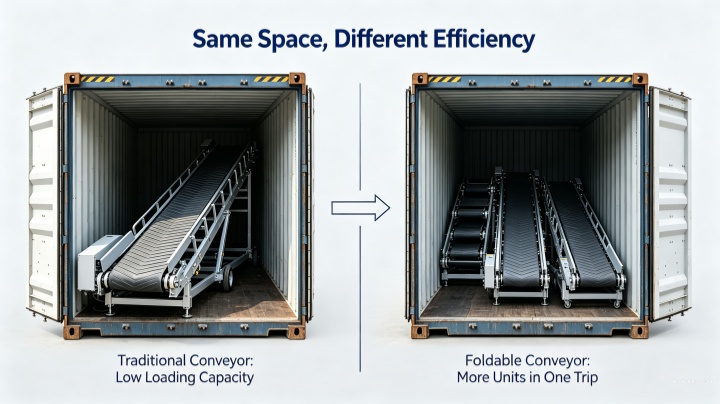
The result? Shipping costs can rival or even exceed the equipment's purchase price, especially for international orders. As one patent specifically notes, the motivation behind foldable conveyor development is that "in a folded state [the conveyor is] more compact than its unfolded state and thus cheaper to ship". This isn't a minor saving—it's a fundamental redesign of the logistics equation.
Warehouse space is expensive. According to industry estimates, industrial storage costs can run from several dollars to over twenty dollars per square foot annually. Fixed conveyors, when not in operation, still consume that space. They cannot be moved aside, stored away, or packed into compact areas.
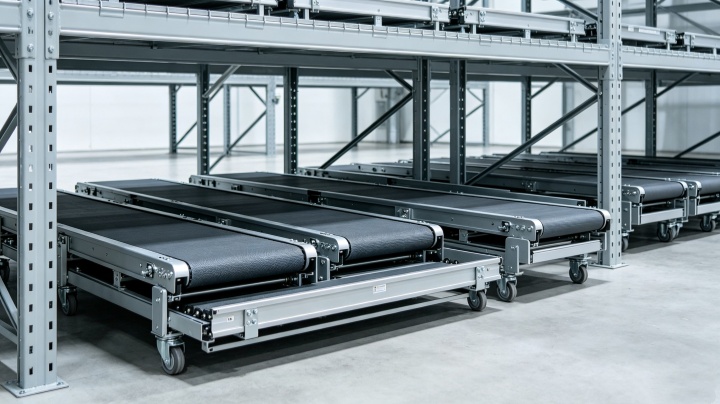
Even when stored temporarily, traditional conveyors require dedicated floor space that could otherwise be used for inventory, workstations, or additional equipment.
Traditional conveyors aren't designed to be moved. Once installed, they stay put. Relocating them requires disassembly, heavy lifting equipment, and often specialized technicians. For operations that handle seasonal inventory or fluctuating production volumes, this lack of flexibility creates unnecessary labor costs and downtime.
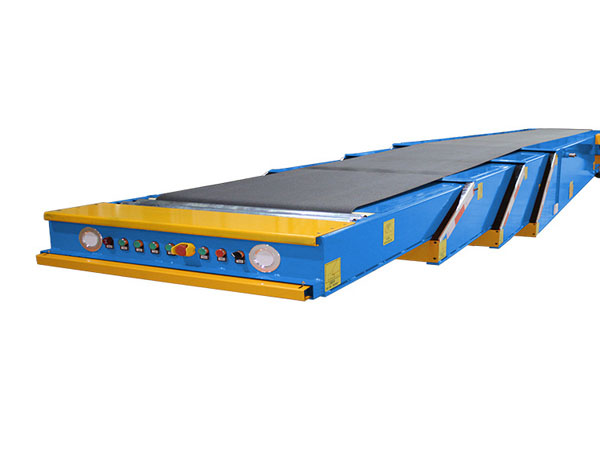
Foldable conveyors are designed with a pivot hinge mechanism that allows the conveyor to collapse into a significantly smaller footprint for transport. The folded dimensions can be remarkably compact—some models fold down to as little as 39 x 12 inches, small enough to fit in an average car trunk.
This compactness translates directly to shipping savings:
As a patent documentation explains, this compact shipping capability was a primary design goal: "a foldable conveyor which in a folded state is more compact than its unfolded state and thus cheaper to ship".
When folded, these conveyors take up a fraction of their operational footprint. They can be:
This flexibility is particularly valuable for facilities with limited space or operations that experience seasonal demand fluctuations. One manufacturer highlights that the foldable design "allows for more efficient use of the available floor space when the conveyor is not in use or during transportation," making it "particularly useful in facilities with limited space".
Beyond shipping and storage, foldable conveyors offer operational flexibility:
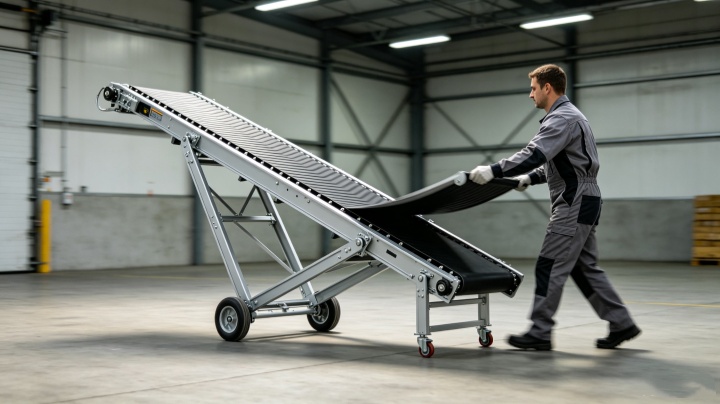
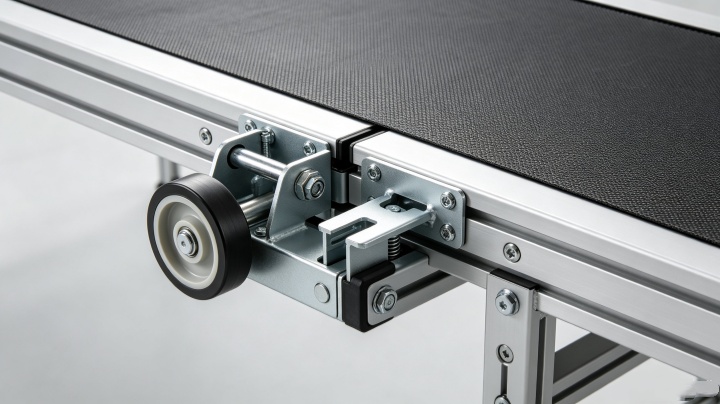
Some designs even feature automatic tensioning devices that ensure the belt maintains proper tension during unfolding, preventing the bunching or snagging that could delay setup.
In high-volume logistics operations, foldable conveyors allow for rapid reconfiguration of sorting lines. When seasonal peaks subside, conveyors can be folded and stored, freeing valuable floor space for other uses. The ability to quickly reposition conveyors between dock doors also means fewer total units are needed to serve fluctuating workloads.
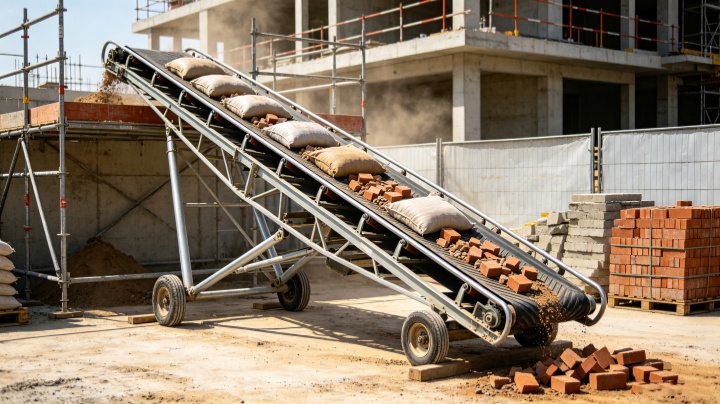
For facilities that process multiple trucks daily, foldable conveyors can be positioned, used, and folded away between shipments. This eliminates the need for permanent dock conveyors that obstruct traffic flow when not in use. As one product description notes, they are "used to load and unload trucks, store materials or transfer materials between different stages of processing".
Construction sites, agricultural operations, and event logistics all benefit from conveyors that can be transported in a standard vehicle and deployed on demand. One manufacturer emphasizes that their foldable conveyor is designed for operations "where space optimization is crucial" and for "facilities with limited space or where multiple conveyors need to be stored or transported".
If you're considering a foldable belt conveyor, these features maximize cost savings and operational efficiency:
| Feature | Benefit |
| Automatic tensioning device | Prevents belt bunching during unfolding; faster setup times |
| Integrated wheels and handle | Enables single-operator mobility without forklifts |
| Adjustable height and angle | Adapts to different truck beds, workstations, and material types |
| 220V single-phase operation | Allows use in locations without three-phase power, reducing electrical installation costs |
| Durable frame materials | Carbon steel or stainless steel options for longevity in demanding environments |
Q: How much space do foldable conveyors save during shipping?
A: Folded dimensions can be dramatically smaller than operational dimensions. Some models fold to roughly 40 x 12 inches, small enough for standard vehicle transport.
Q: Can foldable conveyors handle the same loads as fixed conveyors?
A: Yes, with appropriate specifications. Models are available with load capacities up to 50 kg/m and belt widths from 400mm to 1500mm. Bulk materials, bagged goods, and packaged items are all common applications.
Q: Are foldable conveyors more expensive than traditional ones?
A: While the purchase price may be similar or slightly higher, the total cost of ownership—including shipping, storage, and installation—is often significantly lower, delivering strong ROI.
Q: Are foldable conveyors durable enough for heavy daily use?
A: Absolutely. Quality foldable belt conveyors are engineered with robust frames and automatic tensioning. They are designed to handle rigorous daily operation while offering the unique benefit of compact storage—making them a smart long-term investment.
Q: How long does setup take?
A: Modern foldable conveyors with automatic tensioning and quick-lock mechanisms can be deployed in minutes by a single operator.
Foldable belt conveyors represent more than a space-saving innovation—they're a cost-saving strategy. By addressing the hidden expenses of shipping oversized equipment, paying for wasted storage space, and spending labor on complicated installations, foldable designs deliver a compelling return on investment.
Whether you're managing a busy warehouse, running a seasonal operation, or looking to maximize the value of every square foot, the question isn't whether you can afford a foldable conveyor—it's whether you can afford not to have one.
Interested in learning more about foldable belt conveyor options? Explore product specifications, request a quote, or speak with our material handling experts about your specific application needs.
CONTACT
WhatsApp:+86 18339211009
Email:sale@xxdahan.com
Add:China, Henan Province, Xinxiang City.Yanjin county forest park gate to the west 1000 meters north road