E-mail: sale@xxdahan.com
Follow Us 


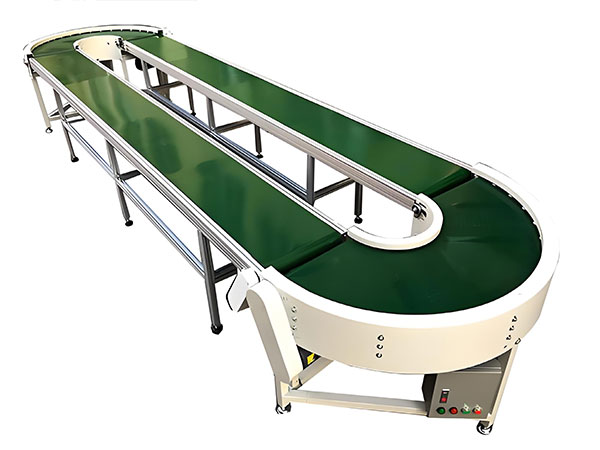
A curved belt conveyor is used for production lines that need to change the transport direction. They carry goods along a curved path and turn without changing the normal transport way.
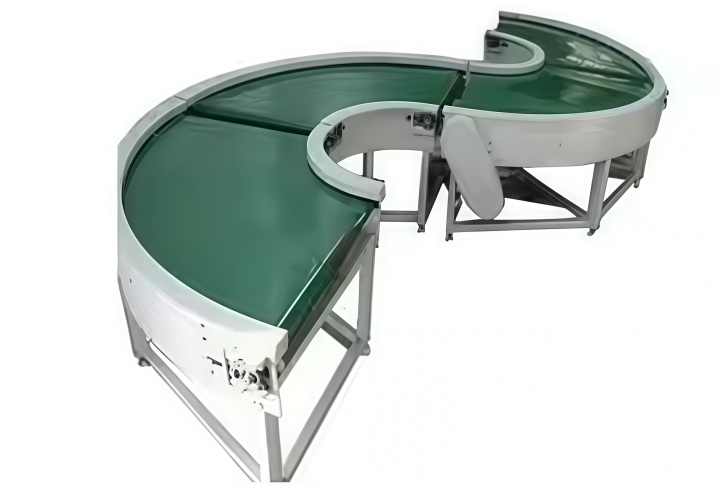
When you pick a curved belt conveyor manufacturer, you should not only check the machine itself, but also learn what sizes they can make, and whether they can build machines to match your site layout.
Different production lines have different needs for curved belt conveyor. A curved belt conveyor manufacturer usually sets the machine sizes based on real transport conditions.
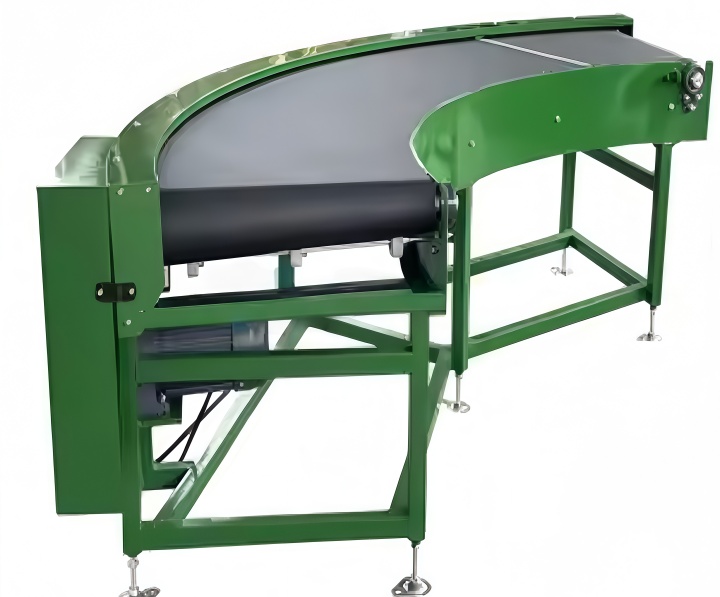
Turning angle: Common turning angles include 45°, 90° and so on. Different angles change the shape of the curved section and the space it takes up.
Curve radius: The curve radius decides the overall size of the curved belt conveyor. It should be set according to the space on site.
Belt width: Belt width depends on the size of the goods you carry. If goods are wide, the belt needs to be wider to move them.
Conveying speed: The drive motor can be chosen to match the running speed of your production line.
A curved belt conveyor is a little different from normal belt conveyors. A curved belt conveyor manufacturer makes them based on these special features.
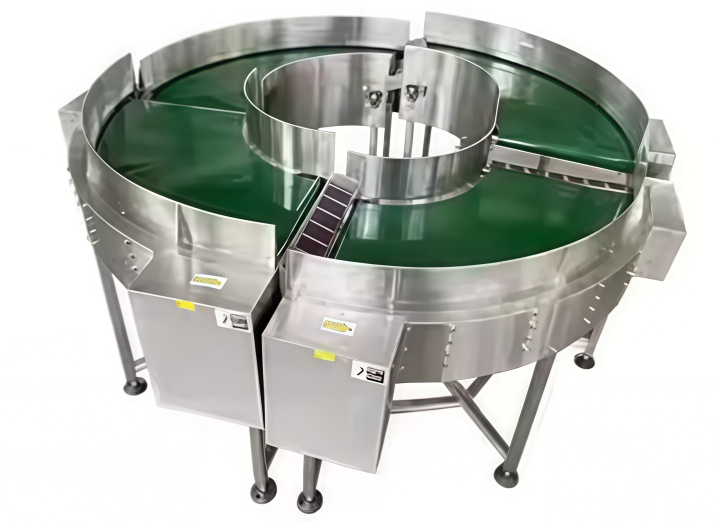
Curved belt: The belt runs along a curved path. So the manufacturer sets the belt size by the curve radius and belt width, to make sure the belt fits the curved section well.
Drive unit: Motors and drive rollers power the curved belt conveyor. The manufacturer picks the motor power based on conveying speed and the weight of goods.
Guide structure: The belt may get side force during running, which can make goods tip over. Guide belts or rollers can be added to stop goods from shifting.
A curved belt conveyor manufacturer also needs to make sure all parts work well together when designing.
Production lines have different space and transport needs. Standard sizes may not work for everyone, so a curved belt conveyor manufacturer needs custom production ability.
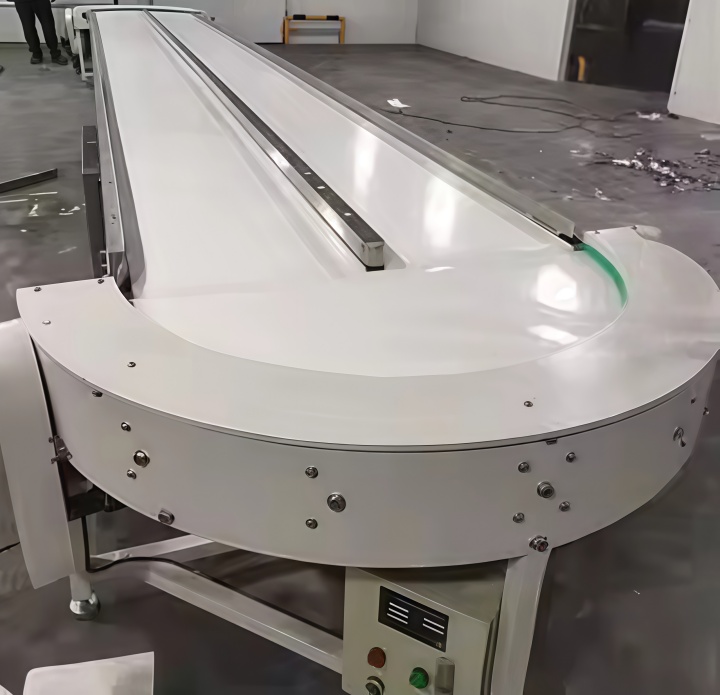
Turning angle and radius: The curved belt conveyor manufacturer sets the turning angle and the space needed for the curved part, following your transport route on site.
Belt width and installation height: The belt width and machine height are set by the size of goods and the height of connected machines, to make smooth connections.
Belt and frame material: Suitable belt and frame materials are chosen for the working environment and goods. For example, stainless steel frames and food-safe belts can be used for food production.
When curved belt conveyor works with other equipment, the connection design directly affects the whole conveyor line.
A curved belt conveyor manufacturer needs to know the size and position of machines before and after the curved conveyor in advance. Then they decide where the inlet and outlet are, and how to install the machine. This avoids height gaps after installation, so goods can move smoothly.
A good curved belt conveyor should not only turn and carry materials, but also fit well with the whole production line. Choose a curved belt conveyor manufacturer that can build machines and offer custom service, so the equipment fits your real needs better.
CONTACT
WhatsApp:+86 18339211009
Email:sale@xxdahan.com
Add:China, Henan Province, Xinxiang City.Yanjin county forest park gate to the west 1000 meters north road