E-mail: sale@xxdahan.com
Follow Us 


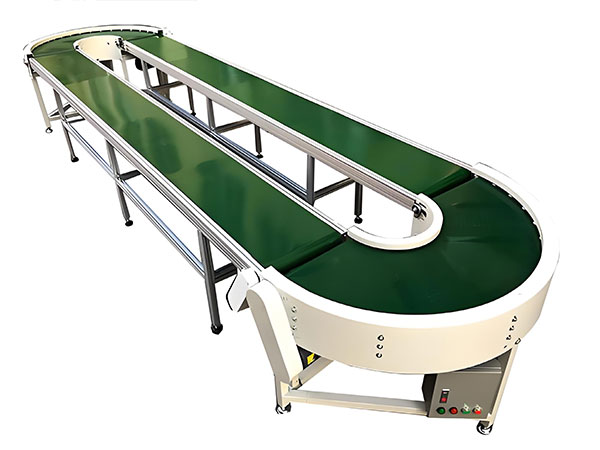
A curved belt conveyor is different from an ordinary straight belt conveyor. It uses a curved frame matched with tapered idlers to directly realize horizontal turning conveying without intermediate transfer chutes.
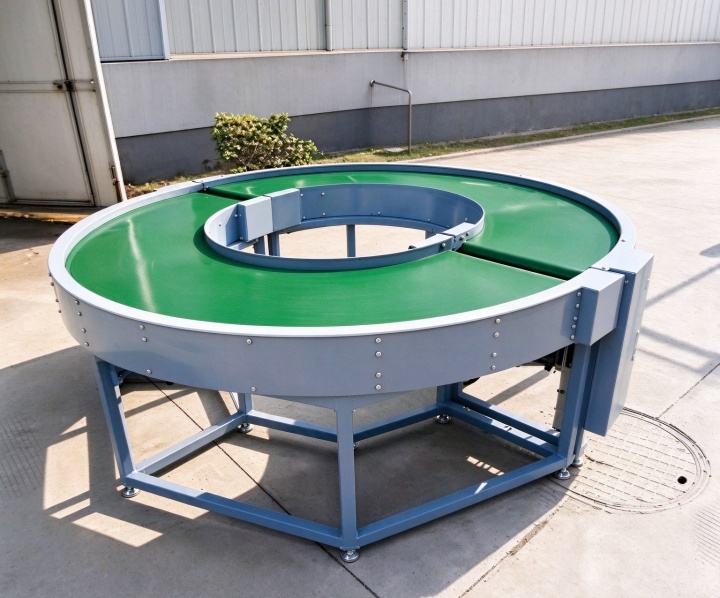
The biggest feature of a curved belt conveyor is continuous material conveying, which reduces dust generation and material breakage. It is suitable for production lines with limited site space and curved routing requirements. Due to the turning structure, the inner and outer sides of the belt bear different forces, so the selection of a curved belt conveyor cannot follow the experience of straight belt conveyors.
The turning radius is the core parameter of a curved belt conveyor, and it is also an indicator that straight belt conveyors do not have. The smaller the radius, the larger the travel gap between the inner and outer sides of the belt, the harsher the stress on the belt, and the higher the probability of belt deviation and tearing.
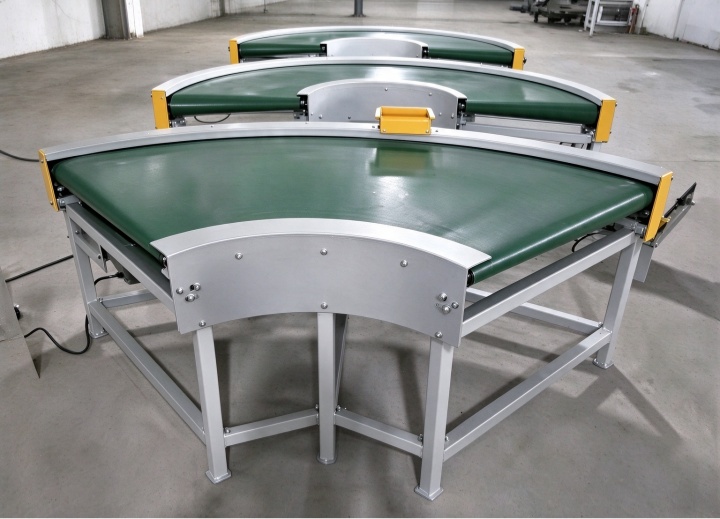
For light materials such as packaged goods, the turning radius of a curved belt conveyor can be appropriately smaller. For bulk materials such as sand, stone and powder, it is recommended to select a larger turning radius for smoother operation. The larger the turning angle, the higher the requirement for the turning radius. Do not select an excessively small turning radius just to save space.
When selecting a belt, you cannot only consider wear resistance. Lateral flexibility is also a key special requirement for the belt of a curved belt conveyor.
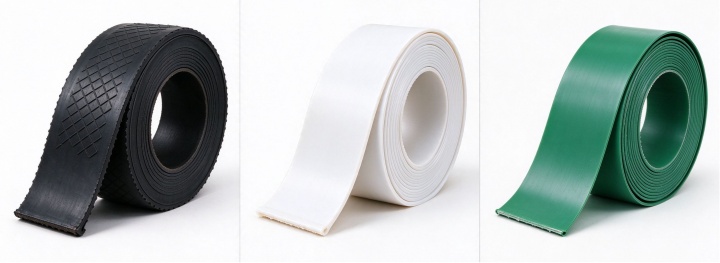
For sand and aggregate conveying, select wear-resistant rubber belts. Corrugated sidewalls can be added for working conditions prone to material spillage. For food and packaging production lines, PU or PVC flexible belts are preferred for easy cleaning.
The belt width of a curved belt conveyor is determined according to conveying capacity and material particle size. Do not set the belt speed blindly high. For bulk material conveying, keep the belt speed of the curved belt conveyor as low as possible to reduce centrifugal force during turning and prevent materials from being thrown outwards.
The belt tension on the curved section of a curved belt conveyor is unevenly distributed, so the drive power cannot be directly applied from straight belt conveyors of the same specification.
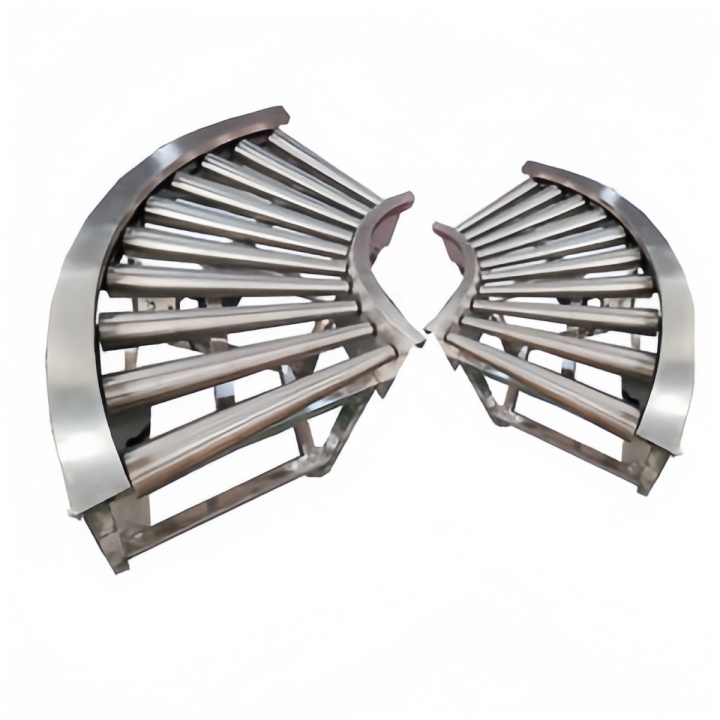
A full set of tapered idlers is required for the curved belt conveyor. Trough-type models also adopt an inner-raised design to hold materials and prevent belt deviation. For long-distance curved conveying, gravity take-up is preferred to automatically compensate for the elongation of the belt. Screw take-up is sufficient for short-distance conveyor models.
The motor of a curved belt conveyor is preferably a variable-frequency motor. It starts and stops at a slow speed to reduce the impact on the belt at the curved section. Accessories such as skirt boards, dust covers and belt deviation alarms can be installed as required to reduce material spillage and send out timely fault alerts.
When selecting a curved belt conveyor, do not replace tapered idlers with ordinary cylindrical idlers. Without differential speed compensation, belt deviation will occur repeatedly. Do not blindly reduce the turning radius. Although it saves site space, the belt will wear quickly. If the conveying route has both turning and upward inclination, centrifugal force and gravity will superimpose, which will increase the risk of material spillage. Parameters must leave sufficient allowance during selection.
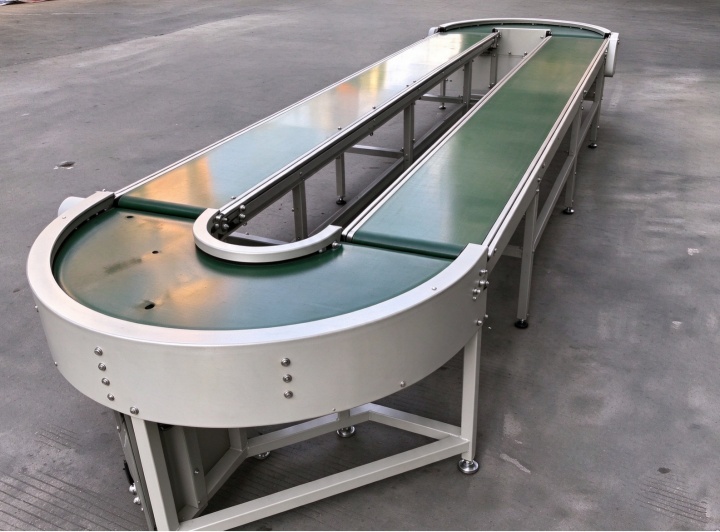
To sum up, a curved belt conveyor is not simply a bent straight belt. When selecting it, grasp the three key point turning radius, tapered idlers and belt lateral flexibility. Match the equipment with materials and conveying capacity, so that the machine can give full play to its advantages of no intermediate transfer and flexible routing, and realize long-term stable material conveying.
CONTACT
WhatsApp:+86 18339211009
Email:sale@xxdahan.com
Add:China, Henan Province, Xinxiang City.Yanjin county forest park gate to the west 1000 meters north road