E-mail: sale@xxdahan.com
Follow Us 


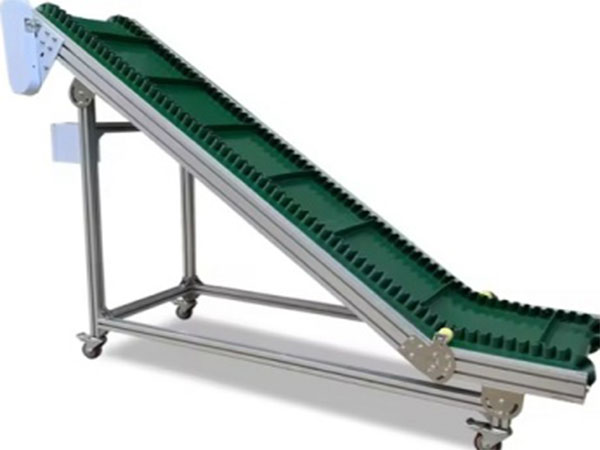
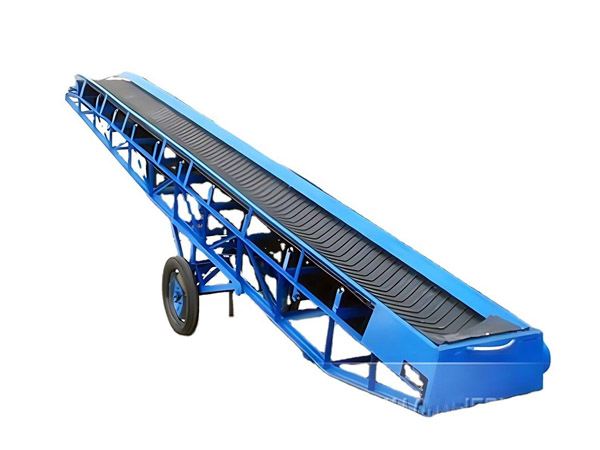
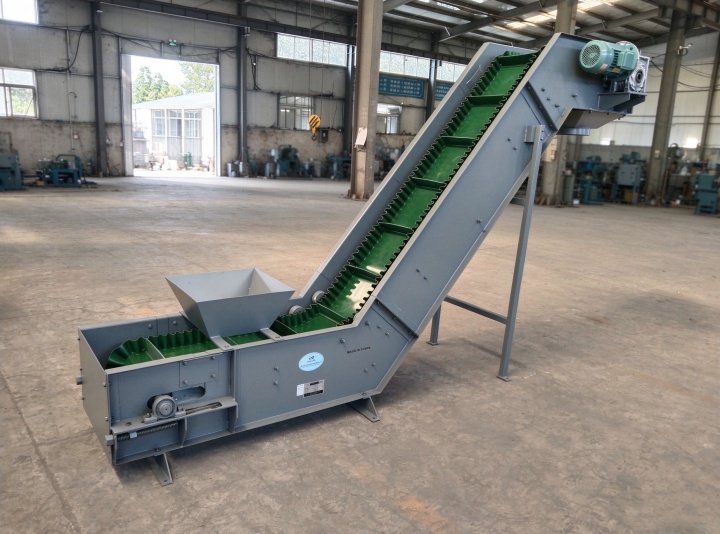
An L-type belt conveyor features an L-shaped belt path. It has a horizontal section at the bottom that lies flat on the ground or the base of other equipment for material receiving, followed by an inclined upward section that lifts materials to a higher position.
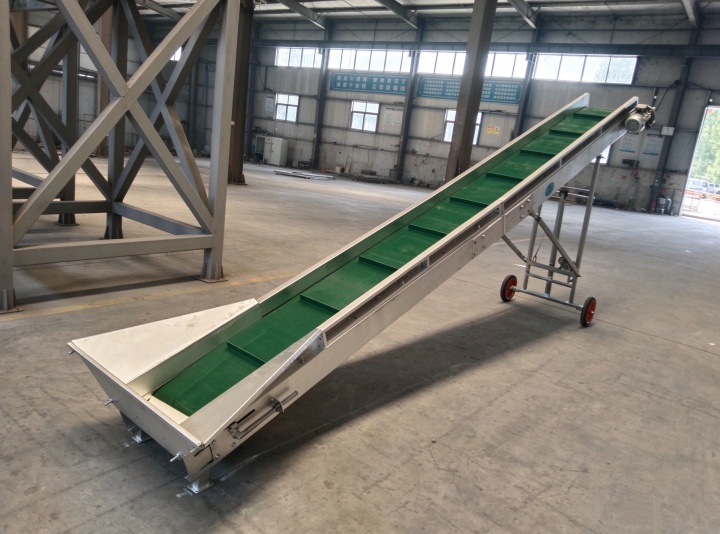
Extremely common in industrial production lines, L-type belt conveyors complete both material receiving and lifting within limited space. However, improper selection will often lead to troubles such as material jamming at the bottom transition and rapid traction wear during subsequent operation.
The first step of selection is always to check the characteristics of the conveyed materials:
Finished products and light industrial components: These items have fixed shapes and stable centers of gravity. During selection, focus on surface friction and barrier height to prevent the goods from sliding due to inertia.
Bulk materials and fine particles: These materials have high flowability and tend to settle or roll down at corners and inclined sections. For such working conditions, sealed side plates or corrugated sidewalls shall be equipped.
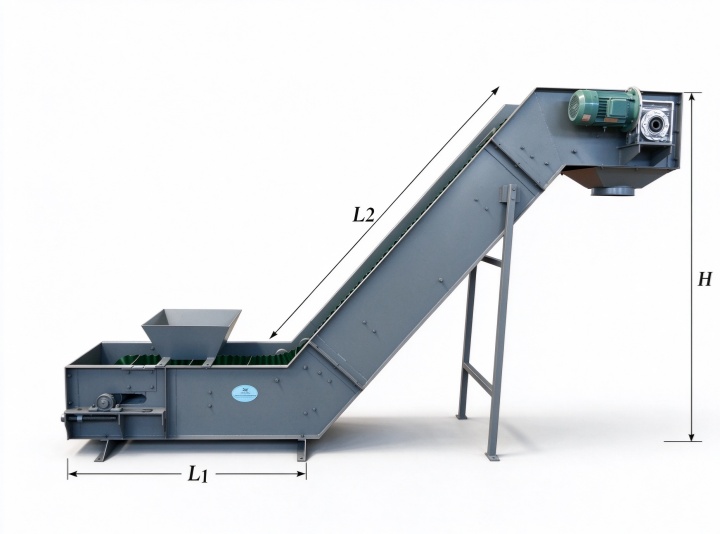
An L-type belt conveyor consists of the bottom horizontal section (L1), inclined lifting section (L2), and lifting height (H).
The incline angle is a key parameter that determines the structural design of the conveyor.Incline angle <15°: Low-angle lifting. Standard patterned PVC belts are sufficient to prevent material backsliding.
Incline angle 15° – 45°: Materials will slide down under gravity, so transverse cleats are mandatory.
Incline angle >45°: Steep-angle conveying. Ordinary cleats alone cannot effectively stop materials from rolling. It is recommended to use high fences paired with corrugated sidewalls, or sidewall cleated belts to form independent hopper structures for lifting.
| Belt Type | Core Advantages | Applicable Scenarios |
| PVC Material Belt | High ultimate strength, strong versatility, moderate wear resistance | General industry, dry goods transfer, injection molded part receiving |
| PU Material Belt | Complies with food-grade standards, oil-resistant, cut-resistant | Food processing, pharmaceutical packaging, oily metal parts |
| Plastic Modular Belt | Wear-resistant, easy assembly and maintenance, heavy-load capable, easy to clean | Heavy steel plate parts, water washing conditions, cliff-edge impact operations |
Cleats are critical to prevent material backsliding on the inclined section. Their shape and spacing shall be determined comprehensively based on the incline angle, material weight and feeding volume per cycle.
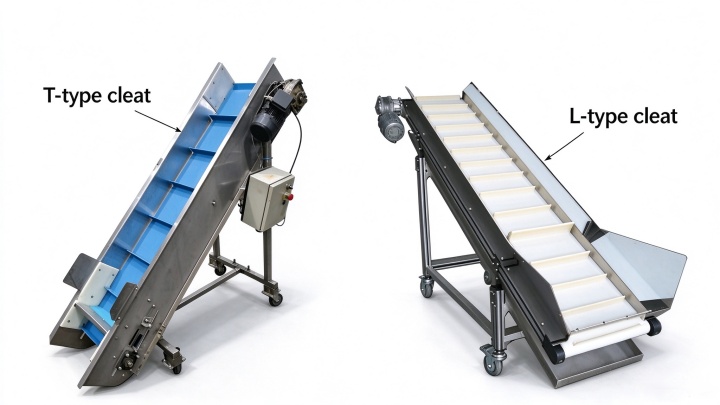
T-type vertical cleat: Suitable for light materials and low-angle lifting.
L-type / inclined cleat: Suitable for larger incline angles or heavier materials, offering better diagonal support.
Cleat spacing: Calculate spacing according to the size of individual goods or feeding volume. Ensure enough space between two adjacent cleats to hold materials, while excessive spacing that causes uneven discharging should be avoided.
Many conveyors break down after several months of operation, and the root cause usually lies in transition details.
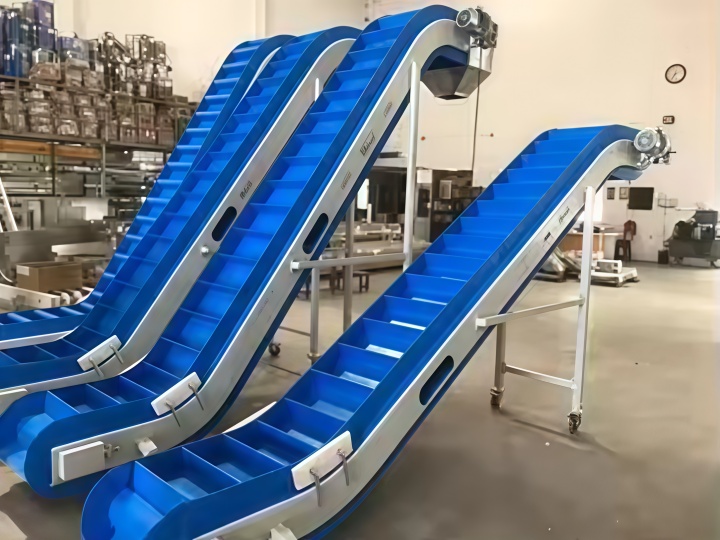
Bottom L-shaped transition point: When the belt changes from horizontal to inclined, upward tension may lift the belt (belt floating). Properly designed pinch rollers or curved guide rails are required in engineering. For fine particles, poor sealing at the transition will cause material leakage into rollers, resulting in belt scratching and belt deviation.
Top transition and discharge outlet: At the transition to the top discharge port, materials are affected alternately by centrifugal force and gravity. An overly sharp transition arc will make materials hit the discharge hood or spill out.
Review the following key technical parameters when confirming your L-type belt conveyor solution.
| Dimension Category | Parameter Name | Unit / Specification |
| Material Characteristics | Material Name and Form | - |
| Bulk Density | kg/m³ | |
| Particle Size Distribution | mm | |
| Oil / Moisture Content | % | |
| Operating Temperature | ℃ | |
| Design Capacity Requirements | Conveying Capacity | t/h or pcs/h |
| Operating Speed | m/s | |
| Spatial Geometric Dimensions | Bottom Horizontal Section Length (L1) | mm / m |
| Rising Section Length (L2) | mm / m | |
| Vertical Lift Height (H) | mm / m | |
| Effective Belt Width (W) | mm | |
| Inclination Angle | Inclination Angle (θ) | degree (°) |
| Electrical and Control | Power Supply Voltage / Frequency | V / Hz |
| Motor Protection Rating | IP55 / IP65, etc. | |
| Explosion-proof Rating Requirement | Ex marking / - |
Q: What is the difference between an L-type belt conveyor and a Z-type conveyor?
A: An L-type belt conveyor has only one bottom horizontal section and one inclined lifting section (L-shaped overall). A Z-type conveyor adds an upper horizontal section at the top of the lifting segment, for stable directional discharging or triggering the next process.
Q: Materials keep jamming and leaking at the bottom transition, how to fix this?
A: This is generally caused by gaps between pinch rollers and side plates. You can upgrade to corrugated sidewall belts, or install UHMW-PE wear-resistant sealing liners at the transition zone.
Q: Do ordinary cleats work when the incline angle reaches 45°?
A: At 45° and above, L-type inclined cleats or scoop-style cleats with anti-roll angles are recommended. Install sidewalls to form an enclosed trough and stop materials from rolling along the side edges.
CONTACT
WhatsApp:+86 18339211009
Email:sale@xxdahan.com
Add:China, Henan Province, Xinxiang City.Yanjin county forest park gate to the west 1000 meters north road