E-mail: sale@xxdahan.com
Follow Us 


Heavy-duty rubber conveyor belts are mainly used to transport heavy and highly abrasive materials such as ore, coal, sand and gravel, and cement.The heavy duty rubber conveyor belt price is not fixed.
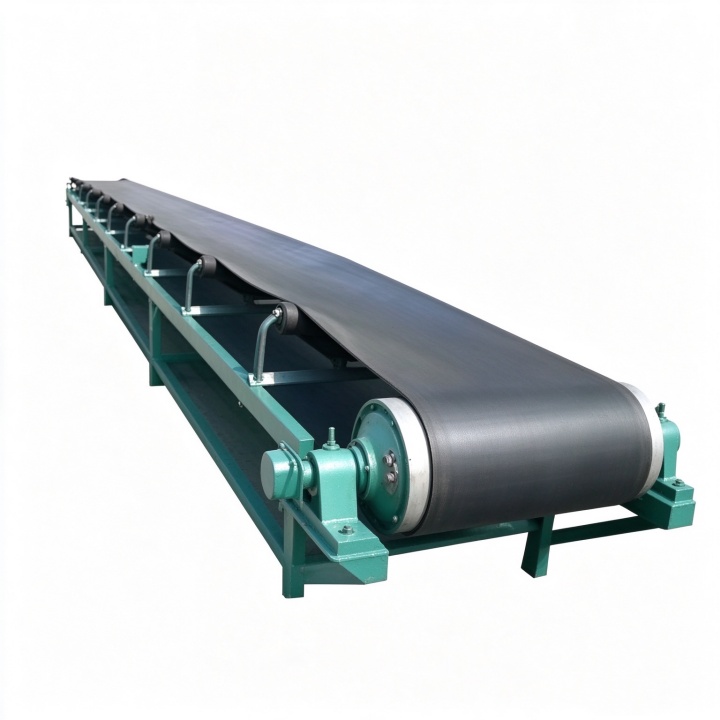
Compared with ordinary rubber conveyor belts, it has higher requirements for internal carcass strength, rubber cover and impact resistance, so its price is different.
The price of heavy duty rubber conveyor belt generally falls within a broad market reference range of 15 to 180 US dollars per meter. Prices vary greatly for different types of products. Ordinary EP fabric conveyor belts are moderately priced, while steel cord conveyor belts and special-performance conveyor belts are usually more expensive.
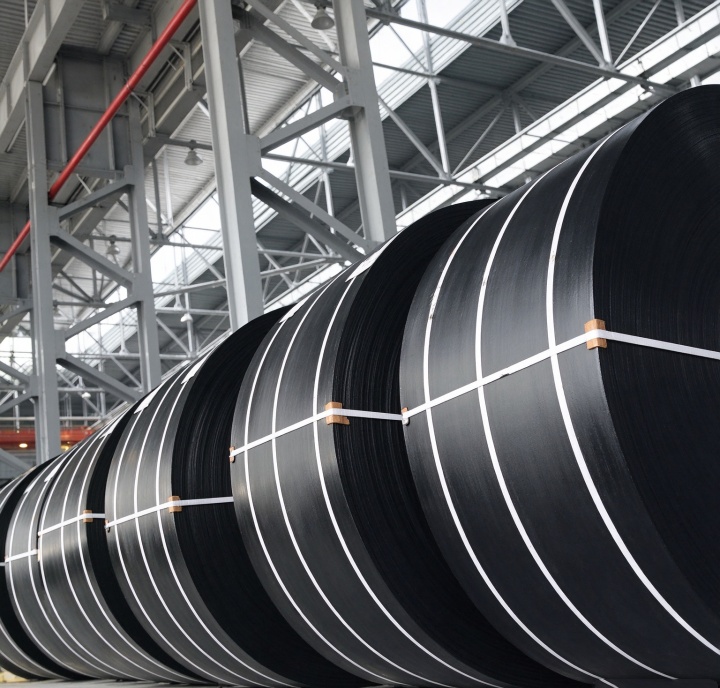
Therefore, when checking the Heavy Duty Rubber Conveyor Belt Price, you should not only look at the quotation per meter, but also judge it in combination with the belt width, length, carcass structure and cover rubber configuration.
Heavy-duty rubber conveyor belts with different structures come with different Heavy Duty Rubber Conveyor Belt Price.
| Conveyor Belt Type | Reference Price (USD/m) |
| EP Rubber Conveyor Belt | $14–60 |
| NN Rubber Conveyor Belt | $20–40 |
| Steel Cord Conveyor Belt | $55–120 |
EP conveyor belts are widely used in mining, sand and gravel and cement industries; NN conveyor belts are suitable for conveying scenarios requiring certain flexibility; steel cord conveyor belts are mainly for long-distance and heavy-load conveying. Different carcass materials and load-bearing capacities lead to different Heavy Duty Rubber Conveyor Belt Price.
The Heavy Duty Rubber Conveyor Belt Price is not only related to the conveyor belt type, but also affected by specific configurations.
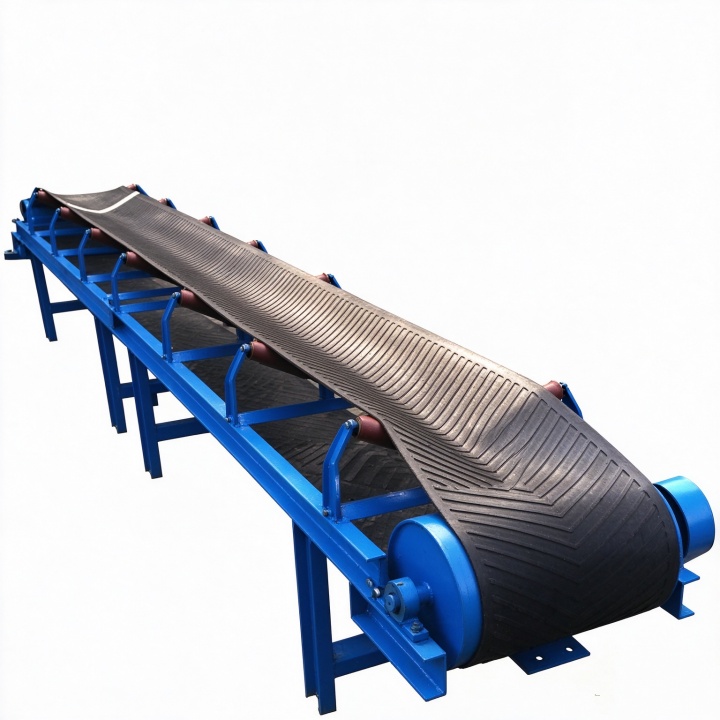
Belt width: The wider the belt, the more rubber and internal carcass materials are required per meter.
Thickness of top and bottom cover rubber: Configurations such as 4+2mm and 6+3mm, the first number stands for the thickness of top cover rubber and the second for the bottom cover rubber. Increasing the top cover rubber from 4mm to 6mm consumes more rubber material, which also affects the Heavy Duty Rubber Conveyor Belt Price.
Number of internal carcass plies: EP fabric conveyor belts have different configurations including 2-ply, 3-ply and 4-ply. More plies mean more fabric material inside and higher tensile strength of the belt, so the price usually goes up.
Rubber performance: Ordinary wear-resistant rubber and heat-resistant rubber have different formulas. For example, when conveying cement clinker, the material temperature needs to be considered. Ordinary rubber may fail to meet the requirements, so heat-resistant rubber is required, which will also raise the price of heavy-duty rubber conveyor belts.
Cover rubber is one of the key factors affecting the Heavy Duty Rubber Conveyor Belt Price. Heavier and sharper materials with greater drop impact usually set higher requirements for the cover rubber.
Common cover rubber configurations are as follows:
| Cover Rubber Configuration | Main Usage Consideration |
| 4+2 mm | General wear conditions |
| 5+2 mm | Medium wear conditions |
| 6+3 mm | Conditions with obvious wear and impact |
| 8+3 mm | Higher wear and impact conditions |
4+2mm cover rubber may be sufficient for conveying ordinary granular materials; but for large lump ore, the falling materials will easily strike the belt, so a thicker top cover rubber should be considered.
However, thicker top cover rubber is not always better. It should be selected according to material size, drop height and actual wear condition to avoid unnecessary cost increase of the heavy duty rubber conveyor belt.
When selecting a heavy-duty rubber conveyor belt, do not only focus on the Heavy Duty Rubber Conveyor Belt Price, but also take the actual conveyed materials and working environment into consideration.
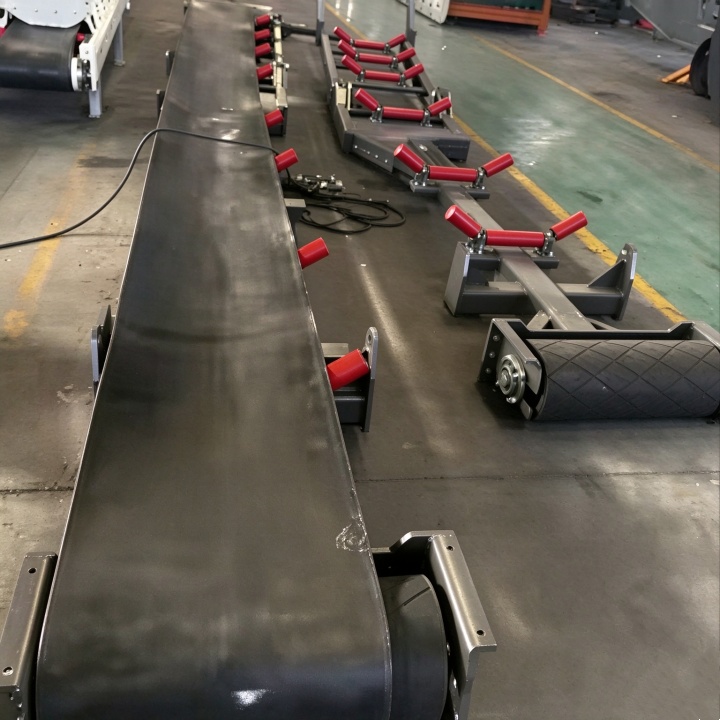
If sand and gravel are the main conveyed materials, priority can be given to the wear resistance of cover rubber; for large lump ore, attention should be paid to the impact resistance and carcass strength of the conveyor belt; for long-distance and heavy-load conveying, the internal carcass structure should be the key consideration.
Why is a steel cord Heavy Duty Rubber Conveyor Belt more expensive?
Steel cord conveyor belts adopt steel cords as the carcass inside and require more complex production processes. They are suitable for long-distance and heavy-load conveying, so the Heavy Duty Rubber Conveyor Belt Price is usually higher than that of ordinary fabric conveyor belts.
Does belt thickness affect Heavy Duty Rubber Conveyor Belt Price?
Yes. Thicker cover rubber generally consumes more rubber material, so the price of the heavy-duty rubber conveyor belt will increase.
Is a 4-ply rubber conveyor belt more expensive than a 3-ply belt?
With other configurations the same, a 4-ply fabric conveyor belt usually uses more carcass material than a 3-ply one, so the Heavy Duty Rubber Conveyor Belt Price may also be higher.
CONTACT
WhatsApp:+86 18339211009
Email:sale@xxdahan.com
Add:China, Henan Province, Xinxiang City.Yanjin county forest park gate to the west 1000 meters north road