E-mail: sale@xxdahan.com
Follow Us 


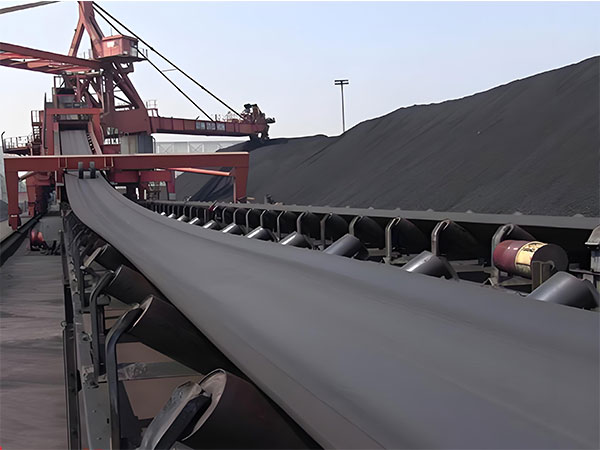
A reversible belt conveyor can discharge materials in both forward and reverse directions. It is suitable for working conditions where materials need to be delivered to the left silo and discharged to the right stockyard alternately.
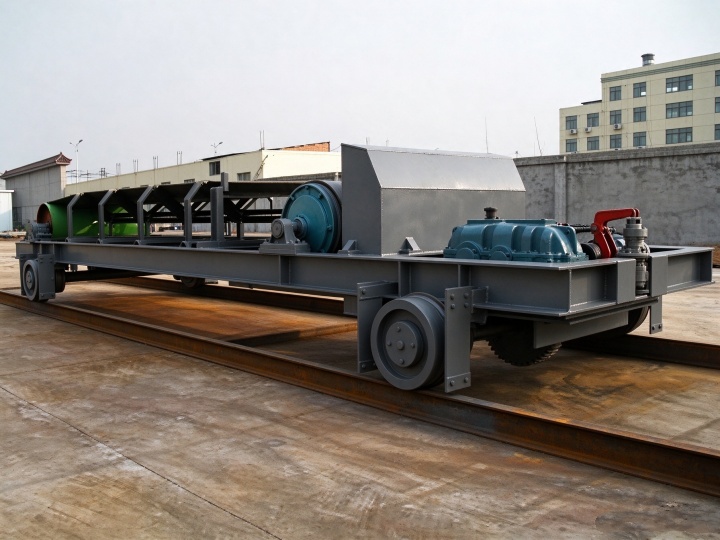
Compared with two separate one-way conveyors, it saves space and cuts investment costs. However, the belt of a reversible belt conveyor undergoes alternating stress during bidirectional operation. Selection experience for ordinary one-way belt conveyors cannot be directly applied. Blindly copying such experience often leads to belt deviation, material spillage, and even motor burnout.
Material characteristics are the primary consideration for equipment selection, as they determine the configuration of belts and idlers.
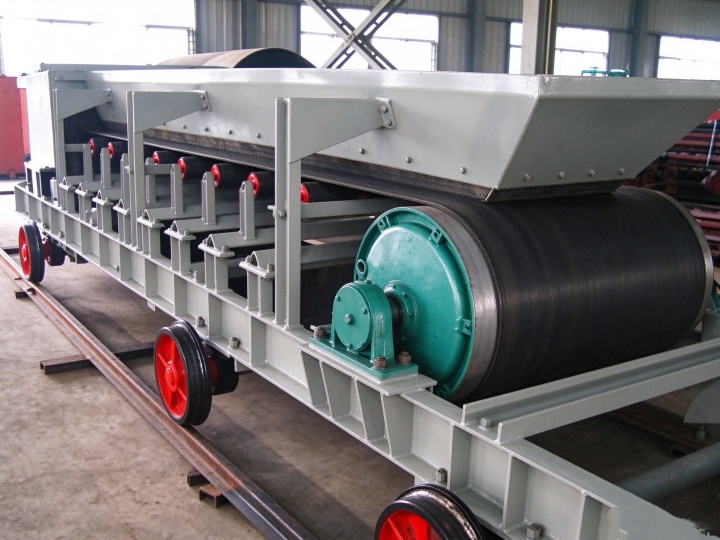
Weight: Materials such as grain and coal powder are relatively light, while ore and crushed stone are heavy. Heavier materials require higher-strength belts, such as canvas-cored or steel cord belts.
Particle size and abrasiveness: Large, sharp-edged stones may easily damage the belt by impact. For such materials, thick-surface, wear-resistant and impact-resistant belts are recommended. Fine powder materials cause less abrasion, so belts with thinner rubber cover can be adopted.
Moisture and stickiness: Wet and sticky materials tend to adhere to the belt. Since the reversible belt conveyor discharges at both ends, sticky residue will accumulate on pulleys, triggering belt deviation. For highly sticky materials, belt cleaners must be equipped to scrape off residual materials.
This is similar to choosing a vehicle: belt width equals the cargo compartment size, and belt speed equals the driving speed. The conveying capacity is determined by three factors: belt width, belt speed and material bulk density.
| Belt Width (mm) | Suitable Speed (m/s) | Material Handling Capacity per Hour (tons) | Suitable Materials |
| 500 | 0.8–1.2 | 30–80 | Sand and gravel, small coal, grain |
| 650 | 1.0–1.4 | 80–150 | Lump coal, crushed stone, chemical powder |
| 800 | 1.2–1.6 | 120–250 | Ore, medium-sized bulk materials |
| 1000 | 1.4–2.0 | 250–450 | Large lump ore, high-volume material handling in stockyards |
| 1200 | 1.6–2.0 | 400–700 | Large-scale plant areas, high-volume material handling at ports |
Reversible belt conveyors have a unique problem: the belt may deviate to the left when running forward and to the right when running backward. Proper accessories are essential to control deviation. Unlike one-way conveyors with a fixed deviation direction that can be adjusted once and for all, reversible conveyors demand dedicated parts.
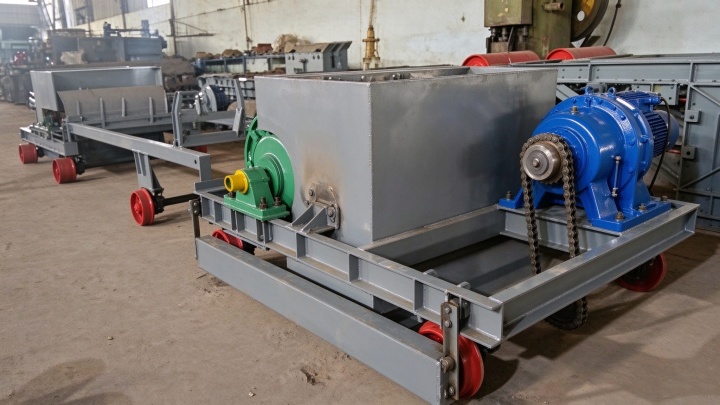
Select reversible self-centering idlers. Ordinary self-centering idlers are designed only for one-way operation. They fail to correct deviation in reverse rotation and may even squeeze and tear the belt.
Choose pulleys with diamond or symmetrical herringbone lagging. Since the conveyor runs in both directions, symmetrical patterns ensure consistent friction in forward and reverse rotation to prevent slipping.
Prefer counterweight or hydraulic take-up devices. Belt tension changes instantly when the conveyor reverses direction. Simple screw take-up devices respond slowly and are prone to slipping. Counterweight and hydraulic take-up systems maintain stable belt tension continuously.
A reversible belt conveyor discharges at both ends. Poor design at the feeding section will cause widespread material spillage.
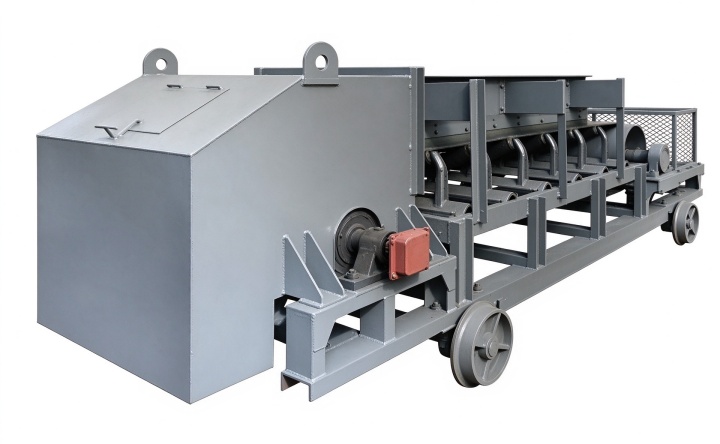
Extend the chute and install wear-resistant rubber skirt seals on both sides. Materials hit the belt at inconsistent speeds and tend to splash. An extended chute with well-sealed rubber skirts reduces material leakage.
Avoid steep inclination angles. Ordinary conveyors can work at 18° to 20°, but reversible conveyors suffer fluctuating tension during direction switching. The inclination angle is best kept within 12–15°. Excessive angles will cause material backsliding once the direction changes.
A frequency converter enables soft start and slow direction switching, lowering impact, reducing spillage, and protecting the motor and reducer.
Reverse direction only after the belt is fully emptied of materials if possible. If on-site conditions require reversing with material on the belt, increase the motor power by 20%–30% and reinforce the frame accordingly.
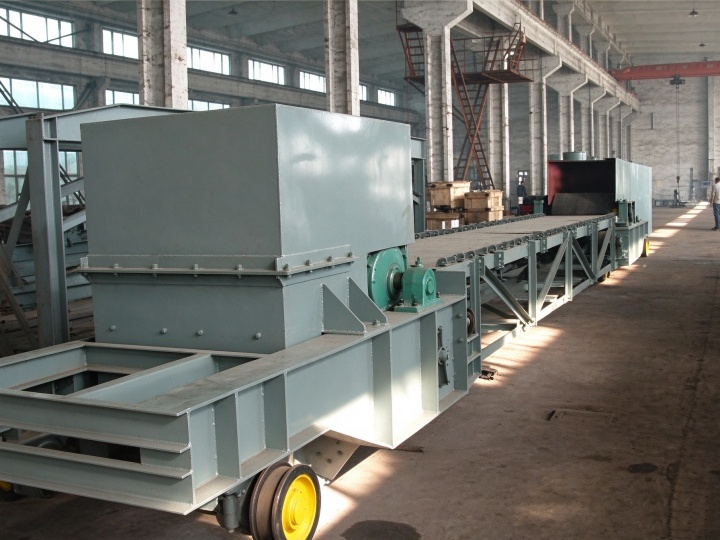
Install cleaners for the return belt. Residues stick not only to the carrying side but also to the bottom of the belt. V-type cleaners at both ends remove bottom deposits to avoid punctures caused by trapped grit.
Do not skimp on frame steel. Repeated direction switching generates impact loads. Undersized channel steel or I-beam will deform over time. Frame deformation leads to persistent belt deviation no matter how the idlers are adjusted, so a solid foundation is also required.
The reversible belt conveyor saves equipment cost and floor space, yet it has stricter requirements than conventional one-way conveyors. Frame rigidity, anti-deviation systems, cleaning assemblies and electric control all need careful consideration. Do not focus merely on cutting costs during selection. Fully assess material properties first, and equip the conveyor with complete self-centering, tensioning, cleaning and frequency conversion systems. Hidden troubles eliminated in the early design stage mean fewer breakdowns and more stable operation later.
CONTACT
WhatsApp:+86 18339211009
Email:sale@xxdahan.com
Add:China, Henan Province, Xinxiang City.Yanjin county forest park gate to the west 1000 meters north road