E-mail: sale@xxdahan.com
Follow Us 


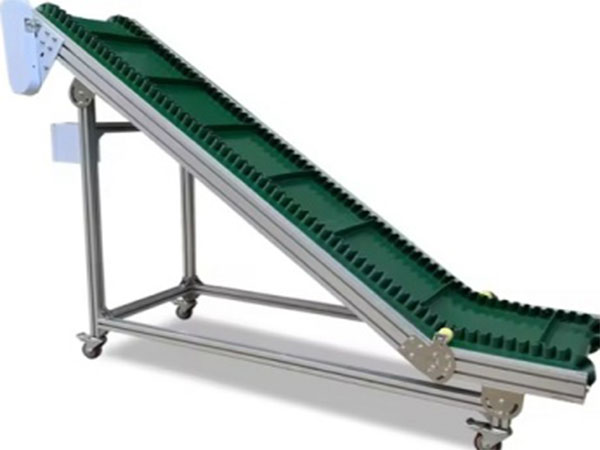
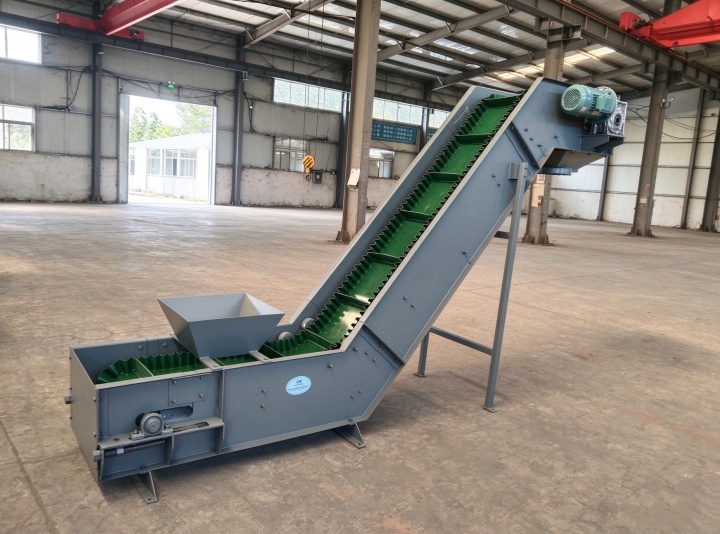
The corrugated sidewall belt conveyor is mainly used for high-angle material conveying. Compared with ordinary belt conveyors, it is equipped with corrugated sidewalls on both sides of the conveyor belt, and materials are supported by transverse cleats. This reduces material sliding during inclined conveying, making it suitable for production lines that require high lifting heights and have limited on-site space.
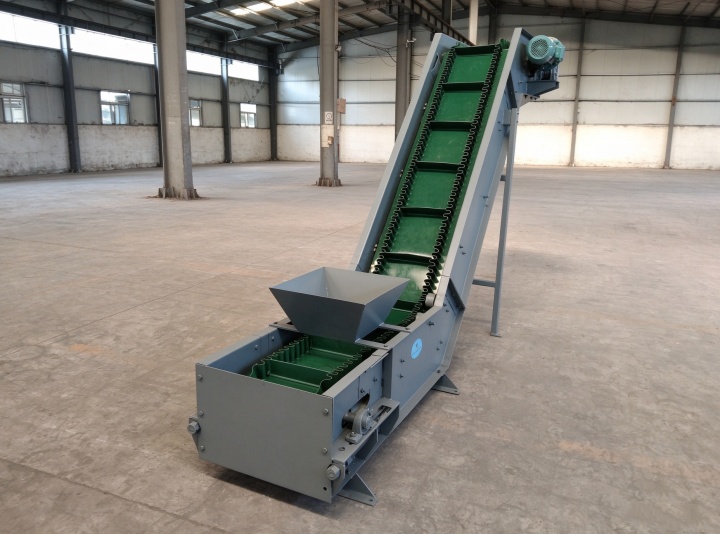
When selecting a Corrugated Sidewall Belt Conveyor Manufacturer, besides learning about the conveying capacity of the equipment, it is also necessary to check what equipment specifications the manufacturer can provide, which materials it can handle, and whether it can adjust the equipment according to on-site conditions. The following introduces the equipment types, specifications and parameters, applicable materials, customization capabilities and manufacturer services.
A Corrugated Sidewall Belt Conveyor Manufacturer mainly provides conveying equipment for high-angle lifting of bulk materials. With the base belt, corrugated sidewalls and transverse cleats working together to carry materials, the equipment can be designed with horizontal feeding and inclined lifting conveying forms according to on-site requirements.
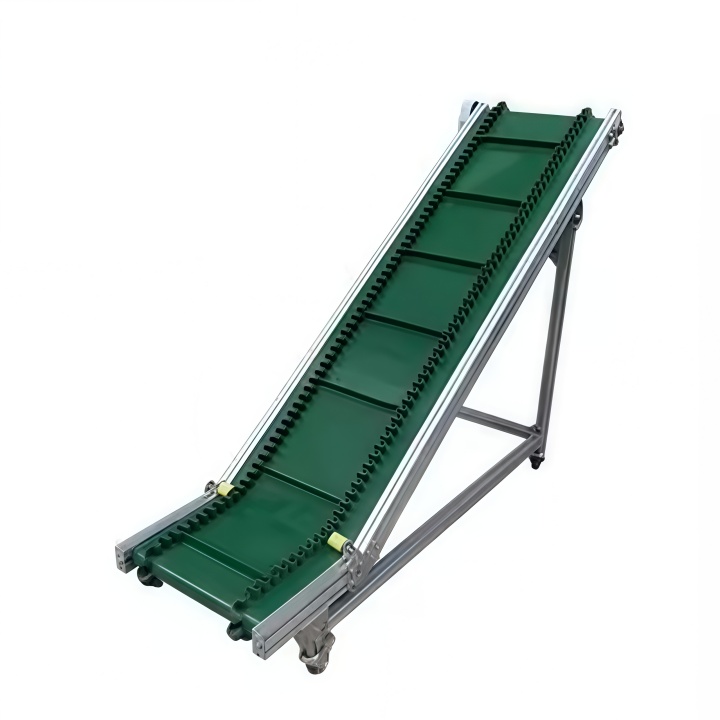
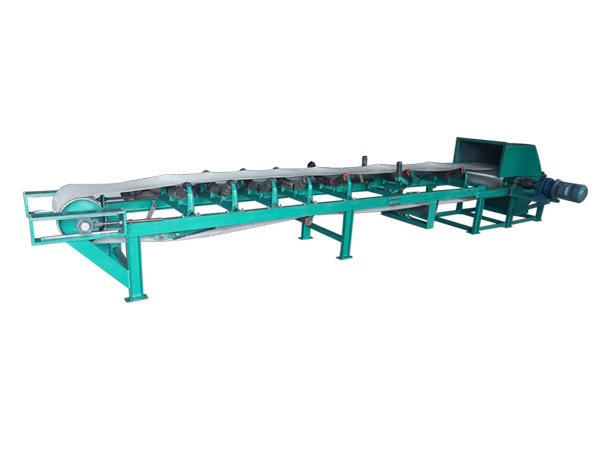
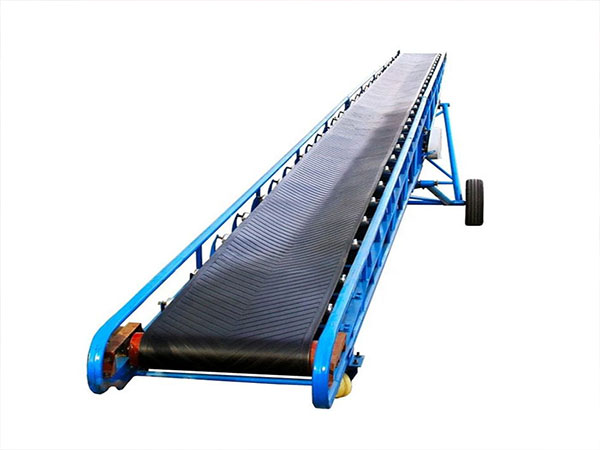
The belt conveying equipment of Dahan Machinery includes ordinary belt conveyors, mobile belt conveyors and high-angle belt conveyors. Among them, high-angle belt conveyors adopt corrugated sidewall conveyor belts and are mainly used for occasions where materials need to be lifted at a relatively large inclination angle.
Different production lines have different requirements for conveying capacity, lifting angle and equipment width. A Corrugated Sidewall Belt Conveyor Manufacturer needs to determine equipment specifications combining material characteristics and on-site working conditions, instead of only focusing on a single parameter.
According to the public product data of Dahan Machinery, the main parameters of its high-angle belt conveyor are as follows:
| Parameter Item | Public Specification |
| Conveying Capacity | 4–235 m³/h |
| Conveying Inclination Angle | 50°–90° |
| Belt Width | 300–800 mm |
| Applicable Material Bulk Density | 0.5–2.5 t/m³ |
| Working Environment Temperature | -15℃ to +40℃ |
During actual model selection, a Corrugated Sidewall Belt Conveyor Manufacturer also needs to determine the specific configuration combining material particle size, bulk density, conveying height and on-site layout.
A Corrugated Sidewall Belt Conveyor Manufacturer needs to learn the type and characteristics of materials before finalizing the equipment plan. Materials differ in particle size, bulk density, flowability and abrasion degree, which will affect the conveyor belt specifications and equipment configuration.
Corrugated sidewall belt conveyors can be used for the following materials:
| Material Type | Common Materials | Factors to Consider During Selection |
| Mining and Metallurgical Materials | Coal, iron ore, sintered powder | Material particle size, bulk density, and wear degree |
| Building Materials | Limestone, sand, sand and gravel, clay | Conveying capacity, material particle size, and conveying inclination angle |
| Other Bulk Materials | Sawdust, granular materials | Material moisture content, flowability, and conveying stability |
For example, when conveying iron ore, gravel and other materials, attention should be paid to the abrasiveness of materials and the wear resistance requirement of the conveyor belt. When conveying powdery materials, the equipment configuration should be determined combining material flowability and conveying angle.
For high-temperature, acidic, alkaline, oil-bearing or organic solvent-containing materials, special conveyor belts of corresponding types shall be selected.
Factories differ in conveying height, equipment installation position and material conditions, so the specifications of corrugated sidewall belt conveyors shall be determined according to actual working conditions.
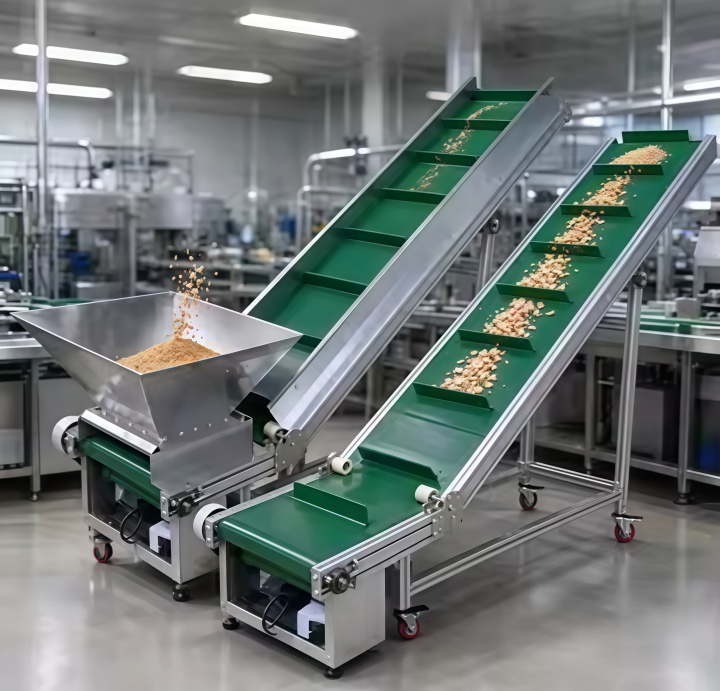
According to the public data of Dahan Machinery, the belt width of the equipment ranges from 300 mm to 800 mm, and customization is available upon user request. For working conditions with special material requirements, the corresponding conveyor belt shall be selected according to material temperature, acidity, alkalinity, oiliness and other conditions.
Before finalizing the plan, a Corrugated Sidewall Belt Conveyor Manufacturer needs to know the material name, hourly conveying capacity, required lifting height, conveying distance, available on-site space and feeding & discharging positions. This information affects the belt width, conveying angle and overall layout of the equipment.
When purchasing a complete set of conveying equipment, you should not only learn about the equipment itself, but also confirm the services related to installation and commissioning. For projects that need to connect to existing production lines, communicating the feeding position, discharging position and on-site space in advance also helps reduce adjustments during equipment installation.
For projects with special material characteristics or complex conveying routes, it is recommended to provide material samples or detailed parameters before procurement, so that the Corrugated Sidewall Belt Conveyor Manufacturer can confirm whether the equipment is applicable according to actual working conditions.
Q: Can a Corrugated Sidewall Belt Conveyor Manufacturer customize equipment according to material requirements?
A: Equipment specifications can be determined according to material characteristics and on-site working conditions. According to the public data of Dahan Machinery, the belt width can be customized upon user request, with the published specification range of 300–800 mm. For special materials such as high-temperature, acidic, alkaline and oily materials, the corresponding conveyor belt shall be selected.
Q: What parameters should be provided when selecting a Corrugated Sidewall Belt Conveyor Manufacturer?
A: It is recommended to provide the material name, particle size, bulk density, hourly conveying capacity, lifting height, conveying distance and on-site installation space in advance.
Q: How to confirm whether the equipment from a Corrugated Sidewall Belt Conveyor Manufacturer is suitable for your production line?
A: You may first check the product parameters and applicable material range of the manufacturer, then provide the actual materials and on-site working conditions for the manufacturer to verify whether the conveying capacity, inclination angle, belt width and equipment layout can meet the production requirements.
CONTACT
WhatsApp:+86 18339211009
Email:sale@xxdahan.com
Add:China, Henan Province, Xinxiang City.Yanjin county forest park gate to the west 1000 meters north road