E-mail: sale@xxdahan.com
Follow Us 


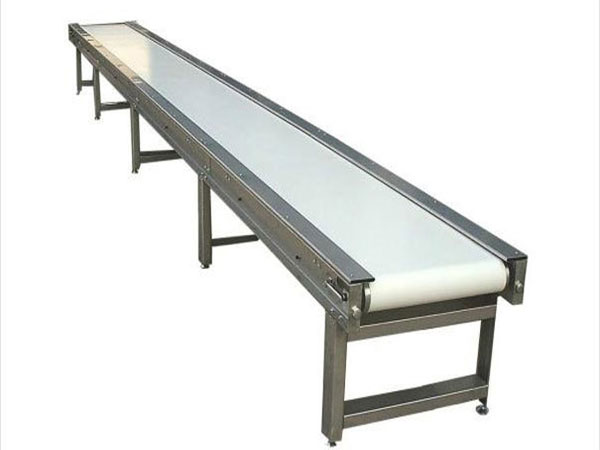
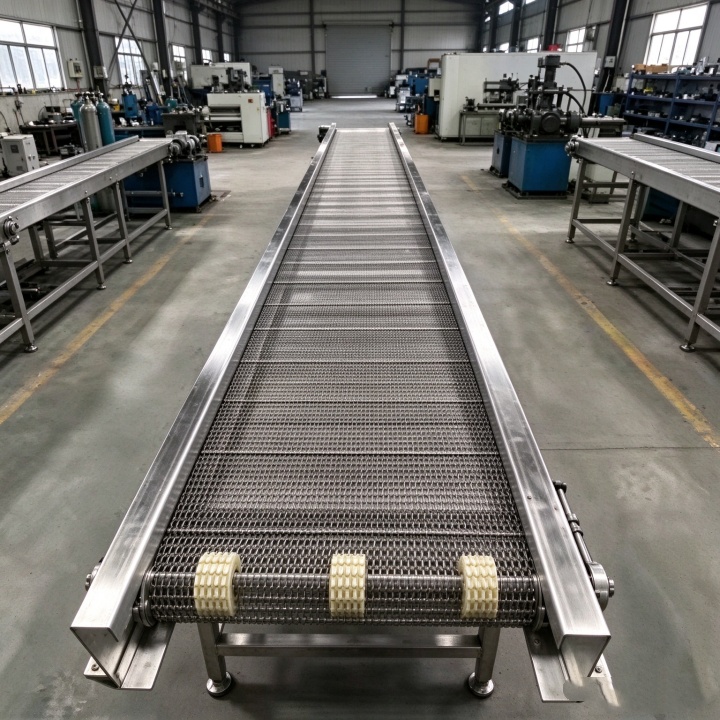
In industrial conveying applications, stainless steel belt conveyors are mainly used for working conditions with strict requirements on hygiene, corrosion resistance or temperature resistance. Compared with traditional rubber conveyor belts, stainless steel belts feature a continuous, seamless flat surface, wide temperature tolerance and easy cleaning.
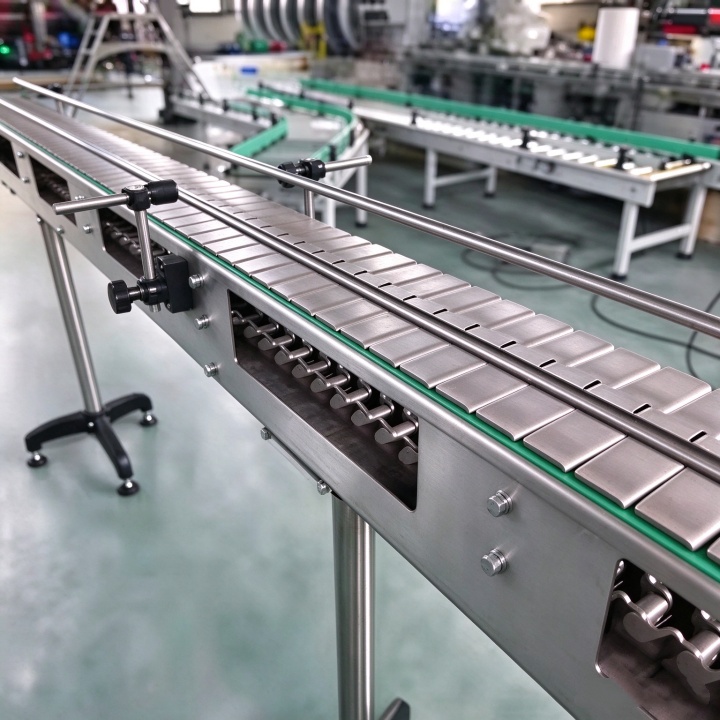
However, improper selection during procurement and engineering design may easily lead to failures such as material corrosion and belt deviation. This article systematically sorts out the selection logic for stainless steel belt conveyors.
Although the upfront purchase cost of a stainless steel belt conveyor is higher than that of ordinary conveyors, it delivers the best stability and low-maintenance performance under the following working conditions.
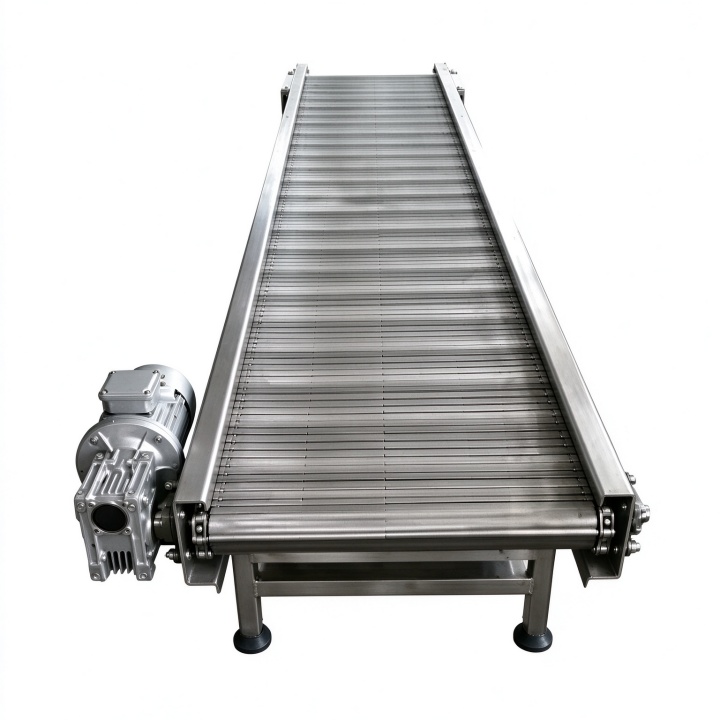
Extreme temperature environments: From -50°C quick-freezing tunnels to continuous baking ovens at 350°C and above. Ordinary plastic belts deform and melt rapidly, while stainless steel belt conveyors can operate steadily.
High-standard hygienic production: The flat, recess-free surface of stainless steel belts hardly accumulates material residues. They fully comply with FDA and HACCP sanitary standards, support IP69K high-pressure washing and CIP cleaning, and produce no debris or cross-contamination.
Conveying highly corrosive or viscous materials: Ideal for high-salt food processing, environments with acid and alkali cleaning agents, as well as processes for viscous slurry and melt cooling and forming. The belt resists corrosion and allows easy material scraping with a scraper.
The grade of stainless steel directly determines corrosion resistance and overall cost. There is no need to blindly specify higher-grade material; matching the grade to your working conditions is the priority.
| Material Grade | Performance Characteristics | Applicable Scenarios |
| SS304 / 304L | Strong versatility, rust-proof, adequate strength, high cost-effectiveness | Conventional food lines, dry material conveying, ordinary packaging lines, working conditions without strong chlorine or strong acid/alkali cleaning |
| SS316 / 316L | Molybdenum added, stronger pitting corrosion resistance and acid/alkali resistance | High-salt processing such as seafood, pharmaceuticals, light chemical industry, production lines requiring strong acid/alkali CIP cleaning |
| Special Alloys 301HY, etc. | Heat treatment strengthened, excellent tensile strength and fatigue resistance | Large-span long-distance conveying, ultra-thin steel belt precision conveying scenarios |
The structure of the stainless steel belt defines its suitability for different process requirements.
| Steel Belt Type | Structural Characteristics | Applicable Process Scenarios |
| Solid Smooth Steel Belt | Flat and smooth surface, seamless and continuous | Film calendering, high-viscosity material scraping, slurry cooling and forming |
| Metal Mesh Belt | Open mesh structure, air-permeable and water-draining | Baking, oil draining after frying, material rinsing and dewatering |
| Perforated Steel Belt | Pre-punched through holes on the belt surface | Combined with vacuum adsorption to fix films and electronic thin sheets, preventing displacement and warping |
Most fatigue fractures of stainless steel belts stem from mismatched belt thickness and drum diameter. A stainless steel belt bears alternating stress as it bends around the rotating drum. The thicker the belt, the larger the required drum diameter.
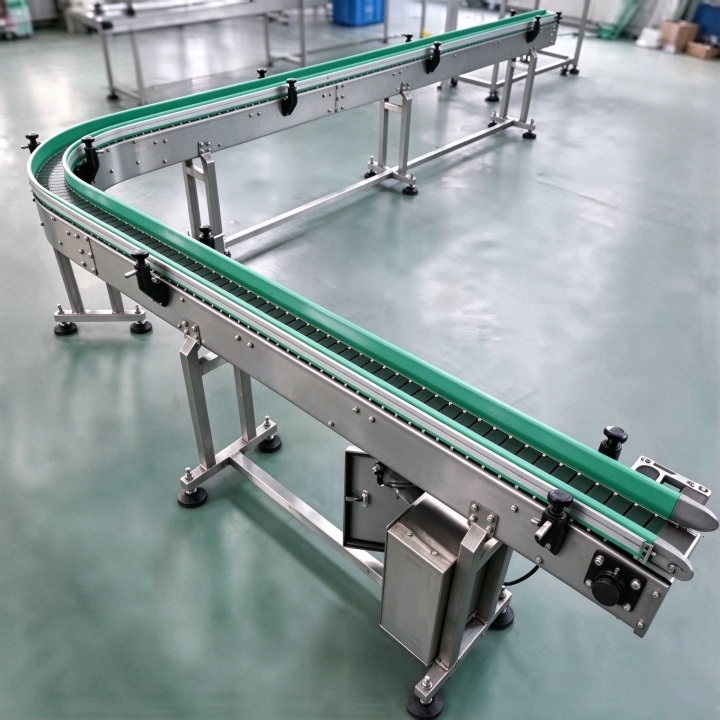
Industry empirical rule: Drum Diameter ≥ 800 × Belt Thickness. For example, a 1 mm thick belt requires a minimum drum diameter of 800 mm. Reducing drum size to save space will quickly cause fatigue cracking. Determine belt width and line speed according to material density and target throughput, and reserve a safety margin of more than 20% for driving tension.
Stainless steel belts feature high rigidity and low elongation, making them extremely sensitive to deviation. Edge abrasion will occur rapidly once the belt drifts off track.
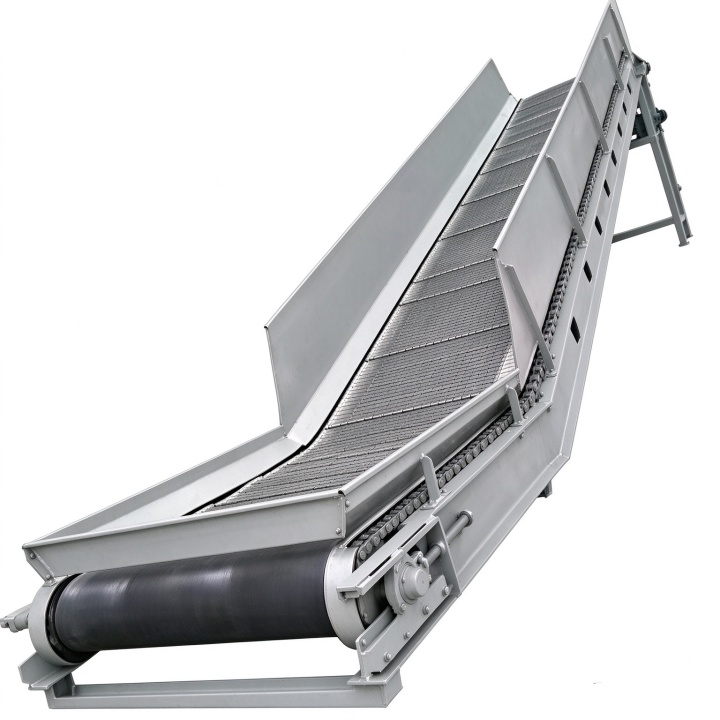
Passive positioning with V-shaped guide strips on the belt back works for short-distance, low-speed machines. For long-distance, high-speed or heavy-duty production lines, pneumatic or electric active deviation correction systems with sensors are recommended for real-time position adjustment.
Temperature changes cause thermal expansion and contraction of the belt. A weight take-up or pneumatic automatic tensioning mechanism must be fitted to maintain stable tension and prevent slippage or overload.
Use this checklist before contacting suppliers for quotes to streamline communication.
Material parameters: Weight, particle size, operating temperature, corrosiveness and viscosity.
Environmental requirements: Temperature range, CIP cleaning requirement and sanitary certification standards.
Belt solution: Confirm belt style (solid / mesh / perforated) and stainless steel grade.
Mechanical verification: Drum Diameter ≥ 800 × Belt Thickness, check installation space.
Auxiliary configuration: Confirm deviation correction and automatic tensioning solutions.
Q: What are the core advantages of stainless steel belt conveyors compared with rubber / PVC conveyors?
A: They withstand extreme high and low temperatures, resist corrosion, have seamless surfaces that do not trap contaminants, suit hygienic food and pharmaceutical production, and offer a longer service life.
Q: Why do stainless steel belts tend to deviate, and how can we fix it?
A: Stainless steel belts barely stretch. Minor misalignment of drum parallelism or levelness, or uneven loading, will lead to deviation. V-shaped guide strips are used for short, low-speed setups; automatic correction rollers are required for long-distance heavy-duty lines.
Q: Can a stainless steel belt continue to run with minor scratches?
A: Shallow scratches that do not trap residues are generally acceptable. If permanent folds or cracks appear, replace the belt immediately. Folds form stress concentration points and can lead to sudden belt breakage under cyclic loading.
CONTACT
WhatsApp:+86 18339211009
Email:sale@xxdahan.com
Add:China, Henan Province, Xinxiang City.Yanjin county forest park gate to the west 1000 meters north road